Fine Point Pen
CN → US| HS Code | Tariff Rate | Origin | Destination | Doc |
|---|---|---|---|---|
| 9608100000 | 0.0% | CN | US | Official Doc |
| 9608200000 | 21.5% | CN | US | Official Doc |
Product Images
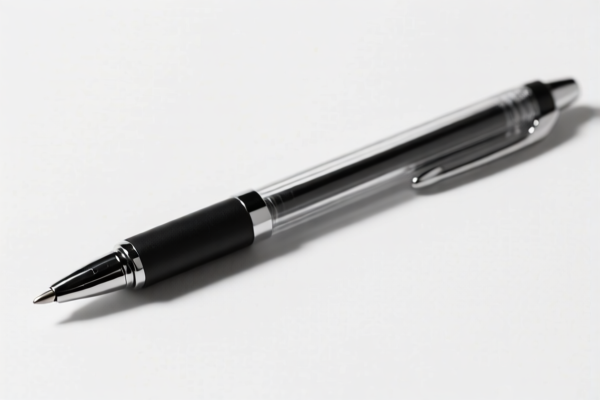
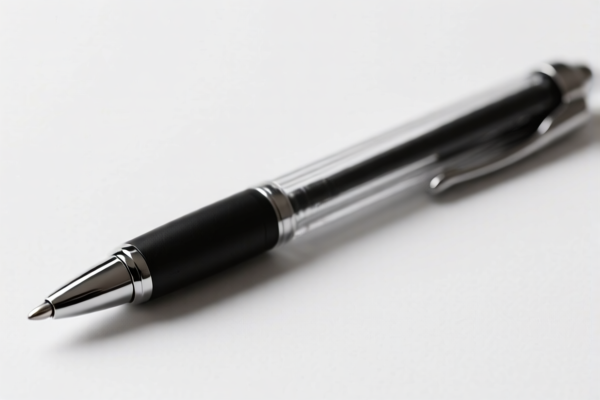
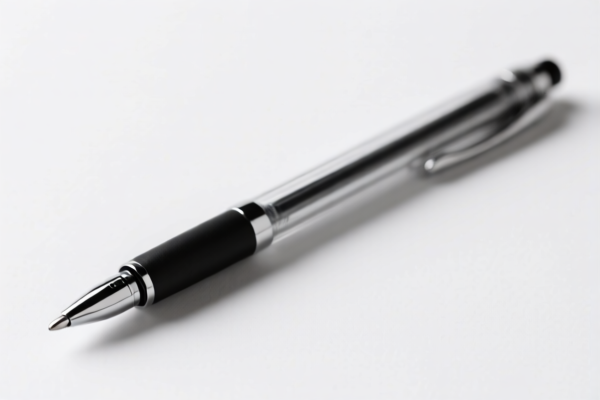
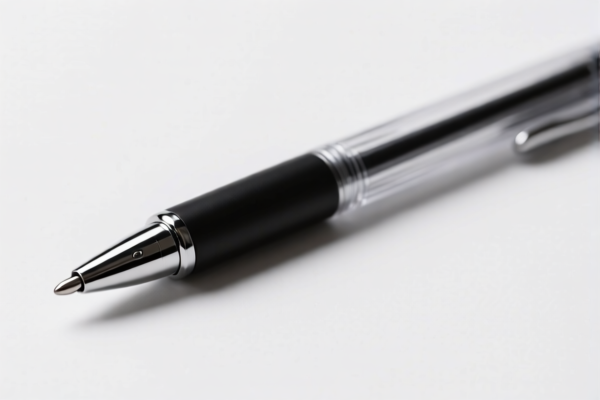
AI Analysis
✒️ Fine Point Pen (Ball Point, Felt-Tipped, Markers, etc.)
🌐 HS Code Reference & Customs Clearance Guide | 2026 Latest Tariff Analysis | Professional Clearance Strategy
📌 Part 1: Product Definition & Classification: Do You Truly Understand the "Pen"?
The term "Fine Point Pen" is a broad commercial description, not a precise legal HS Code definition. In international trade, writing instruments are strictly categorized based on their nib type (ballpoint, felt-tip, fountain pen, etc.) and function. Misclassification can lead to significant tariff discrepancies, especially given the varying duty rates for different pen types.
Core Categories in Heading 9608: 1. Ball Point Pens: Use a rotating ball bearing tip with oil-based ink. 2. Felt-Tipped & Porous-Tipped Pens/Markers: Use a fibrous or porous tip (felt, foam, felt-like material) with liquid ink. This includes "fine point" markers and calligraphy pens. 3. Fountain/Sylograph Pens: Use liquid ink fed by gravity or capillary action. 4. Parts: Caps, clips, nibs (separate from the pen body).
⚠️ Key Distinction Point:
- If the pen uses a metal ball for ink delivery → 9608.10
- If the pen uses a felt, foam, or porous plastic tip (common for "fine point" markers/labels) → 9608.20
- Do not confuse "fine point" (adjective describing size) with the nib type (material/mechanism). A "fine point marker" is still a felt-tipped pen, not a ballpoint.
📦 Part 2: HS Code Classification Details (2026 Latest Tariff Authoritative Comparison)
Based on the provided <DATA>, here are the two primary classifications for writing instruments under Heading 9608.
| HS Code | Product Description | Application Scenario | Tip Type |
|---|---|---|---|
9608.10.00.00 |
Ball point pens | Standard everyday writing, office use, promotional items | ✅ Metal Ball |
9608.20.00.00 |
Felt tipped and other porous-tipped pens and markers | Art, labeling, fine-line drawings, calligraphy, markers | ✅ Felt/Porous |
🔍 Critical Reminder:
- "Fine Point Pen" often refers to markers or art pens in commercial contexts. If the tip is made of felt, plastic bristles, or a porous composite (like Chisel-tip or Bullet-tip markers), it must be classified under 9608.20.00.00.
- If the "fine point" refers to a thin-nib ballpoint pen (e.g., 0.5mm ballpoint), it falls under 9608.10.00.00.
- Fountain pens are excluded from these two codes and fall under other subheadings of 9608.
💰 Part 3: 2026 Latest Tariff Rate Breakdown (Detailed Tax Clauses)
✅ Applicable Region: United States (US) Import
✅ Origin: China (CN) (Note: Tax rates may vary by origin; example below assumes China origin based on typical trade patterns)
✅ Effective Time: Current applicable rates for 2026
🎯 1. 9608.10.00.00 —— Ball Point Pens
| Item | Content |
|---|---|
| Basic Duty Rate | 0.0% (Ad Valorem) |
| Additional Duty (Section 301/IEEPA) | 0.0% |
| Total Effective Tax Rate | 0.0% |
| Tax Calculation | CIF Value × 0.0% = $0 |
| De Minimis Exemption | ✅ Eligible (Under $800, usually duty-free anyway) |
| Legal Basis Path | USITC:9608.10.00.00 → No Section 301 Footnote Application |
📌 Explanation:
- Ball point pens are considered low-value, non-competitive imports that do not attract punitive tariffs in many jurisdictions.
- Zero Duty makes this the most cost-effective classification if the product is indeed a ballpoint pen.
🎯 2. 9608.20.00.00 —— Felt-Tipped & Porous-Tipped Pens/Markers
| Item | Content |
|---|---|
| Basic Duty Rate | 4.0% (Ad Valorem) |
| Additional Duty (Section 301/IEEPA) | 7.5% |
| Total Effective Tax Rate | 11.5% |
| Tax Calculation | CIF Value × 11.5% |
| De Minimis Exemption | ✅ Eligible (Value < $800, but duty still accrues if declared) |
| Legal Basis Path | USITC:9608.20.00.00 → Section 301 Footnote (if applicable to specific lists) |
📌 Explanation:
- Basic Rate (4.0%): The standard Most Favored Nation (MFN) rate for felt-tipped pens.
- Additional Rate (7.5%): Reflects current trade policy additional duties (e.g., Section 301 or similar punitive tariffs on Chinese goods, depending on the specific list).
- Total 11.5%: This is a significant cost driver compared to ballpoint pens. If your "fine point pen" is actually a marker, you must budget for this extra tax.
🛠️ Part 4: Customs Clearance Practical Advice (Real-World Pitfall Avoidance)
✅ 1. Preparation Checklist (Non-Negotiable)
| Document | Must Provide | Explanation |
|---|---|---|
| ✅ Product Photos | ✔️ | Close-up of the nib/tip. Is it metal (ball) or felt/fabric (marker)? |
| ✅ Product Spec Sheet | ✔️ | Must explicitly state: "Ballpoint" OR "Felt-tip/Marker/Porous-tip". |
| ✅ Commercial Invoice | ✔️ | Description should not just say "Pen". Use: "Ballpoint Pen, 0.7mm" or "Felt-Tipped Marker, Fine Point". |
| ✅ Packing List | ✔️ | Separate line items if mixing types (e.g., 100 ballpoints + 100 markers). |
✅ 2. Declaration Tips (Key Rules)
🔥 “Identify the Tip, Not the Thickness!”
| Scenario | Correct HS Code | Incorrect HS Code | Consequence |
|---|---|---|---|
| "Fine Point" Ballpoint pen (metal ball) | 9608.10.00.00 (0% tax) |
9608.20.00.00 |
Overpaying 11.5% duty |
| "Fine Point" Marker (felt/porous tip) | 9608.20.00.00 (11.5% tax) |
9608.10.00.00 |
Under-declaration Risk → Penalty + Back Taxes |
| Fountain Pen | Other 9608 subhead | 9608.10 or 9608.20 |
Misclassification → Clearance Delay |
| Pen Refill (Ink Only) | 3215.90 / 3214.90 | 9608 | Wrong Chapter → Rejection |
✅ 3. Special Case Handling
| Case | Handling Advice |
|---|---|
| Mixed Bulk Shipment | Do NOT combine ballpoint and felt-tip pens under one HS Code. Declare separately to avoid audit flags. |
| "Dual-Tip" Pens (One side ball, one side marker) | Declare as two separate items if sold as a set, or classify based on the principal purpose. Often, the marker side dominates if it's a "paint marker." |
| Promotional Pens | If given away for free, value for customs is still based on fair market value. Tax still applies. |
| Art Markers (Alcohol-based) | Still 9608.20.00.00. The ink type (alcohol vs. water) does not change the HS Code for the pen body. |
🌍 Part 5: Global Market Comparison (2026 Latest)
| Country/Region | Recommended HS Code | Basic Duty | Additional Duty | Total Duty | Notes |
|---|---|---|---|---|---|
| 🇺🇸 USA | 9608.10.00.00 |
0% | 0% | 0.0% | Ballpoint = Free |
| 🇺🇸 USA | 9608.20.00.00 |
4.0% | 7.5% | 11.5% | Markers = Taxed |
| 🇨🇳 China | 9608.10.00.00 |
0% | 0% | 0.0% | Generally low duty |
| 🇨🇳 China | 9608.20.00.00 |
~10-15% | 0% | ~10-15% | Varies by FTA |
| 🇪🇺 EU | 9608.10.00 |
0% | 0% | 0.0% | Ballpoint = Free |
| 🇪🇺 EU | 9608.20.00 |
2.7% | 0% | 2.7% | Markers = Low Duty |
| 🇬🇧 UK | 9608.10.00 |
0% | 0% | 0.0% | Post-Brexit alignment |
| 🇬🇧 UK | 9608.20.00 |
4.5% | 0% | 4.5% | Markers = Moderate |
📌 Conclusion:
- USA has the highest additional duty burden on felt-tip pens (7.5% extra).
- EU/UK tariffs on felt-tip pens are significantly lower than in the US.
- Ballpoint pens are virtually duty-free globally.
📌 Part 6: Common Errors & Pitfalls (Lessons Learned)
❌ Error 1: Describing a Marker as "Pen" without specifying "Felt-Tipped"
👉 Consequence: Customs may classify it as a general pen (0%) or require clarification, causing 15-day delays.
❌ Error 2: Mixing Ballpoint and Felt-Tip in one HS Code line item
👉 Consequence: Audit Risk. If the average duty rate is incorrect, you will face back taxes and penalties.
❌ Error 3: Ignoring the Additional Duty for 9608.20 in US imports
👉 Consequence: Profit margin erosion. A 7.5% surprise cost can wipe out low-margin promotional items.
✅ Correct Practice:
"Felt-Tipped Fine Point Marker, Alcohol-Based Ink, 0.5mm Tip, Model XYZ" → 9608.20.00.00
"Ballpoint Pen, Gel Ink, 0.7mm Ball, Model ABC" → 9608.10.00.00
🎯 Part 7: Conclusion: Precision in Classification Saves Money
🎯 Key Takeaway:
🔹 "Ballpoint = 0% Duty (US)"
🔹 "Felt-Tip/Marker = 11.5% Duty (US)"
🔹 "Fine Point" describes size, NOT nib type. Check the nib!
📌 Pro Tip:
If you are importing large volumes of felt-tipped pens/markers from China, consider:
1. Pre-Classification Ruling: Apply for a binding ruling from US CBP to confirm the HS Code.
2. Supply Chain Diversification: If possible, source from countries with 0% Section 301 tariffs (e.g., Vietnam, Thailand) to reduce the 7.5% additional duty.
3. Product Design: If using a ballpoint mechanism, highlight "Ballpoint" in marketing to justify the 0% duty classification.
📣 Immediate Action:
📞 Verify the Nib Type: Is it a metal ball or felt/porous tip?
📋 Update Invoice Description: Be specific. Avoid generic "Fine Point Pen."
🚀 Ensure Smooth Clearance: Accurate HS Code = No Delays = Faster Market Entry!
✨ Professional Clearance Starts with Accurate Classification!
💼 Don't let a 7.5% tax surprise cut into your profits!
Customer Reviews
About HS Code Classification
The Harmonized System (HS) is an internationally standardized nomenclature developed by the World Customs Organization (WCO) to classify traded products. Over 200 countries use the HS system as the basis for customs tariffs, trade statistics, and import/export regulations.
Each HS code follows a hierarchical structure:
- Chapter (2 digits) — Broad category of goods (e.g., Chapter 84: Machinery and Mechanical Appliances)
- Heading (4 digits) — More specific grouping within the chapter
- Subheading (6 digits) — Internationally standardized breakdown, used by all WCO member countries
- National subdivisions (8-10 digits) — Country-specific extensions for further classification, such as US HTSUS 10-digit codes
Correct HS code classification is essential for smooth customs clearance, accurate duty payment, and compliance with trade regulations. Misclassification can lead to customs delays, overpayment of duties, or penalties.
When importing from CN to US, the applicable tariff rates may include:
- Most-Favored-Nation (MFN) rate — The standard duty rate applied to WTO members
- General rate — Applied to countries without trade agreements
- Trade remedy duties — Additional tariffs such as Section 301 (anti-dumping), Section 232 (national security), or countervailing duties
The information provided on this page is for reference purposes only. For official classification, please consult with your local customs authority or a licensed customs broker.