Fine animal hair fabric for filtration
CN → US| HS Code | Tariff Rate | Origin | Destination | Doc |
|---|---|---|---|---|
| 5111196040 | 60.0% | CN | US | Official Doc |
| 5911400100 | 43.0% | CN | US | Official Doc |
| 5911900080 | 38.8% | CN | US | Official Doc |
Product Images
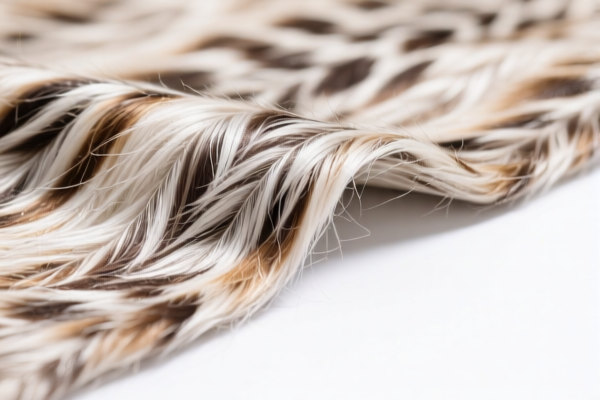
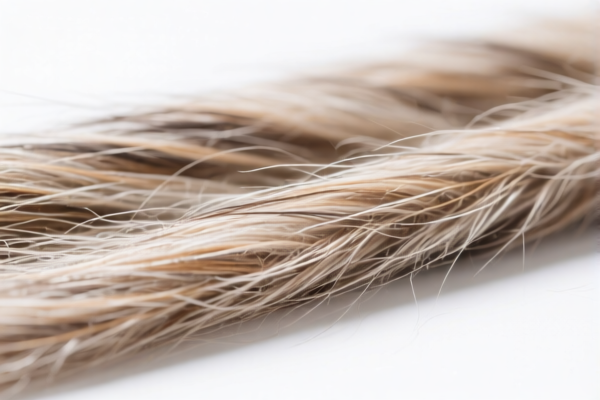

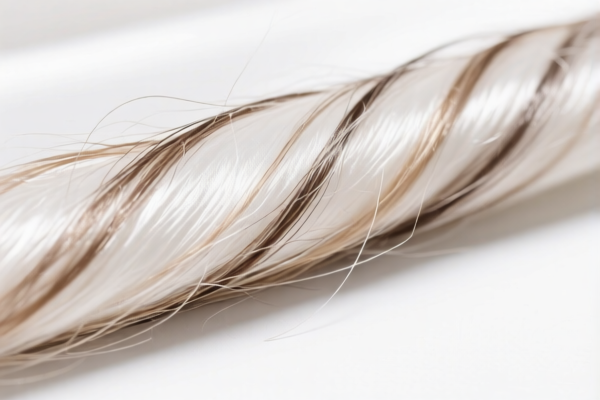
AI Analysis
🧶 Fine Animal Hair Fabric for Filtration: HS Code Classification & US Customs Clearance Guide 2026
🌐 HS Code Reference & Customs Clearance Strategy | 2026 Latest Tariff Analysis | Professional Compliance Guide
📌 I. Product Definition & Classification: What Exactly Is "Fine Animal Hair Fabric for Filtration"?
This product category involves textile materials made from animal fibers (such as wool, cashmere, goat hair, etc.) that are specifically engineered or utilized for filtration purposes. In international trade, the classification depends heavily on the technical application and the structure of the fabric.
Key Distinction: * Generic Animal Hair Fabric: If used for clothing or general upholstery, it falls under Chapter 51 (Wool, Fine or Coarse Animal Hair). * Technical/Industrial Fabric: If used specifically for filtration (separating solids from liquids/gases), it often moves to Chapter 59 (Impregnated, Coated, Covered or Reinforced Fabric) or Chapter 56 (Wadding and Yarn) depending on treatment, but most commonly Chapter 59 if it meets technical textile criteria.
⚠️ Critical Classification Point:
- If the fabric is a generic animal hair textile without specific technical treatment for filtration → It may be classified as a "fall-back" category in 5111.19.60.40.
- If it is explicitly recognized as a technical textile for filtration → It should be classified under 5911.40.01.00 or 5911.90.00.80 to reflect its industrial function.
📦 II. HS Code Classification Details (2026 Latest Tariff Authority Cross-Reference)
| HS Code | Product Description | Applicable Scenario | Tariff Rate (Total) | Legal Basis / Notes |
|---|---|---|---|---|
5111.19.60.40 |
Fine animal hair fabric, fall-back category | Generic animal hair fabric; no specific technical filtration certification; used as a baseline classification | 60.0% | Base Tariff: 25%, Section 301: 25%, Section 122: 10% |
5911.40.01.00 |
Technical textile for filtration, animal hair material | Specific industrial filtration use; meets technical textile requirements for animal hair fabrics | 43.0% | Base Tariff: 8%, Section 301: 25%, Section 122: 10% |
5911.90.00.80 |
Other technical textiles for filtration | General technical textile definition; broader category for non-animal or mixed material filtration fabrics | 38.8% | Base Tariff: 3.8%, Section 301: 25%, Section 122: 10% |
🔍 Key Insight:
- 5911.40.01.00 is the most accurate classification if the product is explicitly animal hair and used for filtration. It has the lowest total tariff (43%) among animal hair-specific options.
- 5111.19.60.40 is the highest tariff (60%) and should only be used if the product cannot be proven as a "technical textile." It is a "catch-all" category.
- 5911.90.00.80 is suitable for non-animal or mixed-material technical filtration fabrics, offering the lowest base tariff (3.8%).
💰 III. 2026 Latest Tariff Rate Breakdown (Including Additional Taxes & Policy Surcharges)
✅ Applicable Country: United States (US)
✅ Origin: China (CN)
✅ Effective Date: Post-2025 (Includes subsequent imports)
🎯 1. 5111.19.60.40 —— Fine Animal Hair Fabric (Fall-back Category)
| Item | Detail |
|---|---|
| Base Tariff | 25.0% (General Ad Valorem) |
| Section 301 Surcharge | +25.0% (USITC Footnote related to Chinese goods) |
| Section 122 Surcharge | +10.0% (Special provision for specific industrial goods) |
| Total Tariff Rate | 60.0% |
| Tax Calculation | CIF Value × 60% |
| De Minimis Exemption | ❌ Not Applicable (Deny De Minimis) |
| Legal Basis Path | USITC:5111.19.60.40 → Section 301: Footnote → Section 122: Special Provision |
📌 Explanation:
- This classification has the highest total tariff. It is used when the product does not qualify as a "technical textile" or when documentation is insufficient to prove filtration-specific use.
- Recommendation: Avoid this classification if possible, as it significantly increases costs.
🎯 2. 5911.40.01.00 —— Technical Textile for Filtration (Animal Hair)
| Item | Detail |
|---|---|
| Base Tariff | 8.0% (Preferential for technical textiles) |
| Section 301 Surcharge | +25.0% (USITC Footnote related to Chinese goods) |
| Section 122 Surcharge | +10.0% (Special provision for specific industrial goods) |
| Total Tariff Rate | 43.0% |
| Tax Calculation | CIF Value × 43% |
| De Minimis Exemption | ❌ Not Applicable (Deny De Minimis) |
| Legal Basis Path | USITC:5911.40.01.00 → Section 301: Footnote → Section 122: Special Provision |
📌 Note:
- This is the optimal classification for animal hair filtration fabrics. It offers a 17% savings compared to the fall-back category.
- Requires proof of technical use (e.g., product specs, industrial application documentation).
🎯 3. 5911.90.00.80 —— Other Technical Textiles for Filtration
| Item | Detail |
|---|---|
| Base Tariff | 3.8% (Lowest base rate for technical textiles) |
| Section 301 Surcharge | +25.0% (USITC Footnote related to Chinese goods) |
| Section 122 Surcharge | +10.0% (Special provision for specific industrial goods) |
| Total Tariff Rate | 38.8% |
| Tax Calculation | CIF Value × 38.8% |
| De Minimis Exemption | ❌ Not Applicable (Deny De Minimis) |
| Legal Basis Path | USITC:5911.90.00.80 → Section 301: Footnote → Section 122: Special Provision |
📌 Note:
- This classification is lowest in total tariff (38.8%), but it is not specific to animal hair. It is suitable for mixed-material or non-animal filtration fabrics.
- If the product is pure animal hair, this classification may be challenged by customs unless the material composition is mixed or not clearly animal hair.
🛠️ IV. Customs Clearance Practical Advice (Real-World Pitfall Avoidance Guide)
✅ 1. Documentation Checklist (Mandatory)
| Document | Required | Explanation |
|---|---|---|
| ✅ Product Specification Sheet | ✔️ | Must detail fiber content, weave structure, pore size, and intended filtration use. |
| ✅ Technical Data Sheet (TDS) | ✔️ | Prove the fabric meets industrial filtration standards (e.g., particle retention, flow rate). |
| ✅ Product Photos (Labeled) | ✔️ | Show the fabric roll, label, and any industrial markings. |
| ✅ Commercial Invoice | ✔️ | Clearly state "Technical Textile for Filtration" and material composition (e.g., "100% Goat Hair Filtration Fabric"). |
| ✅ Declaration of Technical Use | ✔️ | A signed statement from the manufacturer or buyer confirming the industrial filtration purpose. |
| ✅ Packing List | ✔️ | Detail net/gross weight, dimensions, and quantity. |
✅ 2. Declaration Tips (Key Mnemonics)
🔥 "Prove Technical Use, Avoid Fall-Back, Animal Hair Needs Specific Code!"
| Scenario | Correct Declaration | Incorrect Practice |
|---|---|---|
| Pure animal hair, industrial filtration | 5911.40.01.00 (43%) |
Declare as generic fabric → 5111.19.60.40 (60%) |
| Mixed material, filtration use | 5911.90.00.80 (38.8%) |
Declare as animal hair → Risk of reclassification |
| Clothing fabric (non-filtration) | 5111.19.60.40 (60%) |
Declare as technical textile → Customs audit & penalty |
✅ 3. Special Handling
| Situation | Handling Advice |
|---|---|
| OEM Custom Filtration Fabric | Provide client’s technical specs + design drawings to justify 5911.40.01.00. |
| Mixed Fiber Fabric | If animal hair is <50%, consider 5911.90.00.80 if not dominated by animal hair. |
| No Technical Documentation | Fall back to 5111.19.60.40 (60%) to avoid delays, but accept higher cost. |
| Sample for Testing | Declare as "Sample, not for resale" with low value to reduce risk, but still pay applicable duties. |
🌍 V. Global Market Comparison (2026 Latest)
| Country/Region | Recommended HS Code | Tariff (China Origin) | Certification Requirement | Notes |
|---|---|---|---|---|
| 🇺🇸 USA | 5911.40.01.00 |
43% (Total) | No specific certification, but technical proof required | Highest risk of reclassification if documentation is weak. |
| 🇨🇳 China | 5911.40.01.00 |
8% (Base) | GB Standards for industrial textiles | No Section 301/122 surcharges. |
| 🇪🇺 EU | 5911.40.00.00 |
0-4% | REACH, ISO 9001 (if applicable) | No Section 301/122. Lower total cost. |
| 🇦🇺 Australia | 5911.40.00.00 |
5% | ACCC Standards | No Section 301/122. |
| 🇯🇵 Japan | 5911.40.00.00 |
0-3% | JIS Standards | No Section 301/122. |
📌 Conclusion:
- USA imposes the highest total tariff (43-60%) due to Section 301 and 122 surcharges.
- Technical proof is critical to avoid the 60% fall-back rate.
- Exporters should invest in proper documentation to qualify for the 43% rate.
📌 VI. Common Mistakes & Pitfall Guide (Lessons Learned)
❌ Mistake 1: Declaring technical filtration fabric as "Generic Animal Hair Fabric"
👉 Result: Tariff jumps from 43% to 60% → Extra 17% cost!
❌ Mistake 2: No technical documentation provided
👉 Result: Customs reclassifies to 5111.19.60.40 → Audit delay + Penalty.
❌ Mistake 3: Using "Clothing Fabric" as description for filtration fabric
👉 Result: Rejection of entry → Return or Destruction.
❌ Mistake 4: Incorrect material composition declaration
👉 Result: If animal hair is not dominant, 5911.90.00.80 may be more appropriate, but declaring it as animal hair leads to dispute.
✅ Correct Approach:
"Animal Hair Technical Filtration Fabric, Industrial Use, Model XYZ, Pore Size: 10 Microns, Certified for Industrial Filtration"
🎯 VII. Conclusion: Precision in Classification Saves Money!
🎯 Remember the Mantra:
🔹 "Technical Proof = Lower Tariff (43% vs 60%)!
🔹 "Animal Hair + Filtration = 5911.40.01.00!
🔹 "No Proof? Pay 60%!
🔹 "Mixed Material? Consider 5911.90.00.80 (38.8%)!"
📌 Pro Tip:
If your product is originated from Vietnam, Mexico, or Thailand, it may be exempt from Section 301/122 surcharges, reducing tariffs to base rates only (8% or 3.8%).
Recommendation: Apply for a Pre-Ruling (Advance Ruling) from U.S. Customs to confirm the correct HS Code and avoid post-import audits.
📣 Immediate Action Required:
📞 Contact a Professional Customs Broker + Provide Product Specs + Apply for HS Code Pre-Ruling
🚀 Ensure Smooth Clearance, Minimize Costs, Maximize Profit!
✨ Professional Clearance Starts with Accurate Classification!
💼 Every Percent Counts in International Trade!
Customer Reviews
About HS Code Classification
The Harmonized System (HS) is an internationally standardized nomenclature developed by the World Customs Organization (WCO) to classify traded products. Over 200 countries use the HS system as the basis for customs tariffs, trade statistics, and import/export regulations.
Each HS code follows a hierarchical structure:
- Chapter (2 digits) — Broad category of goods (e.g., Chapter 84: Machinery and Mechanical Appliances)
- Heading (4 digits) — More specific grouping within the chapter
- Subheading (6 digits) — Internationally standardized breakdown, used by all WCO member countries
- National subdivisions (8-10 digits) — Country-specific extensions for further classification, such as US HTSUS 10-digit codes
Correct HS code classification is essential for smooth customs clearance, accurate duty payment, and compliance with trade regulations. Misclassification can lead to customs delays, overpayment of duties, or penalties.
When importing from CN to US, the applicable tariff rates may include:
- Most-Favored-Nation (MFN) rate — The standard duty rate applied to WTO members
- General rate — Applied to countries without trade agreements
- Trade remedy duties — Additional tariffs such as Section 301 (anti-dumping), Section 232 (national security), or countervailing duties
The information provided on this page is for reference purposes only. For official classification, please consult with your local customs authority or a licensed customs broker.