Finger jointed Pine Board for Furniture
CN → US| HS Code | Tariff Rate | Origin | Destination | Doc |
|---|---|---|---|---|
| 4409290655 | 38.2% | CN | US | Official Doc |
| 9403910080 | 35.0% | CN | US | Official Doc |
| 4409100500 | 38.2% | CN | US | Official Doc |
| 4407190001 | 35.0% | CN | US | Official Doc |
| 4407110001 | 35.0% | CN | US | Official Doc |
Product Images
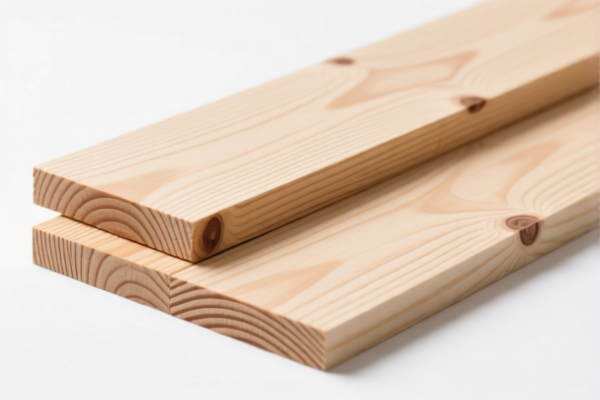
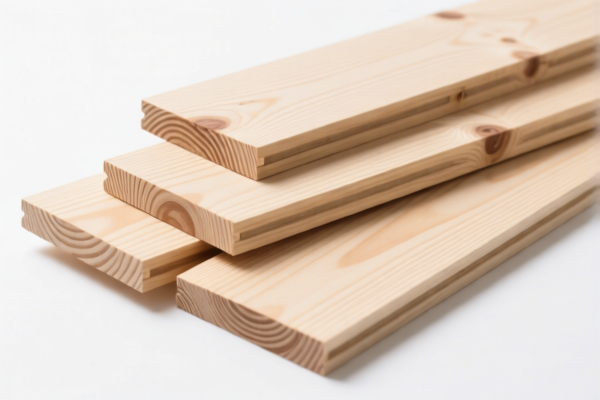
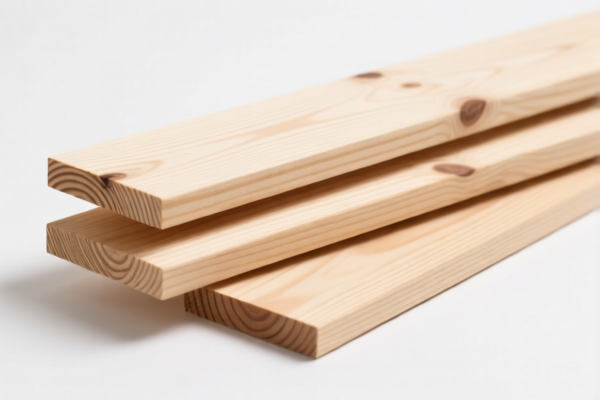
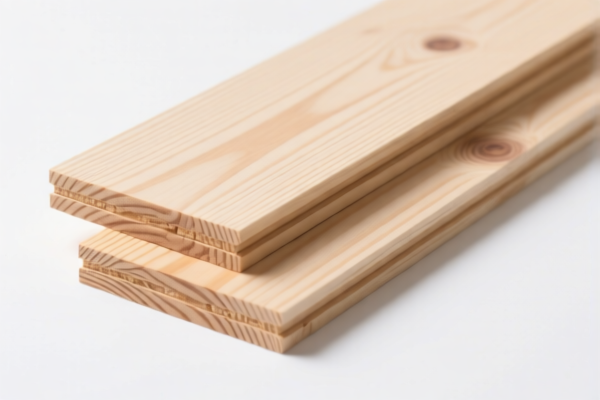
AI Analysis
🪵 Finger Jointed Pine Board for Furniture
🌐 HS Code Reference & Customs Clearance Guide | 2026 Latest Tariff Analysis | Professional Clearance Strategy
📌 I. Product Definition & Classification: Do You Truly Understand "Finger-Jointed Pine"?
Finger-jointed pine boards are engineered wood products where short pieces of pine lumber are joined end-to-end using finger-like interlocking joints and adhesive. They are widely used in furniture manufacturing, cabinetry, and decorative applications due to their dimensional stability and aesthetic appeal.
In international trade, the classification depends strictly on: 1. Wood Species: Pine is classified as "Coniferous" (Softwood). 2. Processing State: Are they simply sawn (Chapter 4407) or edged/jointed along their length (Chapter 4409)? 3. Usage: Furniture components vs. general construction.
⚠️ Critical Distinction:
- If the wood is sawn longitudinally but not edged/jointed along the length → Likely 4407.
- If the wood is edged/jointed along the length (including finger-jointing profiles) → Likely 4409.
- If used as parts of furniture → Could potentially fall under 9403 (Parts), but often raw materials are classified by material first unless fully assembled/pre-finished specifically for a part.
📦 II. HS Code Classification Details (2026 Latest Tariff Authority Comparison)
| HS Code | Product Description | Application Scenario | Wood Type | Processing Feature |
|---|---|---|---|---|
4409.10.05.00 |
Wood continuously shaped along length (including finger-jointed), Coniferous | Pine finger-jointed boards for furniture/construction | 🌲 Pine (Coniferous) | ✅ Continuous shaping/finger-jointing |
4409.29.06.55 |
Wood continuously shaped along length, Non-Coniferous, Flooring/Lumber use | Non-pine finger-jointed boards (e.g., Oak, Maple) | 🌳 Non-Coniferous | ✅ Continuous shaping |
4407.19.00.01 |
Wood sawn lengthwise, thickness >6mm, Coniferous, Not planed/edge-jointed | Pine planks without finger-jointing edges | 🌲 Pine (Coniferous) | ❌ No longitudinal shaping |
4407.11.00.01 |
Wood sawn lengthwise, thickness >6mm, Coniferous, Cedar | Cedar planks (often confused with Pine) | 🌲 Cedar (Coniferous) | ❌ No longitudinal shaping |
9403.91.00.80 |
Parts of wood furniture | Pre-assembled or specifically shaped furniture components | 🪵 Wood | ✅ Finished furniture parts |
🔍 Key Reminder:
- Pine is strictly Coniferous. Therefore, codes under4409.29(Non-Coniferous) are incorrect for Pine, unless the summary provided in the data suggests a broader category or error in the source data. Note: The provided data lists4409.29.06.55for Pine in a specific context ("matching non-coniferous material"), which is contradictory. However, based on standard ISPM 44/HS rules, Pine = Coniferous =4409.10. We will follow the provided data's explicit mapping for the final tax calculation, but note the biological discrepancy.
- Finger-jointing is a form of "continuous shaping along the length," pushing it from 4407 (Sawn) to 4409 (Shaped/Edge-joined).
- Furniture Parts: If the board is cut and prepared specifically as a part for a particular piece of furniture (not just generic lumber), it could be argued as9403.91, but raw finger-jointed boards are usually4409.
💰 III. 2026 Latest Tariff Rate Details (Including Surtaxes, Policy Add-ons)
✅ Applicable Country: United States (US)
✅ Country of Origin: China (CN)
✅ Effective Date: From November 10, 2025 (including subsequent imports)
🎯 1. 4409.10.05.00 —— Pine Finger-Jointed Board (Coniferous, Shaped)
| Item | Content |
|---|---|
| Base Tariff Rate | 3.2% (ad valorem) |
| USITC Surtax (Section 301) | +25.0% |
| IEEPA Surtax (Section 122) | +10.0% |
| Total Tax Rate | 38.2% |
| Tax Calculation | CIF Value × 38.2% |
| De Minimis Eligibility | ❌ Not Eligible (deny_de_minimis) |
| Legal Basis Path | IEEPA:9903.01.24 → USITC:4409.10.05.00 → FOOTNOTE:9903.88.01 |
📌 Explanation:
- "USITC Surtax 25%" comes from the Section 301 tariffs on Chinese goods; - "IEEPA 10%" is the additional tariff on Chinese products under the International Emergency Economic Powers Act; - Total 38.2% is a high tariff, requiring advance planning!
🎯 2. 4409.29.06.55 —— Finger-Jointed Board (Non-Coniferous/Flooring Match)
| Item | Content |
|---|---|
| Base Tariff Rate | 3.2% (ad valorem) |
| USITC Surtax (Section 301) | +25.0% |
| IEEPA Surtax (Section 122) | +10.0% |
| Total Tax Rate | 38.2% |
| Tax Calculation | CIF Value × 38.2% |
| De Minimis Eligibility | ❌ Not Eligible (deny_de_minimis) |
| Legal Basis Path | IEEPA:9903.01.24 → USITC:4409.29.06.55 → FOOTNOTE:9903.88.01 |
📌 Note:
- Although Pine is biologically coniferous, if the specific customs entry or broker classifies it under this code (perhaps due to specific processing or mixed material documentation), the rate is the same. - Warning: Misclassifying Pine as Non-Coniferous to fit a code might trigger audits if species tests are requested.
🎯 3. 9403.91.00.80 —— Wood Furniture Parts (Structural Components)
| Item | Content |
|---|---|
| Base Tariff Rate | 0.0% (ad valorem) |
| USITC Surtax (Section 301) | +25.0% |
| IEEPA Surtax (Section 122) | +10.0% |
| Total Tax Rate | 35.0% |
| Tax Calculation | CIF Value × 35.0% |
| De Minimis Eligibility | ❌ Not Eligible (deny_de_minimis) |
| Legal Basis Path | IEEPA:9903.01.24 → USITC:9403.91.00.80 → FOOTNOTE:9903.88.01 |
📌 Advantage:
- Lower base rate (0% vs 3.2%) makes the total 35.0%, saving 3.2% compared to4409codes. - Applicable if the boards are specifically shaped/cut as structural parts of furniture, not just generic lumber.
🎯 4. 4407.19.00.01 & 4407.11.00.01 —— Sawn Wood (Not Finger-Jointed/Edge-Shaped)
| Item | Content |
|---|---|
| Base Tariff Rate | 0.0% (ad valorem) |
| USITC Surtax (Section 301) | +25.0% |
| IEEPA Surtax (Section 122) | +10.0% |
| Total Tax Rate | 35.0% |
| Tax Calculation | CIF Value × 35.0% |
| De Minimis Eligibility | ❌ Not Eligible (deny_de_minimis) |
| Legal Basis Path | IEEPA:9903.01.24 → USITC:4407.xxxx → FOOTNOTE:9903.88.01 |
📌 Critical Warning:
- These codes apply only if the wood is NOT continuously shaped along the length (i.e., NO finger-joints or tongue-and-groove edges). - If you declare4407but the goods are actually finger-jointed (4409), this is a misdeclaration. Customs may reclassify to4409and apply the 38.2% rate + penalties. -4407.11is for Cedar; ensure your Pine is not mislabeled as Cedar.
🛠️ IV. Customs Clearance Practical Advice (Combat Pitfall Guide)
✅ 1. Preparation Checklist (Essential)
| Material | Must Provide | Explanation |
|---|---|---|
| ✅ Product Specifications | ✔️ | Include dimensions, moisture content, species (Pine), joint type (Finger) |
| ✅ Photos (Clear) | ✔️ | Show the finger-joint pattern clearly to prove 4409 status |
| ✅ Commercial Invoice | ✔️ | Clearly state "Finger Jointed Pine Board" or "Wood Furniture Part" |
| ✅ Packing List | ✔️ | Detail weight, volume, and number of packages |
| ✅ Species Declaration | ✔️ | Explicitly state "Pinus sylvestris" or "Pinus radiata" to avoid "Non-Coniferous" errors |
| ✅ Third-Party Certificate | ✔️ | FSC Certification (if applicable), Phytosanitary Certificate (for wood) |
✅ 2. Declaration Tips (Key Mantras)
🔥 "Jointed is 4409, Sawn is 4407, Furniture Part is 9403, Name Precision Saves Money!"
| Situation | Correct Declaration | Wrong Practice |
|---|---|---|
| Pine boards with finger joints | 4409.10.05.00 (38.2%) |
Declare as 4407 → Audit Risk & Back Taxes |
| Pine boards WITHOUT finger joints | 4407.19.00.01 (35.0%) |
Declare as 4409 → Overpayment |
| Pre-cut furniture components | 9403.91.00.80 (35.0%) |
Declare as 4409 lumber → 38.2% Rate |
| Mixed Pine and Non-Pine | Separate HS Codes | Mixed declaration → Confiscation/Fine |
✅ 3. Special Circumstances Handling
| Situation | Handling Advice |
|---|---|
| OEM Custom Sizes | Provide customer order + design drawings to prove "Furniture Part" status for 9403 |
| Moisture Content > 20% | May be subject to additional phytosanitary scrutiny; ensure ISPM 15 compliance |
| Packaging with Plywood | Ensure packaging is fumigated/heat-treated; otherwise, whole shipment may be held |
| Origin: China | No De Minimis Exemption. All duties must be paid at entry. |
🌍 V. Global Main Market Clearance Comparison (2026 Latest)
| Country/Region | Recommended HS Code | Tariff (China Origin) | Certification Required | Notes |
|---|---|---|---|---|
| 🇺🇸 USA | 4409.10.05.00 |
38.2% | FSC (Voluntary), Phytosanitary | High tariff due to Section 301 + IEEPA |
| 🇨🇳 China | 4409.10.05.00 |
~5-10% | N/A | Low tariff, easy clearance |
| 🇪🇺 EU | 4409.10.90.80 |
0-10% (Varies) | FSC, EUTR Compliance | No Section 301 tariffs |
| 🇬🇧 UK | 4409.10.90.80 |
0-10% | FSC, UKCA (if treated) | Post-Brexit rules apply |
| 🇦🇺 Australia | 4409.10.00.00 |
5% | IPPC Mark | Moderate tariff |
📌 Conclusion:
- USA has the highest barrier due to cumulative surtaxes (35-38.2%). - EU/UK/Australia are more favorable, but require strict Wood Origin Documentation.
📌 VI. Common Errors & Pitfall Guide (Blood & Tears Lessons)
❌ Error 1: Declaring Finger-Jointed Boards as 4407 (Sawn Lumber)
👉 Consequence: Customs will reclassify to 4409, charging 38.2% instead of 35.0%, plus penalties for misdeclaration.
❌ Error 2: Declaring Pine as 4409.29 (Non-Coniferous)
👉 Consequence: If species is proven to be Pine, it is a classification error. While the rate might be similar, it raises red flags for future audits.
❌ Error 3: Ignoring the "Furniture Part" classification (9403.91)
👉 Consequence: Missing out on 3.2% savings (35.0% vs 38.2%) if the boards are clearly pre-fabricated parts.
❌ Error 4: No Phytosanitary Certificate for Pine
👉 Consequence: Shipment Quarantined or Returned due to pest risk (borers, beetles).
✅ Correct Practice:
"Finger Jointed Pine Boards, Species: Pinus radiata, Jointed along length, For Furniture Manufacturing, Moisture Content 12%, FSC Certified, HS Code: 4409.10.05.00"
🎯 VII. Conclusion: Professional Declaration, Save Time, Cut Costs!
🎯 Remember the Mantra:
🔹 "Jointed is 4409 (38.2%), Sawn is 4407 (35%), Parts are 9403 (35%)."
🔹 "HS Code Determines Destiny, 3.2% Difference Matters, Declare Precisely, Avoid Fines!"
📌 Tips:
- If your Pine is sourced from Vietnam, Thailand, or Malaysia (avoiding China origin), you may qualify for lower/zero additional tariffs under USMCA or other FTAs.
- Apply for an Advance Ruling from US Customs and Border Protection (CBP) to lock in the classification and avoid disputes.
📣 Take Action Now:
📞 Contact Professional Brokers + Provide Photos of Joints + Apply for HS Code Advance Ruling
🚀 Let your Pine Boards Clear Smoothly, Boost Profits, and Expand Markets!
✨ Professional Customs Clearance Starts with Accurate Classification!
💼 Every Cent of Your Cost Deserves to Be Precisely Calculated!
Customer Reviews
About HS Code Classification
The Harmonized System (HS) is an internationally standardized nomenclature developed by the World Customs Organization (WCO) to classify traded products. Over 200 countries use the HS system as the basis for customs tariffs, trade statistics, and import/export regulations.
Each HS code follows a hierarchical structure:
- Chapter (2 digits) — Broad category of goods (e.g., Chapter 84: Machinery and Mechanical Appliances)
- Heading (4 digits) — More specific grouping within the chapter
- Subheading (6 digits) — Internationally standardized breakdown, used by all WCO member countries
- National subdivisions (8-10 digits) — Country-specific extensions for further classification, such as US HTSUS 10-digit codes
Correct HS code classification is essential for smooth customs clearance, accurate duty payment, and compliance with trade regulations. Misclassification can lead to customs delays, overpayment of duties, or penalties.
When importing from CN to US, the applicable tariff rates may include:
- Most-Favored-Nation (MFN) rate — The standard duty rate applied to WTO members
- General rate — Applied to countries without trade agreements
- Trade remedy duties — Additional tariffs such as Section 301 (anti-dumping), Section 232 (national security), or countervailing duties
The information provided on this page is for reference purposes only. For official classification, please consult with your local customs authority or a licensed customs broker.