Fingerless Rubber Gloves
CN → US| HS Code | Tariff Rate | Origin | Destination | Doc |
|---|---|---|---|---|
| 4015195100 | 49.0% | CN | US | Official Doc |
| 4015129000 | 49.0% | CN | US | Official Doc |
| 3926204050 | 16.5% | CN | US | Official Doc |
| 3926204010 | 16.5% | CN | US | Official Doc |
Product Images
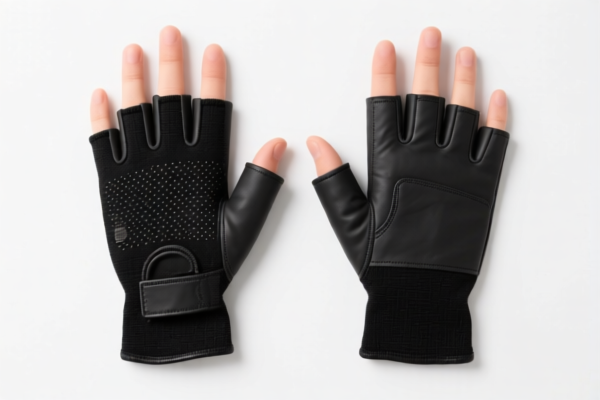
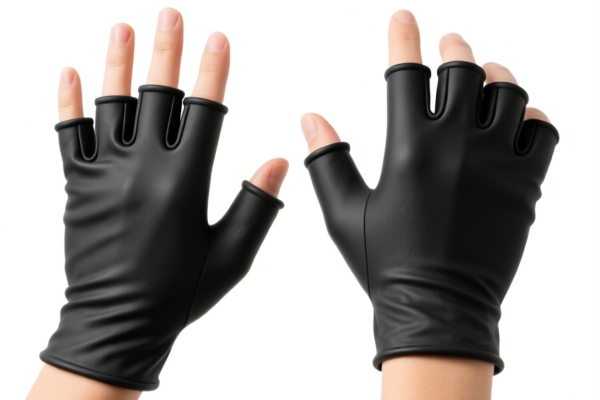
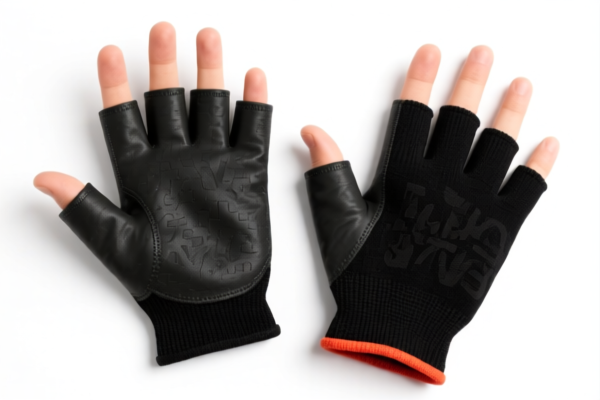
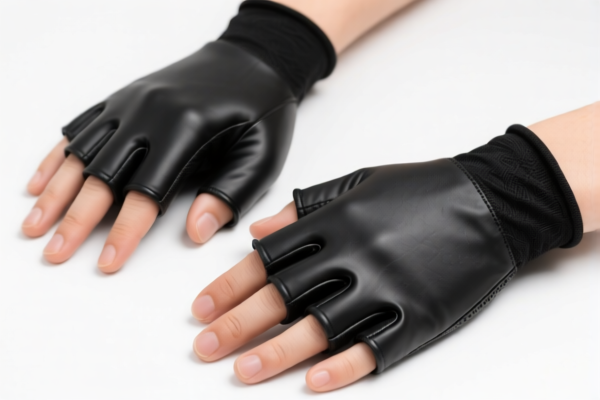
AI Analysis
🧤 Fingerless Rubber Gloves: The Ultimate Customs Classification & Tax Guide (2026 Edition)
🌐 HS Code Reference & Customs Clearance Strategy | 2026 Latest Tariff Analysis | Professional Compliance Guide
📌 One-Stop Solution for "Fingerless Rubber Gloves" Classification, Tax Calculation, and Risk Avoidance
🖐️ 一、Product Definition & Classification Logic: Why These Specific Codes?
"Fingerless Rubber Gloves" (half-finger or open-finger gloves) are a unique category where the material (Vulcanized Rubber) and purpose (Medical vs. Daily Use) dictate the HS Code.
According to the provided , there are four distinct classification paths depending on the glove's specific usage and material composition (Rubber vs. Plastic/Artificial):
1. The "Medical/Surgical" Path (High Tax)
If your fingerless gloves are used for medical, surgical, dental, or veterinary purposes (e.g., latex surgical exam gloves without fingers for dexterity), they fall under Chapter 40.
* Logic: They are "Articles of apparel... of vulcanized rubber... of a kind used for medical... purposes."
* HS Code: 4015.12.90.00
* Why? Medical-grade rubber gloves are strictly regulated and taxed higher due to trade tensions and material specifics.
2. The "General/Non-Medical Rubber" Path (High Tax)
If the gloves are for all other purposes (e.g., household cleaning, industrial handling, fishing) and are made of vulcanized rubber, they fall under Chapter 40.
* Logic: They are "Gloves... of vulcanized rubber... Other."
* HS Code: 4015.19.51.00
* Why? Non-medical rubber gloves are still subject to the same heavy tariffs as medical ones because they are made of the same base material (vulcanized rubber) and are not exempt from Chapter 40 duties.
3. The "Disposable/Everyday Plastic" Path (Low Tax)
If the gloves are disposable (e.g., food service, light cleaning, party favors) and made of plastics (like PE/PP) rather than natural/synthetic rubber, they fall under Chapter 39.
* Logic: They are "Articles of apparel... of plastics... Other... Disposable."
* HS Code: 3926.20.40.10
* Why? Plastic gloves are considered lower-value, high-volume consumer goods. The tariff structure for plastics (Chapter 39) is significantly different and more favorable than for rubber (Chapter 40).
4. The "Reusable/Non-Disposable Plastic" Path (Low Tax)
If the gloves are made of plastics but are not disposable (e.g., reusable household cleaning gloves with a cotton lining or thick plastic), they fall under Chapter 39.
* Logic: They are "Articles of apparel... of plastics... Other... Other."
* HS Code: 3926.20.40.50
* Why? Like the disposable version, these are classified under plastics, which attract a much lower duty rate.
📦 二、HS Code & Tax Rate Matrix (2026 Latest)
| Product Type | HS Code | Material | Purpose | Base Duty | Additional Duty (China Origin) | Total Tax Rate |
|---|---|---|---|---|---|---|
| Medical/Surgical | 4015.12.90.00 |
Vulcanized Rubber | Medical/Dental/Veterinary | 14.0% | 25.0% | 39.0% |
| General/Industrial | 4015.19.51.00 |
Vulcanized Rubber | Non-Medical/General Use | 14.0% | 25.0% | 39.0% |
| Disposable Plastic | 3926.20.40.10 |
Plastics | Disposable (Light Use) | 6.5% | 0.0% | 6.5% |
| Reusable Plastic | 3926.20.40.50 |
Plastics | Non-Disposable (Household) | 6.5% | 0.0% | 6.5% |
⚠️ Critical Insight:
The difference between 39.0% and 6.5% is massive. Misclassifying a rubber glove as plastic (or vice versa) can lead to severe penalties, back taxes, and shipment delays.
- Rubber = Chapter 40 = High Tax
- Plastic = Chapter 39 = Low Tax
💰 三、Detailed Tax Clause Explanation
🎯 1. The "High Tax" Category (HS Codes: 4015.12.90.00 & 4015.19.51.00)
| Item | Detail |
|---|---|
| Base Tariff | 14.0% (Standard Most Favored Nation rate for Chapter 40) |
| Section 301 Tariff | 25.0% (Additional duty imposed on Chinese goods under US Trade Act Section 301) |
| Total Tax | 39.0% |
| Applicable To | All vulcanized rubber gloves, regardless of whether they are medical or general use. |
| Key Risk | Customs officers often scrutinize "rubber" claims. If you declare rubber but the sample is plastic, you will be fined for misclassification. |
🎯 2. The "Low Tax" Category (HS Codes: 3926.20.40.10 & 3926.20.40.50)
| Item | Detail |
|---|---|
| Base Tariff | 6.5% (Standard rate for Chapter 39 Plastic Articles) |
| Section 301 Tariff | 0.0% (Plastic gloves are generally NOT subject to the 25% Section 301 surcharge in this specific subheading) |
| Total Tax | 6.5% |
| Applicable To | Gloves made of plastic materials (PE, PP, PVC, etc.), whether disposable or reusable. |
| Key Advantage | This is the target classification for importers to minimize costs, provided the product is truly plastic and not rubber. |
🛠️ 四、Customs Clearance Best Practices (Pro Tips)
✅ 1. How to Determine Your HS Code (Step-by-Step)
| Question | Answer | Resulting HS Code |
|---|---|---|
| Is the material rubber? | Yes (Natural/Synthetic/ Vulcanized) | Go to Chapter 40 |
| No (Plastic/PE/PP/PVC) | Go to Chapter 39 | |
| If Rubber: | Is it for Medical/Dental/Vet? | 4015.12.90.00 (39% Tax) |
| Is it for General/Industrial Use? | 4015.19.51.00 (39% Tax) |
|
| If Plastic: | Is it Disposable? | 3926.20.40.10 (6.5% Tax) |
| Is it Reusable? | 3926.20.40.50 (6.5% Tax) |
✅ 2. Documentation Required
| Document | Purpose |
|---|---|
| Product Composition Report | Must explicitly state material: "100% Vulcanized Rubber" vs. "100% Polyethylene". |
| Product Photos (Close-up) | Show texture. Rubber is matte/slightly textured; Plastic is often smoother or glossy. |
| Intended Use Statement | "For Household Cleaning" vs. "For Surgical Examination". |
| Material Safety Data Sheet (MSDS) | Helps customs verify material type if questioned. |
✅ 3. Common Mistakes to Avoid
❌ Mistake 1: Calling "Rubber" Gloves "Plastic" to Save Tax
👉 Consequence: If customs tests the material and finds it is rubber, you face misclassification penalties, back payment of the 32.5% difference (39% - 6.5%), and potential seizure of goods.
👉 Solution: Be honest. If it's rubber, pay the 39%. If it's plastic, declare plastic.
❌ Mistake 2: Ignoring the "Disposable" vs. "Reusable" Distinction in Plastic
👉 Consequence: While the tax rate is the same (6.5%), incorrect sub-coding can lead to administrative delays.
👉 Solution: Use 3926.20.40.10 for thin, single-use gloves. Use 3926.20.40.50 for thicker, washable gloves.
❌ Mistake 3: Assuming All "Medical" Gloves Are Tax-Free
👉 Consequence: There is no tax exemption for medical gloves in this dataset. They are taxed at 39%.
👉 Solution: Factor the 39% cost into your pricing model.
🌍 五、Global Comparison & Strategic Advice
| Market | Recommended HS Code | Tax Rate (China Origin) | Key Certification |
|---|---|---|---|
| 🇺🇸 USA | 4015.12.90.00 / 4015.19.51.00 (Rubber)3926.20.40.10 / 3926.20.40.50 (Plastic) |
39.0% (Rubber) 6.5% (Plastic) |
FDA (if medical), CPSC |
| 🇨🇳 China | Same HS Codes | Lower (Check local catalog) | CCC (if applicable) |
| 🇪🇺 EU | Different HS Structure | Varies (Often 0-6.5%) | CE Mark (if medical) |
📌 Strategic Advice for Importers:
1. If you are selling to the US:
- If the product can be made of plastic (PE/PP) while maintaining performance, switch to plastic. The tax saving is 32.5% (39% - 6.5%).
- If the product must be rubber (e.g., high-dexterity surgical gloves), ensure you have budgeted for the 39% tariff.
2. Labeling: Clearly label products as "Vulcanized Rubber" or "Plastic" to avoid customs ambiguity.
3. Pre-Clearance: For high-volume shipments, apply for an Advance Ruling from US Customs and Border Protection (CBP) to lock in the HS code and avoid surprises.
🎯 六、Conclusion: Precision is Profit
🎯 Key Takeaway:
"Rubber is 39%, Plastic is 6.5%. Know your material, save your margin."
✅ Final Checklist:
- [ ] Material Test: Is it Rubber or Plastic?
- [ ] Use Case: Medical or General?
- [ ] Type: Disposable or Reusable?
- [ ] Select Correct HS Code from the Matrix Above.
- [ ] Prepare Documentation to Prove Material Composition.
✨ Professional Customs Clearance Starts with Accurate Classification!
💼 Don't let a 32.5% tax difference eat your profit. Get it right the first time.
Customer Reviews
About HS Code Classification
The Harmonized System (HS) is an internationally standardized nomenclature developed by the World Customs Organization (WCO) to classify traded products. Over 200 countries use the HS system as the basis for customs tariffs, trade statistics, and import/export regulations.
Each HS code follows a hierarchical structure:
- Chapter (2 digits) — Broad category of goods (e.g., Chapter 84: Machinery and Mechanical Appliances)
- Heading (4 digits) — More specific grouping within the chapter
- Subheading (6 digits) — Internationally standardized breakdown, used by all WCO member countries
- National subdivisions (8-10 digits) — Country-specific extensions for further classification, such as US HTSUS 10-digit codes
Correct HS code classification is essential for smooth customs clearance, accurate duty payment, and compliance with trade regulations. Misclassification can lead to customs delays, overpayment of duties, or penalties.
When importing from CN to US, the applicable tariff rates may include:
- Most-Favored-Nation (MFN) rate — The standard duty rate applied to WTO members
- General rate — Applied to countries without trade agreements
- Trade remedy duties — Additional tariffs such as Section 301 (anti-dumping), Section 232 (national security), or countervailing duties
The information provided on this page is for reference purposes only. For official classification, please consult with your local customs authority or a licensed customs broker.