Finished Bovine Leather Decorative Pieces
CN → US| HS Code | Tariff Rate | Origin | Destination | Doc |
|---|---|---|---|---|
| 4205008000 | 35.0% | CN | US | Official Doc |
| 4205006000 | 39.9% | CN | US | Official Doc |
Product Images
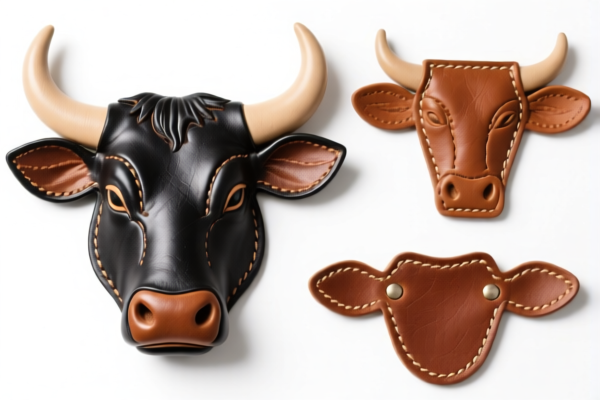
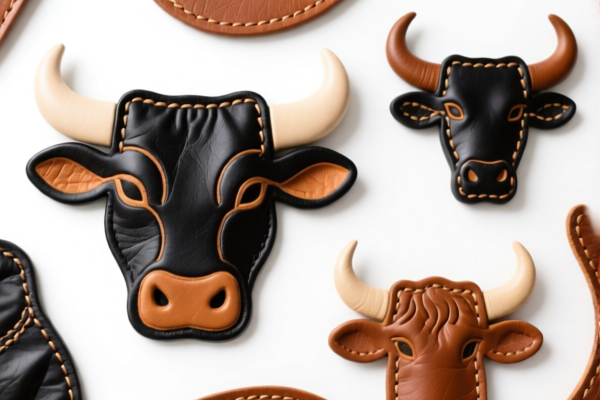
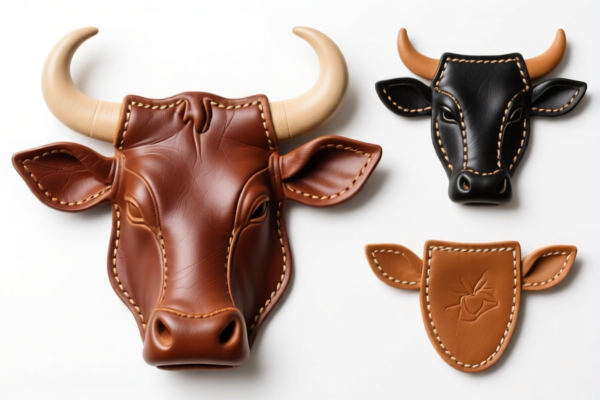
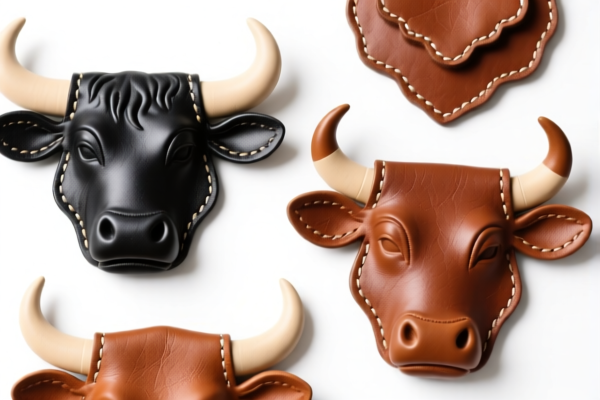
AI Analysis
🧵 Finished Bovine Leather Decorative Pieces (Artificial/Non-Functional)
🌐 HS Code Reference & Customs Clearance Guide | 2026 Latest Tariff Analysis | Professional Clearance Strategy
📌 I. Product Definition and Classification: What Exactly Are "Bovine Leather Decorative Pieces"?
Finished bovine leather decorative pieces refer to crafted items made from genuine cowhide that serve solely aesthetic purposes and do not function as functional containers, tools, or apparel. In international trade, these are generally classified under Chapter 42 (Articles of Leather; Saddlery and Harness).
The critical distinction lies in whether the item is a functional leather good (like a bag or wallet) or a purely decorative article.
⚠️ Key Differentiation:
- If the item is ornamental (e.g., wall hangings, carved plaques, decorative tassels, leather art sculptures) and not a specific functional item listed elsewhere → It falls under 4205.00.
- If the item is made from reptile leather (even if described as "leather" generally), it is excluded from general bovine leather categories and has a higher tax rate.
- Note: "Bovine" implies non-reptile. However, customs may inspect for species verification. If "reptile" is found, the HS code changes drastically.
📦 II. HS Code Classification Details (2026 Latest Tariff Authority Comparison)
Based on the provided <DATA>, only two HS codes are relevant for this query. All other potential codes (e.g., 4202 for bags) are excluded as they do not fit the "decorative" description or are outside the provided dataset scope.
| HS Code | Product Description | Applicable Scenario | Leather Type |
|---|---|---|---|
4205.00.80.00 |
Other articles of leather or of composition leather: Other: Other: Other | Standard Bovine Leather decorative items (e.g., carved panels, non-functional ornaments, leather patches) | ✅ Bovine / General |
4205.00.60.00 |
Other articles of leather or of composition leather: Other: Other: Of reptile leather | Misclassified or Actual Reptile leather decorative items (e.g., alligator skin plaques, snake skin art) | ❌ Reptile |
🔍 Critical Alert:
- The term "Bovine" in your query points directly to4205.00.80.00.
- However, if the leather is actually from a crocodile, alligator, or snake, it must be declared as4205.00.60.00. Misdeclaring reptile leather as bovine is a serious customs violation.
- Scope Constraint: Only these two codes are covered in the provided data. Functional leather goods (like belts or bags) are not included in this specific dataset analysis.
💰 III. 2026 Latest Tariff Rate Breakdown (Detailed Tax Clauses)
✅ Applicable Country: United States (US)
✅ Origin: China (CN) (Inferred from the specific "Additional Tariff" context in the data)
✅ Effective Date: Current as of 2025/2026 tariff regimes
🎯 1. 4205.00.80.00 —— Finished Bovine Leather Decorative Pieces (General)
| Item | Content |
|---|---|
| Basic Tariff (MFN) | 0.0% |
| Additional Tariff (Section 301) | +25.0% |
| Total Tax Rate | 25.0% |
| Tax Calculation | CIF Value × 25.0% |
| De Minimis Exemption | ❌ Not Applicable (Typically, goods under Section 301 are excluded from de minimis thresholds for formal entries) |
| Legal Basis | USHTS 4205.00.80.00 + Section 301 Tariff List |
📌 Explanation:
- 0% Basic: Standard Most Favored Nation (MFN) rate for general leather articles is often 0%.
- +25% Additional: This is the Section 301 tariff imposed on specific Chinese goods. Leather decorative articles are typically included in this list.
- Total 25%: This is a high-cost category for importers. The lack of a basic tariff does not mean it is tax-free.
🎯 2. 4205.00.60.00 —— Other Articles of Leather (Of Reptile Leather)
| Item | Content |
|---|---|
| Basic Tariff (MFN) | 4.9% |
| Additional Tariff (Section 301) | +25.0% |
| Total Tax Rate | 29.9% |
| Tax Calculation | CIF Value × 29.9% |
| De Minimis Exemption | ❌ Not Applicable |
| Legal Basis | USHTS 4205.00.60.00 + Section 301 Tariff List |
📌 Explanation:
- 4.9% Basic: Reptile leather goods have a higher base duty due to their luxury status.
- +25% Additional: Same Section 301 surcharge applies.
- Total 29.9%: This is 4.9% higher than the bovine equivalent.
- ⚠️ Warning: If your "Bovine" product is actually reptile leather, you pay 29.9%. If you declare reptile as bovine to save the 4.9% base, you risk penalties, seizure, and fraud charges.
🛠️ IV. Customs Clearance Practical Advice (Real-World Pitfall Guide)
✅ 1. Required Documentation Checklist
| Document | Mandatory? | Notes |
|---|---|---|
| ✅ Product Photos | ✔️ | Must clearly show the texture and type of leather. Distinguish between bovine grain and reptile scale patterns. |
| ✅ Material Declaration | ✔️ | Explicitly state "100% Bovine Leather" or "Alligator Leather". |
| ✅ Function Statement | ✔️ | State: "Decorative item, no functional use (not a bag, belt, or wallet)." |
| ✅ Commercial Invoice | ✔️ | Value must reflect the CIF price accurately. |
| ✅ HS Code Justification | ✔️ | Provide reasoning for 4205.00.80.00 vs. 4205.00.60.00. |
✅ 2. Declaration Strategy (Key Mantra)
🔥 "Bovine is 25%, Reptile is 29.9%. Fake Bovine is Risky!"
| Scenario | Correct Declaration | Wrong Practice |
|---|---|---|
| Standard Cowhide Art | 4205.00.80.00 |
Declaring as "Fabric Decor" → Smuggling Risk |
| Genuine Reptile Art | 4205.00.60.00 |
Declaring as "Bovine" → Penalty + Back Taxes |
| Functional Leather Bag | Not in Dataset | Trying to force into 4205.00 → Misclassification |
✅ 3. Special Handling Tips
| Situation | Recommendation |
|---|---|
| Mixed Materials | If the decorative piece has non-leather parts (e.g., wood frame, metal studs), ensure the leather value is separable. The HS code is based on the essential character (leather). |
| Composition Leather | The term "Composition leather" is also under 4205. If it's artificial, it still falls under 4205.00.80.00 if it's bovine-type, but ensure it's not classified as "Textile" (Chapter 59) if it has a fabric base. |
| CITES Compliance | If there is any doubt about reptile leather, check for CITES permits. Reptile leather often requires international wildlife trade certificates, even for decorative items. |
🌍 V. Global Market Comparison (2026 Latest)
| Country/Region | Recommended HS Code | Tariff (China Origin) | Certification | Notes |
|---|---|---|---|---|
| 🇺🇸 USA | 4205.00.80.00 |
25.0% | None specific | High Section 301 tariff. |
| 🇺🇸 USA (Reptile) | 4205.00.60.00 |
29.9% | CITES (if applicable) | Higher base duty. |
| 🇪🇺 EU | 4205 90 90 | ~4.5% | None | No Section 301 equivalent. Lower burden. |
| 🇨🇳 China | 4205.00.80.00 | ~8.5% | None | Export duty may apply depending on raw material origin. |
📌 Conclusion:
- USA imposes a significant 25% surcharge on these goods.
- EU tariffs are generally lower (~4.5%), making it a more attractive market for decorative leather goods.
- Cost Implication: Importing bovine leather decorations to the US costs 25% of the value in tax alone.
📌 VI. Common Mistakes & Pitfall Guide (Lessons Learned)
❌ Mistake 1: Declaring Reptile Leather as Bovine to Save 4.9%
👉 Consequence: Customs inspection reveals scale pattern → Seizure + Fine. The penalty can exceed 5x the value.
❌ Mistake 2: Declaring Functional Bags as "Decorative Pieces"
👉 Consequence: Misclassification. Bags are 4202, which may have different rates and documentation requirements (e.g., anti-dumping duties on certain leather goods).
❌ Mistake 3: Ignoring "Composition Leather"
👉 Consequence: If the item is made of crushed leather powder + binder, it is still 4205, but ensure it's not classified as Plastic Articles (3926) if the leather content is minimal.
✅ Correct Practice:
"Finished decorative art panel, 100% Full Grain Bovine Leather, non-functional, for wall hanging. HS Code: 4205.00.80.00."
🎯 VII. Conclusion: Professional Declaration, Save Costs, Avoid Risks!
🎯 Remember the Mantra:
🔹 "Bovine = 25%, Reptile = 29.9%.
🔹 "Be Honest on Species, Avoid the Fraud Penalty."
🔹 "Decorative = 4205, Functional = 4202. Don't Mix Them Up!"
📌 Pro Tip:
If you are importing small quantities for personal use, check the de minimis threshold ($800 USD). However, Section 301 goods often lose de minimis exemption. Always verify with your customs broker.
📣 Immediate Action:
📞 Contact Your Customs Broker + Provide Clear Photos of Leather Texture + Verify Species
🚀 Ensure Accurate HS Classification to avoid delays at US Customs!
✨ Professional Clearance Starts with Precise Classification!
💼 Every Percentage Point of Tax Affects Your Profit Margin!
Customer Reviews
About HS Code Classification
The Harmonized System (HS) is an internationally standardized nomenclature developed by the World Customs Organization (WCO) to classify traded products. Over 200 countries use the HS system as the basis for customs tariffs, trade statistics, and import/export regulations.
Each HS code follows a hierarchical structure:
- Chapter (2 digits) — Broad category of goods (e.g., Chapter 84: Machinery and Mechanical Appliances)
- Heading (4 digits) — More specific grouping within the chapter
- Subheading (6 digits) — Internationally standardized breakdown, used by all WCO member countries
- National subdivisions (8-10 digits) — Country-specific extensions for further classification, such as US HTSUS 10-digit codes
Correct HS code classification is essential for smooth customs clearance, accurate duty payment, and compliance with trade regulations. Misclassification can lead to customs delays, overpayment of duties, or penalties.
When importing from CN to US, the applicable tariff rates may include:
- Most-Favored-Nation (MFN) rate — The standard duty rate applied to WTO members
- General rate — Applied to countries without trade agreements
- Trade remedy duties — Additional tariffs such as Section 301 (anti-dumping), Section 232 (national security), or countervailing duties
The information provided on this page is for reference purposes only. For official classification, please consult with your local customs authority or a licensed customs broker.