Fir Column
CN → US| HS Code | Tariff Rate | Origin | Destination | Doc |
|---|---|---|---|---|
| 4407120058 | 35.0% | CN | US | Official Doc |
| 4407120059 | 35.0% | CN | US | Official Doc |
| 4409100500 | 38.2% | CN | US | Official Doc |
| 4409105000 | 35.0% | CN | US | Official Doc |
Product Images
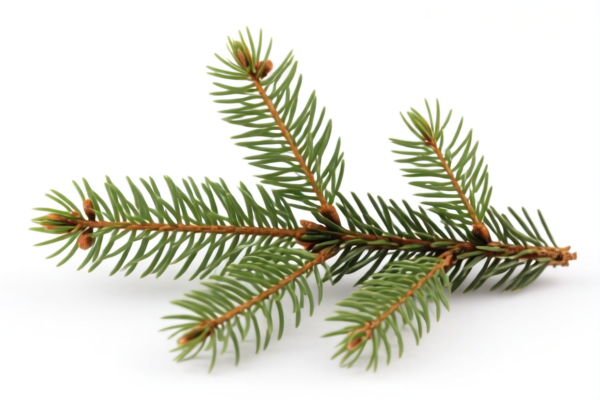
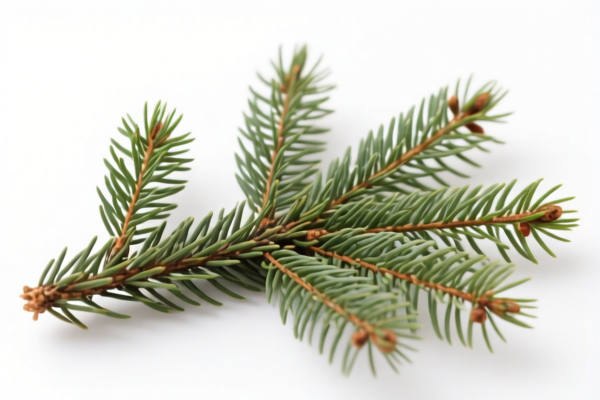
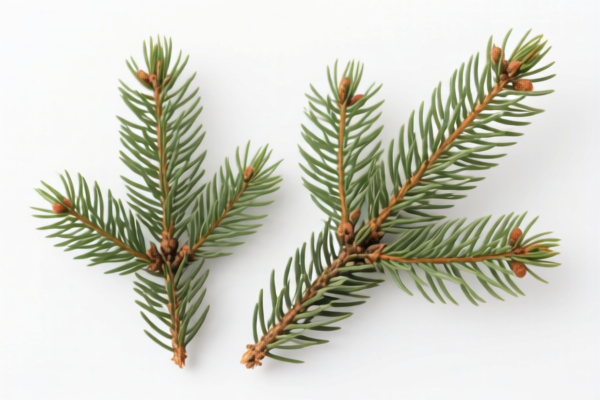

AI Analysis
🌲 Fir Columns & Timber Components (Abies spp.)
🌐 HS Code Reference & Customs Clearance Guide | 2026 Latest Tariff Analysis | Professional Clearance Strategy
📌 I. Product Definition & Classification: Understanding "Fir"
In international trade, "Fir" refers specifically to timber from the genus Abies. When users search for "Fir Column," they are typically importing processed wood products derived from this coniferous species. These products fall strictly under Chapter 44 of the Harmonized System (Wood and articles of wood).
The classification depends heavily on processing depth: * Rough/Sawn Timber: Basic sawn wood (thickness > 6mm). * Continuously Shaped Wood: Wood with tongues, grooves, moldings, or specific profile shaping along edges/ends.
⚠️ Key Distinction:
- If the "column" is a structural post that is simply cut to length but not continuously shaped (tongued/grooved), it falls under 4407.12.
- If the "column" (or molding/trim) has continuous shaping (molded, rounded, chamfered, V-jointed) along its length, it falls under 4409.10.
- Do not confuse "Fir" with other softwoods like Pine or Spruce if the species is specifically Abies.
📦 II. HS Code Classification Details (2026 Latest Tariff Authority)
Based on the provided , here are the precise classifications for Fir-related products:
| HS Code | Product Description | Application Scenario | Processing Level |
|---|---|---|---|
4407.12.00.58 |
Sawn wood, thickness > 6mm; Fir (Abies spp.) | Rough sawn timber; structural posts, beams not yet shaped for finish. | ⛓️ Rough/Sawn Only |
4407.12.00.59 |
Sawn wood, thickness > 6mm; Fir (Abies spp.) | Other treated/processed sawn wood (not rough). | ⛓️ Sawn/Treated |
4409.10.05.00 |
Continuously shaped wood; Coniferous | Fir: Shaped along ends (e.g., tongue-and-groove planks, specific molding). | 📐 Continuously Shaped |
4409.10.50.00 |
Continuously shaped wood; Coniferous | Other: Wood moldings (general profile, not end-shaped). | 📐 Continuously Shaped |
🔍 Critical Note:
- The term "Column" in wood trade can be ambiguous.
- If it is a structural column (plain rectangular or round post), it is likely4407.12.
- If it is a decorative column/molding with profiled edges, it is likely4409.10.
- Species Verification: Must be confirmed as Abies (Fir). If it is Spruce (Picea), it stays in 4407.12 but may have different specific codes. If it is Pine, it falls under 4407.11.
💰 III. 2026 Latest Tariff Rate Breakdown (US Import from China)
✅ Applicable Country: United States (US)
✅ Origin: China (CN)
✅ Effective Date: Current 2026 Tariff Schedule (Includes Section 301 & IEEPA Surcharges)
🎯 1. 4407.12.00.58 — Fir Sawn Wood (Rough)
| Item | Detail |
|---|---|
| Base Tariff | 0.0% (ad valorem) |
| Section 301 Surcharge | +25.0% |
| Total Tariff Rate | 25.0% |
| Tax Calculation | CIF Value × 25% |
| De Minimis Exemption | ❌ Not Eligible (High tax rate excludes it from de minimis) |
| Legal Authority | HTSUS 4407.12.00.58 → USITC Footnote 9903.88.01 |
📌 Explanation:
- Base Rate: 0% for rough coniferous sawn wood.
- Surcharge: 25% applies due to Section 301 tariffs on Chinese wood products.
- Net Impact: 25% effective duty.
🎯 2. 4407.12.00.59 — Fir Sawn Wood (Other)
| Item | Detail |
|---|---|
| Base Tariff | 0.0% (ad valorem) |
| Section 301 Surcharge | +25.0% |
| Total Tariff Rate | 25.0% |
| Tax Calculation | CIF Value × 25% |
| De Minimis Exemption | ❌ Not Eligible |
| Legal Authority | HTSUS 4407.12.00.59 → USITC Footnote 9903.88.01 |
📌 Note: Same as above. Whether "Rough" or "Other," the base rate is 0%, but the 25% surcharge makes the total 25%.
🎯 3. 4409.10.05.00 — Fir Wood, Continuously Shaped (End-Shaped)
| Item | Detail |
|---|---|
| Base Tariff | 3.2% (ad valorem) |
| Section 301 Surcharge | +25.0% |
| Total Tariff Rate | 28.2% |
| Tax Calculation | CIF Value × 28.2% |
| De Minimis Exemption | ❌ Not Eligible |
| Legal Authority | HTSUS 4409.10.05.00 → USITC Footnote 9903.88.01 |
📌 Explanation:
- Base Rate: 3.2% for specifically shaped fir wood (ends shaped).
- Surcharge: 25% applies.
- Net Impact: 28.2% effective duty. This is higher than rough sawn wood due to the base rate.
🎯 4. 4409.10.50.00 — Wood Moldings (Other Coniferous)
| Item | Detail |
|---|---|
| Base Tariff | 0.0% (ad valorem) |
| Section 301 Surcharge | +25.0% |
| Total Tariff Rate | 25.0% |
| Tax Calculation | CIF Value × 25% |
| De Minimis Exemption | ❌ Not Eligible |
| Legal Authority | HTSUS 4409.10.50.00 → USITC Footnote 9903.88.01 |
📌 Note: Despite being "shaped" (moldings), the base rate is 0%, resulting in a 25% total. However, ensure it fits the "Other" category and not the end-shaped
4409.10.05.00which has a 28.2% rate.
🛠️ IV. Customs Clearance Practical Advice (Avoiding Pitfalls)
✅ 1. Documentation Checklist (Mandatory)
| Document | Requirement | Purpose |
|---|---|---|
| Commercial Invoice | Must state "Fir (Abies spp.)" explicitly | Confirms species for correct HS Code |
| Packing List | Detail dimensions, thickness, and processing type | Distinguishes between Sawn (4407) vs. Shaped (4409) |
| Species Certificate | From supplier or lab | Proves wood is Abies (Fir) and not Pine/Spruce |
| ISPM 15 Mark | Heat Treatment (HT) mark on pallets | Prevents quarantine issues |
| Product Photos | Clear view of cross-section and profile | Helps customs distinguish "Rough" vs. "Molded" |
| Contract/PO | Specify "Fir" and processing level | Legal basis for declared value and description |
✅ 2. Classification Strategy (Key Mnemonic)
🔥 "Sawn is 4407, Shaped is 4409. Rough is 0% Base, Shaped Ends is 3.2% Base. All pay 25% Extra!"
| Scenario | Correct HS Code | Effective Rate | Why? |
|---|---|---|---|
| Plain Fir posts (uncut edges) | 4407.12.00.58 |
25.0% | Base 0% + 25% surcharge |
| Planed but not profiled Fir boards | 4407.12.00.59 |
25.0% | Base 0% + 25% surcharge |
| Fir planks with tongue/groove on ends | 4409.10.05.00 |
28.2% | Base 3.2% + 25% surcharge |
| Fir decorative moldings (generic profile) | 4409.10.50.00 |
25.0% | Base 0% + 25% surcharge |
✅ 3. Common Errors & Consequences
❌ Error 1: Declaring "Fir Columns" as "General Wood" (e.g., 4407.10)
👉 Consequence: Misclassification penalty + possible audit. Species must be specific (Abies).
❌ Error 2: Confusing "Sawn" with "Continuously Shaped"
👉 Consequence: If you declare molded wood as 4407 (0% base), you underpay the 3.2% base rate → Back taxes + interest. If you declare rough wood as 4409, you overpay → Lost money.
❌ Error 3: Ignoring the 25% Section 301 Surcharge
👉 Consequence: Unexpected cost of 25% on CIF value. All listed items in carry this surcharge.
✅ Correct Declaration Example:
"Fir (Abies) Sawn Timber, Rough, Heat Treated, ISPM 15 Compliant, for Structural Use. HS Code: 4407.12.00.58."
🌍 V. Global Market Comparison (2026)
| Market | Recommended HS Code | Tariff Rate (China Origin) | Notes |
|---|---|---|---|
| 🇺🇸 USA | 4407.12.00.58 / 4409.10.x |
25% - 28.2% | High surcharge (25%) applies to all. |
| 🇨🇳 China | 4407.12.00.58 |
0% - 5% | Lower base rates, no Section 301. |
| 🇪🇺 EU | 4407.12 / 4409.10 |
0% - 12% | Check for EUTR compliance (timber legality). |
| 🇨🇦 Canada | 4407.12 |
0% | CUSMA preferential rates may apply if originating. |
📌 Conclusion:
- The USA market is the most expensive due to the flat 25% additional tariff on Chinese wood products.
- Always verify the processing level (Sawn vs. Shaped) to avoid misclassification penalties.
- "Fir" must be explicitly stated as Abies to ensure correct subheading.
📌 VI. Conclusion: Precise Classification Saves Costs!
🎯 Remember the Rules:
🔹 "Rough Fir: 25% Total. Shaped Ends: 28.2% Total. Other Moldings: 25% Total."
🔹 "HS Code 4407 for Sawn, 4409 for Shaped."
🔹 "Don't forget the 25% Surcharge on all Chinese-origin wood!"
📌 Pro Tip:
If your "Fir Columns" are part of a prefabricated house kit, ensure all components are declared correctly. Missing details on the invoice can lead to customs holds and demurrage fees.
📣 Immediate Action:
📞 Confirm species with supplier (Abies).
📄 Define processing type (Rough vs. Molded).
🚀 Apply for Pre-Ruling if shipment value is high to secure classification certainty.
✨ Professional clearance, accurate classification, lower costs!
💼 Every percent counts in international trade.
Customer Reviews
About HS Code Classification
The Harmonized System (HS) is an internationally standardized nomenclature developed by the World Customs Organization (WCO) to classify traded products. Over 200 countries use the HS system as the basis for customs tariffs, trade statistics, and import/export regulations.
Each HS code follows a hierarchical structure:
- Chapter (2 digits) — Broad category of goods (e.g., Chapter 84: Machinery and Mechanical Appliances)
- Heading (4 digits) — More specific grouping within the chapter
- Subheading (6 digits) — Internationally standardized breakdown, used by all WCO member countries
- National subdivisions (8-10 digits) — Country-specific extensions for further classification, such as US HTSUS 10-digit codes
Correct HS code classification is essential for smooth customs clearance, accurate duty payment, and compliance with trade regulations. Misclassification can lead to customs delays, overpayment of duties, or penalties.
When importing from CN to US, the applicable tariff rates may include:
- Most-Favored-Nation (MFN) rate — The standard duty rate applied to WTO members
- General rate — Applied to countries without trade agreements
- Trade remedy duties — Additional tariffs such as Section 301 (anti-dumping), Section 232 (national security), or countervailing duties
The information provided on this page is for reference purposes only. For official classification, please consult with your local customs authority or a licensed customs broker.