Fir Posts
CN → US| HS Code | Tariff Rate | Origin | Destination | Doc |
|---|---|---|---|---|
| 4407120058 | 35.0% | CN | US | Official Doc |
| 4407120059 | 35.0% | CN | US | Official Doc |
Product Images
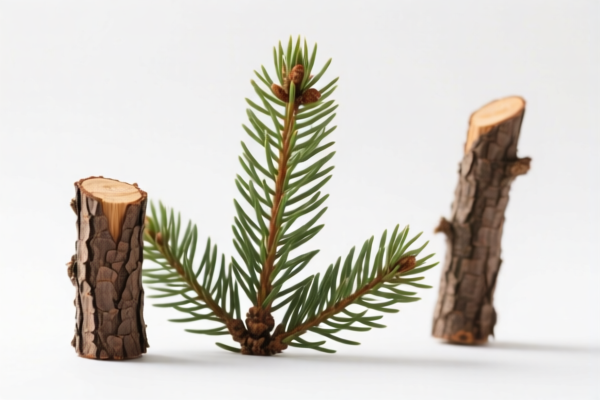
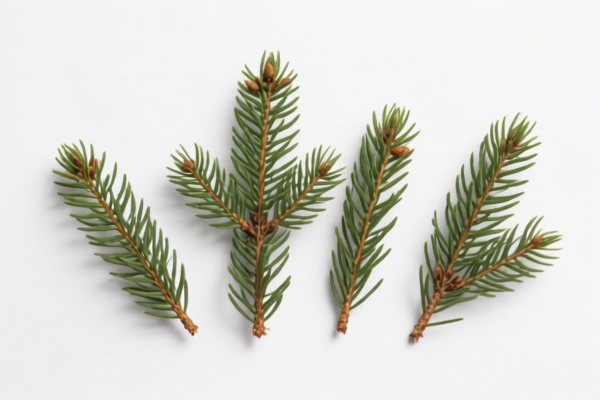
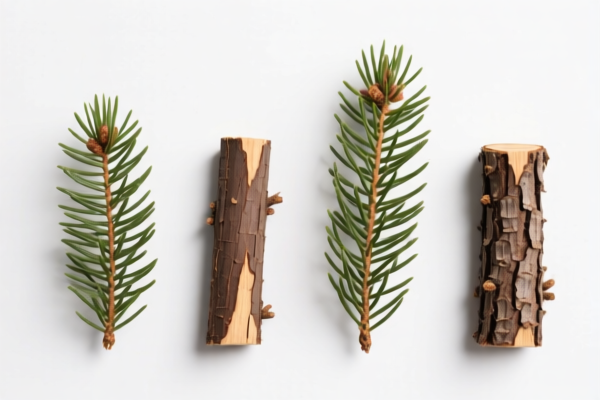
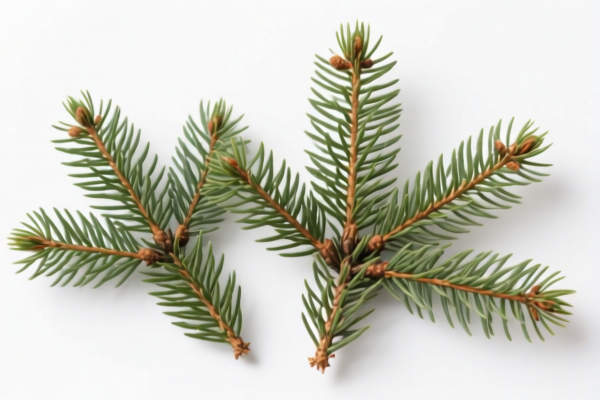
AI Analysis
🌲 Fir Posts (Wood for Construction & Carpentry)
🌐 HS Code Reference & Customs Clearance Guide | 2026 Latest Tariff Analysis | Professional Clearance Strategy
📌 I. Product Definition & Classification: What Exactly Are "Fir Posts"?
Fir posts are wooden posts primarily made from the Abies genus (Fir). In international trade, these are classified as "Sawn or Chipped Wood" that has been processed (sliced, peeled, planed, sanded, or end-jointed) with a thickness exceeding 6 mm.
For customs purposes, "Fir Posts" are not classified as furniture or finished construction materials (like framed walls), but rather as raw/semi-processed timber components. The critical distinction lies in the surface treatment and precision:
-
Rough Posts (未加工/粗加工):
- Posts that have been cut to size but retain a rough, natural surface.
- Not planed, sanded, or treated for aesthetic finish.
- Primary Use: Structural supports, fencing, pallets, general construction frameworks.
- HS Code Category:
4407.12.00.58
-
Other/Processed Posts (其他/精加工):
- Posts that may be planed, sanded, or end-joined but do not fall into the specific "Rough" category, or are treated/processed beyond simple sawing.
- Often used for higher-grade carpentry, furniture frames, or decorative structural elements.
- HS Code Category:
4407.12.00.59
⚠️ Key Distinction Point:
- If the surface is rough, unplaned, and untreated →归入 4407.12.00.58
- If the surface is planed, sanded, or otherwise processed (but not finished furniture) →归入 4407.12.00.59
📦 II. HS Code Classification Details (2026 Latest Tariff Authority)
| HS Code | Product Description | Application Scenario | Surface Treatment |
|---|---|---|---|
4407.12.00.58 |
Fir (Abies spp.): Rough | Structural beams, fence posts, pallet wood, rough carpentry | ✅ No planing/sanding; natural rough surface |
4407.12.00.59 |
Fir (Abies spp.): Other | Sanded posts, planed timber, end-joined boards, higher-grade structural wood | ✅ Planed, sanded, or treated |
🔍 Important Reminder:
- Thickness > 6mm: Both codes require wood thickness to exceed 6 mm.
- Coniferous: Must be from Abies (Fir) or Picea (Spruce). If it's Pine (Pinus), different codes apply.
- "Rough" Definition: In customs terms, "rough" means not further worked than sawn or chipped. If it’s planed, it moves to "Other."
💰 III. 2026 Latest Tariff Rate Details (Including Surcharges & Policy Add-ons)
✅ Applicable Country: United States (US)
✅ Origin: China (CN)
✅ Effective Time: 2025 November 10 onwards (including subsequent imports)
🎯 1. 4407.12.00.58 —— Fir Posts: Rough (Unplaned)
| Item | Content |
|---|---|
| Base Tariff | 0.0% (ad valorem) |
| Surtax (Section 301) | +25.0% |
| Total Tariff | 25.0% |
| Tax Calculation | CIF Value × 25% |
| De Minimis Eligibility | ❌ No (High risk of detention if < $800) |
| Legal Basis Path | USITC:4407.12.00.58 → SECTION301:FOOTNOTE:9903.88.01 |
📌 Explanation:
- Base Tariff: 0% for most coniferous sawn wood.
- 25% Surtax: Applied under US Trade Act Section 301 against Chinese goods.
- Total Cost: Importers pay 25% duty on the CIF value.
- Risk: High scrutiny for agricultural/wood products due to phytosanitary risks.
🎯 2. 4407.12.00.59 —— Fir Posts: Other (Planed/Sanded)
| Item | Content |
|---|---|
| Base Tariff | 0.0% (ad valorem) |
| Surtax (Section 301) | +25.0% |
| Total Tariff | 25.0% |
| Tax Calculation | CIF Value × 25% |
| De Minimis Eligibility | ❌ No |
| Legal Basis Path | USITC:4407.12.00.59 → SECTION301:FOOTNOTE:9903.88.01 |
📌 Note:
- Same tariff rate as "Rough" posts because both fall under the same Section 301 penalty category.
- The distinction between "Rough" and "Other" affects customs valuation and market price, but not the tariff rate in this specific 2026 context.
🛠️ IV. Customs Clearance Practical Advice (Real-World Pitfall Guide)
✅ 1. Required Documents Checklist (Non-Negotiable)
| Document | Required | Explanation |
|---|---|---|
| ✅ Phytosanitary Certificate | ✔️ Mandatory | Issued by origin country’s agricultural authority. Proves wood is pest-free. Without this, shipment will be rejected. |
| ✅ ISPM 15 Marking | ✔️ If Wooden Packaging | If pallets/crates are wood, they must bear the heat-treated (HT) or fumigated (MB) stamp. |
| ✅ Commercial Invoice | ✔️ | Must clearly state: "Sawn Wood, Fir, Abies Spp., Thickness > 6mm". Avoid vague terms like "Wooden Parts." |
| ✅ Packing List | ✔️ | Detail dimensions, weight, and number of pieces. |
| ✅ Bill of Lading | ✔️ | Consistent with invoice and packing list. |
| ✅ Treatment Certificate | ✔️ | If wood is treated for fire/pest resistance, provide proof. |
✅ 2. Declaration Tips (Key Mantra)
🔥 "Rough vs. Planed: Declare Surface! IPM 15: Must Be Marked! Tax 25%: Plan Ahead!"
| Situation | Correct Declaration | Wrong Practice |
|---|---|---|
| Rough, unplaned posts | 4407.12.00.58 |
Declaring as "Furniture Parts" → Higher duty + delays |
| Planed/sanded posts | 4407.12.00.59 |
Declaring as "Rough" → Misclassification penalty |
| Wooden pallets used | ISPM 15 HT mark visible | Using untreated wood pallets → Quarantine/Return |
| Mixed wood types | Separate by species | Mixing Fir with Pine → Customs reclassification risk |
✅ 3. Special Cases Handling
| Case | Handling Advice |
|---|---|
| Wood Treatment | If wood is chemically treated (preservative), declare as "Treated Wood" and provide MSDS. May trigger additional EPA regulations. |
| Furniture Parts | If posts are part of a pre-assembled furniture kit, they may be classified under HS 9403 (Furniture), but standalone posts remain HS 4407. |
| Small Quantity (< $800) | Do NOT use De Minimis (Section 321). Section 301 goods are excluded. You must file formal entry and pay 25% duty. |
| Origin Misdeclaration | If wood is from Canada/Mexico, provide Certificate of Origin to avoid Section 301 tax. Do not falsely declare CN origin as non-CN. |
🌍 V. Global Market Customs Comparison (2026 Latest)
| Country/Region | Recommended HS Code | Tariff (China Origin) | Certification | Remarks |
|---|---|---|---|---|
| 🇺🇸 USA | 4407.12.00.58/59 |
25% (Section 301) | Phytosanitary + ISPM 15 | High tariff risk; strict phytosanitary |
| 🇨🇳 China | 4407.12.00.58/59 |
0% - 5% (Import) | N/A | Domestic trade common |
| 🇪🇺 EU | 4407.12.00.58/59 |
0% (Most Favored Nation) | FLEGT (if tropical) | No Section 301 equivalent, but strict wood legality |
| 🇬🇧 UK | 4407.12.00.58/59 |
0% - 5% | UK Woodland Assurance | Post-Brexit rules apply |
| 🇨🇦 Canada | 4407.12.00.58/59 |
0% (CUSMA) | N/A | No Section 301; trade-friendly |
📌 Conclusion:
- USA is the only major market imposing a 25% surcharge on Chinese fir wood.
- Phytosanitary compliance is the biggest barrier across all markets.
- Consider supply chain diversification (e.g., sourcing from Canada/EU) to avoid US tariffs.
📌 VI. Common Mistakes & Pitfall Guide (Blood & Tears Lessons)
❌ Mistake 1: Declaring "Rough" posts as "Planed" or vice versa
👉 Consequence: Customs may reject or reclassify, leading to back-taxes + penalties.
❌ Mistake 2: Using untreated wooden pallets without ISPM 15 mark
👉 Consequence: Shipment blocked at port for fumigation or destruction. Cost: $5,000+ per container.
❌ Mistake 3: Not providing Phytosanitary Certificate
👉 Consequence: Rejection/Return. Wood products are high-risk for pests. No certificate = No entry.
❌ Mistake 4: Using De Minimis ($800 threshold) for Section 301 goods
👉 Consequence: Penalty + Back Tax. Section 301 goods are excluded from de minimis. CBP will assess 25% duty + fines.
✅ Correct Approach:
"Sawn Wood, Fir (Abies Spp.), Thickness > 6mm, Rough/Planed, Phytosanitary Certified, ISPM 15 Pallets, Origin: China"
🎯 VII. Conclusion: Professional Declaration Saves Money!
🎯 Remember the Mantra:
🔹 "Phyto Cert: Must Have! ISPM 15: Must Mark! Tax 25%: Plan Ahead!"
🔹 "Rough vs. Planed: Choose Correctly! De Minimis: Not Allowed!"
📌 Pro Tip:
If your fir posts are originally from Canada, Mexico, or the EU, you can claim Free Trade Agreement (CUSMA/UEU) benefits, reducing tariffs to 0%.
Recommend applying for an Advance Ruling if unsure about "Rough" vs. "Other" classification.
📣 Immediate Action:
📞 Contact a licensed customs broker + Provide Phytosanitary Cert + Verify ISPM 15 Marking
🚀 Ensure smooth clearance, avoid port delays, and maximize profit margins!
✨ Professional Clearance Starts with Accurate Classification!
💼 Every Percent Saved on Tariffs is Pure Profit!
Customer Reviews
About HS Code Classification
The Harmonized System (HS) is an internationally standardized nomenclature developed by the World Customs Organization (WCO) to classify traded products. Over 200 countries use the HS system as the basis for customs tariffs, trade statistics, and import/export regulations.
Each HS code follows a hierarchical structure:
- Chapter (2 digits) — Broad category of goods (e.g., Chapter 84: Machinery and Mechanical Appliances)
- Heading (4 digits) — More specific grouping within the chapter
- Subheading (6 digits) — Internationally standardized breakdown, used by all WCO member countries
- National subdivisions (8-10 digits) — Country-specific extensions for further classification, such as US HTSUS 10-digit codes
Correct HS code classification is essential for smooth customs clearance, accurate duty payment, and compliance with trade regulations. Misclassification can lead to customs delays, overpayment of duties, or penalties.
When importing from CN to US, the applicable tariff rates may include:
- Most-Favored-Nation (MFN) rate — The standard duty rate applied to WTO members
- General rate — Applied to countries without trade agreements
- Trade remedy duties — Additional tariffs such as Section 301 (anti-dumping), Section 232 (national security), or countervailing duties
The information provided on this page is for reference purposes only. For official classification, please consult with your local customs authority or a licensed customs broker.