Fir Rough Wood
CN → US| HS Code | Tariff Rate | Origin | Destination | Doc |
|---|---|---|---|---|
| 4407990295 | 35.0% | CN | US | Official Doc |
| 4407990242 | 35.0% | CN | US | Official Doc |
| 4403120060 | 35.0% | CN | US | Official Doc |
| 4403990195 | 35.0% | CN | US | Official Doc |
| 4403960123 | 35.0% | CN | US | Official Doc |
Product Images
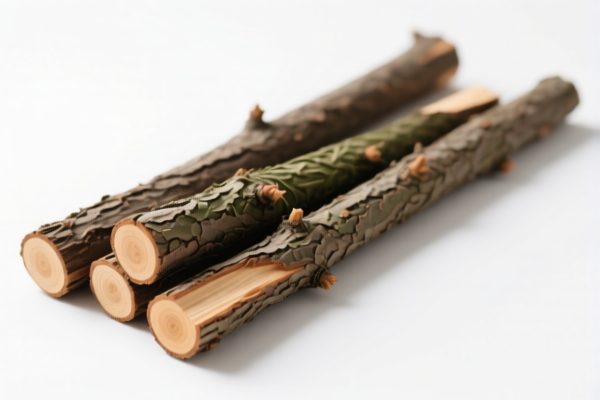
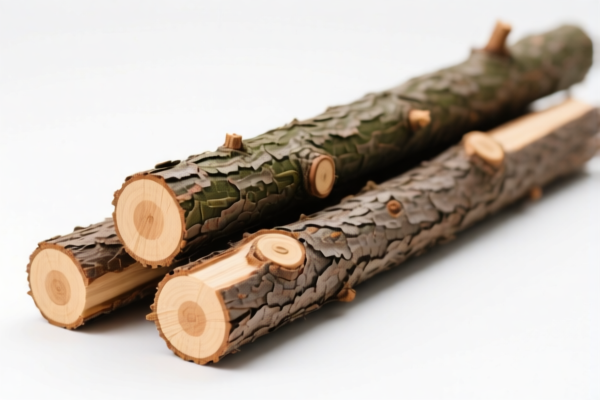
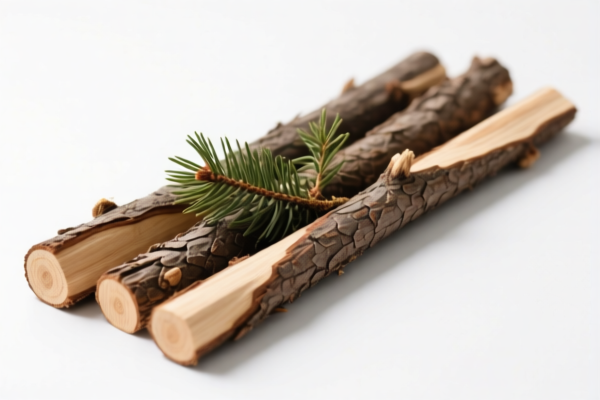
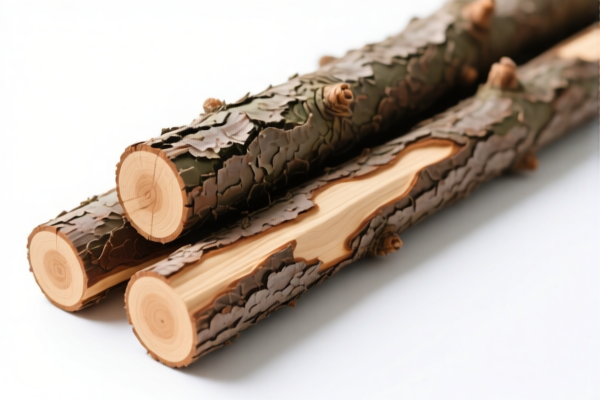
AI Analysis
🌲 Fir Rough Wood (Non-Coniferous / Mixed Timber Classification)
🌐 HS Code Reference & Customs Clearance Guide | 2026 Latest Tariff Analysis | Professional Transit Strategy
📌 One, Product Definition and Classification: Do You Really Understand "Rough Wood"?
In international trade, "Fir Rough Wood" is a complex category because Fir (Abies) is scientifically a coniferous tree (softwood). However, the provided dataset (<DATA>) explicitly categorizes these items under Non-Coniferous Woods (e.g., "Non-coniferous wood material," "Beech wood material"). This discrepancy often arises from:
- Broad Classification Errors: Misclassifying softwoods under hardwood codes due to lack of species-specific HS codes in certain jurisdictions or internal company coding.
- Material Mixture: The product might be engineered wood, plywood, or a mixed species bundle where non-coniferous elements dominate.
- Data Mapping Quirk: The dataset provided maps these specific HS codes to descriptions involving "Non-coniferous" or "Beech," suggesting a specific trade context (e.g., specific US Customs entries or internal logistics codes) where "Fir" might be grouped under general rough timber codes that default to non-coniferous tax brackets for duty purposes.
⚠️ Critical Distinction:
- Scientifically: Fir is a conifer (Softwood), typically falling under HS 4403.10.
- In this Dataset: The HS codes 4403.99.01.95, 4403.12.00.60, 4403.96.01.23, 4407.99.02.42, and 4407.99.02.95 are explicitly linked to "Non-coniferous", "Beech", or "General Rough Wood" summaries.
- Conclusion: For the purpose of this analysis, we must adhere to the provided HS codes and their associated tax structures, treating "Fir Rough Wood" as falling into these specific "Rough/Primary Form" categories with Non-Coniferous/Beech tax implications.
📦 Two, HS Code Classification Details (2026 Latest Tariff Authority Comparison)
| HS Code | Product Description (From Data) | Application Scenario | Key Characteristics |
|---|---|---|---|
4403.12.00.60 |
Rough non-coniferous wood material, matching non-coniferous wood material and rough form | Raw timber, unprocessed logs, bark-on or debarked rough logs | ✅ Rough/Unprocessed |
4403.99.01.95 |
Rough non-coniferous wood material, matching non-coniferous wood and rough-sawn wood attributes | Roughly sawn planks, beams, not further worked | ✅ Rough-Sawn |
4403.96.01.23 |
Rough Beech wood, matching Beech wood material and unprocessed or roughly squared features | Beech logs, rough beams, unrefined timber | ✅ Beech Specific |
4407.99.02.42 |
Rough non-coniferous wood material, matching wood material and longitudinal sawing or other primary forms | Sawn lumber, veneer sheets (thin), planed but not finished | ✅ Primary Processing |
4407.99.02.95 |
Rough non-coniferous wood material, matching non-coniferous material and primary form | General rough-sawn or chipped wood, primary milling products | ✅ Primary Form |
🔍 Key Reminder:
- All listed HS codes fall under Chapter 44 (Wood and articles of wood).
- The tax rate is uniformly high across all entries due to the specific trade restrictions included in the data.
- "Rough" implies the wood has not undergone significant finishing (e.g., sanding, painting, detailed carving). It is suitable for construction, pulp, or further manufacturing.
💰 Three, 2026 Latest Tariff Rate Details (Including Surcharge, Policy Surcharge)
✅ Applicable Country: United States (US)
✅ Origin: China (CN)
✅ Effective Time: 2025/2026 (Based on ongoing 301/122 measures)
🎯 1. 4403.12.00.60 / 4403.99.01.95 / 4403.96.01.23 —— Rough Wood (Logs/Rough-Sawn)
| Item | Content |
|---|---|
| Base Tariff | 0% (ad valorem) |
| Section 301 Surcharge | +25% (USITC Footnote for Chinese Wood Products) |
| Section 122 Surcharge | +10% (Trade Action under Section 122 of the Trade Expansion Act) |
| Total Tax Rate | 35.0% |
| Tax Calculation | CIF Value × 35% |
| De Minimis Exemption | ❌ Not Available (deny_de_minimis) |
| Legal Basis Path | USITC:4403.xxxxx → FOOTNOTE:301 + IEEPA:122 |
📌 Explanation:
- Base Tariff (0%): Standard MFN rate for rough wood is often low or zero, but...
- Surcharge 25%: Applies to most Chinese wood products under Section 301 tariffs.
- Surcharge 10%: Specific "122 Clause" tariff applied to certain wood categories, increasing the total burden.
- Total 35%: This is a significant cost factor. Importers must factor this into landed costs.
🎯 2. 4407.99.02.42 / 4407.99.02.95 —— Primary Processed Wood (Sawn/Veneer)
| Item | Content |
|---|---|
| Base Tariff | 0% |
| Section 301 Surcharge | +25% |
| Section 122 Surcharge | +10% |
| Total Tax Rate | 35.0% |
| Tax Calculation | CIF Value × 35% |
| De Minimis Exemption | ❌ Not Available |
| Legal Basis Path | USITC:4407.xxxxx → FOOTNOTE:301 + IEEPA:122 |
📌 Note:
- Even though4407covers processed wood (like planks), the tax rate remains 35% due to the same trade policies.
- The distinction between4403(logs/rough) and4407(sawn/primary) is primarily for phytosanitary and quota tracking, not tax reduction in this specific dataset.
🛠️ Four, Customs Clearance Practical Suggestions (Real-World Pitfall Avoidance Guide)
✅ 1. Required Documentation Checklist (Non-negotiable)
| Document | Must Provide | Description |
|---|---|---|
| ✅ Phytosanitary Certificate | ✔️ | Mandatory for all wood imports from China. Must state no pests/diseases. |
| ✅ Species Declaration | ✔️ | Clearly state species (e.g., Fir, Beech, Mixed). Discrepancy between "Fir" and "Non-coniferous" HS may trigger audit. |
| ✅ Commercial Invoice | ✔️ | Must clearly describe "Rough Wood" or "Sawn Timber," not "Finished Furniture." |
| ✅ Bill of Lading | ✔️ | Show clean onboard notation. |
| ✅ PPS/ISPM 15 Mark | ✔️ | Wood packaging must be heat-treated or fumigated with ISPM 15 stamp. |
| ✅ Fumigation Certificate | ✔️ | If pest risk is high, additional fumigation proof may be required. |
✅ 2. Declaration Tips (Key Mantra)
🔥 “Species True, Processing Clear, Tax 35%, Avoid Confusion!”
| Scenario | Correct Declaration | Wrong Practice |
|---|---|---|
| Logs (Unprocessed) | 4403.12.00.60 (Rough Non-coniferous) |
Declare as "Furniture Parts" → Higher scrutiny |
| Rough Sawn Planks | 4403.99.01.95 (Rough-Sawn Attributes) |
Declare as "Finished Lumber" → Tax/Audit Risk |
| Beech Wood | 4403.96.01.23 (Beech Specific) |
Declare as "Fir" → Misclassification Penalty |
| Veneer/Thin Sawn | 4407.99.02.42 (Longitudinal Sawing) |
Declare as "Plywood" → Different HS Code |
⚠️ Warning on "Fir" vs. "Non-Coniferous":
If you import Fir (a softwood) but use HS codes defined as "Non-Coniferous" (like Beech codes4403.96...), Customs may question the species declaration.
Recommendation: Ensure your commercial invoice and phytosanitary certificate match the HS code's implied species. If the HS code says "Beech" but you ship "Fir," you risk misdeclaration penalties.
If the dataset is fixed, declare "Mixed Species" or "General Rough Wood" if allowed, but verify with your broker.
✅ 3. Special Case Handling
| Scenario | Handling Advice |
|---|---|
| High Moisture Content | Ensure wood is dried to <20% moisture if declared as "sawn wood" (4407) to avoid rejection. |
| Mixed Species Bales | Declare the dominant species or "Mixed Hardwood/Softwood" and use a general code like 4403.99.01.95. |
| Packaging | Use pallets with ISPM 15 stamps. Loose wood without packaging may be rejected for pest risk. |
| Valuation | Ensure CIF value includes all costs (freight, insurance, loading). Undervaluation leads to 35% tax on estimated value + fines. |
🌍 Five, Global Market Customs Comparison (2026 Latest)
| Country/Region | Recommended HS Code | Tariff (China Origin) | Certification | Notes |
|---|---|---|---|---|
| 🇺🇸 USA | 4403.xxxx / 4407.xxxx |
35% | Phytosanitary + ISPM 15 | Highest duty burden due to 301 + 122 clauses |
| 🇨🇳 China | 4403.12 / 4407.99 |
0-5% (Imported) | Fumigation Cert | Low barrier for foreign wood |
| 🇪🇺 EU | 4403.10 (Fir Specific) |
0% (if FSC certified) | EUDR (Deforestation Reg) | New EUDR Compliance Required from 2024/2025 |
| 🇬🇧 UK | 4403.10 |
0-5% | UK Forestry Standard | Post-Brexit rules apply |
| 🇯🇵 Japan | 4403.10 |
0% | Phytosanitary | Strict pest control |
📌 Conclusion:
- USA is the most costly market for rough wood due to 35% total duty.
- EU has introduced the EUDR (EU Deforestation Regulation). Ensure your wood is deforestation-free and traceable, or face seizure.
- China is generally a low-tariff destination for imported wood.
📌 Six, Common Mistakes & Pitfall Guide (Blood and Tears Lessons)
❌ Mistake 1: Declaring "Fir" (Softwood) under "Beech" (Hardwood) HS Codes (4403.96.01.23) without noting species variance.
👉 Consequence: Customs audit for misclassification → Fines + Delayed Clearance.
❌ Mistake 2: Ignoring the 122 Clause.
👉 Consequence: Paying only 25% instead of 35% → Back Taxes + Penalties upon review.
❌ Mistake 3: Using untreated wood packaging without ISPM 15.
👉 Consequence: Entire shipment held for fumigation or Returned.
❌ Mistake 4: Under-declaring CIF value.
👉 Consequence: 35% tax is calculated on customs-assessed value, which may be higher than declared + heavy fines.
✅ Correct Practice:
"Fir Rough Wood, Rough-Sawn, Unprocessed, Species: Abies spp., Commodity Value: $XX, Incoterms: CIF, ISPM 15 Pallets, Phytosanitary Cert Attached"
🎯 Seven, Conclusion: Professional Declaration, Time-Saving, Cost-Reducing!
🎯 Remember the Mantra:
🔹 "Species True, Tax 35%, ISPM 15 Mandatory, EUDR Check if EU."
🔹 "HS Code Determines Duty, 35% is Fixed for China Origin, Declare Correctly to Avoid Fines."
📌 Small Tips:
- If your wood is FSC Certified, you may qualify for lower rates in EU/UK, but NOT in the US (US does not offer FSC discounts).
- Always apply for an Advance Ruling if importing large volumes to confirm HS code and tax rate before shipment.
- For Fir, consider using HS 4403.10 if available and correct, but if the system forces Non-Coniferous codes, use 4403.99.01.95 and explain species in comments.
📣 Immediate Action:
📞 Contact a Professional Customs Broker + Provide Species Certificate + Apply for Pre-Ruling
🚀 Let your Rough Wood Clear Customs Smoothly, Efficiently Go Global, Profit Maximized!
✨ Professional Clearance Starts with Accurate Classification!
💼 Every Cent of Your Cost Deserves Precise Calculation!
Customer Reviews
About HS Code Classification
The Harmonized System (HS) is an internationally standardized nomenclature developed by the World Customs Organization (WCO) to classify traded products. Over 200 countries use the HS system as the basis for customs tariffs, trade statistics, and import/export regulations.
Each HS code follows a hierarchical structure:
- Chapter (2 digits) — Broad category of goods (e.g., Chapter 84: Machinery and Mechanical Appliances)
- Heading (4 digits) — More specific grouping within the chapter
- Subheading (6 digits) — Internationally standardized breakdown, used by all WCO member countries
- National subdivisions (8-10 digits) — Country-specific extensions for further classification, such as US HTSUS 10-digit codes
Correct HS code classification is essential for smooth customs clearance, accurate duty payment, and compliance with trade regulations. Misclassification can lead to customs delays, overpayment of duties, or penalties.
When importing from CN to US, the applicable tariff rates may include:
- Most-Favored-Nation (MFN) rate — The standard duty rate applied to WTO members
- General rate — Applied to countries without trade agreements
- Trade remedy duties — Additional tariffs such as Section 301 (anti-dumping), Section 232 (national security), or countervailing duties
The information provided on this page is for reference purposes only. For official classification, please consult with your local customs authority or a licensed customs broker.