Fir Telephone Pole
CN → US| HS Code | Tariff Rate | Origin | Destination | Doc |
|---|---|---|---|---|
| 4404100080 | 35.0% | CN | US | Official Doc |
| 4407120020 | 35.0% | CN | US | Official Doc |
| 4403240112 | 35.0% | CN | US | Official Doc |
| 4407120059 | 35.0% | CN | US | Official Doc |
| 4403230112 | 35.0% | CN | US | Official Doc |
Product Images
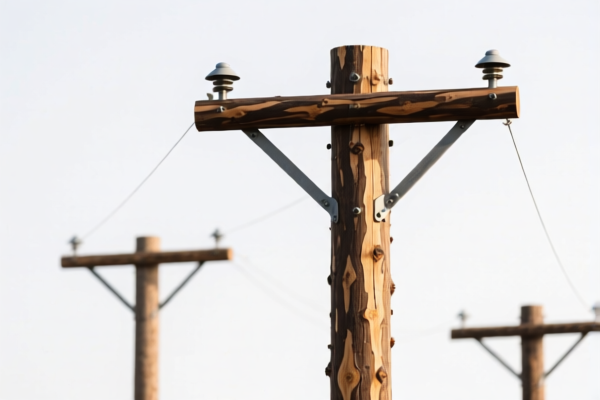
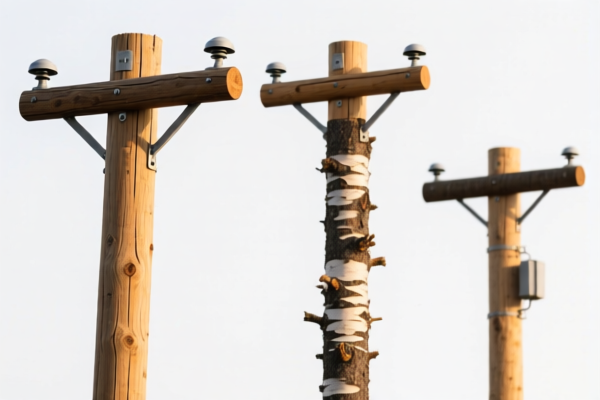
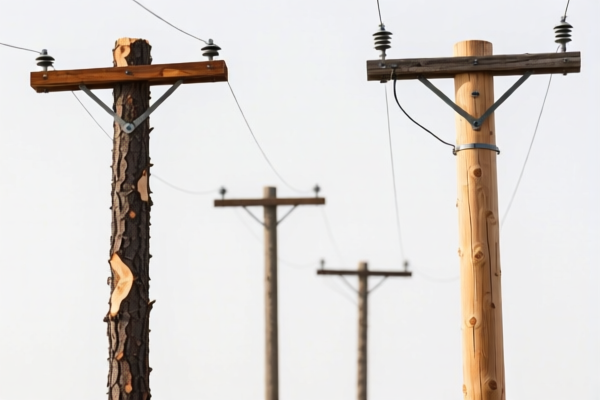
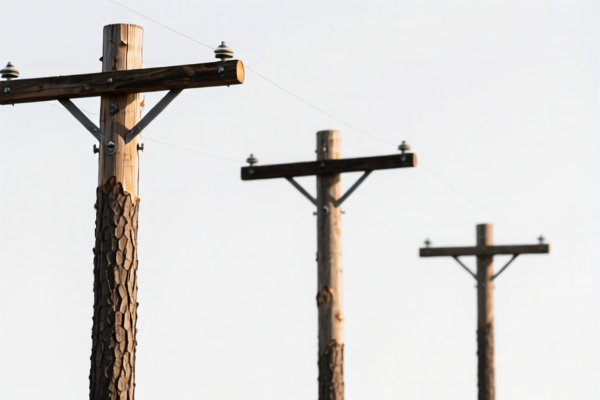
AI Analysis
🌲 Fir Telephone Poles (Spruce/Fir Wood Utility Poles)
🌐 HS Code Reference & Customs Clearance Guide | 2026 Latest Tariff Analysis | Strategic Customs Strategy
📌 I. Product Definition & Classification: Understanding Wood Utility Poles
Fir/Spruce Telephone Poles are treated timber products used primarily for electrical transmission and communication infrastructure. In international trade, these are classified based on their processing level (raw timber vs. processed lumber) and specific form (poles/piles).
Key Classification Logic: 1. Chemically Treated/Preserved: If the wood has been impregnated with preservatives, it falls under Chapter 44 heading 4403 (Wood prepared for the conservation of wood). 2. Unpreserved/Roughly Processed: If merely hewn or sawn but not chemically treated, they may fall under 4407 (Wood sawn or chipped lengthwise) or 4404 (Hoopwood; split poles; pales and pales).
⚠️ Critical Distinction:
- If the pole is chemically treated for durability (common for utility poles) →归入 4403 series.
- If the pole is plain wood, simply shaped into a pole/pale without chemical treatment →归入 4404 or 4407 series.
📦 II. HS Code Classification Details (Based on Provided Data)
| HS Code | Product Description | Key Characteristics | Tax Rate (Total) |
|---|---|---|---|
| 4404.10.00.80 | Fir/Spruce poles, matching coniferous wood category and pole shape | Shape-focused: Defined by its "pole/pale" morphology. Typically unprocessed or roughly hewn coniferous wood. | 35.0% |
| 4407.12.00.20 | Fir/Spruce poles, conforming to coniferous material and wood processing/usage form | Processing-focused: Classified as sawn/chipped wood (lumber form) used for poles. Indicates more refined planing or specific dimensional cuts. | 35.0% |
| 4403.24.01.12 | Fir/Spruce poles, conforming to coniferous material, pole shape, and electric pole usage | Usage-focused: Specifically classified as wood prepared for conservation (often implies treatment) for electrical poles. High specificity for utility infrastructure. | 35.0% |
| 4407.12.00.59 | Fir/Spruce poles, conforming to coniferous wood material attributes | Material-focused: Broad category for other coniferous wood products not specifically listed elsewhere. | 35.0% |
| 4403.23.01.12 | Fir/Spruce poles, conforming to coniferous timber classification for electric pole use | Application-focused: Similar to 4403.24 but different sub-code, likely differing in specific coniferous species or treatment method details. | 35.0% |
🔍 Key Takeaway:
Regardless of the specific HS code variant (4403 vs. 4404 vs. 4407), all provided codes carry a Total Tariff Rate of 35.0%. The choice of HS code depends on the exact physical state (treated vs. untreated) and manufacturing precision of the poles.
💰 III. 2026 Latest Tariff Rate Breakdown (Detailed Policy Analysis)
✅ Applicable Country: USA (US)
✅ Country of Origin: China (CN)
✅ Effective Date: 2025/2026 (Subject to ongoing trade policies)
🎯 Universal Tariff Structure for All Listed Codes
| Item | Content |
|---|---|
| Base MFN Rate | 0.0% (ad valorem) |
| Section 301 Additional Duty | +25.0% (USITC Footnote/Section 301 Tariff) |
| Section 122 Tariff | +10.0% (Specific to certain Chinese imports under IEEPA/Section 122 provisions) |
| Total Effective Tariff Rate | 35.0% |
| Calculation Basis | CIF Value (Cost, Insurance, and Freight) × 35% |
| De Minimis Exemption | ❌ Not Applicable (Goods are subject to high tariffs and do not qualify for Section 321 de minimis relief) |
| Legal Basis Path | USITC:44xx.xx.xx.xx → 301_Tariff:25% → IEEPA/122:10% |
📌 Explanation of Tax Components:
- Base Rate (0%): Under normal WTO Most Favored Nation (MFN) treatment, untreated wood products often have low or zero base duties.
- Section 301 Duty (25%): This is the standard retaliatory tariff imposed on a wide range of Chinese goods. Wood products, including poles and timber, are frequently included.
- Section 122 / IEEPA (10%): This additional layer reflects specific trade restrictions or emergency powers invoked for strategic materials or sectors.
- Cumulative Effect: 0% + 25% + 10% = 35%. This is a high-cost entry barrier for Chinese-sourced wooden poles.
🛠️ IV. Customs Clearance Practical Advice (Pitfall Avoidance Guide)
✅ 1. Required Documentation Checklist
| Document | Mandatory? | Purpose |
|---|---|---|
| ✅ Product Specification Sheet | ✔️ | Must detail wood species (Fir/Spruce), dimensions, length, diameter, and treatment status (chemically treated or not). |
| ✅ Treatment Certificate | ✔️ | If classified under 4403, a certificate proving chemical preservation (e.g., Creosote, CCA, ACQ) is crucial to justify the HS code. |
| ✅ Phytosanitary Certificate | ✔️ | Required for raw wood products to confirm freedom from pests/diseases. |
| ✅ Commercial Invoice | ✔️ | Must clearly state "Fir/Spruce Wood Telephone Pole" and unit price. Avoid vague terms like "Wood." |
| ✅ Bill of Lading / Packing List | ✔️ | Detailed packing list showing bundle counts and total weight. |
| ✅ ISF (Importer Security Filing) | ✔️ | Must be filed 24 hours before loading at the foreign port. |
✅ 2. Classification Strategy & Naming Conventions
🔥 “Be Specific: Treatment & Shape Define Your Code!”
| Scenario | Recommended HS Code | Reasoning |
|---|---|---|
| Treated Utility Poles | 4403.24.01.12 or 4403.23.01.12 | "Prepared for conservation" (treated) is the key feature. These codes are most accurate for durable electrical poles. |
| Untreated, Roughly Shaped Poles | 4404.10.00.80 | "Hoopwood, split poles, pales." Fits the physical description of unprocessed poles. |
| Planed/Sawn Poles (Not Treated) | 4407.12.00.20 or 4407.12.00.59 | "Wood sawn or chipped lengthwise." Use if poles are milled to precise dimensions but not chemically treated. |
⚠️ Common Mistakes:
- Mistake: Using generic "Wood Lumber" code.
👉 Risk: Customs may reject it for lacking "pole" specification.
- Mistake: Claiming 4407 (Sawn Wood) for heavily treated poles.
👉 Risk: Misclassification; treated wood is legally "prepared" (4403), not just "sawn."
✅ 3. Special Considerations
| Situation | Handling Advice |
|---|---|
| Chemical Treatment | If treated with Creosote or heavy metals, ensure compliance with EPA and environmental regulations in the destination country. Additional permits may be needed. |
| Mixed Shipments | If a shipment contains both treated and untreated wood, declare separately. Mixing codes can lead to audits and penalties. |
| Value Declaration | Ensure the declared value includes freight and insurance. The 35% tariff is calculated on CIF, not just FOB. |
🌍 V. Global Market Comparison (2026 Snapshot)
| Country/Region | Recommended HS Code | Tariff Rate (China Origin) | Key Requirements |
|---|---|---|---|
| 🇺🇸 USA | 4403/4404/4407 | 35.0% | ISF, Phytosanitary, Treatment Cert. |
| 🇨🇳 China | 4403/4404 | 0% - 5% | Standard export declaration. |
| 🇪🇺 EU | 4403/4407 | 0% - 6% | EUTR (EU Timber Regulation) due diligence statement. |
| 🇬🇧 UK | 4403/4407 | 0% - 5% | UK Timber Regulation compliance. |
📌 Conclusion:
The USA presents the highest barrier to entry due to the 35% cumulative tariff. Importers must carefully verify if the wood is treated (4403) or untreated (4404/4407) to select the most accurate HS code and avoid customs delays.
📌 VI. Common Errors & Pitfall Guide (Lessons Learned)
❌ Error 1: Declaring "Wooden Poles" without specifying treatment.
👉 Consequence: Customs holds the shipment for inspection, requiring additional documentation and causing delays.
❌ Error 2: Using 4407 for chemically treated poles.
👉 Consequence: Risk of misclassification penalty. Treated wood is legally "prepared" (4403), which has different regulatory implications.
❌ Error 3: Ignoring the Section 122 / 10% additional duty.
👉 Consequence: Underestimating landed cost. The total tax is 35%, not just 25%.
✅ Correct Approach:
"Fir/Spruce Wood Telephone Poles, Chemically Treated, 30ft Length, Creosote Impregnated, Bundle of 10, HS Code 4403.24.01.12, CIF Value $XXX, 35% Total Duty Applicable."
🎯 VII. Conclusion: Professional Classification Saves Costs
🎯 Key Takeaways:
🔹 "Treatment Defines 4403; Shape Defines 4404; Milling Defines 4407."
🔹 "Total Duty is 35%: 0% Base + 25% Sec 301 + 10% Sec 122."
🔹 "Always provide a Phytosanitary Certificate and Treatment Details."
📌 Pro Tip:
If you are importing large volumes, consider applying for a Customs Ruling from US CBP to confirm the exact HS code before shipment. This provides legal certainty and avoids post-entry adjustments.
📣 Immediate Action:
📞 Contact your freight forwarder with the Product Specification Sheet and Treatment Certificate.
📝 Ensure your commercial invoice explicitly states "Fir/Spruce Wood" and "Telephone Pole" to avoid classification disputes.
🚀 Accurate classification ensures smooth customs clearance and accurate cost forecasting!
✨ Precise Classification, Seamless Clearance!
💼 Your supply chain resilience starts with the right HS Code!
Customer Reviews
About HS Code Classification
The Harmonized System (HS) is an internationally standardized nomenclature developed by the World Customs Organization (WCO) to classify traded products. Over 200 countries use the HS system as the basis for customs tariffs, trade statistics, and import/export regulations.
Each HS code follows a hierarchical structure:
- Chapter (2 digits) — Broad category of goods (e.g., Chapter 84: Machinery and Mechanical Appliances)
- Heading (4 digits) — More specific grouping within the chapter
- Subheading (6 digits) — Internationally standardized breakdown, used by all WCO member countries
- National subdivisions (8-10 digits) — Country-specific extensions for further classification, such as US HTSUS 10-digit codes
Correct HS code classification is essential for smooth customs clearance, accurate duty payment, and compliance with trade regulations. Misclassification can lead to customs delays, overpayment of duties, or penalties.
When importing from CN to US, the applicable tariff rates may include:
- Most-Favored-Nation (MFN) rate — The standard duty rate applied to WTO members
- General rate — Applied to countries without trade agreements
- Trade remedy duties — Additional tariffs such as Section 301 (anti-dumping), Section 232 (national security), or countervailing duties
The information provided on this page is for reference purposes only. For official classification, please consult with your local customs authority or a licensed customs broker.