Fir Wood
CN → US| HS Code | Tariff Rate | Origin | Destination | Doc |
|---|---|---|---|---|
| 4418999195 | 38.2% | CN | US | Official Doc |
| 4407120059 | 35.0% | CN | US | Official Doc |
| 4403230142 | 35.0% | CN | US | Official Doc |
| 4407120058 | 35.0% | CN | US | Official Doc |
| 4403240142 | 35.0% | CN | US | Official Doc |
Product Images
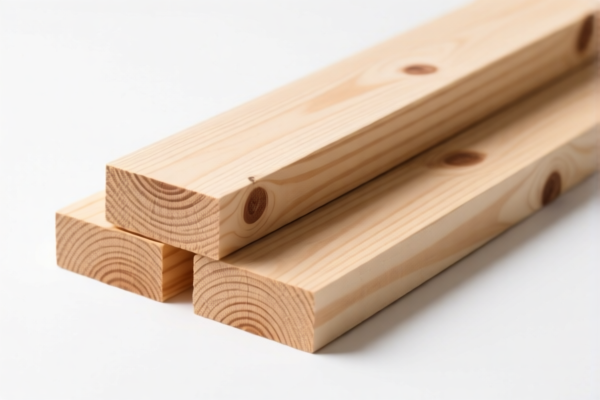
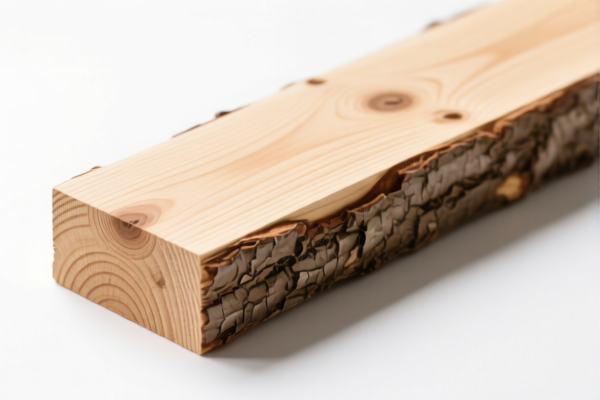
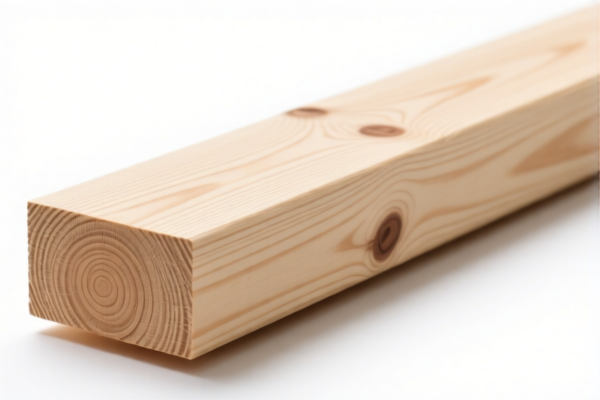

AI Analysis
🌲 Fir Wood (For Furniture / Construction)
🌐 HS Code Reference & Customs Clearance Guide | 2026 Latest Tariff Analysis | Professional Level通关 Strategy
📌 I. Product Definition & Classification: Do You Really Understand "Fir Wood"?
Fir Wood (Abies spp.) is a type of softwood widely used in the furniture, construction, and woodworking industries. In international trade, its classification depends heavily on the processing level (log, sawn, veneer) and the specific application (furniture parts vs. raw timber).
Key Distinction:
- Raw/Primary Processed Wood: Logs, planks, or sawn timber → Usually falls under Chapter 44 (Sawn Wood/Veneers).
- Finished/Component Parts: Ready-to-assemble furniture parts or structural components → Usually falls under Chapter 44 (Prefabricated Buildings/Construction) or Chapter 94 (Furniture) if highly finished.
⚠️ Critical Judgment Point:
- If it is raw timber or sawn wood intended for further processing →归入 4403 or 4407.
- If it is finished furniture parts (e.g., legs, panels, frames) ready for assembly →归入 4418.
📦 II. HS Code Classification Details (2026 Latest Tariff Authoritative Comparison)
Based on the provided data, here are the relevant HS Codes for Fir Wood intended for furniture, ranked by processing depth.
| HS Code | Product Description | Application Scenario | Processing Level |
|---|---|---|---|
4418.99.91.95 |
Other builders' joinery and carpentry, including assembled panels, for furniture use; made of Fir Wood | Furniture components, pre-assembled frames, decorative panels | ✅ Finished/Component (Joinery/Carpentry) |
4407.12.00.59 |
Wood continuously cut along its length, whether or not planed, sanded or finger-jointed, of a thickness exceeding 6 mm, of fir | Sawn planks, planed boards for furniture making | ✅ Sawn/Primary Processed |
4407.12.00.58 |
Similar to above, other fir wood of a thickness > 6mm | Raw sawn timber, unfinished boards | ✅ Sawn/Primary Processed |
4403.23.01.42 |
Wood freshly cut, whether or not bark-edged or roughly squared, of fir | Logs, rough-squared timber | ✅ Raw/Log |
4403.24.01.42 |
Other wood freshly cut, of fir (less common, likely specific sub-category) | Rough timber, bark-edged logs | ✅ Raw/Log |
🔍 Key Reminder:
-4418is for finished parts (furniture joinery).
-4407is for sawn wood (planks, boards).
-4403is for raw logs/timber.
- Misclassification Risk: Declaring sawn wood (4407) as raw logs (4403) to avoid tariffs, or vice versa, triggers customs audits and penalties.
💰 III. 2026 Latest Tariff Rate Details (Including Surtaxes, Policy Add-ons)
✅ Applicable Country: United States (US)
✅ Origin: China (CN)
✅ Effective Date: From November 10, 2025 (for subsequent imports)
🎯 1. 4418.99.91.95 — Builders’ Joinery/Carpentry for Furniture (Finished Parts)
| Item | Content |
|---|---|
| Base Tariff | 3.2% |
| Section 301 Surtax | +25% |
| IEEPA Surtax (Section 122) | +10% |
| Total Tariff Rate | 38.2% |
| Tax Calculation | CIF Value × 38.2% |
| De Minimis Exemption | ❌ Not Eligible (Deny de minimis) |
| Legal Basis Path | USITC:4418.99.91.95 → Footnote:301 → IEEPA:122 |
📌 Explanation:
- Even though it is "finished furniture parts," it is still classified under Chapter 44 (Wood Products) rather than Chapter 94 (Furniture), leading to higher tariffs due to China-specific surtaxes.
- Total 38.2% is a significant cost driver for finished wood components.
🎯 2. 4407.12.00.59 & 4407.12.00.58 — Sawn Fir Wood (Planks/Boards)
| Item | Content |
|---|---|
| Base Tariff | 0.0% |
| Section 301 Surtax | +25% |
| IEEPA Surtax (Section 122) | +10% |
| Total Tariff Rate | 35.0% |
| Tax Calculation | CIF Value × 35.0% |
| De Minimis Exemption | ❌ Not Eligible (Deny de minimis) |
| Legal Basis Path | USITC:4407.12.00.5X → Footnote:301 → IEEPA:122 |
📌 Note:
- Base tariff is 0%, but the 35% total rate makes it expensive.
- This code applies to sawn, planed, or finger-jointed wood.
- Whether you declare as58or59, the tariff is the same (35%).
🎯 3. 4403.23.01.42 & 4403.24.01.42 — Raw Fir Timber (Logs/Rough Squared)
| Item | Content |
|---|---|
| Base Tariff | 0.0% |
| Section 301 Surtax | +25% |
| IEEPA Surtax (Section 122) | +10% |
| Total Tariff Rate | 35.0% |
| Tax Calculation | CIF Value × 35.0% |
| De Minimis Exemption | ❌ Not Eligible (Deny de minimis) |
| Legal Basis Path | USITC:4403.23/24.01.42 → Footnote:301 → IEEPA:122 |
📌 Note:
- Same 35% total rate as sawn wood.
- Applies to freshly cut wood, whether bark-edged or roughly squared.
- No difference in tariff between raw logs and sawn wood under current US-China trade rules.
🛠️ IV. Customs Clearance Practical Advice (Real-World Pitfall Guide)
✅ 1. Preparation Checklist (Essential Documents)
| Document | Mandatory? | Description |
|---|---|---|
| ✅ Product Specification | ✔️ | Must specify: Species (Fir/Abies), Moisture Content, Dimensions, Treatment (Heat-treated/Kiln-dried) |
| ✅ Processing Description | ✔️ | Clearly state: "Sawn Wood," "Logs," or "Furniture Parts" to match HS Code |
| ✅ Commercial Invoice | ✔️ | Must match HS Code description exactly; avoid vague terms like "Wood" |
| ✅ Phytosanitary Certificate | ✔️ | Mandatory for wood products to prove pest-free treatment (ISPM 15) |
| ✅ Bill of Lading | ✔️ | Ensure cargo description matches invoice |
| ✅ Origin Certificate | ✔️ | If claiming non-US origin, provide CO if applicable |
✅ 2. Declaration Tips (Key Mnemonic)
🔥 "Species Must Match, Processing Level Defines, Tariff is 35-38%, No De Minimis!"
| Scenario | Correct Declaration | Common Mistake |
|---|---|---|
| Sawn Planks for Furniture | 4407.12.00.59 "Sawn Fir Wood" |
Declaring as "Furniture" → Wrong HS, Penalty |
| Raw Logs | 4403.23.01.42 "Fir Logs" |
Declaring as "Sawn Wood" → Over-declaration risk |
| Furniture Parts (Joinery) | 4418.99.91.95 "Fir Wood Joinery" |
Declaring as "Furniture" (9403) → Higher scrutiny |
| Veneer Sheets | Not in this list | Must use specific veneer codes (e.g., 4408) |
⚠️ Critical Warning:
- Do NOT use "De Minimis" (Section 321) for shipments valued under $800. These wood products are explicitly excluded from de minimis exemption due to Section 301 and IEEPA surtaxes.
- Phytosanitary Compliance: Failure to provide an ISPM 15 certificate will result in cargo detention, fumigation, or return.
✅ 3. Special Situation Handling
| Situation | Recommendation |
|---|---|
| Mixed Species | If wood contains both Fir and other species, declare the primary species or split the shipment. Misdeclaration leads to penalties. |
| Heat-Treated (HT) vs. Kiln-Dried (KD) | Specify treatment in invoice. HT is required for phytosanitary compliance; KD is for quality. Both are acceptable but must be declared. |
| Furniture Parts vs. Raw Wood | If parts are assembled or pre-finished, use 4418. If just cut shapes, use 4407. Customs may inspect to verify "processing level." |
| Origin Marking | Ensure wood is clearly marked "Made in China" to apply correct surtaxes. |
🌍 V. Global Market Comparison (2026 Latest)
| Country/Region | Recommended HS Code | Tariff (China Origin) | Certification | Notes |
|---|---|---|---|---|
| 🇺🇸 USA | 4407.12.00.59 / 4418.99.91.95 |
35% - 38.2% | ISPM 15, FCC (if electrical) | High tariffs due to Section 301 & 122 |
| 🇨🇳 China | 4407.12.00.59 |
~0-10% (Import Tariff) | Phytosanitary | Low import tariff, high environmental regulation |
| 🇪🇺 EU | 4407.12.00 |
~0-10% | FSC/PEFC (Sustainability) | No Section 301 surtax, but strict timber regulations |
| 🇬🇧 UK | 4407.12.00 |
~0-10% | UKCA, FSC | Post-Brexit rules apply |
| 🇦🇺 Australia | 4407.12.00 |
~5-10% | IPPC | Strict biosecurity |
📌 Conclusion:
- USA is the most expensive market for Chinese Fir Wood due to 35-38.2% combined tariffs.
- EU/UK/Australia have lower base tariffs but stricter sustainability and phytosanitary requirements.
- Cost Advantage: Consider sourcing fir wood from non-China origins (e.g., Canada, Russia, Europe) to avoid US surtaxes.
📌 VI. Common Errors & Pitfall Guide (Lessons Learned)
❌ Error 1: Declaring "Sawn Wood" as "Logs" (4403) to avoid tariffs
👉 Consequence: Customs inspection reveals planed edges → Penalty + Back Taxes + Interest
❌ Error 2: Using "De Minimis" for shipments <$800
👉 Consequence: Seizure because wood products are excluded from Section 321 exemption
❌ Error 3: Missing Phytosanitary Certificate
👉 Consequence: Cargo Held at Port, Fumigation Costs ($500-$2000), Delivery Delays
❌ Error 4: Vague Description "Wood Parts"
👉 Consequence: Customs assigns random HS Code → Highest Possible Tariff
✅ Correct Practice:
"Sawn Fir Wood (Abies), Kiln-Dried, 25mm x 100mm, for Furniture Manufacturing, HS 4407.12.00.59, ISPM 15 Certified, Origin: China"
🎯 VII. Conclusion: Professional Declaration, Save Money, Ensure Clearance!
🎯 Remember the Mantra:
🔹 "HS Code Determines Tariff, 35-38% is the Norm, No De Minimis, Phytosanitary is Key!"
🔹 "Misclassification Costs More Than Correct Declaration!"
📌 Pro Tip:
If your fir wood is sourced from Vietnam, Mexico, or Canada, you may avoid the 25% Section 301 Surtax, reducing total tariff to 3.2%-10%.
✅ Recommendation: Apply for Pre-Ruling with US Customs (CBP) to confirm HS Code and tariff liability before shipment.
📣 Immediate Action:
📞 Contact a Professional Customs Broker + Provide Product Photos + Apply for HS Code Pre-Ruling
🚀 Let your Fir Wood Clear Customs Smoothly, Reduce Costs, and Maximize Profits!
✨ Professional Customs Clearance Starts with Accurate Classification!
💼 Every Penny of Your Cost Deserves Precise Calculation!
Customer Reviews
About HS Code Classification
The Harmonized System (HS) is an internationally standardized nomenclature developed by the World Customs Organization (WCO) to classify traded products. Over 200 countries use the HS system as the basis for customs tariffs, trade statistics, and import/export regulations.
Each HS code follows a hierarchical structure:
- Chapter (2 digits) — Broad category of goods (e.g., Chapter 84: Machinery and Mechanical Appliances)
- Heading (4 digits) — More specific grouping within the chapter
- Subheading (6 digits) — Internationally standardized breakdown, used by all WCO member countries
- National subdivisions (8-10 digits) — Country-specific extensions for further classification, such as US HTSUS 10-digit codes
Correct HS code classification is essential for smooth customs clearance, accurate duty payment, and compliance with trade regulations. Misclassification can lead to customs delays, overpayment of duties, or penalties.
When importing from CN to US, the applicable tariff rates may include:
- Most-Favored-Nation (MFN) rate — The standard duty rate applied to WTO members
- General rate — Applied to countries without trade agreements
- Trade remedy duties — Additional tariffs such as Section 301 (anti-dumping), Section 232 (national security), or countervailing duties
The information provided on this page is for reference purposes only. For official classification, please consult with your local customs authority or a licensed customs broker.