Fir Wood (Cross section 15 cm and above)
CN → US| HS Code | Tariff Rate | Origin | Destination | Doc |
|---|---|---|---|---|
| 4407120058 | 35.0% | CN | US | Official Doc |
| 4403230142 | 35.0% | CN | US | Official Doc |
| 4407120059 | 35.0% | CN | US | Official Doc |
| 4409109040 | 35.0% | CN | US | Official Doc |
Product Images
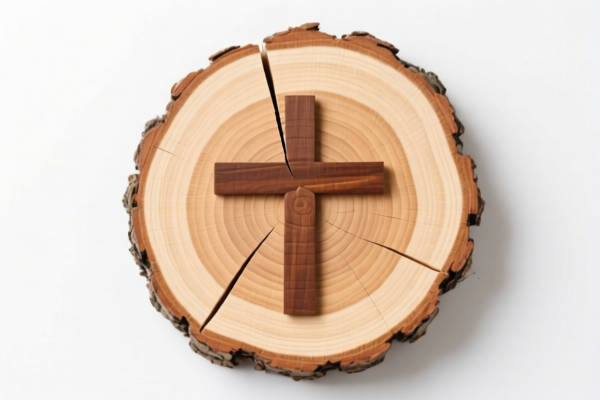

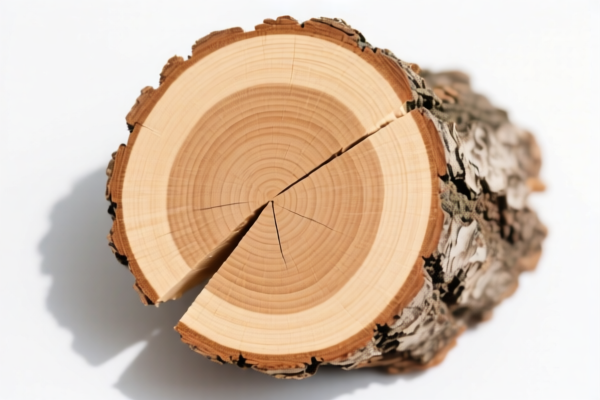
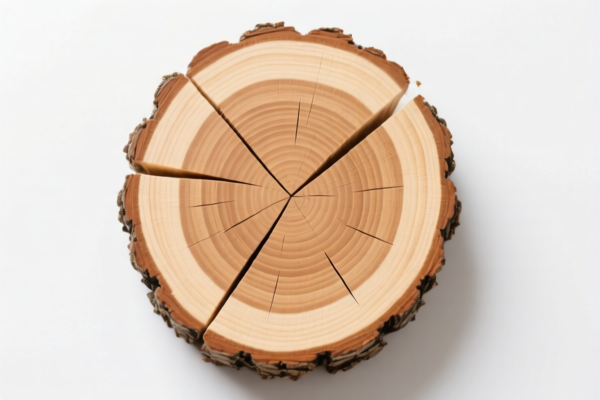
AI Analysis
🌲 Fir Wood (Cross-Section ≥ 15 cm) — High Tariff Alert!
🌐 HS Code Reference & Customs Clearance Guide | 2026 Updated Tariff Analysis | Strategic Compliance for Heavy Timber
📌 I. Product Definition & Classification: Understanding "Fir Wood" in International Trade
Fir wood, specifically Abies species and related Picea/Spruce categories within the needlewood family, is a high-volume construction and industrial material. In international trade, classification depends strictly on processing method (sawn vs. roughly hewn) and cross-sectional dimensions.
⚠️ Critical Distinction:
- "Roughly Hewn" (Log/Beam stage): Wood that has been debarked or roughly shaped but not planed. Often used for structural beams.
→ HS Code Category:4403(Wood prepared for flooring, not sawn lengthwise) or4407if sawn but with specific dimensions.
- "Sawn Lengthwise" (Plank/Lumber stage): Wood cut longitudinally to specific profiles.
→ HS Code Category:4407or4409(Continuously shaped along its length).
- Dimensional Threshold: Cross-section ≥ 15 cm is a key threshold. Many preferential trade agreements or specific sub-headings require this minimum size for certain structural classifications.📌 Key Insight:
- If the wood is sawn longitudinally and has a cross-section ≥ 15 cm, it falls under 4407 or 4409.
- If it is not sawn (roughly hewn) but meets the size requirement, it may fall under 4403.
- All variants in our dataset are subject to 35% Total Duty due to US-China trade tensions.
📦 II. HS Code Classification Matrix (2026 Latest Tariff Schedule)
| HS Code | Product Description | Cross-Section | Processing Type | Key Features |
|---|---|---|---|---|
4403.23.01.42 |
Fir (Abies) wood, roughly hewn | ≥ 15 cm | Roughly Hewn (not sawn lengthwise) | Minimum dimension characteristic; structural logs/beams |
4407.12.00.58 |
Spruce/Pine/Fir sawn lengthwise | ≥ 15 cm | Sawn Lengthwise | "Other" category fallback; specific to fir/spruce family |
4407.12.00.59 |
Spruce/Pine/Fir sawn lengthwise | ≥ 15 cm | Sawn Lengthwise | "Other" category fallback; generic fir/spruce lumber |
4409.10.90.40 |
Fir (Needlewood) wood, shaped | Any | Continuously Shaped (e.g., tongued/grooved) | Processed for flooring, paneling, or specialized joinery |
🔍 Important Notes:
-4403.23.01.42: Specifically targets Fir (Abies) that is roughly hewn and meets the ≥15 cm cross-section. This is often used for heavy construction timber.
-4407.12Series: Applies to Sawn wood. The.58and.59are "catch-all" sub-categories for specific fir/spruce types not explicitly listed elsewhere.
-4409.10.90.40: Applies to processed/finished fir wood (e.g., tongue-and-groove) that doesn’t fit standard lumber sizes.
- All Codes Share the Same Tax Rate: 35% Total Duty.
💰 III. 2026 Tariff Rate Breakdown (Including Surcharges & Policy Duties)
✅ Applicable Country: United States (US)
✅ Country of Origin: China (CN)
✅ Effective Date: November 10, 2025 (and subsequent imports)
🎯 1. 4403.23.01.42 — Fir Wood, Roughly Hewn, ≥15 cm
| Item | Detail |
|---|---|
| Base Tariff | 0% |
| Section 301 Tariff | +25% (USITC Footnote) |
| Section 122 Tariff | +10% (Specific Chinese Import Duty) |
| Total Duty Rate | 35% |
| Tax Calculation | CIF Value × 35% |
| De Minimis Exemption | ❌ NOT Eligible (deny_de_minimis) |
| Legal Path | USITC:4403.23.01.42 → SECTION301:35% → SECTION122:10% |
📌 Explanation:
- This is raw construction timber. It is not eligible for the $800 de minimis exemption (Section 321) because it is a bulk commodity subject to specific trade remedies.
- The 25% is the standard Section 301 tariff on Chinese wood products.
- The 10% is the additional Section 122 tariff, which targets specific strategic materials, including certain wood products.
🎯 2. 4407.12.00.58 & 4407.12.00.59 — Sawn Fir/Spruce Wood (≥15 cm)
| Item | Detail |
|---|---|
| Base Tariff | 0% |
| Section 301 Tariff | +25% |
| Section 122 Tariff | +10% |
| Total Duty Rate | 35% |
| Tax Calculation | CIF Value × 35% |
| De Minimis Exemption | ❌ NOT Eligible |
| Legal Path | USITC:4407.12.00.58/59 → SECTION301:35% → SECTION122:10% |
📌 Note:
- Whether sawn or roughly hewn, all fir wood variants in this dataset are subject to the same 35% total duty.
- The distinction between.58and.59is minor and relates to specific sub-category coding within the USITC schedule, but the tax impact is identical.
🎯 3. 4409.10.90.40 — Shaped Fir Wood (e.g., Flooring, Paneling)
| Item | Detail |
|---|---|
| Base Tariff | 0% |
| Section 301 Tariff | +25% |
| Section 122 Tariff | +10% |
| Total Duty Rate | 35% |
| Tax Calculation | CIF Value × 35% |
| De Minimis Exemption | ❌ NOT Eligible |
| Legal Path | USITC:4409.10.90.40 → SECTION301:35% → SECTION122:10% |
📌 Warning:
- Even if the wood is finished (e.g., sanded, tongued/grooved), it still incurs the full 35% duty.
- Do not assume processed wood gets a lower rate; trade remedies apply to the product category, not just its raw state.
🛠️ IV. Customs Clearance Practical Advice (Risk Mitigation Guide)
✅ 1. Required Documentation (Non-Negotiable)
| Document | Mandatory? | Description |
|---|---|---|
| ✅ Commercial Invoice | ✔️ | Must state: "Fir Wood (Abies spp.)", HS Code, Country of Origin: China |
| ✅ Packing List | ✔️ | Detail volume (CBM), weight, and dimensions of each bundle |
| ✅ Certificate of Origin | ✔️ | Essential to prove origin (China) for accurate tariff application |
| ✅ Phytosanitary Certificate | ✔️ | Critical for Wood! Must confirm no pests/diseases (ISPM 15 compliance) |
| ✅ Bill of Lading/Air Waybill | ✔️ | Standard transport document |
| ✅ Product Specification Sheet | ✔️ | Confirm cross-section dimensions (must be ≥15 cm for specific codes) |
⚠️ Phytosanitary Alert:
- Wood without a valid Phytosanitary Certificate or proper ISPM 15 Heat Treatment Marking will be rejected or destroyed at US ports.
- Ensure all pallets and wooden packaging are marked with the IPPC logo.
✅ 2. Declaration Best Practices
🔥 "Dimension Check, Phytosanitary Clear, Origin Proof, Tax Accurate!"
| Scenario | Correct Declaration | Common Mistake |
|---|---|---|
| Roughly Hewn Logs | 4403.23.01.42 |
Misclassifying as 4407 (sawn) → Potential penalty |
| Sawn Lumber | 4407.12.00.58/59 |
Using generic "Timber" description → Delays |
| Processed Flooring | 4409.10.90.40 |
Declaring as raw wood → Under/Over-declaration risk |
| <15 cm Cross-Section | Not covered in this dataset | Not eligible for these specific HS codes |
✅ 3. Special Considerations
| Issue | Recommendation |
|---|---|
| Volume Measurement | Use board feet or cubic meters consistently. Discrepancies cause customs holds. |
| Moisture Content | Declare if it affects valuation or classification (e.g., green vs. kiln-dried). |
| Mixed Shipments | If a container has both ≥15 cm and <15 cm wood, separate declarations are required. |
| Supplier Verification | Ensure your supplier provides accurate phytosanitary documents. Delays here are common. |
🌍 V. Global Market Comparison (2026)
| Country/Region | Recommended HS Code | Tariff Rate | Certification Required | Notes |
|---|---|---|---|---|
| 🇺🇸 USA | 4403.23.01.42 / 4407.12 / 4409.10 |
35% (China Origin) | Phytosanitary + ISPM 15 | Highest duty among major markets |
| 🇨🇳 China | Same HS Codes | 0-5% (Import) | None (Domestic) | N/A for export |
| 🇪🇺 EU | 4403 / 4407 / 4409 |
0% (MFN) | FSC/PEFC (Preferred) | No Section 301/122 duties |
| 🇨🇦 Canada | Same HS Codes | 0% (CUSMA) | Phytosanitary | Free trade under CUSMA |
| 🇲🇽 Mexico | Same HS Codes | 0% (USMCA) | Phytosanitary | Free trade under USMCA |
📌 Conclusion:
- USA is the only major market imposing 35% duties on Chinese fir wood.
- If possible, consider transshipment (with caution for origin rules) or sourcing from non-China origins (e.g., Canada, EU) to avoid high tariffs.
- EU, Canada, and Mexico offer 0% duty for Chinese wood (subject to standard MFN rates, which are often 0% for wood), making them more cost-effective if you have alternative supply chains.
📌 VI. Common Mistakes & Pitfalls (Learn from Others' Errors)
❌ Mistake 1: Ignoring Phytosanitary Requirements
👉 Consequence: Cargo held at port, destroyed, or returned. Cost: 100% of shipment value lost.
❌ Mistake 2: Misdeclaring Cross-Section Dimensions
👉 Consequence: If <15 cm, it may fall under a different, potentially higher or lower tax rate. Incorrect declaration leads to penalties.
❌ Mistake 3: Assuming De Minimis Applies
👉 Consequence: Small shipments (<$800) are still subject to 35% duty. Do not expect tax-free entry.
❌ Mistake 4: Using Generic Descriptions ("Wood", "Timber")
👉 Consequence: Customs will classify it based on their interpretation, likely resulting in higher duties or delays.
✅ Correct Practice:
"Fir Wood (Abies spp.), Roughly Hewn, Cross-Section ≥15 cm, Kiln-Dried, ISPM 15 Marked, HS Code: 4403.23.01.42"
🎯 VII. Conclusion: Strategic Sourcing & Compliance
🎯 Key Takeaways:
🔹 "35% Duty is Inevitable for US Imports from China"
🔹 "Phytosanitary Certificate is Non-Negotiable"
🔹 "Dimension Accuracy is Critical for Correct HS Code"
🔹 "Consider Non-US Markets or Alternative Origins to Save Costs"
📌 Pro Tip:
If you are importing large volumes, consider:
1. Applying for a Tariff Exclusion (if applicable under Section 301).
2. Sourcing from Canada or Mexico (USMCA partners) for 0% duty.
3. Using a Bonded Warehouse in the US to defer duty payment until sale.
📣 Immediate Action:
📞 Contact Your Freight Forwarder to verify phytosanitary requirements.
📄 Prepare Accurate Commercial Invoices with precise HS Codes.
🚀 Plan for 35% Duty in Your Cost Structure to avoid margin erosion.
✨ Precision in Classification, Safety in Compliance!
💼 Your Wood Shipment, Your Competitive Edge!
Customer Reviews
About HS Code Classification
The Harmonized System (HS) is an internationally standardized nomenclature developed by the World Customs Organization (WCO) to classify traded products. Over 200 countries use the HS system as the basis for customs tariffs, trade statistics, and import/export regulations.
Each HS code follows a hierarchical structure:
- Chapter (2 digits) — Broad category of goods (e.g., Chapter 84: Machinery and Mechanical Appliances)
- Heading (4 digits) — More specific grouping within the chapter
- Subheading (6 digits) — Internationally standardized breakdown, used by all WCO member countries
- National subdivisions (8-10 digits) — Country-specific extensions for further classification, such as US HTSUS 10-digit codes
Correct HS code classification is essential for smooth customs clearance, accurate duty payment, and compliance with trade regulations. Misclassification can lead to customs delays, overpayment of duties, or penalties.
When importing from CN to US, the applicable tariff rates may include:
- Most-Favored-Nation (MFN) rate — The standard duty rate applied to WTO members
- General rate — Applied to countries without trade agreements
- Trade remedy duties — Additional tariffs such as Section 301 (anti-dumping), Section 232 (national security), or countervailing duties
The information provided on this page is for reference purposes only. For official classification, please consult with your local customs authority or a licensed customs broker.