Fir Wood Cross Section
CN → US| HS Code | Tariff Rate | Origin | Destination | Doc |
|---|---|---|---|---|
| 4407120058 | 35.0% | CN | US | Official Doc |
| 4407120059 | 35.0% | CN | US | Official Doc |
| 4408100125 | 35.0% | CN | US | Official Doc |
| 4408100145 | 35.0% | CN | US | Official Doc |
Product Images
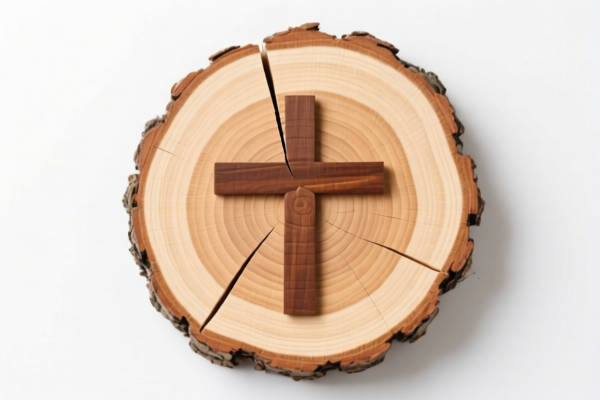
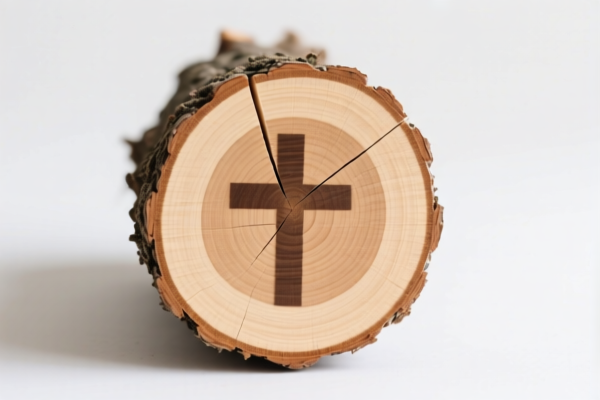
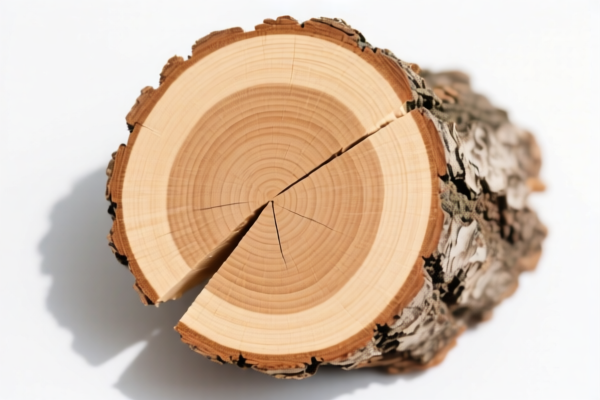
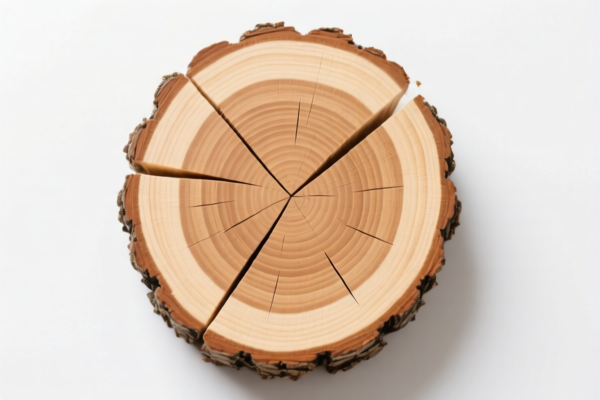
AI Analysis
🌲 Fir Wood Cross Section (Technical Analysis & Classification)
🌐 HS Code Reference & Customs Clearance Guide | 2026 Latest Tariff Analysis | Professional Level Strategy
📌 I. Product Definition & Classification: Do You Truly Understand "Fir Wood"?
Fir wood, specifically referring to species within the genus Abies, is a premium coniferous timber widely used in construction, veneer, and plywood manufacturing. In international trade, "Fir Wood Cross Section" is not a single HS code but depends entirely on the processing state and thickness of the material.
Key Distinctions: * Veneer Sheets (≤ 6mm): If the wood is sliced, peeled, or sawn into thin sheets for veneering or plywood, it falls under Chapter 44.08. * Sawn Wood (> 6mm): If the wood is sawn lengthwise with a thickness exceeding 6mm, it falls under Chapter 44.07.
⚠️ Critical Classification Point:
- If the product is a thin sheet (≤ 6mm) intended for veneering or laminating → Go to 4408.10.xxxx
- If the product is a solid plank/board (> 6mm), whether rough or planed → Go to 4407.12.xxxx
📦 II. HS Code Classification Details (2026 Latest Tariff Authority Alignment)
Based strictly on the provided data , here are the applicable HS Codes for Fir Wood (Abies spp.) and Coniferous Wood.
| HS Code | Product Description | Application Scenario | Processing State |
|---|---|---|---|
4408.10.01.25 |
Sheets for veneering (incl. slicing laminated wood), for plywood/similar laminated wood, other wood... of a thickness not exceeding 6 mm: Coniferous Douglas Fir | Thin veneer sheets, plywood cores, decorative surfaces | ≤ 6mm, Sliced/Peeling/Sawing |
4408.10.01.45 |
Sheets for veneering (incl. slicing laminated wood), for plywood/similar laminated wood, other wood... of a thickness not exceeding 6 mm: Coniferous Other | General coniferous veneer sheets (non-Douglas) | ≤ 6mm, Sliced/Peeling/Sawing |
4407.12.00.58 |
Wood sawn/chipped lengthwise, sliced/peeled... thickness exceeding 6 mm: Coniferous: Of fir (Abies) and spruce (Picea)... Rough | Rough-cut planks, beams, structural lumber | > 6mm, Not Planed/Sanded |
4407.12.00.59 |
Wood sawn/chipped lengthwise, sliced/peeled... thickness exceeding 6 mm: Coniferous: Of fir (Abies) and spruce (Picea)... Other | Planed, sanded, spliced, or end-jointed planks | > 6mm, Finished/Processed |
🔍 Key Reminder:
- "Rough" (4407.12.00.58) means the wood has only been sawn/chipped and is not further processed (e.g., no planing or sanding).
- "Other" (4407.12.00.59) covers all fir wood > 6mm that has undergone additional processing (planing, sanding, splicing, etc.).
- Veneer (4408) is strictly defined by its thickness ≤ 6mm. If the "cross section" is a solid block > 6mm, it is NOT veneer.
💰 III. 2026 Latest Tariff Rate Details (Including Surcharge Tariffs)
✅ Applicable Country: United States (US)
✅ Origin: China (CN)
✅ Effective Date: As per provided data (Current Surcharge Applies)
🎯 1. 4408.10.01.25 & 4408.10.01.45 —— Veneer Sheets (≤ 6mm)
| Item | Content |
|---|---|
| Base Tariff | 0.0% (ad valorem) |
| Additional Surcharge Tariff (Section 301) | +25.0% |
| Total Tariff Rate | 25.0% |
| Tax Calculation | CIF Value × 25% |
| Legal Basis | Based on provided data: 基础关税: 0.0%, 加征关税: 25.0% |
📌 Explanation:
- These HS codes represent thin veneer sheets.
- While the base MFN tariff is 0%, the 25% Section 301 surcharge applies to all wood products from China.
- Total Cost Impact: You must pay 25% of the declared value as customs duties.
🎯 2. 4407.12.00.58 & 4407.12.00.59 —— Sawn Fir Wood (> 6mm)
| Item | Content |
|---|---|
| Base Tariff | 0.0% (ad valorem) |
| Additional Surcharge Tariff (Section 301) | +25.0% |
| Total Tariff Rate | 25.0% |
| Tax Calculation | CIF Value × 25% |
| Legal Basis | Based on provided data: 基础关税: 0.0%, 加征关税: 25.0% |
📌 Explanation:
- These HS codes represent solid fir wood planks or beams.
- Like veneer, the base tariff is 0%, but the 25% Section 301 surcharge is fully applicable.
- Total Cost Impact: 25% duty on the CIF value.⚠️ Important Note on "Total Tax":
The provided data explicitly statestotal_tax: "25.0%". This means no additional IEEPA 10% tax is listed in this specific dataset for these wood products. The total burden is flat 25%. Do not assume additional taxes unless confirmed by updated USITC rulings.
🛠️ IV. Customs Clearance Practical Advice (Avoid Pitfalls)
✅ 1. Essential Documentation Checklist
| Document | Required? | Purpose |
|---|---|---|
| ✅ Commercial Invoice | ✔️ | Must clearly state: "Fir Wood (Abies spp.)", HS Code, and Thickness. |
| ✅ Packing List | ✔️ | Specify if goods are "Veneer Sheets" or "Sawn Lumber". |
| ✅ Processing Certificate | ✔️ | Confirm if wood is "Rough" or "Planed/Sanded" to distinguish between 58 and 59. |
| ✅ Fumigation Certificate (ISPM 15) | ✔️ | Mandatory for all wood products entering the US to prevent pest invasion. |
| ✅ Product Photos | ✔️ | Show cross-section and thickness measurement to prove ≤ 6mm (Veneer) or > 6mm (Sawn). |
✅ 2. Declaration Tips (Crucial!)
🔥 "Thickness Defines Category, Species Defines Code"
| Scenario | Correct HS Code | Wrong Declaration | Consequence |
|---|---|---|---|
| Thin sheets (< 6mm) for plywood | 4408.10.01.25 or .45 |
Declare as "Sawn Wood" | May be reclassified, causing delays. |
| Planks (> 6mm), rough cut | 4407.12.00.58 |
Declare as "Planed Wood" | Incorrect description, potential penalty. |
| Planks (> 6mm), planed/sanded | 4407.12.00.59 |
Declare as "Rough" | Under-declares processing, risk of audit. |
| Non-Fir Coniferous Wood | 4408.10.01.45 or 4407.xxxx |
Declare as "Fir" | Misdeclaration → Heavy penalties. |
✅ 3. Special Handling for "Cross Section" Descriptions
- If "Cross Section" means a slice for examination:
- If the slice is ≤ 6mm and intended for use → HS 4408.
- If it is just a sample for analysis → It may be classified as a "sample" and potentially duty-free, but must be clearly marked as "Non-commercial Sample" and not exceed value thresholds.
- If "Cross Section" means a transverse cut of a log/plank:
- This is still Sawn Wood. Ensure thickness > 6mm is stated. Use HS 4407.12.00.58/59.
🌍 V. Global Market Clearance Comparison (2026)
| Country/Region | Recommended HS Code | Tariff Rate (China Origin) | Key Requirement | Notes |
|---|---|---|---|---|
| 🇺🇸 USA | 4408.10.01.x5 or 4407.12.00.58/59 |
25% (Surcharge) | ISPM 15 Fumigation | High compliance with Section 301. |
| 🇨🇳 China | 4408.10.01.x5 or 4407.12.00.58/59 |
0-5% (Depending on Treaty) | Phytosanitary Certificate | No Section 301 surcharge for exports from China. |
| 🇪🇺 EU | 4408.10.10 or 4407.12.00 |
0% (Most FTA Partners) | Timber Regulation (EUTR) | Strict due diligence required for legality. |
| 🇯🇵 Japan | 4408.10.000 or 4407.12.000 |
0-3% | Phytosanitary Certificate | Low tariffs, high quality standards. |
📌 Conclusion:
- The US market imposes a flat 25% surcharge on all Chinese-origin fir wood (veneer or sawn).
- Ensure ISPM 15 compliance is flawless; any pest violation leads to rejection.
📌 VI. Common Mistakes & Pitfall Guide (Lessons Learned)
❌ Mistake 1: Confusing Veneer (≤ 6mm) with Sawn Wood (> 6mm)
👉 Consequence: If you declare a 5mm sheet as sawn wood, customs may still classify it as veneer but question the thickness. If you declare 7mm as veneer, it is rejected as misclassification.
✅ Fix: Measure thickness precisely. Use "Not exceeding 6mm" for 4408.
❌ Mistake 2: Not specifying "Rough" vs. "Other" for Sawn Wood
👉 Consequence: 4407.12.00.58 (Rough) and .59 (Other) have the same tax rate in this data, but wrong description can lead to inspections or delays.
✅ Fix: Clearly state "Rough Sawn" or "Planed and Sanded" in the commercial invoice.
❌ Mistake 3: Ignoring Fumigation Certificate
👉 Consequence: US CBP will detain the cargo for phytosanitary checks. Storage fees accrue daily.
✅ Fix: Ensure the wooden packaging and the wood itself are treated and certified under ISPM 15.
🎯 VII. Conclusion: Precise Classification Saves Money!
🎯 Remember the Golden Rule:
🔹 "Thickness is King: ≤ 6mm is Veneer (4408), > 6mm is Sawn (4407)."
🔹 "Species Matters: Abies is Fir, Picea is Spruce."
🔹 "Tax is Flat 25%: Base is 0%, Surcharge is 25%. Total = 25%."
📌 Pro Tip:
If your "Fir Wood Cross Section" is a small sample for testing purposes, consider declaring it as a "Non-Commercial Sample" to potentially avoid duties, provided it meets the value and quantity limits. Always consult a licensed customs broker for pre-ruling.
📣 Immediate Action:
📞 Verify the exact thickness of your wood products.
📄 Ensure ISPM 15 fumigation certificates are attached to the shipment.
📝 Declare accurately: "Fir Wood (Abies spp.), Sawn, [Rough/Planed], Thickness [X] mm".
✨ Professional Clearance Starts with Accurate Classification!
💼 Every detail in your declaration protects your profit margin!
Customer Reviews
About HS Code Classification
The Harmonized System (HS) is an internationally standardized nomenclature developed by the World Customs Organization (WCO) to classify traded products. Over 200 countries use the HS system as the basis for customs tariffs, trade statistics, and import/export regulations.
Each HS code follows a hierarchical structure:
- Chapter (2 digits) — Broad category of goods (e.g., Chapter 84: Machinery and Mechanical Appliances)
- Heading (4 digits) — More specific grouping within the chapter
- Subheading (6 digits) — Internationally standardized breakdown, used by all WCO member countries
- National subdivisions (8-10 digits) — Country-specific extensions for further classification, such as US HTSUS 10-digit codes
Correct HS code classification is essential for smooth customs clearance, accurate duty payment, and compliance with trade regulations. Misclassification can lead to customs delays, overpayment of duties, or penalties.
When importing from CN to US, the applicable tariff rates may include:
- Most-Favored-Nation (MFN) rate — The standard duty rate applied to WTO members
- General rate — Applied to countries without trade agreements
- Trade remedy duties — Additional tariffs such as Section 301 (anti-dumping), Section 232 (national security), or countervailing duties
The information provided on this page is for reference purposes only. For official classification, please consult with your local customs authority or a licensed customs broker.