Fir Wood Poles for Electricity
CN → US| HS Code | Tariff Rate | Origin | Destination | Doc |
|---|---|---|---|---|
| 4407120058 | 35.0% | CN | US | Official Doc |
| 4407120059 | 35.0% | CN | US | Official Doc |
Product Images
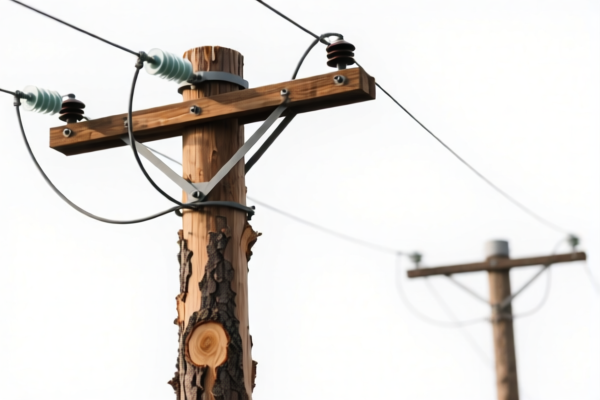
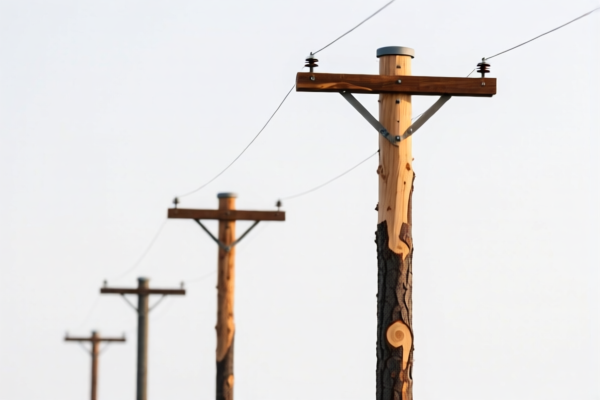
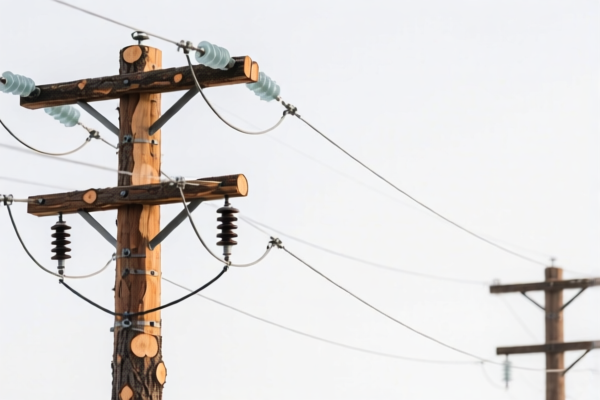
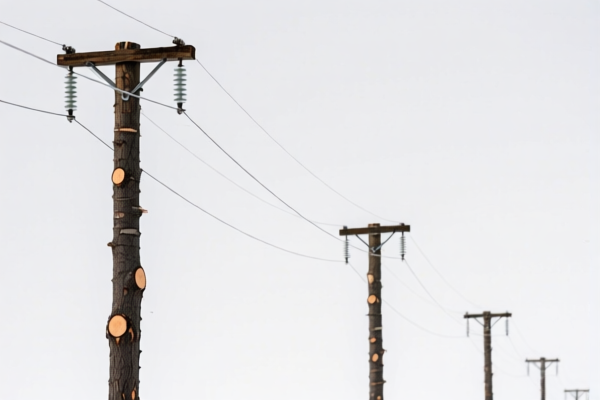
AI Analysis
🌲 Fir Wood Poles for Electricity (Treated vs. Untreated Classification)
🌐 HS Code Reference & Clearance Guide | 2026 Updated Tariff Analysis | Professional Customs Strategy
📌 I. Product Definition & Classification: Understanding "Fir Wood Poles"
Electricity poles made from fir wood (Abies spp.) are critical infrastructure components in power transmission and distribution networks. However, in international trade, treatment status is the single most decisive factor for HS Code classification and tariff liability.
⚠️ Critical Distinction:
- Treated Poles: Poles impregnated with preservatives (creosote, copper azole, etc.) are NOT covered in the provided data. They typically fall under different headings (e.g., 4403 or 4426) with different tax implications.
- Untreated Poles: The provided <DATA> only covers Untreated fir wood, specifically sawn/chipped lengthwise with a thickness exceeding 6 mm.
- Shape: "Poles" are often round or tapered. If they are sawn/chipped (rectangular or roughly squared), they fall under 4407. If they are peeled (round logs), they may fall under 4408 or 4426 (parts of vehicles/structures), but the provided data strictly limits us to 4407 (Sawn/Sliced/Pealed wood >6mm thickness).
🔍 Key Insight for Clearance:
- If the poles are round and untreated, they might NOT qualify for HS 4407.12.00.58/59 if they are considered "round timber" (4403) or "parts of structures" (4426).
- However, if the poles are sawn, planed, or roughly squared (even if intended for use as poles), and thickness >6mm, they fall under 4407.12.
- The provided data explicitly lists "Untreated" fir wood under HS 4407.12. We must assume the importer is declaring them as sawn/chipped fir wood (possibly rough-squared poles) to fit this code.
- Do NOT declare "Treated" poles under these codes — they are incorrect and will cause customs rejection.
📦 II. HS Code Classification Details (2026 Tariff Reference)
The provided data specifies two HS Codes for Untreated Fir Wood, thickness >6mm, sawn/chipped:
| HS Code | Product Description | Key Characteristics |
|---|---|---|
| 4407.12.00.58 | Fir (Abies spp.): Rough | Untreated, rough-sawn or unplaned fir wood |
| 4407.12.00.59 | Fir (Abies spp.): Other | Untreated, planed, sanded, or end-jointed fir wood |
📌 Note on "Poles":
- If the poles are round and untreated, they are NOT covered by 4407.12.00.58/59. Round untreated fir poles typically fall under 4403 (Wood treated with preservatives) or 4403.99 (Other wood, untreated) — but these are NOT in the provided data.
- Therefore, if you are using the provided data, you must be declaring sawn/chipped fir wood (e.g., rough timber used as poles, or squared poles).
- If your poles are truly round, you must consult a separate HS Code (e.g., 4403.99 or 4426.10), which is not covered in this response.
💰 III. 2026 Tariff Rate Breakdown (US Market, China Origin)
✅ Applicable Country: United States (US)
✅ Origin: China (CN)
✅ Product Type: Untreated Fir Wood (Sawn/Chipped, >6mm thickness)
✅ HS Codes: 4407.12.00.58 / 4407.12.00.59
🎯 1. HS Code 4407.12.00.58 — Fir Wood, Rough (Untreated)
| Item | Detail |
|---|---|
| Base Tariff | 0.0% (ad valorem) |
| Section 301 Additional Tariff | +25.0% |
| Total Tariff Rate | 25.0% |
| Tax Calculation | CIF Value × 25% |
| De Minimis Exemption | ❌ Not Eligible (Section 301 goods are exempt from de minimis) |
| Legal Basis | USITC:4407.12.00.58 → Footnote: 9903.88.01 (Section 301) |
📌 Explanation:
- The 25% additional tariff is imposed under Section 301 of the Trade Act of 1974 against Chinese-origin goods.
- No base tariff applies (0%), but the 25% surcharge is mandatory.
- Untreated status is critical — treated wood would have different codes and possibly different rates.
🎯 2. HS Code 4407.12.00.59 — Fir Wood, Other (Untreated, Planed/Sanded)
| Item | Detail |
|---|---|
| Base Tariff | 0.0% (ad valorem) |
| Section 301 Additional Tariff | +25.0% |
| Total Tariff Rate | 25.0% |
| Tax Calculation | CIF Value × 25% |
| De Minimis Exemption | ❌ Not Eligible |
| Legal Basis | USITC:4407.12.00.59 → Footnote: 9903.88.01 (Section 301) |
📌 Note:
- Identical tax treatment to.58.
- Applies if the wood is planed, sanded, or end-jointed (still untreated).
🛠️ IV. Customs Clearance Practical Advice
✅ 1. Documentation Checklist (Mandatory)
| Document | Required | Notes |
|---|---|---|
| Commercial Invoice | ✔️ | Must specify: "Fir Wood, Untreated, Sawn/Chipped, Thickness >6mm" |
| Packing List | ✔️ | Weight, dimensions, number of poles/planks |
| Certificate of Origin | ✔️ | Proof of China origin (triggers 25% tariff) |
| Treatment Certificate | ✔️ | CRITICAL: Must explicitly state "UNTREATED" or "NO PRESERVATIVE TREATMENT" |
| Product Photos | ✔️ | Show cross-section to prove >6mm thickness and rough/planed surface |
| ISPM 15 Compliance | ❌ | Not required if untreated wood (no fumigation needed) |
⚠️ Warning:
- If the wood is treated (e.g., with creosote), DO NOT use HS 4407.12.00.58/59. It will be rejected.
- If untreated, ensure the invoice and certificate clearly state "NOT TREATED WITH PRESERVATIVES" to avoid delays.
✅ 2. Classification Tips
🔥 Golden Rule:
"Untreated + Sawn/Chipped + Fir = 4407.12.00.58/59"
"Treated + Fir = 4403 or 4426 (Not in Data)"
"Round + Untreated = 4403.99 or 4426.10 (Not in Data)"
| Scenario | Correct HS Code (in Data) | If Wrong |
|---|---|---|
| Untreated, Rough-Sawn Fir | 4407.12.00.58 |
Misclassification → 25% penalty + delay |
| Untreated, Planed Fir | 4407.12.00.59 |
Misclassification → 25% penalty + delay |
| Treated Poles (Creosote) | NOT IN DATA | Use 4403/4426 → Risk of seizure |
| Round Untreated Poles | NOT IN DATA | Use 4403.99 → Risk of rejection |
✅ 3. Special Cases
| Case | Advice |
|---|---|
| Mixed Shipment | Separate treated and untreated woods. Treated woods require different HS codes and possibly fumigation. |
| Thickness <6mm | NOT COVERED in data. Falls under 4407.10.20 or similar (different tax). |
| Non-Fir Coniferous | Spruce (Picea) is also in 4407.12 but may have different subcodes. Check specifically for Abies. |
🌍 V. Global Market Comparison (2026)
| Market | HS Code (if applicable) | Base Tariff | Additional Tariff (China) | Total | Notes |
|---|---|---|---|---|---|
| 🇺🇸 USA | 4407.12.00.58/59 |
0% | +25% (Section 301) | 25% | Only untreated sawn wood covered |
| 🇨🇳 China | 4407.12.00 |
Varies | 0% | Low | Import duty may apply |
| 🇪🇺 EU | 4407.12 |
0% | 0% | 0% | No Section 301 equivalent |
| 🇬🇧 UK | 4407.12 |
0% | 0% | 0% | Post-Brexit tariff |
📌 Conclusion:
- USA is the only market with a 25% additional tariff for Chinese-origin untreated fir wood (HS 4407.12.00.58/59).
- EU/UK have no additional tariffs for this product.
- Treated wood may face different regulations (e.g., REACH in EU, EPA in US).
📌 VI. Common Mistakes & Pitfalls
❌ Mistake 1: Declaring Treated Poles under HS 4407.12.00.58
👉 Consequence: Customs rejection, fines, seizure. Treated wood is not "sawn wood" in the same sense.
❌ Mistake 2: Declaring Round Untreated Poles under HS 4407.12.00.58
👉 Consequence: Misclassification. Round poles are not "sawn/chipped" in the technical sense. Use 4403 or 4426.
❌ Mistake 3: Ignoring Thickness >6mm
👉 Consequence: If thickness ≤6mm, HS code changes (e.g., 4407.10.20). Different tax rate.
❌ Mistake 4: Not specifying "UNTREATED"
👉 Consequence: Customs may assume treated → require fumigation certificate → delay.
✅ Correct Declaration:
"Fir Wood, Untreated, Rough-Sawn, Thickness >6mm, HS 4407.12.00.58, No Preservative Treatment"
🎯 VII. Conclusion: Precision in Classification Saves Costs
🎯 Key Takeaways:
🔹 Untreated + Sawn/Fir = 25% Total Tariff (USA)
🔹 Treated or Round = NOT COVERED in this data
🔹 Clear Documentation is Critical – Specify "Untreated" explicitly📌 Pro Tip:
If you are importing round, untreated fir poles, consult a customs broker for HS 4403.99 or 4426.10, which may have different tax rates (possibly lower or higher). Do not force-fit into 4407.12.
📣 Immediate Action:
📞 Confirm treatment status (Treated vs. Untreated)
📞 Confirm shape (Sawn/Squared vs. Round)
📞 Verify thickness (>6mm)
📞 Prepare Certificate of Origin and Treatment Statement
🚀 Accurate Classification = Smooth Clearance = Cost Efficiency!
✨ Professional Customs Compliance Starts with Accurate HS Codes!
💼 Every Dollar Saved on Tariffs is Pure Profit!
Customer Reviews
About HS Code Classification
The Harmonized System (HS) is an internationally standardized nomenclature developed by the World Customs Organization (WCO) to classify traded products. Over 200 countries use the HS system as the basis for customs tariffs, trade statistics, and import/export regulations.
Each HS code follows a hierarchical structure:
- Chapter (2 digits) — Broad category of goods (e.g., Chapter 84: Machinery and Mechanical Appliances)
- Heading (4 digits) — More specific grouping within the chapter
- Subheading (6 digits) — Internationally standardized breakdown, used by all WCO member countries
- National subdivisions (8-10 digits) — Country-specific extensions for further classification, such as US HTSUS 10-digit codes
Correct HS code classification is essential for smooth customs clearance, accurate duty payment, and compliance with trade regulations. Misclassification can lead to customs delays, overpayment of duties, or penalties.
When importing from CN to US, the applicable tariff rates may include:
- Most-Favored-Nation (MFN) rate — The standard duty rate applied to WTO members
- General rate — Applied to countries without trade agreements
- Trade remedy duties — Additional tariffs such as Section 301 (anti-dumping), Section 232 (national security), or countervailing duties
The information provided on this page is for reference purposes only. For official classification, please consult with your local customs authority or a licensed customs broker.