Fir Wood Post
CN → US| HS Code | Tariff Rate | Origin | Destination | Doc |
|---|---|---|---|---|
| 4407120059 | 35.0% | CN | US | Official Doc |
| 4407120058 | 35.0% | CN | US | Official Doc |
| 4407120059 | 35.0% | CN | US | Official Doc |
| 4407120058 | 35.0% | CN | US | Official Doc |
Product Images
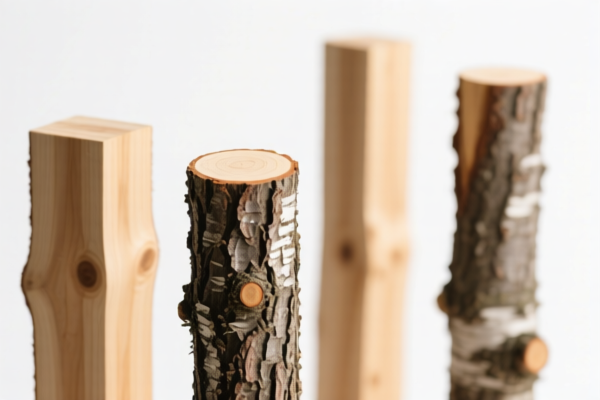
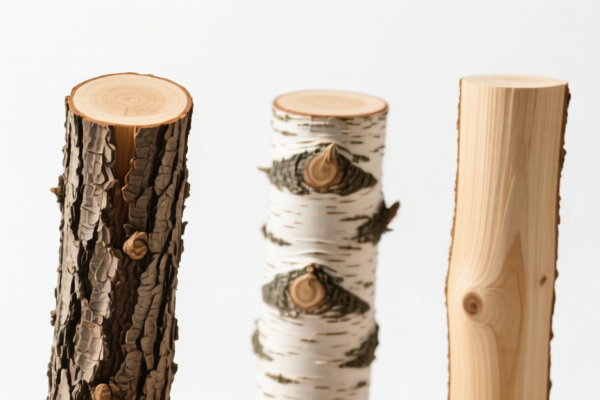
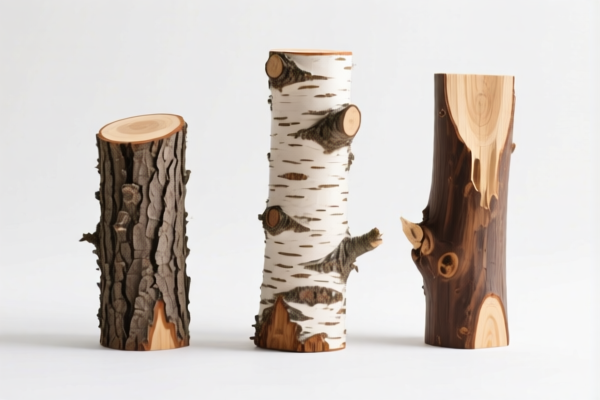

AI Analysis
🌲 Fir Wood Post (Cold-Fir Timber)
🌐 HS Code Reference & Customs Clearance Guide | 2026 Latest Tariff Analysis | Professional Entry Strategy
📌 I. Product Definition & Classification: Do You Really Understand "Fir Wood Post"?
Fir Wood Post refers to timber processed from the genus Abies (commonly known as Fir, Balsam Fir, or Noble Fir). In international trade, this product is classified not as a finished construction component, but as processed wood in its primary form.
The classification hinges on two critical factors: 1. Material Identity: The wood must be identifiable as belonging to the genus Abies (Cold Fir/Cold Fir). 2. Physical Form: It is described as a "Post," which implies a cylindrical or squared longitudinal shape. This typically falls under sawn wood (lengthwise cut) or roughly squared timber, rather than raw logs or finished carpentry.
⚠️ Key Distinction Point:
- If the wood is merely sawed lengthwise (even if shaped into a post/cylinder), it is classified under Chapter 44 (Wood and Wood Products).
- If it is charred, heavily treated, or cut into precise structural beams with specific joinery, it might move to Chapter 45 or 94, but standard "Fir Posts" for fencing, landscaping, or basic structural support remain in Chapter 44.
📦 II. HS Code Classification Details (2026 Latest Tariff Authority Comparison)
Based on the provided data, the goods fall into two closely related subheadings depending on the precise physical characteristics and customs interpretation of "Post" (cylindrical vs. sawn/squared).
| HS Code | Product Description | Applicable Scenario | Key Physical Feature |
|---|---|---|---|
4407.12.00.59 |
Wood sawed longitudinally, chipped, or split; of spruce, fir, or larch (Picea, Abies, Larix) | Cylindrical/Rough Posts: Fir wood shaped into posts (cylindrical or rough-squared), implying a "columnar" form inferred from "Post." | ✅ Matches "Post" as a columnar shape; Primary processed form. |
4407.12.00.58 |
Wood sawed longitudinally, chipped, or split; of spruce, fir, or larch (Picea, Abies, Larix) | Longitudinal Sawn/Sliced: Fir wood characterized by physical features of longitudinal sawing, planing, or slicing. Matches the material (Abies) and initial processing. | ✅ Matches "Abies" material & longitudinal sawing process. |
🔍 Critical Note:
- Both codes belong to 4407.12: Wood sawed longitudinally, chipped, or split, of a thickness exceeding 6 mm.
- The distinction between.58and.59often lies in the specific dimensional tolerance or surface finish (e.g., planed/sanded vs. rough-sawn) or local customs sub-classification of "Fir" species.
- "Post" (柱状) strongly suggests a cylindrical or rough-squared shape, which aligns with.59's summary "columnar/sawed primary form." However, if the post is simply a sawn plank squared off,.58may apply.
- Both codes attract the SAME high tariff rate due to the 25% + 10% additional duties.
💰 III. 2026 Latest Tariff Rate Breakdown (Including Surcharges & Policy Add-ons)
✅ Applicable Country: United States (US)
✅ Country of Origin: China (CN)
✅ Effective Date: 2025 November 10 onwards (including subsequent imports)
🎯 1. 4407.12.00.59 —— Fir Wood Post (Columnar/Sawed Primary Form)
| Item | Content |
|---|---|
| Base Tariff | 0% (ad valorem) |
| USITC Surcharge (Section 301) | +25% |
| IEEPA Surcharge (Section 122) | +10% |
| Total Tariff Rate | 35.0% |
| Tax Calculation | CIF Value × 35% |
| De Minimis Exemption | ❌ Not Available (deny_de_minimis) |
| Legal Basis Path | IEEPA:9903.01.24 → USITC:4407.12.00.59 → FOOTNOTE:301 |
📌 Explanation:
- "Base 0%": Standard MFN rate for sawn fir wood is often 0%.
- "+25%": Additional tariff under Section 301 of the Trade Act of 1974 against Chinese imports.
- "+10%": Additional tariff under IEEPA (International Emergency Economic Powers Act) or specific Section 122 measures targeting Chinese timber/wood products.
- Total 35%: This is a high barrier. Wood products from China face significant political and economic friction.
🎯 2. 4407.12.00.58 —— Fir Wood (Longitudinally Sawn/Sliced)
| Item | Content |
|---|---|
| Base Tariff | 0% |
| USITC Surcharge (Section 301) | +25% |
| IEEPA Surcharge (Section 122) | +10% |
| Total Tariff Rate | 35.0% |
| Tax Calculation | CIF Value × 35% |
| De Minimis Exemption | ❌ Not Available |
| Legal Basis Path | IEEPA:9903.01.24 → USITC:4407.12.00.58 → FOOTNOTE:301 |
📌 Note:
- Identical tax structure to.59.
- Whether classified as a "post" (.59) or "sawn wood" (.58), the cost impact is identical.
- Customs may scrutinize the species declaration. Must provide botanical name (Abies) to avoid misclassification penalties.
🛠️ IV. Customs Clearance Practical Advice (Battle-Tested Pitfall Avoidance)
✅ 1. Documentation Checklist (Mandatory)
| Document | Must Provide | Description |
|---|---|---|
| ✅ Commercial Invoice | ✔️ | Must clearly state: "Fir Wood Post, Genus: Abies, HS Code: 4407.12.00.59/58, Value: USD X" |
| ✅ Phytosanitary Certificate | ✔️ | CRITICAL: Issued by Chinese customs/forestry authority. Must confirm no pests/diseases. |
| ✅ Species Declaration | ✔️ | Explicitly state "Genus: Abies" (Cold Fir). Vague terms like "Softwood" or "Fir" may cause delays. |
| ✅ Packing List | ✔️ | Detail dimensions (diameter, length, thickness) to justify "Post" vs. "Log" classification. |
| ✅ Bill of Lading | ✔️ | Clean bill of lading, no stowage damage claims. |
| ✅ Fumigation Certificate | ✔️ | If wood is not heat-treated (HT), IPPC stamp is required. HT wood (HT stamp) is preferred for faster clearance. |
✅ 2. Declaration Tips (Key Mnemonics)
🔥 "Species Clear, Shape Defined, Phytosanitary Ready, Tariff Avoided!"
| Scenario | Correct Declaration | Incorrect Practice |
|---|---|---|
| Fir Post (Cylindrical/Rough) | 4407.12.00.59 - "Fir Wood Posts, Sawed, Genus Abies" |
Declaring as "Wood Logs" (4403) → Higher scrutiny, potential reclassification. |
| Fir Plank/Board | 4407.12.00.58 - "Fir Wood, Sawn, Thickness >6mm" |
Declaring as "Finished Furniture" (9403) → Wrong chapter, heavy fines. |
| Heat-Treated Wood | Mention "HT" on IPPC stamp | Ignoring treatment status → Quarantine risk, destruction risk. |
| Mixed Species | Separate declaration per species | Mixing Spruce and Fir → Confusion, potential denial of "Abies" benefits/penalties. |
✅ 3. Special Circumstances Handling
| Situation | Handling Advice |
|---|---|
| OEM Custom Shapes | Provide CAD drawings or photos showing the "Post" shape to justify 4407.12.00.59. |
| Chemically Treated Wood | If pressure-treated with preservatives, it may move to 4403 (Wood treated with paint, creosote, etc.). Notify Customs! |
| Small Samples (De Minimis) | ❌ Not Eligible. Wood products from China under 301/122 are excluded from $800 de minimis. |
| Origin Substitution | If wood is sourced from Canada/USA but processed in China, Country of Origin is China. Tariffs still apply. |
🌍 V. Global Market Clearance Comparison (2026 Latest)
| Country/Region | Recommended HS Code | Tariff (China Origin) | Certification Requirements | Notes |
|---|---|---|---|---|
| 🇺🇸 USA | 4407.12.00.59 / .58 |
35% (0% Base + 25% + 10%) | Phytosanitary + IPPC HT | High Barrier: 301 + IEEPA surcharges. |
| 🇨🇳 China | 4407.12.00.59 / .58 |
0% - 5% (Import Duty) | Phytosanitary | No 301/IEEPA. Low cost. |
| 🇪🇺 EU | 4407.12.00.00 |
0% (If FSC Certified) | EUTR (EU Timber Regulation) + FSC | Strict Legality: Must prove legal harvesting. |
| 🇬🇧 UK | 4407.12.00.00 |
0% - 5% | UKTR (UK Timber Regulation) | Similar to EU post-Brexit. |
| 🇯🇵 Japan | 4407.12.00.00 |
0% | Phytosanitary + IPPC | Strict pest control. |
📌 Conclusion:
- USA is the most expensive market due to 35% effective tariff.
- EU/UK focus on Legality (FSC/EUTR) rather than high tariffs.
- China Export: No export duties on raw wood, but Phytosanitary is strictly enforced.
📌 VI. Common Errors & Pitfall Guide (Lessons Learned)
❌ Error 1: Declaring "Fir Wood Post" as "Wood Logs" (HS 4403)
👉 Consequence: Logs have different phytosanitary rules and lower base tariffs, but misclassification leads to heavy fines and seizure.
❌ Error 2: Missing IPPC Heat Treatment Stamp
👉 Consequence: Quarantine Hold. Wood may be fumigated at your expense or destroyed.
❌ Error 3: Vague Species Description ("Softwood")
👉 Consequence: Customs may reclassify to a higher-risk or higher-tariff category, or reject the entry for lack of specificity.
❌ Error 4: Assuming De Minimis Applies
👉 Consequence: Packages under $800 from China are NOT exempt for wood products under 301/122. Full duty applies.
✅ Correct Practice:
"Fir Wood Posts, Sawn, Genus: Abies, Heat Treated (HT), IPPC Certified, HS Code: 4407.12.00.59, Value: USD X, Origin: China"
🎯 VII. Conclusion: Professional Declaration, Save Cost, Avoid Delays!
🎯 Remember the Mnemonic:
🔹 "Species Specific, Shape Clear, HT Stamp Ready, 35% Tax Avoided!"
🔹 "HS Code Determines Life, 35% Tax Difference, Declaration Mistake Means Big Loss!"
📌 Pro Tip:
If your Fir Wood Posts are sourced from Canada or the US but processed/sawn in China, the Country of Origin is China. The 35% tariff still applies.
Recommendation:
- Consider sawing in the country of origin (e.g., Canada) if the final product is destined for the US, to potentially leverage USMCA benefits (if applicable).
- Apply for a Binding Tariff Information (BTI) or Ruling from US Customs before shipping to lock in the HS Code and tariff rate.
📣 Immediate Action:
📞 Contact a licensed customs broker + Provide product photos + Apply for a Pre-Ruling on HS Code 4407.12.00.59/58
🚀 Let your Fir Wood Posts pass smoothly, avoid tariffs, and maximize profit!
✨ Professional Clearance Starts with Precise Classification!
💼 Every Dollar Saved is a Dollar Earned!
Customer Reviews
About HS Code Classification
The Harmonized System (HS) is an internationally standardized nomenclature developed by the World Customs Organization (WCO) to classify traded products. Over 200 countries use the HS system as the basis for customs tariffs, trade statistics, and import/export regulations.
Each HS code follows a hierarchical structure:
- Chapter (2 digits) — Broad category of goods (e.g., Chapter 84: Machinery and Mechanical Appliances)
- Heading (4 digits) — More specific grouping within the chapter
- Subheading (6 digits) — Internationally standardized breakdown, used by all WCO member countries
- National subdivisions (8-10 digits) — Country-specific extensions for further classification, such as US HTSUS 10-digit codes
Correct HS code classification is essential for smooth customs clearance, accurate duty payment, and compliance with trade regulations. Misclassification can lead to customs delays, overpayment of duties, or penalties.
When importing from CN to US, the applicable tariff rates may include:
- Most-Favored-Nation (MFN) rate — The standard duty rate applied to WTO members
- General rate — Applied to countries without trade agreements
- Trade remedy duties — Additional tariffs such as Section 301 (anti-dumping), Section 232 (national security), or countervailing duties
The information provided on this page is for reference purposes only. For official classification, please consult with your local customs authority or a licensed customs broker.