Fir Wood Posts
CN → US| HS Code | Tariff Rate | Origin | Destination | Doc |
|---|---|---|---|---|
| 4403210115 | 35.0% | CN | US | Official Doc |
| 4421997040 | 35.0% | CN | US | Official Doc |
| 4403220115 | 35.0% | CN | US | Official Doc |
Product Images
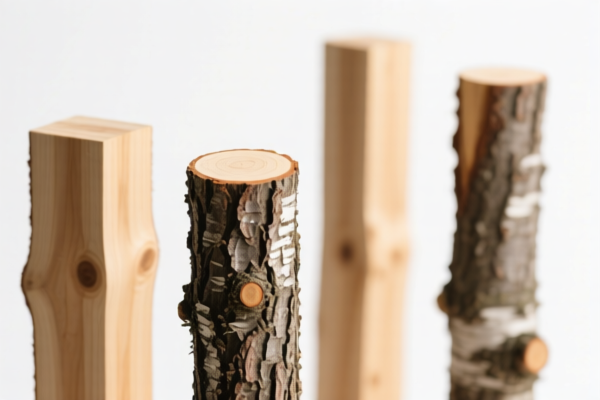
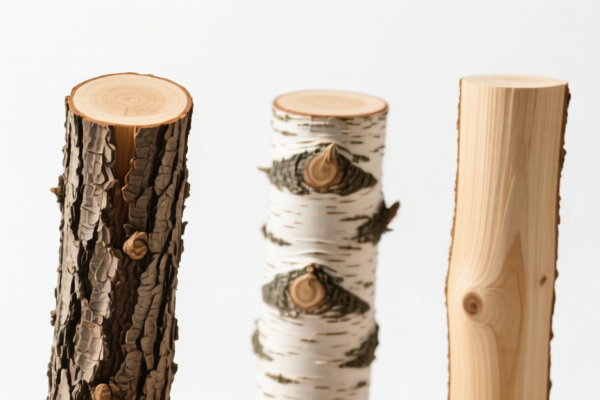


AI Analysis
🌲 Fir Wood Posts (Fence Posts & Structural Pillars)
🌐 HS Code Reference & Customs Clearance Guide | 2024/2025 Latest Tariff Analysis | Professional Strategy for US Import
📌 I. Product Definition & Classification: What Exactly is a "Fir Wood Post"?
Fir Wood Posts are wooden structures primarily used for fencing, landscaping, or light structural support. In international trade, their classification depends heavily on processing level and specific end-use intent at the time of import.
1. Rough/Hewn Posts (Primary Classification):
Treated or untreated fir wood posts that are essentially "logs" or rough-sawn timber intended for use as fence posts, piles, or stakes. These fall under Chapter 44 (Wood and articles of wood).
2. Processed/Finished Components (Secondary Classification):
If the fir wood is cut into precise shapes, grooved, or manufactured into specific fence panels or decorative garden structures, it might fall under Heading 4421 (Other articles of wood). However, for simple "posts," Chapter 44 is the dominant path.
⚠️ Key Distinction Point:
- If the post is rough-sawn, debarked, and shaped simply for fencing → Classify under 4403 (Wood treated/preserved or not).
- If the post is part of a finished garden structure or highly specialized accessory → Classify under 4421.
- Note: For standard "Fir Wood Fence Posts," 4403 is the most common and accurate entry.
📦 II. HS Code Classification Details (Based on Provided Data)
| HS Code | Product Description | Usage/Intent | Processing Status |
|---|---|---|---|
4403.21.01.15 |
Fir Wood Fence Posts | Used specifically as fence posts; material is Fir (Picea). | Rough-sawn/Treated |
4421.99.70.40 |
Fir Wood Posts (Pillars) | General wood pillars; shaped piles, fence posts, or rails. | Cut/Shaped wood articles |
4403.22.01.15 |
Fir Wood Fence Posts | Specific classification for Fir (Picea) fence posts with defined classification explanation. | Treated/Untreated Fir |
🔍 Important Note:
-4403.21.01.15&4403.22.01.15: These are the primary recommendations for standard fir wood fence posts. They explicitly mention "Fence Posts" and material "Fir."
-4421.99.70.40: This is a fallback for general "posts" or "pillars" if they are not strictly categorized as fencing material but rather as structural wood articles. It describes "Cut piles, fence posts, and rails."
💰 III. 2024/2025 Latest Tariff Rate Breakdown (Including Additional Duties)
✅ Applicable Country: United States (US)
✅ Origin: China (CN) (Assumed based on typical tariff structures mentioned in data)
✅ Effective Time: Current Trade Policies (Section 301 & IEEPA)
🎯 1. 4403.21.01.15 —— Fir Wood Fence Posts (Picea/Spruce)
| Item | Content |
|---|---|
| Base Tariff | 0.0% (Ad Valorem) |
| Section 301 Additional Duty | +25.0% |
| IEEPA (Section 122) Duty | +10.0% |
| Total Tariff Rate | 35.0% |
| Tax Calculation | CIF Value × 35% |
| De Minimis Exemption? | ❌ No (Deny De Minimis) |
| Legal Basis | Section 301 (USITC) + IEEPA (Executive Order) |
📌 Explanation:
- Base Rate 0%: Standard free trade rate for many wood products.
- 301 Duty 25%: Trump-era/Biden-maintained tariff on Chinese wood products.
- IEEPA 10%: Additional tariff under International Emergency Economic Powers Act.
- Total 35%: This is a high-cost item for US importers. Profit margins must account for this 35% levy.
🎯 2. 4421.99.70.40 —— Fir Wood Posts (General Wood Articles)
| Item | Content |
|---|---|
| Base Tariff | 0.0% |
| Section 301 Additional Duty | +25.0% |
| IEEPA (Section 122) Duty | +10.0% |
| Total Tariff Rate | 35.0% |
| Tax Calculation | CIF Value × 35% |
| De Minimis Exemption? | ❌ No |
📌 Note:
- Even if classified under 4421 (Other articles of wood), the additional tariffs remain the same (35%).
- Do not assume "other articles" are exempt from Section 301 duties. Most wood products from China are targeted.
🛠️ IV. Customs Clearance Practical Advice (Avoiding Pitfalls)
✅ 1. Required Documentation Checklist
| Document | Mandatory? | Notes |
|---|---|---|
| ✅ Commercial Invoice | ✔️ | Must specify: "Fir Wood Fence Posts," Material: Picea spp., Use: Fencing |
| ✅ Packing List | ✔️ | Detail weight, dimensions, and number of posts per bundle |
| ✅ Phytosanitary Certificate | ✔️ | CRITICAL: Wood products require IPPC treatment proof (heat treatment or fumigation) |
| ✅ HTS Code Confirmation | ✔️ | Use 4403.21.01.15 for specific fence posts |
| ✅ Proof of Treatment | ✔️ | Certify if wood is chemically treated (e.g., CCA, ACQ) to avoid EPA/USDA restrictions |
✅ 2. Declaration Tips (Key Keywords)
🔥 “Specify Species, State Use, Declare Treatment!”
| Scenario | Correct Declaration | Wrong Declaration |
|---|---|---|
| Standard Fence Posts | "Fir Wood Fence Posts, Heat Treated, For Garden Fencing" |
"Wooden Sticks" or "Timber" |
| Treated Posts | "Fir Posts, Chemically Treated with ACQ, Phytosanitary Cert Attached" |
"Untreated Wood" |
| Bulk Shipment | "Picea abies Fence Posts, HS 4403.21.01.15" |
"Lumber" (Wrong HS) |
✅ 3. Special Cases
| Situation | Handling Advice |
|---|---|
| Treated vs. Untreated | Untreated wood faces stricter USDA/APHIS inspection. Treated wood requires EPA compliance docs. |
| IPPC Marking | All wood packaging/posts must have the IPPC logo with country code (e.g., CN-XXX). |
| Value Misdeclaration | Do not undervalue. Customs audits wood imports heavily. 35% tax is significant; errors trigger penalties. |
🌍 V. Global Market Comparison (2024/2025)
| Country/Region | Recommended HS Code | Base Tariff | Additional Duties | Total Est. Rate | Notes |
|---|---|---|---|---|---|
| 🇺🇸 USA | 4403.21.01.15 |
0% | 35% (301+IEEPA) | 35% | High tariff barrier |
| 🇨🇳 China | 4403.21.01.15 |
0-5% | None | 0-5% | Low export tax |
| 🇪🇺 EU | 4403.21.00.00 |
0% | None | 0% | Free trade, but strict phytosanitary |
| 🇨🇦 Canada | 4403.21.00.00 |
0% | None | 0% | CUSMA Free Trade |
📌 Conclusion:
- USA is the hardest market due to the 35% combined tariff.
- EU and Canada are tariff-free but have strict environmental and phytosanitary regulations.
- Consider sourcing from non-China origins (e.g., Canada, EU, Vietnam) to avoid the 35% US tariff.
📌 VI. Common Mistakes & Pitfalls (Lessons Learned)
❌ Mistake 1: Declaring "Fir Wood Posts" as "Raw Timber" (HS 4403 without specific subheading)
👉 Consequence: Customs may reclassify and apply higher penalties or delay shipment for inspection.
❌ Mistake 2: Omitting Phytosanitary Certificate
👉 Consequence: Shipment held at port for fumigation or destroyed. Costly and time-consuming.
❌ Mistake 3: Underestimating Tariff Impact
👉 Consequence: Profit margin wiped out by 35% duty. Always calculate Landed Cost including 35% tax.
❌ Mistake 4: Incorrect IPPC Marking
👉 Consequence: Rejected by USDA/APHIS. Must have proper heat treatment label.
✅ Correct Approach:
"Fir (Picea spp.) Fence Posts, Heat Treated, IPPC Marked, HS 4403.21.01.15, CIF Value $XX,000"
🎯 VII. Conclusion: Professional Clearance, Save Costs, Avoid Risks
🎯 Key Takeaways:
🔹 HS Code
4403.21.01.15is the most precise for Fir Fence Posts.
🔹 Total Tariff = 35% (0% Base + 25% Section 301 + 10% IEEPA).
🔹 Phytosanitary Compliance is non-negotiable.
🔹 Value Calculation must include 35% duty upfront.
📌 Pro Tip:
If you are importing to the US, consider bonded warehousing or foreign trade zones (FTZ) to defer duty payments until the goods are sold domestically.
Also, verify if your supplier can provide EPA-compliant treatment if the wood is chemically preserved.
📣 Immediate Action Required:
📞 Contact a Customs Broker to confirm the latest IEEPA 10% applicability.
📄 Ensure Phytosanitary Certificate is issued by the country of origin.
📊 Calculate Landed Cost:(CIF Value × 1.35) + Freight + Insurance + Port Fees
✨ Professional Customs Clearance Starts with Accurate Classification!
💼 Your Profit Margin Depends on Precision!
Customer Reviews
About HS Code Classification
The Harmonized System (HS) is an internationally standardized nomenclature developed by the World Customs Organization (WCO) to classify traded products. Over 200 countries use the HS system as the basis for customs tariffs, trade statistics, and import/export regulations.
Each HS code follows a hierarchical structure:
- Chapter (2 digits) — Broad category of goods (e.g., Chapter 84: Machinery and Mechanical Appliances)
- Heading (4 digits) — More specific grouping within the chapter
- Subheading (6 digits) — Internationally standardized breakdown, used by all WCO member countries
- National subdivisions (8-10 digits) — Country-specific extensions for further classification, such as US HTSUS 10-digit codes
Correct HS code classification is essential for smooth customs clearance, accurate duty payment, and compliance with trade regulations. Misclassification can lead to customs delays, overpayment of duties, or penalties.
When importing from CN to US, the applicable tariff rates may include:
- Most-Favored-Nation (MFN) rate — The standard duty rate applied to WTO members
- General rate — Applied to countries without trade agreements
- Trade remedy duties — Additional tariffs such as Section 301 (anti-dumping), Section 232 (national security), or countervailing duties
The information provided on this page is for reference purposes only. For official classification, please consult with your local customs authority or a licensed customs broker.