Fir Wood Protective Post
CN → US| HS Code | Tariff Rate | Origin | Destination | Doc |
|---|---|---|---|---|
| 4407120058 | 35.0% | CN | US | Official Doc |
| 4407120059 | 35.0% | CN | US | Official Doc |
Product Images
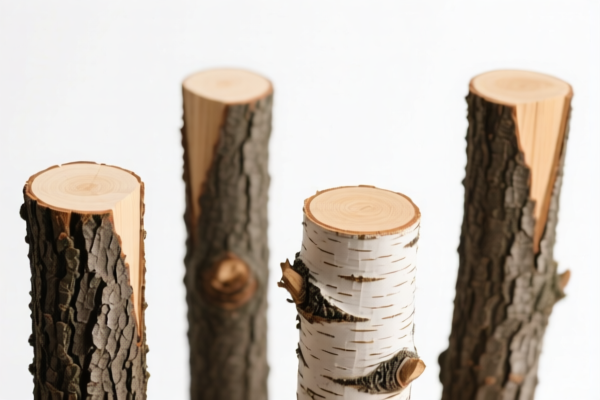
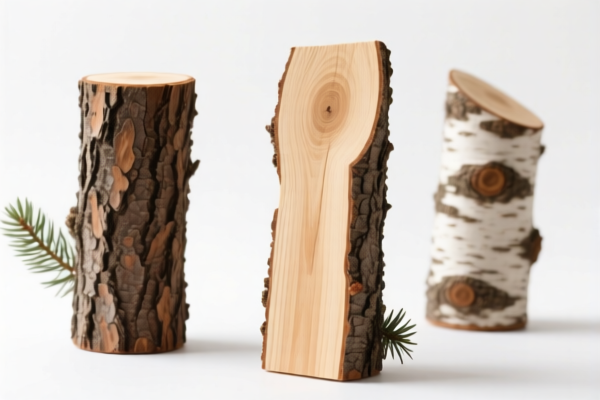
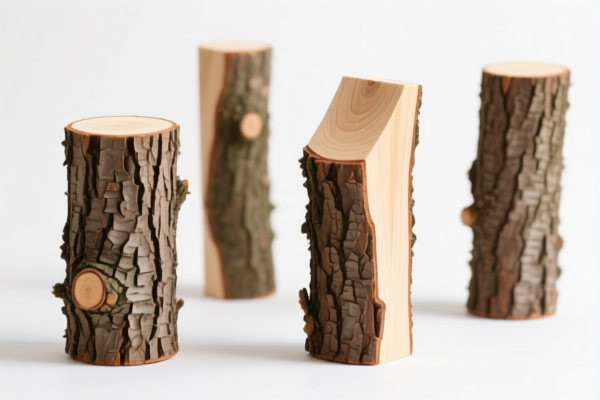

AI Analysis
🌲 Fir Wood Protective Post (Treated & Untreated Coniferous Timber)
🌐 HS Code Reference & Clearance Guide | 2026 Latest Tariff Analysis | Professional Clearance Strategy
📌 Part 1: Product Definition & Classification: Do You Truly Understand "Fir Wood Posts"?
A "Fir Wood Protective Post" is typically a structural timber component used in construction, fencing, or landscaping. In international trade, the classification depends strictly on the processing state and treatment level of the wood.
Key Distinction: - Processed Timber (Planned/Sanded/End-Jointed): Wood that has been refined, planed, sanded, or joined, exceeding 6mm thickness. - Untreated/Rough Timber: Wood that has been sawn or chipped but not further processed or chemically treated.
⚠️ Critical Classification Point:
- If the post is rough, untreated, and specifically identified as Fir (Abies spp.) → It falls under 4407.12.00.58.
- If the post is other types of Fir (Abies spp.) (e.g., planed, sanded, or end-jointed) → It falls under 4407.12.00.59.
- Note: "Spruce (Picea spp.)" is grouped with Fir in the general description but has separate sub-codes. Ensure your product is specifically Fir (Abies) and not Spruce.
📦 Part 2: HS Code Classification Details (2026 Latest Tariff Authority Comparison)
| HS Code | Product Description | Application Scenario | Treatment Status |
|---|---|---|---|
4407.12.00.58 |
Fir (Abies spp.), Rough | Raw construction posts, untreated wooden stakes, rough-sawn timber | ❌ Not Treated / Rough |
4407.12.00.59 |
Fir (Abies spp.), Other | Planed, sanded, end-jointed, or processed fir wood posts | ✅ Processed / Other |
🔍 Key Reminder:
- Both codes fall under 4407.12.00.00: "Wood sawn or chipped lengthwise... of a thickness exceeding 6 mm: Coniferous: Of fir (Abies spp.) and spruce (Picea spp.) Other". - The suffix.58is for Rough (unprocessed) Fir. - The suffix.59is for Other (processed/planed/sanded) Fir. - Misclassification Risk: Declaring planed/sanded wood as "Rough" to avoid scrutiny can lead to customs penalties.
💰 Part 3: 2026 Latest Tariff Rate Details (Including Additional Taxes)
✅ Applicable Country: United States (US)
✅ Origin: China (CN)
✅ Effective Date: Post-2025 (Subject to current trade policies)
🎯 1. 4407.12.00.58 —— Fir (Abies spp.): Rough
| Item | Content |
|---|---|
| Base Tariff Rate | 0.0% (ad valorem) |
| Section 301 Additional Tariff | +25.0% |
| Total Effective Tax Rate | 25.0% |
| Tax Calculation | CIF Value × 25% |
| De Minimis Eligibility | ❌ Not Eligible (Wood products are generally excluded from $800 de minimis exemption under current enforcement) |
| Legal Basis Path | HTS:4407.12.00.58 → Section 301 Footnote |
📌 Explanation:
- Although the base MFN tariff is 0%, the Section 301 additional duty of 25% applies to most Chinese-origin wood products. - This is a high-cost scenario for exporters. The 25% is mandatory unless a specific exclusion is obtained.
🎯 2. 4407.12.00.59 —— Fir (Abies spp.): Other
| Item | Content |
|---|---|
| Base Tariff Rate | 0.0% (ad valorem) |
| Section 301 Additional Tariff | +25.0% |
| Total Effective Tax Rate | 25.0% |
| Tax Calculation | CIF Value × 25% |
| De Minimis Eligibility | ❌ Not Eligible |
| Legal Basis Path | HTS:4407.12.00.59 → Section 301 Footnote |
📌 Note:
- The tax rate is identical to the "Rough" category. - Whether the wood is planed, sanded, or end-jointed does not reduce the additional duty. - Ensure your description matches the "Other" category if the wood is processed, to avoid misdeclaration.
🛠️ Part 4: Customs Clearance Practical Advice (Real-World Pitfall Avoidance)
✅ 1. Required Documentation Checklist (Non-Negotiable)
| Document | Mandatory? | Description |
|---|---|---|
| ✅ Product Specification Sheet | ✔️ | Must specify species (Abies spp.), dimensions, thickness (>6mm), and processing type (Rough vs. Planed). |
| ✅ Material Safety Data Sheet (MSDS) | ✔️ | If the "protective post" implies any chemical treatment (even if declared as "not treated" for tariff, verify no preservatives are present). |
| ✅ Phytosanitary Certificate | ✔️ | Critical for wood! Required by US USDA/APHIS to prevent pest entry. Must certify wood is free from live insects and bark (unless exempt). |
| ✅ Commercial Invoice | ✔️ | Must clearly state: "Fir Wood (Abies spp.) Protective Post, HTS 4407.12.00.58/59, Origin: China". |
| ✅ Packing List | ✔️ | Detailed breakdown of weight and volume. |
| ✅ Bill of Lading / Air Waybill | ✔️ | Standard shipping document. |
✅ 2. Declaration Tips (Key Mnemonics)
🔥 "Species First, Treatment Second, Phytosanitary Always!"
| Scenario | Correct Declaration | Wrong Practice |
|---|---|---|
| Unprocessed, Rough Fir Post | 4407.12.00.58 - "Fir Wood (Abies spp.), Rough, Not Treated" |
Declaring as "Spruce" or generic "Lumber" |
| Planed/Sanded Fir Post | 4407.12.00.59 - "Fir Wood (Abies spp.), Planed/Sanded" |
Declaring as "Rough" to avoid inspection |
| Chemically Treated Post | Not in provided HS Codes | Must declare proper treatment; may require different HS & EPA/FIFRA compliance |
| Spruce (Picea) Post | Different HS Code (e.g., 4407.13.xxxx) | Mislabeling as "Fir" → Severe penalties |
✅ 3. Special Handling Notes
| Situation | Handling Advice |
|---|---|
| Chemical Treatment | If the "protective" aspect involves creosote, copper chromate arsenic (CCA), or other preservatives, these HS codes do not apply. You must declare the specific treatment, which may trigger EPA regulations and different HS codes. |
| Bark Removal | US imports often require debarked wood. Ensure your supplier provides wood without bark unless explicitly allowed. |
| Moisture Content | Specify moisture content if required by buyer, but note it doesn't change HS classification. |
| End-Jointed Wood | If the post is made of multiple pieces joined together, ensure it meets the definition of "end-jointed" under HTS 4407. |
🌍 Part 5: Global Market Clearance Comparison (2026 Latest)
| Country/Region | Recommended HS Code | Tariff (China Origin) | Certification Requirements | Notes |
|---|---|---|---|---|
| 🇺🇸 USA | 4407.12.00.58 or .59 |
25% (Section 301) | Phytosanitary Certificate, USDA Compliance | High duty; strict biosecurity |
| 🇨🇳 China | 4407.12.00.58 or .59 |
~5-10% | Fumigation Certificate | Lower duty than US |
| 🇪🇺 EU | 4407.12.00 |
~5-15% | ISPM 15 Marking, Timber Regulation (EUTR) | Heavy compliance burden |
| 🇬🇧 UK | 4407.12.00 |
~5-15% | ISPM 15 Marking, UK Timber Regulation | Similar to EU |
| 🇯🇵 Japan | 4407.12.00 |
~1-5% | Phytosanitary Certificate, ISPM 15 | Strict pest control |
📌 Conclusion:
- USA imposes a 25% additional tariff on Chinese-origin fir wood posts. This significantly impacts cost competitiveness. - Phytosanitary compliance is more critical than tariff negotiation for wood products.
📌 Part 6: Common Errors & Pitfall Guide (Lessons Learned)
❌ Error 1: Misidentifying Species
👉 Consequence: Declaring Spruce as Fir → Customs audit → Penalties + Delay
✅ Fix: Verify species name on label/packaging. Use scientific name Abies spp.
❌ Error 2: Ignoring "Treated" Status
👉 Consequence: Declaring "Not Treated" when wood is chemically protected → EPA Violation + Confiscation
✅ Fix: If any chemical is added, declare treatment and consult EPA guidelines.
❌ Error 3: Missing Phytosanitary Certificate
👉 Consequence: Shipment Rejected or Destroyed at US Port of Entry
✅ Fix: Obtain Phytosanitary Certificate from origin country's agricultural authority before shipment.
❌ Error 4: Incorrect Thickness Declaration
👉 Consequence: If thickness ≤6mm, HS code changes → Misclassification Penalty
✅ Fix: Ensure all measurements are strictly >6mm for these codes.
🎯 Part 7: Conclusion: Precision in Declaration Saves Costs!
🎯 Remember the Mantra:
🔹 "Fir is Abies, Spruce is Picea – Don't mix them up!"
🔹 "Rough is .58, Planed is .59 – Match the reality!"
🔹 "25% Tariff is Inevitable – Plan your pricing!"
🔹 "Phytosanitary Certificate is Mandatory – No Certificate, No Entry!"
📌 Pro Tip:
If your fir wood posts are originating from Vietnam, Malaysia, or Thailand, check for FTA benefits (e.g., CPTPP, RCEP) to potentially reduce or eliminate tariffs. However, ensure rules of origin are strictly met.
📣 Immediate Action Items:
📞 Confirm Species (Abies spp.) and Treatment Status with Supplier
📄 Request Phytosanitary Certificate
🧮 Calculate Landed Cost with 25% Additional Duty
🚀 Ensure Smooth Clearance by Accurate HS Code Declaration
✨ Professional Clearance Starts with Accurate Classification!
💼 Your Profit Margin Depends on Precise Tariff Planning!
Customer Reviews
About HS Code Classification
The Harmonized System (HS) is an internationally standardized nomenclature developed by the World Customs Organization (WCO) to classify traded products. Over 200 countries use the HS system as the basis for customs tariffs, trade statistics, and import/export regulations.
Each HS code follows a hierarchical structure:
- Chapter (2 digits) — Broad category of goods (e.g., Chapter 84: Machinery and Mechanical Appliances)
- Heading (4 digits) — More specific grouping within the chapter
- Subheading (6 digits) — Internationally standardized breakdown, used by all WCO member countries
- National subdivisions (8-10 digits) — Country-specific extensions for further classification, such as US HTSUS 10-digit codes
Correct HS code classification is essential for smooth customs clearance, accurate duty payment, and compliance with trade regulations. Misclassification can lead to customs delays, overpayment of duties, or penalties.
When importing from CN to US, the applicable tariff rates may include:
- Most-Favored-Nation (MFN) rate — The standard duty rate applied to WTO members
- General rate — Applied to countries without trade agreements
- Trade remedy duties — Additional tariffs such as Section 301 (anti-dumping), Section 232 (national security), or countervailing duties
The information provided on this page is for reference purposes only. For official classification, please consult with your local customs authority or a licensed customs broker.