Fir Wood for Packaging
CN → US| HS Code | Tariff Rate | Origin | Destination | Doc |
|---|---|---|---|---|
| 4415103000 | 35.0% | CN | US | Official Doc |
| 4410190010 | 35.0% | CN | US | Official Doc |
| 4415109000 | 45.7% | CN | US | Official Doc |
| 4407110046 | 35.0% | CN | US | Official Doc |
| 4407110043 | 35.0% | CN | US | Official Doc |
Product Images
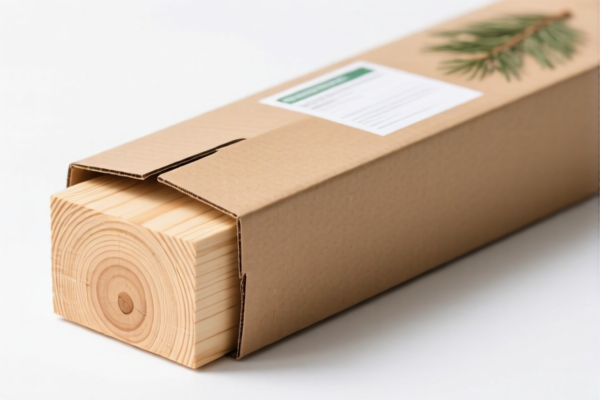
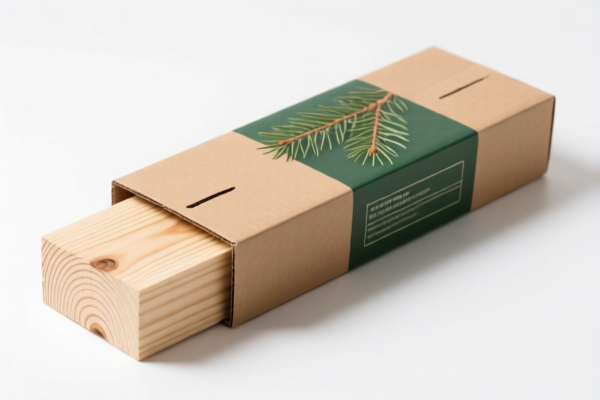
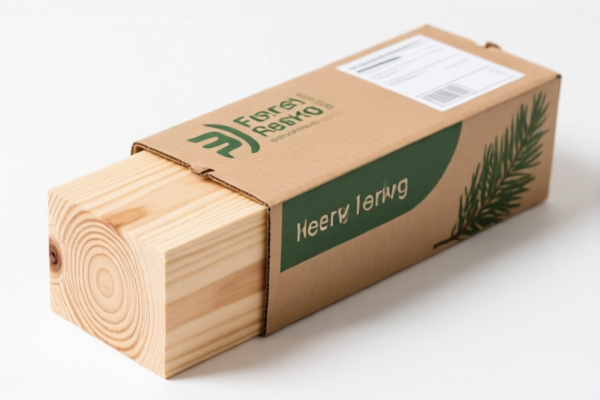
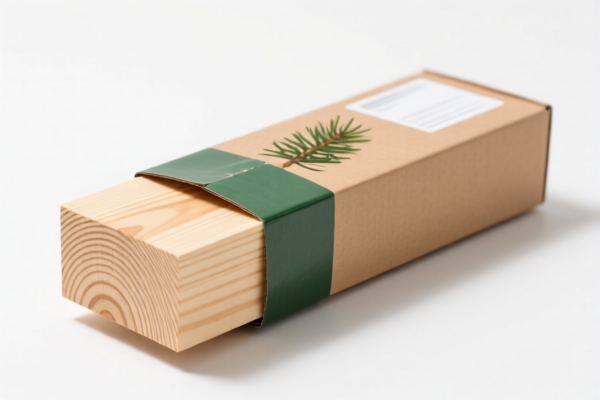
AI Analysis
🌲 Fir Wood for Packaging (FSC-Compliant & Structural)
🌐 HS Code Reference & Customs Clearance Guide | 2026 Latest Tariff Analysis | Professional US Entry Strategy
📌 I. Product Definition & Classification: What is "Fir Wood for Packaging"?
Fir wood (often referring to Spruce-Fir mix or specific Spruce species in trade contexts) used for packaging falls into two distinct categories in international trade:
- Packaging Boxes/Crates (Finished Goods): Structurally formed boxes, crates, or pallets made of fir/spruce wood. These are considered "articles" rather than raw material.
- Wooden Planks/Slabs (Raw Material): Rough-sawn, planed, or processed wood intended to be used for packaging but not yet formed into boxes. These fall under "wood in the primary forms."
⚠️ Key Distinction:
- If the item is already shaped into a box/crate →归入 4415.10 (Packaging containers).
- If the item is still in plank/slab form →归入 4410.19 or 4407.11 (Wood products/Planks).
- Note on Species: In HS nomenclature, "Fir" and "Spruce" are often grouped under Chapter 44, Heading 4407/4410 for softwood. The data provided specifically distinguishes between "Packaging Boxes" (4415) and "Plank-like derivatives" (4410/4407).
📦 II. HS Code Classification Details (2026 Latest Tariff Authority Cross-Reference)
| HS Code | Product Description | Application Scenario | Form Factor |
|---|---|---|---|
4415.10.30.00 |
Packaging boxes/crates of spruce/fir wood | Ready-to-use shipping crates, export boxes | ✅ Finished Box |
4410.19.00.10 |
Plank-based derivatives of spruce/fir wood | Rough planks, slabs used for making packaging | 🪵 Wood/Plank Form |
4415.10.90.00 |
Other packaging boxes of spruce/fir wood | Non-standard crates, specialized wooden containers | ✅ Finished Box (Other) |
4407.11.00.46 |
Fir/Spruce sawn wood (packaging grade) | Raw logs, sawn timber for packaging manufacturing | 🌲 Raw Log/Timber |
4407.11.00.43 |
Fir/Spruce sawn wood (packaging grade) | Raw logs, sawn timber for packaging manufacturing | 🌲 Raw Log/Timber |
🔍 Critical Reminder:
- Packaging Boxes (4415) are finished articles.
- Wood Planks/Lumber (4410/4407) are raw materials.
- Misclassification Risk: Declaring a finished crate as "wood plank" or vice versa leads to customs delays, penalties, and potential re-inspection.
💰 III. 2026 Latest Tariff Rate Breakdown (US Import from China)
✅ Applicable Country: United States (US)
✅ Origin: China (CN)
✅ Effective Date: 2025 November 10 onwards (and subsequent imports)
🎯 1. HS Code 4415.10.30.00 & 4410.19.00.10 – Packaging Boxes / Plank Derivatives
| Item | Detail |
|---|---|
| Base Tariff | 0% (ad valorem) |
| USITC Additional Tariff | +25% (Section 301 Measures) |
| IEEPA Additional Tariff | +10% (China/HK specific, effective Nov 10, 2025) |
| Total Tax Rate | 35.0% |
| Tax Calculation | CIF Value × 35% |
| De Minimis Eligibility | ❌ Not Eligible (deny_de_minimis) |
| Legal Basis Chain | IEEPA:9903.01.25 → IEEPA:9903.01.24 → USITC:4415.10.30.00 / 4410.19.00.10 |
📌 Explanation:
- The 25% USITC tariff is part of the ongoing Section 301 tariffs on Chinese wood products.
- The 10% IEEPA tariff is a new/additional levy applied to specific Chinese goods.
- Total 35% is a significant cost driver. Must be factored into landed cost calculations.
🎯 2. HS Code 4415.10.90.00 – Other Packaging Boxes (Spruce/Fir)
| Item | Detail |
|---|---|
| Base Tariff | 10.7% |
| USITC Additional Tariff | +25% |
| IEEPA Additional Tariff | +10% |
| Total Tax Rate | 45.7% |
| Tax Calculation | CIF Value × 45.7% |
| De Minimis Eligibility | ❌ Not Eligible |
| Legal Basis Chain | IEEPA:9903.01.25 → IEEPA:9903.01.24 → USITC:4415.10.90.00 |
📌 Note:
- This code applies to non-standard or unspecified fir/spruce packaging boxes.
- The higher base rate (10.7%) makes this category more expensive than4415.10.30.00.
- Avoid this code if your product fits4415.10.30.00(standard boxes).
🎯 3. HS Code 4407.11.00.46 & 4407.11.00.43 – Fir/Spruce Sawn Wood (Raw)
| Item | Detail |
|---|---|
| Base Tariff | 0% |
| USITC Additional Tariff | +25% |
| IEEPA Additional Tariff | +10% |
| Total Tax Rate | 35.0% |
| Tax Calculation | CIF Value × 35% |
| De Minimis Eligibility | ❌ Not Eligible |
| Legal Basis Chain | IEEPA:9903.01.25 → IEEPA:9903.01.24 → USITC:4407.11.00.46 / 4407.11.00.43 |
📌 Explanation:
- These codes apply to raw sawn wood intended for packaging manufacturing.
- Although the form is raw, it is still subject to 35% total tariffs due to Section 301 and IEEPA.
- ISPM 15 Compliance: Ensure wood is heat-treated (HT) or fumigated (MB) to prevent pest quarantine issues.
🛠️ IV. Customs Clearance Practical Advice (Battle-Tested Pitfall Avoidance)
✅ 1. Required Documentation Checklist (Non-Negotiable)
| Document | Required | Notes |
|---|---|---|
| ✅ Commercial Invoice | ✔️ | Must clearly state "Fir/Spruce Wood Packaging" or "Wood Planks" |
| ✅ Packing List | ✔️ | Detail weight, volume, and number of boxes/planks |
| ✅ ISPM 15 Certificate | ✔️ | Critical for Wood: Proof of Heat Treatment (HT) or Fumigation |
| ✅ Marking on Wood | ✔️ | Must display IBR (International Bark Removal) logo + HT mark + Country Code (CN) |
| ✅ Product Photos | ✔️ | Show end grain, knots, and treatment stamps |
| ✅ FSC/PEFC Certificate | ✔️ | Optional but recommended for sustainability claims |
| ✅ Bill of Lading | ✔️ | Ensure HS codes match invoice description |
✅ 2. Declaration Strategy (Key Mnemonic)
🔥 “Form Determines Code, Stamp Determines Entry, No Stamp = Hold!”
| Scenario | Correct HS Code | Common Mistake |
|---|---|---|
| Finished Crate/Box | 4415.10.30.00 or 4415.10.90.00 |
Declaring as "Plank" → 45% or 35%? Check form! |
| Rough Sawn Plank | 4410.19.00.10 or 4407.11.00.46 |
Declaring as "Box" → Wrong form factor |
| Wood WITHOUT ISPM 15 Mark | Held by CBP | No HS code matters if pest risk is unverified |
| Mixed Wood/Packaging | Separate Lines | Do not lump "wood" and "boxes" together |
✅ 3. Special Case Handling
| Scenario | Handling Advice |
|---|---|
| OEM Custom Crates | Provide design specs. Ensure it fits 4415.10.30.00 (standard) to avoid higher 4415.10.90.00 rate. |
| Recycled Wood | Must prove it is not "waste wood" (which has stricter regulations). |
| Wood with Metal/Nails | Still classified as wood packaging. Do not declare nails separately. |
| Heat Treatment Failure | If mark is illegible, CBP may require re-treatment or destruction. Costly! |
🌍 V. Global Market Comparison (2026 Update)
| Country/Region | Recommended HS Code | Tariff (China Origin) | Certification | Notes |
|---|---|---|---|---|
| 🇺🇸 USA | 4415.10.30.00 / 4407.11.00.46 |
35% (Base 0%+25%+10%) | ISPM 15 | High tariffs due to Sec 301 |
| 🇨🇳 China | 4415.10.30.00 |
0-5% | ISPM 15 | Low tariffs for domestic trade |
| 🇪🇺 EU | 4415.10.90 |
0-6% | ISPM 15 + Fumigation | Stricter pest checks |
| 🇯🇵 Japan | 4415.10.90 |
0-5% | ISPM 15 | Strict wood quality standards |
📌 Conclusion:
- USA is the most costly market for Chinese fir wood packaging due to 35% total tariffs.
- ISPM 15 compliance is non-negotiable globally. Failure leads to rejection.
- Consider transshipment or third-country processing if tariff burden is too high (e.g., Vietnam, Mexico).
📌 VI. Common Mistakes & Pitfalls (Lessons Learned)
❌ Mistake 1: Forgetting the ISPM 15 Stamp
👉 Consequence: Goods held at port, re-treatment required ($$$), or destroyed.
❌ Mistake 2: Declaring Finished Boxes as Raw Planks (4407)
👉 Consequence: Misclassification penalty. If caught, may lead to audit of all past shipments.
❌ Mistake 3: Using 4415.10.90.00 for Standard Boxes
👉 Consequence: Paying 45.7% instead of 35%. Always check if 4415.10.30.00 applies.
❌ Mistake 4: Ignoring IEEPA 10% Surcharges
👉 Consequence: Under-quoting landed cost, losing profit margin.
✅ Correct Approach:
"Fir Wood Packaging Crate, ISPM 15 HT Marked, Standard Export Size, Model XYZ"
🎯 VII. Conclusion: Professional Declaration, Cost Efficiency
🎯 Remember the Mantra:
🔹 “Form is Key, Stamp is Law, 35% is the New Normal, 45% for Mistakes!”
🔹 “HS Code 4415.30 saves 10.7%, ISPM 15 saves Demurrage!”
📌 Pro Tip:
If your fir wood packaging is processed in Vietnam, Mexico, or Thailand, you may apply for IEEPA Exemptions or lower Section 301 rates.
Recommend applying for Advance Ruling from CBP to confirm the correct HS code for your specific design.
📣 Immediate Action:
📞 Contact a licensed Customs Broker + Provide Product Photos + Verify ISPM 15 Marks
🚀 Let your wood packaging clear smoothly, avoid delays, and protect your margins!
✨ Professional Customs Clearance Starts with Accurate Classification!
💼 Every Percent of Tariff Saved is Pure Profit!
Customer Reviews
About HS Code Classification
The Harmonized System (HS) is an internationally standardized nomenclature developed by the World Customs Organization (WCO) to classify traded products. Over 200 countries use the HS system as the basis for customs tariffs, trade statistics, and import/export regulations.
Each HS code follows a hierarchical structure:
- Chapter (2 digits) — Broad category of goods (e.g., Chapter 84: Machinery and Mechanical Appliances)
- Heading (4 digits) — More specific grouping within the chapter
- Subheading (6 digits) — Internationally standardized breakdown, used by all WCO member countries
- National subdivisions (8-10 digits) — Country-specific extensions for further classification, such as US HTSUS 10-digit codes
Correct HS code classification is essential for smooth customs clearance, accurate duty payment, and compliance with trade regulations. Misclassification can lead to customs delays, overpayment of duties, or penalties.
When importing from CN to US, the applicable tariff rates may include:
- Most-Favored-Nation (MFN) rate — The standard duty rate applied to WTO members
- General rate — Applied to countries without trade agreements
- Trade remedy duties — Additional tariffs such as Section 301 (anti-dumping), Section 232 (national security), or countervailing duties
The information provided on this page is for reference purposes only. For official classification, please consult with your local customs authority or a licensed customs broker.