Fir and Spruce Telephone Poles
CN → US| HS Code | Tariff Rate | Origin | Destination | Doc |
|---|---|---|---|---|
| 4407120059 | 35.0% | CN | US | Official Doc |
| 4403230112 | 35.0% | CN | US | Official Doc |
| 4404100080 | 35.0% | CN | US | Official Doc |
| 4407120020 | 35.0% | CN | US | Official Doc |
| 4403240112 | 35.0% | CN | US | Official Doc |
Product Images
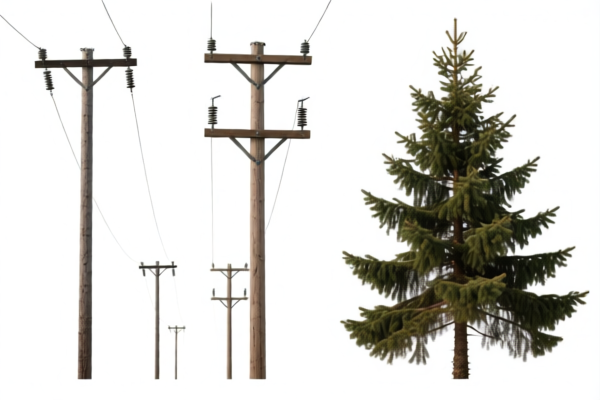
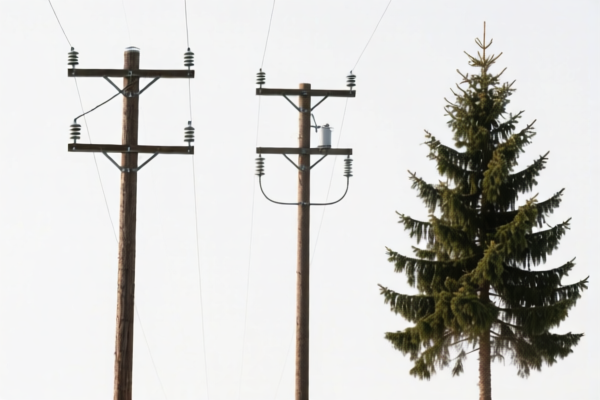
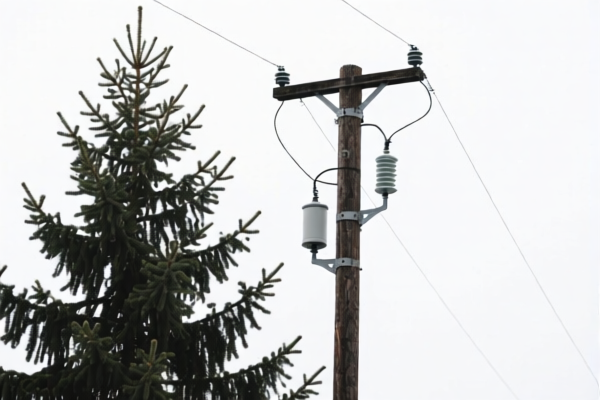
AI Analysis
🌲 Fir & Spruce Telephone Poles (Power Poles)
🇺🇸 US Import Clearance Guide 2026 | Tax & Compliance Deep Dive
🌐 HS Code Reference & Customs Clearance Guide | 2026 Latest Tariff Analysis | Professional-Level Entry Strategy
📌 Part 1: Product Definition & Classification: What Are "Fir & Spruce Poles"?
Fir and Spruce telephone poles (often referred to as Power Poles or Utility Poles) are treated timber products used for telecommunications and electrical transmission. In international trade, their classification depends heavily on processing level and final form.
They are typically categorized into three main stages of processing:
- Preserved Log Poles (4403 Series): Raw or partially processed tree trunks, treated with preservatives, retaining their natural bark or rough surface.
- Sawn Wood / Dimensional Timber (4407 Series): Wood that has been sawn, dressed, or planed but not yet formed into a specific utility shape.
- Towns of Wood / Poles & Palings (4404 Series): Wood shaped into specific forms, such as rounded poles, stakes, or posts, often with smoothed surfaces.
⚠ Key Distinction Point: - If the pole is a rough, natural tree trunk (preserved) →归类 to 4403 - If the pole is sawn or planed into a specific utility shape →归类 to 4404 or 4407 depending on exact finish. - Critical Note: All these categories are subject to high additional tariffs due to US-China trade tensions.
📦 Part 2: Detailed HSCodes & Tariff Breakdown (2026 Official Data)
Based on the provided data, the following HSCodes apply to Fir & Spruce Telephone Poles. All items share the same total tax rate of 35.0%.
| HSCODE | Product Description (Summary) | Key Classification Logic |
|---|---|---|
4407.12.00.59 |
Fir & Spruce Poles, Matched Coniferous Material | Material Match: Classified as processed wood (sawn/dressed) of coniferous species (Fir/Spruce). No material conflict. |
4403.23.01.12 |
Fir & Spruce Poles, Telecommunication/Power Use | Usage-Based: Classified as wood treated for preservation, specifically for telephone/telegraph and power poles. |
4404.10.00.80 |
Fir & Spruce Poles, Pole/Post/Stake Form | Form-Based: Classified as wood shaped into poles, posts, or stakes (not sawn planks). |
4407.12.00.20 |
Fir & Spruce Poles, Wood Processing/Utilization | Processing State: Classified as wood processed for utilization, fitting under general coniferous sawn wood. |
4403.24.01.12 |
Fir & Spruce Poles, Coniferous & Power Pole Use | Usage-Based: Similar to 4403.23, but under a different subheading for coniferous wood intended for power poles. |
🔍 Important Reminder: - All five HSCodes listed above have a Total Tax Rate of 35.0%. - The composition of this tax is identical across all codes: - Base Tariff: 0.0% - Section 301 Additional Tariff: 25.0% - Section 122 Tariff: 10.0% - Do not assume lower rates based on different HSCodes; the additional duties apply uniformly to these coniferous wood products from China.
💰 Part 3: 2026 Tariff Rate Details (With Additional Taxes)
✅ Applicable Country: United States (US)
✅ Origin: China (CN)
✅ Effective Date: Current as of 2026
🎯 1. All Listed HSCodes (4407.12.00.59, 4403.23.01.12, 4404.10.00.80, 4407.12.00.20, 4403.24.01.12): Fir & Spruce Poles
| Item | Detail |
|---|---|
| Base Tariff | 0.0% (Ad Valorem) |
| Section 301 Additional Tariff | +25.0% (USITC Footnote for Chinese Goods) |
| Section 122 Tariff | +10.0% (Additional Duty on Certain Steel/Aluminum/Wood Products) |
| Total Tax Rate | 35.0% |
| Duty Calculation | CIF Value × 35% |
| De Minimis Exempted? | ❌ No (Not eligible for Section 321 de minimis exemption due to additional duties) |
| Legal Basis Path | Section 301 → Section 122 → Chapter 44 (Wood) → Specific HSCodes |
📌 Explanation: - The 25% is the standard Section 301 tariff on Chinese-origin goods. - The 10% is the Section 122 tariff, applied to specific imports for national security reasons. - Combined Total: 35%. This is a high-cost item for importers. Cost calculations must include this 35% burden. - No Origin Preference: These tariffs apply regardless of whether the wood is "sawn" or "shaped."
🛠 Part 4: Customs Clearance Practical Advice
✅ 1. Required Documentation Checklist (Mandatory)
| Document | Required | Notes |
|---|---|---|
| ✅ Product Specification Sheet | ✔ | Includes: Length, Diameter, Taper, Preservation Type (Copper Chromate Arsenate, etc.), Species (Fir/Spruce). |
| ✅ Preservation Test Report | ✔ | Proof of treatment (e.g., ASTM D 1413) to prove it meets USDA/ACCA standards. |
| ✅ ISPM 15 Phytosanitary Certification | ✔ | Mandatory for wood products. Must state "Heat Treated" or "Fumigated." |
| ✅ Commercial Invoice | ✔ | Must clearly describe: "Fir/Spruce Telephone Poles, Preserved, Untreated Ends." |
| ✅ Packing List | ✔ | Detail number of poles per bundle, total bundles, weight. |
| ✅ Bill of Lading / Air Waybill | ✔ | Standard shipping documents. |
⚠ Critical: Without ISPM 15 certification, the shipment will be rejected or destroyed by USDA APHIS.
✅ 2. Declaration Tips (Key Mantras)
🔥 "Preserve It, Shape It, Describe It, Pay It!"
| Scenario | Correct Declaration | Incorrect Practice |
|---|---|---|
| Raw Preserved Poles | 4403.23.01.12 or 4403.24.01.12 |
Declare as "Unprocessed Logs" → High inspection risk. |
| Rounded/Shaped Poles | 4404.10.00.80 |
Declare as "Planks" → Wrong classification, fines. |
| Sawn/Dressed Poles | 4407.12.00.59 or 4407.12.00.20 |
Declare as "Poles" → Inaccurate physical description. |
| Any Coniferous Wood | Always declare 35% duty | Assume 0% base tariff means low total cost → Financial loss. |
✅ 3. Special Cases
| Situation | Recommendation |
|---|---|
| OEM Custom Poles | Provide customer specifications (length, taper) to ensure correct HSCODE. |
| Mixed Species | If mix includes non-Fir/Spruce, re-classify accordingly. Pure Fir/Spruce is critical for these codes. |
| Treated with Copper | Ensure COPR (Copper Chromate) is declared for environmental compliance (EPA regulations). |
| Transshipment via Vietnam/Mexico | RISKY. US Customs will check for Rule of Origin. If not sufficiently transformed, 35% duty still applies. Avoid false origin declarations. |
🌍 Part 5: Global Market Comparison (2026)
| Country/Region | Recommended HSCODE | Total Duty Rate | Certification Required | Notes |
|---|---|---|---|---|
| 🇺🇸 USA | 4403.23.01.12 / 4404.10.00.80 / 4407.12.00.59 |
35% (China Origin) | ISPM 15, ACCA/USDA Preserv. | Highest duty. Include 35% in cost. |
| 🇨🇳 China | 4403.23 / 4404.10 |
0% (Export) | None | No additional export tax for wood poles. |
| 🇪🇺 EU | 4403.23 / 4404.10 |
2.5% - 4.0% | ISPM 15, FSC/PEFC Cert. | Lower duty, but strict phytosanitary rules. |
| 🇯🇵 Japan | 4403.23 / 4404.10 |
2.0% - 5.0% | ISPM 15 | No additional Section 301/122 duties. |
📌 Conclusion: - USA is the most expensive market due to the 35% combined tariff. - EU and Japan are more cost-effective for duty purposes, but have strict environmental and phytosanitary requirements. - Supplier Cost Strategy: Consider pricing in FOB China and let the US importer handle the high duty, or negotiate shared burden.
📌 Part 6: Common Errors & Pitfall Avoidance (Lessons Learned)
❌ Error 1: Claiming 0% duty because the "Base Tariff" is 0%.
👉 Consequence: Underpayment of 35% → Fines + Penalties + Audit.
❌ Error 2: Failing to provide ISPM 15 Marking.
👉 Consequence: Rejected by Customs/USDA. Goods destroyed or re-exported at importer’s cost.
❌ Error 3: Mixing Preserved and Untreated wood in one shipment without separate declaration.
👉 Consequence: Confusion at port, potential detention.
❌ Error 4: Using Generic Terms like "Wood Poles" without specifying species (Fir/Spruce).
👉 Consequence: Customs may select a higher-rate HSCODE or request additional classification proof → Delays.
✅ Best Practice:
"Fir and Spruce Telephone Poles, Preserved with Copper Chromate Arsenate, Length: 40ft, Diameter: Top 8", ISPM 15 Heat Treated, HSCODE: 4403.23.01.12"
🎯 Part 7: Conclusion: Precise Classification, Cost Control, Smooth Clearance!
🎯 Remember the Mantra:
🔹 "Base 0%, Add 35%, Total 35%."
🔹 "ISPM 15 is Non-Negotiable."
🔹 "Specify Species, Specify Shape, Specify Use."
📌 Pro Tip:
If your poles are originally from Canada or Russia, they may be exempt from the 35% US tariff (check current FTA/GSP status).
Recommendation: Apply for a Pre-Ruling from US CBP if you are importing large volumes to confirm the exact HSCODE and duty applicability.
📣 Immediate Action:
📞 Contact your Customs Broker with Product Photos + Spec Sheets.
🚀 Ensure ISPM 15 Compliance before shipment.
💼 Budget for 35% Duty to avoid cash flow surprises.
✨ Professional Customs Clearance Starts with Accurate Classification!
💼 Every Percent of Duty Saved is Profit Earned!
Customer Reviews
About HS Code Classification
The Harmonized System (HS) is an internationally standardized nomenclature developed by the World Customs Organization (WCO) to classify traded products. Over 200 countries use the HS system as the basis for customs tariffs, trade statistics, and import/export regulations.
Each HS code follows a hierarchical structure:
- Chapter (2 digits) — Broad category of goods (e.g., Chapter 84: Machinery and Mechanical Appliances)
- Heading (4 digits) — More specific grouping within the chapter
- Subheading (6 digits) — Internationally standardized breakdown, used by all WCO member countries
- National subdivisions (8-10 digits) — Country-specific extensions for further classification, such as US HTSUS 10-digit codes
Correct HS code classification is essential for smooth customs clearance, accurate duty payment, and compliance with trade regulations. Misclassification can lead to customs delays, overpayment of duties, or penalties.
When importing from CN to US, the applicable tariff rates may include:
- Most-Favored-Nation (MFN) rate — The standard duty rate applied to WTO members
- General rate — Applied to countries without trade agreements
- Trade remedy duties — Additional tariffs such as Section 301 (anti-dumping), Section 232 (national security), or countervailing duties
The information provided on this page is for reference purposes only. For official classification, please consult with your local customs authority or a licensed customs broker.