Fire Extinguishing Agent Filter
CN → US| HS Code | Tariff Rate | Origin | Destination | Doc |
|---|---|---|---|---|
| 7326908688 | 87.9% | CN | US | Official Doc |
| 8421390160 | 35.0% | CN | US | Official Doc |
| 8421290065 | 35.0% | CN | US | Official Doc |
| 8424900500 | 17.5% | CN | US | Official Doc |
| 8424909080 | 85.0% | CN | US | Official Doc |
Product Images
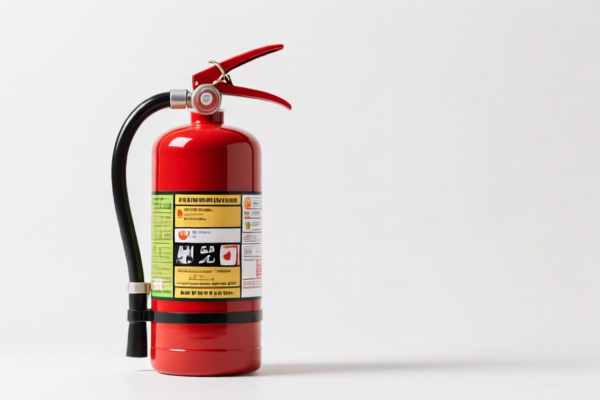
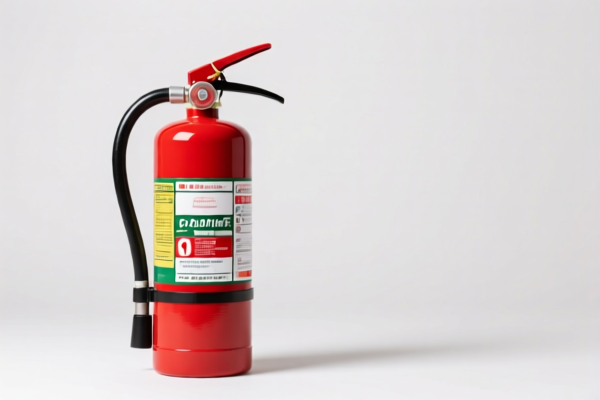
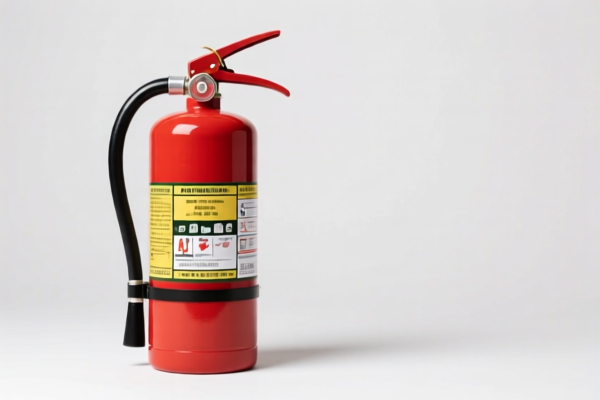
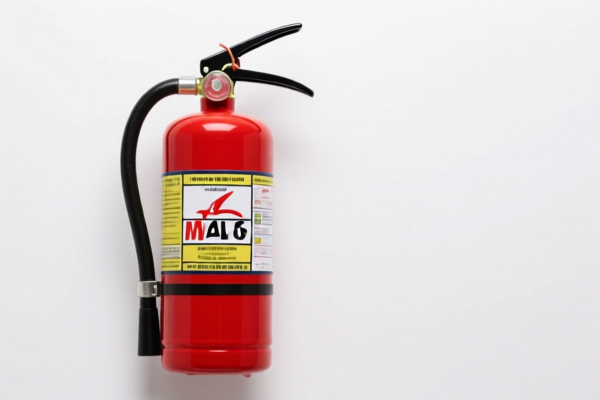
AI Analysis
🧯 Fire Extinguishing Agent Filter
🌐 HS Code Reference & Customs Clearance Guide | 2026 Latest Tariff Analysis | Professional Clearance Strategy
📌 I. Product Definition & Classification: What Exactly is a "Fire Extinguishing Agent Filter"?
A Fire Extinguishing Agent Filter is a critical component within fire suppression systems, designed to purify or separate particulates from liquid or gaseous fire extinguishing agents (such as foam, water mist, or clean agents) before they are discharged. In international trade, the classification hinges entirely on its primary function and specific application context.
The data provided identifies two distinct classification paths: 1. As a Standalone Mechanical Filter: Classified under Heading 8421 (Mechanical appliances for filtering or purifying liquids or gases), depending on whether the agent is liquid or gas. 2. As a Spare Part for Fire Extinguishers: Classified under Heading 8424 (Mechanical appliances for projecting, dispersing, or spraying liquids or powders; fire extinguishers), specifically as parts/accessories of fire extinguishers.
⚠️ Key Distinction Point:
- If the filter is sold separately for use in industrial fire suppression piping systems (not attached to a hand-held extinguisher), it is classified by its function (Liquid vs. Gas).
- If the filter is a replaceable part specifically for a fire extinguisher unit (even if sold separately but intended for that specific use), it may be classified under 8424.90 as a "part of a fire extinguisher."
📦 II. HS Code Classification Details (2026 Latest Tariff Authority Cross-Reference)
Based on the provided dataset, here are the four possible HS Codes with their specific tax implications for imports into the USA from China:
| HS Code | Product Description | Application Context | Tax Rate (Total) |
|---|---|---|---|
8421.39.01.60 |
Mechanical appliances for filtering or purifying gaseous fluids | Used for gas-based fire suppression agents (e.g., FM-200, Novec 1230 vapor) | 35.0% |
8421.29.00.65 |
Mechanical appliances for filtering or purifying liquids (extinguishing agents) | Used for liquid agents (e.g., Water Mist, AFFF foam concentrate) | 35.0% |
8424.90.05.00 |
Parts and accessories for fire extinguishers | Specifically identified as a component of a fire extinguisher unit | 17.5% |
8424.90.90.80 |
Other parts and accessories for fire extinguishers | General spare parts for fire extinguishers, potentially metallic/aluminum | 85.0% |
🔍 Critical Insight:
- Liquid vs. Gas: If the filter is for liquid agents (like foam/water), use8421.29.00.65. If for gas agents, use8421.39.01.60. Both carry a 35% total rate.
- Part vs. Device: If declared as a spare part for a fire extinguisher (8424.90), the rate drops significantly to 17.5% (for specific parts) or jumps to 85.0% (for other/general metallic parts).
- Material Matters: The 85.0% rate applies specifically if the part is made of steel, aluminum, or copper under Section 232/1221 tariffs.
💰 III. 2026 Latest Tariff Rate Breakdown (Including Surtaxes & Policy Surcharges)
✅ Applicable Country: United States (US)
✅ Origin: China (CN)
✅ Effective Time: Post-2025 Policies (Current Active Rates)
🎯 1. 8421.29.00.65 & 8421.39.01.60 – Standalone Filters (Liquid/Gas)
| Item | Content |
|---|---|
| Base Duty Rate | 0.0% (ad valorem) |
| Section 301 Surtax | +25.0% (Standard "China Surcharge") |
| Section 232/1221 Surtax | +10.0% (If deemed steel/aluminum/copper related or under specific 1221 clauses) |
| Total Tax Rate | 35.0% |
| Tax Calculation | CIF Value × 35% |
| De Minimis Exemption | ❌ Not Applicable (High-value industrial equipment) |
| Legal Basis Path | USITC:8421.29.00.65 / 8421.39.01.60 → USITC:Footnote:25% → IEEPA:1221:10% |
📌 Explanation:
- These codes classify the item as machinery for purification, not just a simple metal screen.
- The 25% Section 301 tariff is standard for Chinese industrial machinery.
- The additional 10% may apply under specific Section 232/1221 interpretations if the filter housing is metallic.
- Total: 35%. This is a moderate-high tariff.
🎯 2. 8424.90.05.00 – Parts for Fire Extinguishers (Specific)
| Item | Content |
|---|---|
| Base Duty Rate | 0.0% |
| Section 301 Surtax | +7.5% (Reduced surcharge for specific fire safety parts) |
| Section 232/1221 Surtax | +10.0% (If metallic materials are involved) |
| Total Tax Rate | 17.5% |
| Tax Calculation | CIF Value × 17.5% |
| De Minimis Exemption | ❌ Not Applicable |
| Legal Basis Path | USITC:8424.90.05.00 → USITC:Footnote:7.5% → IEEPA:1221:10% |
📌 Explanation:
- This is the most cost-effective classification if the item can be legally defined as a part of a fire extinguisher rather than a standalone filter device.
- The base Section 301 rate for this specific subheading is lower (7.5% instead of 25%).
- Total: 17.5%. This offers significant savings compared to the 35% machinery rate.
🎯 3. 8424.90.90.80 – Other Fire Extinguisher Parts (General/Metallic)
| Item | Content |
|---|---|
| Base Duty Rate | 0.0% |
| Section 301 Surtax | +25.0% |
| Section 232/1221 Surtax | +50.0% (Steel, Aluminum, Copper Surtax) |
| Total Tax Rate | 85.0% |
| Tax Calculation | CIF Value × 85.0% |
| De Minimis Exemption | ❌ Not Applicable |
| Legal Basis Path | USITC:8424.90.90.80 → USITC:Footnote:25% → IEEPA:232:50% |
📌 Warning:
- If the filter is made of steel, aluminum, or copper and does not qualify for the specific8424.90.05.00category, it falls into "Other Parts."
- The 50% steel/aluminum surtax is catastrophic.
- Total: 85%. This rate is prohibitively high.
🎯 4. 7326.90.86.88 – Metal/Steel Filter Parts (Non-Specific)
| Item | Content |
|---|---|
| Base Duty Rate | 2.9% |
| Section 301 Surtax | +25.0% |
| Section 232/1221 Surtax | +50.0% (Steel Surtax) |
| Total Tax Rate | 87.9% |
| Tax Calculation | CIF Value × 87.9% |
| De Minimis Exemption | ❌ Not Applicable |
| Legal Basis Path | USITC:7326.90.86.88 → USITC:Footnote:25% → IEEPA:232:50% |
📌 Warning:
- Classifying a functional fire protection component as a generic "steel article" (7326) is highly risky and likely incorrect by customs authorities.
- However, if it is misclassified or deemed a simple steel mesh without mechanical purification function, this rate applies.
- Total: 87.9%. The highest possible rate. Avoid this unless absolutely necessary.
🛠️ IV. Customs Clearance Operational Advice (Practical Pitfall Guide)
✅ 1. Required Documentation Checklist (All Mandatory)
| Document | Must Provide | Description |
|---|---|---|
| ✅ Product Specification Sheet | ✔️ | Detail: Flow rate, filtration micron rating, pressure rating, agent compatibility (gas/liquid). |
| ✅ Function Statement | ✔️ | Explicitly state: "Used for filtering fire extinguishing agents in fire suppression systems" OR "Spare part for fire extinguisher model XYZ." |
| ✅ Material Declaration | ✔️ | Clearly list materials (e.g., Stainless Steel 316, Brass, Aluminum). Critical for avoiding the 50% steel surtax if possible. |
| ✅ Installation Diagram | ✔️ | Show how it fits into the system or extinguisher. Proves it is a "part" vs. "standalone device." |
| ✅ Commercial Invoice | ✔️ | Must match the HS Code chosen. Use precise terminology. |
| ✅ Certificate of Origin | ✔️ | For China origin verification. |
✅ 2. Declaration Strategy (Key Mnemonic)
🔥 "Function First, Part Second, Material Caution!"
| Scenario | Correct Declaration Strategy | Risk |
|---|---|---|
| Sold with Fire Extinguisher | Declare as Part of Fire Extinguisher (8424.90.05.00) |
✅ Low Risk (17.5% Rate) |
| Sold as Standalone Gas Filter | Declare as Gas Filter (8421.39.01.60) |
✅ Medium Risk (35% Rate) |
| Sold as Standalone Liquid Filter | Declare as Liquid Filter (8421.29.00.65) |
✅ Medium Risk (35% Rate) |
| Generic Steel Mesh in Pipe | Declare as Steel Part (7326...) |
❌ High Risk (87.9% Rate + Audit) |
| Aluminum Housing Filter | Avoid 8424.90.90.80 if possible |
⚠️ Very High Risk (85.0% Rate) |
✅ 3. Special Handling Tips
| Situation | Advice |
|---|---|
| Material Substitution | If the filter housing is non-metallic (e.g., plastic/composite), you may avoid the 50% steel/aluminum surtax. Check if 8424.90.90.80 still applies (it might, but base rate may differ). |
| Pre-Ruling Application | Apply for an Advance Ruling from CBP. Submit technical docs showing it is a "part" of a fire extinguisher to secure the 17.5% rate. |
| Avoid "Steel" Keywords | In the description, avoid generic terms like "Steel Filter." Use "Fire Suppression System Component" or "Fire Extinguisher Part." |
| Bundle Shipments | If shipping with a fire extinguisher, declare the filter as a part included in the main unit's value, not as a separate item. |
🌍 V. Global Market Comparison (2026 Update)
| Region | Recommended HS Code | Est. Duty Rate (China Origin) | Note |
|---|---|---|---|
| 🇺🇸 USA | 8424.90.05.00 |
17.5% | Best rate if classified as "Part." Avoid 85%+ steel rates. |
| 🇪🇺 EU | 8421.29 or 8424.90 |
~4.5% - 6.5% | No Section 301/232 surcharges. Lower base rates. |
| 🇨🇳 China | 8421.29 or 8424.90 |
~4.0% - 8.0% | Low import duties. No retaliatory tariffs. |
| 🇬🇧 UK | 8421.29 or 8424.90 |
~4.0% - 6.0% | Post-Brexit tariffs align closely with EU. |
| 🇨🇦 Canada | 8421.29 or 8424.90 |
~4.5% - 7.0% | CUSMA benefits if Canadian origin, but China origin faces MFN rates. |
📌 Conclusion:
- The USA is the most expensive market due to Section 301 and 232 tariffs.
- Classification as a "Part" (8424.90.05.00) is the only viable strategy to reduce costs significantly.
- Avoid classification as generic "Steel Articles" (7326) to prevent 87.9% duties.
📌 VI. Common Errors & Pitfall Guide (Lessons Learned)
❌ Error 1: Declaring a liquid filter as a "Gas Filter"
👉 Consequence: Wrong HS Code → Potential penalty + 35% duty assessment instead of correct one.
❌ Error 2: Ignoring the Material Composition
👉 Consequence: If made of steel/aluminum and declared as "Other Parts" (8424.90.90.80), you face 85% duty.
👉 Fix: Prove it is a "Specific Part" (8424.90.05.00) or use non-metallic materials.
❌ Error 3: Using "Filter" without context
👉 Consequence: CBP may assume it's a general industrial filter (8421) or a steel part (7326).
👉 Fix: Always specify "Fire Extinguishing Agent" in the description.
❌ Error 4: Splitting Shipment to Avoid Tariffs
👉 Consequence: CBP will combine values for "parts" of a single system.
👉 Fix: Declare accurately as parts of a fire extinguisher.
✅ Correct Description Example:
"Fire Extinguisher Part, Porous Metal Filter Element, Model FX-100, Compatible with ABC Dry Chemical Extinguishers, Not for General Industrial Use."
🎯 VII. Conclusion: Precision Classification, Cost Efficiency!
🎯 Remember the Golden Rule:
🔹 "Part > Device > General Steel"
🔹 "Fire Extinguisher Part = 17.5% | Standalone Filter = 35% | Steel Part = 85-87.9%"
📌 Pro Tip:
If your filters are made of stainless steel, argue for the "Specific Part" classification (8424.90.05.00) under Heading 8424. Avoid the "Steel Article" heading (7326) at all costs, as it triggers the massive 50% surtax.
📣 Immediate Action:
📞 Apply for a CBP Advance Ruling before shipment.
📄 Prepare technical drawings showing the filter's integration with fire extinguishers.
🚀 Secure the 17.5% rate and protect your profit margins!
✨ Professional Clearance, Starting with Accurate Classification!
💼 Your cost savings depend on the first digit of the HS Code!
Customer Reviews
About HS Code Classification
The Harmonized System (HS) is an internationally standardized nomenclature developed by the World Customs Organization (WCO) to classify traded products. Over 200 countries use the HS system as the basis for customs tariffs, trade statistics, and import/export regulations.
Each HS code follows a hierarchical structure:
- Chapter (2 digits) — Broad category of goods (e.g., Chapter 84: Machinery and Mechanical Appliances)
- Heading (4 digits) — More specific grouping within the chapter
- Subheading (6 digits) — Internationally standardized breakdown, used by all WCO member countries
- National subdivisions (8-10 digits) — Country-specific extensions for further classification, such as US HTSUS 10-digit codes
Correct HS code classification is essential for smooth customs clearance, accurate duty payment, and compliance with trade regulations. Misclassification can lead to customs delays, overpayment of duties, or penalties.
When importing from CN to US, the applicable tariff rates may include:
- Most-Favored-Nation (MFN) rate — The standard duty rate applied to WTO members
- General rate — Applied to countries without trade agreements
- Trade remedy duties — Additional tariffs such as Section 301 (anti-dumping), Section 232 (national security), or countervailing duties
The information provided on this page is for reference purposes only. For official classification, please consult with your local customs authority or a licensed customs broker.