Fire Extinguishing Agent Flow Controller
CN → US| HS Code | Tariff Rate | Origin | Destination | Doc |
|---|---|---|---|---|
| 8531100025 | 36.3% | CN | US | Official Doc |
| 8479896500 | 20.3% | CN | US | Official Doc |
| 8479899599 | 87.5% | CN | US | Official Doc |
| 3813005000 | 38.7% | CN | US | Official Doc |
| 8531100045 | 11.3% | CN | US | Official Doc |
Product Images
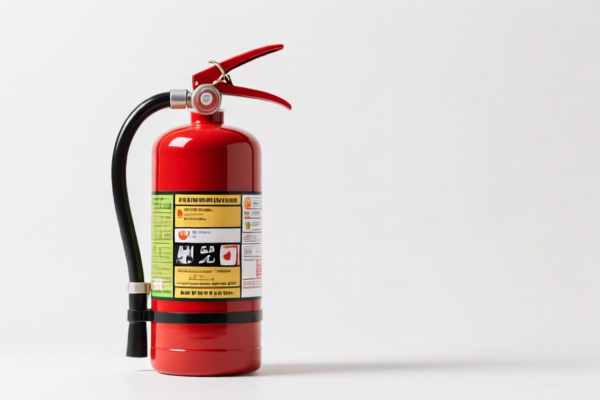
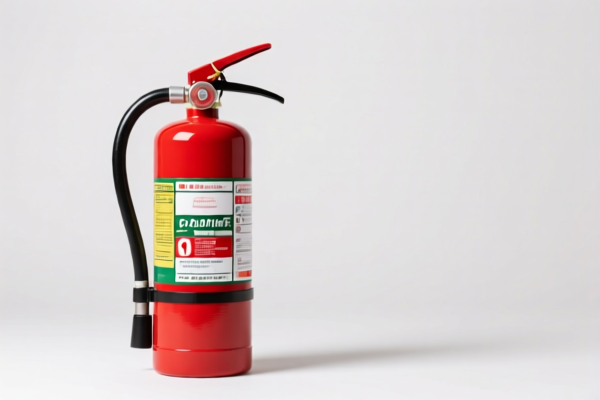
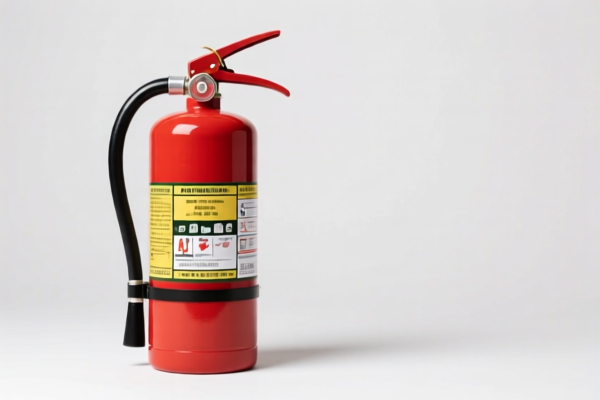
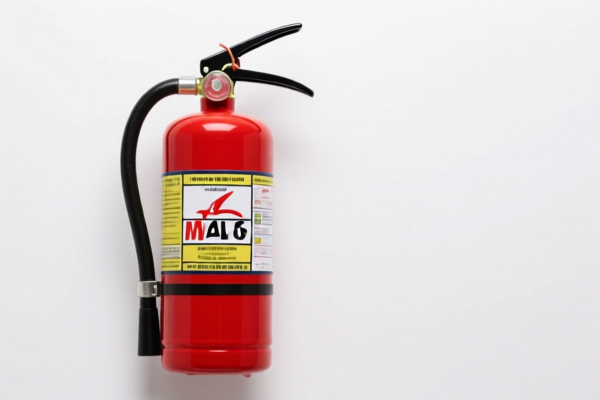
AI Analysis
🚒 Fire Extinguishing Agent Flow Controller
🌐 HS Code Reference & Customs Clearance Guide | 2024-2025 Tax Rate Full Analysis | Professional Clearance Strategy
📌 I. Product Definition & Classification: Do You Really Understand the "Flow Controller"?
A Fire Extinguishing Agent Flow Controller is a critical component in automatic fire suppression systems (such as FM-200, CO2, or Water Mist systems). Its core function is to control the release, direction, and flow rate of extinguishing agents to the hazard zone.
In international trade, this product is ambiguous because it sits at the intersection of electronic control, mechanical actuation, and safety equipment. Misclassification can lead to severe tariff penalties (up to 87.5% in the US target scenario) or customs delays.
⚠️ Key Distinction Point:
- Is it primarily an Electronic Control Unit (ECU) triggering a valve? → Consider Chapter 85
- Is it a Mechanical Device with its own motor/pump to move liquid/gas? → Consider Chapter 84
- Is it a Specialized Chemical Dispenser component? → Consider Chapter 38
- Note: The specific classification depends heavily on the exact hardware configuration (sensor vs. motor vs. simple valve).
📦 II. HS Code Classification Details (Based on Provided Data)
The following HS Codes are derived from the provided dataset, representing different technical interpretations of the "Flow Controller."
| HS Code | Product Description (From Data) | Applicable Scenario / Technical Basis | Estimated Total Tax (US Target)* |
|---|---|---|---|
| 8531.10.00.25 | Fire Alarm/Control Component | Electronic/Acoustic signal control module; part of fire alarm system logic. | 36.3% |
| 8479.89.65.00 | Mechanical Control Device | Independent mechanical device; controls agent release; integrates self-contained motor/control circuit. | 20.3% |
| 8479.89.95.99 | Other Independent Mechanical Apparatus | "Catch-all" for independent mechanical control systems not elsewhere specified. | 87.5% |
| 3813.00.50.00 | Fire Extinguishing Equipment Part | 配套 component for extinguishing agents/equipment; classified by end-use. | 38.7% |
| 8531.10.00.45 | Fire Alarm Control Equipment | Electronic signal control component for fire alarm and related control equipment. | 11.3% |
🔍 Critical Insight:
- The tax rate disparity is massive: from 11.3% to 87.5%.
- 8531 codes imply the device is seen as an alarm/control indicator part.
- 8479 codes imply the device is seen as a mechanical actuator.
- 3813 implies it is a specialized accessory for chemicals.
💰 III. 2024-2025 Tariff Rate Detailed Breakdown (Including Surcharges)
✅ Applicable Country: United States (US)
✅ Origin: China (CN)
✅ Note: These rates reflect the inclusion of Base Tariff + Section 301 (25%) + IEEPA (10%) as per the provided data.
🎯 1. 8531.10.00.25 —— Fire Alarm Control Component
| Item | Detail |
|---|---|
| Base Tariff | 1.3% |
| Section 301 Surcharge | 25.0% |
| IEEPA Surcharge | 10.0% |
| Total Tax Rate | 36.3% |
| Calculation Base | CIF Value × 36.3% |
| Legal Basis | Harmonized Tariff Schedule (HTS) 8531.10.00.25 |
📌 Analysis:
This classification treats the controller as part of the fire alarm signaling system. If your device is primarily an electronic PCB that sends signals to open valves (but doesn't physically move them), this may apply. However, 36.3% is a significant cost.
🎯 2. 8479.89.65.00 —— Mechanical Control Device (Motorized)
| Item | Detail |
|---|---|
| Base Tariff | 2.8% |
| Section 301 Surcharge | 7.5% (Note: Data shows 7.5% surcharge here, possibly due to specific subheading nuance or exemption logic in the dataset) |
| IEEPA Surcharge | 10.0% |
| Total Tax Rate | 20.3% |
| Calculation Base | CIF Value × 20.3% |
| Legal Basis | HTS 8479.89.65.00 |
📌 Analysis:
This is likely the most optimized classification if the device has a motor. If the controller includes a self-contained motor or actuator to physically push/pull the valve stem, it falls under "Machines and Mechanical Appliances." The lower Section 301 rate (7.5% vs 25%) makes this highly advantageous.
🎯 3. 8479.89.95.99 —— Other Independent Mechanical Apparatus
| Item | Detail |
|---|---|
| Base Tariff | 2.5% |
| Section 301 Surcharge | 25.0% |
| IEEPA Surcharge | 10.0% |
| Metal/Steel/Aluminum/Copper Surcharge | 50.0% (If applicable materials) |
| Total Tax Rate | 87.5% (or higher with metal surcharge) |
| Calculation Base | CIF Value × 87.5% |
| Legal Basis | HTS 8479.89.95.99 |
📌 Analysis:
High Risk! This is a "residual" category for mechanical devices not specifically listed elsewhere. Customs may apply this if the device is complex, unique, or doesn't fit neatly into the "motorized" 8479.65 slot. Avoid this unless no other classification fits. The 87.5% rate is prohibitive.
🎯 4. 3813.00.50.00 —— Fire Extinguishing Equipment Part
| Item | Detail |
|---|---|
| Base Tariff | 3.7% |
| Section 301 Surcharge | 25.0% |
| IEEPA Surcharge | 10.0% |
| Total Tax Rate | 38.7% |
| Calculation Base | CIF Value × 38.7% |
| Legal Basis | HTS 3813.00.50.00 |
📌 Analysis:
Chapter 38 covers "Chemical Products." Classifying a hardware controller here is unconventional and risky. It suggests the item is viewed as a "dispensing mechanism" for chemicals. While 38.7% is moderate, Customs may challenge this classification as it mixes electronics/mechanics with chemical handling.
🎯 5. 8531.10.00.45 —— Fire Alarm Control Equipment
| Item | Detail |
|---|---|
| Base Tariff | 1.3% |
| Section 301 Surcharge | 0.0% (Note: Dataset shows 0% surcharge here, potentially indicating an exemption or specific subcategory logic) |
| IEEPA Surcharge | 10.0% |
| Total Tax Rate | 11.3% |
| Calculation Base | CIF Value × 11.3% |
| Legal Basis | HTS 8531.10.00.45 |
📌 Analysis:
The Most Favorable Rate. If your controller is purely electronic (sensors, circuit boards, signal processors) and part of the fire alarm network, this code applies. The 0% Section 301 surcharge makes it significantly cheaper than other electronic classifications. Priority Target: Try to argue the device is a "control component" for the alarm system, not a mechanical actuator.
🛠️ IV. Customs Clearance Practical Advice (Best Practices)
✅ 1. Documentation Checklist (Essential)
| Document | Required? | Explanation |
|---|---|---|
| Product Specification Sheet | ✅ Yes | Must detail: Voltage, Signal Type (Analog/Digital), Actuation Method (Manual/Auto). |
| Technical Diagram | ✅ Yes | Show if there is a motor. If yes, argue for 8479. If no, argue for 8531. |
| Bill of Materials (BOM) | ✅ Yes | List electronic components vs. mechanical parts. |
| Photos (Labeled) | ✅ Yes | Show connectors, labels, and any moving parts. |
| Commercial Invoice | ✅ Yes | Describe as "Electronic Fire Control Panel" or "Mechanical Valve Actuator" based on target HS. |
| Certifications | ✅ Yes | UL, FM, CE, or FCC certificates help prove it's a recognized safety control device. |
✅ 2. Declaration Strategy (Key Mnemonics)
🔥 "Electronic = 8531, Mechanical = 8479, Avoid 8479.95!"
| Scenario | Recommended Declaration | Target HS Code | Risk |
|---|---|---|---|
| Device has a motor pushing the valve | "Motorized Fire Extinguisher Valve Actuator" | 8479.89.65.00 |
Low (20.3%) |
| Device is purely electronic (sensors/PCB) | "Fire Alarm System Control Module" | 8531.10.00.45 |
Low (11.3%) |
| Device is complex/hybrid without clear motor | "Fire Suppression Control Unit" | 8479.89.95.99 |
High (87.5%) |
| Device is just a nozzle/diffuser | "Fire Extinguishing Dispenser" | 3813.00.50.00 |
Medium (38.7%) |
✅ 3. Special Handling Tips
| Situation | Advice |
|---|---|
| OEM Custom Controllers | Provide the customer's engineering drawings to prove intent. If the drawing shows an electrical signal output only, push for 8531.10.00.45. |
| Hybrid Devices | If the device has both electronics and a small motor, emphasize the primary function. If it moves liquid/gas, 8479 is safer. If it only sends signals, 8531 is cheaper. |
| Valve Actuator Kits | If sold with the valve, declare together? No, customs often splits. Ensure the controller is described accurately. |
| Pre-Ruling (Advance Ruling) | Strongly Recommended. With a 76% difference between 11.3% and 87.5%, applying for a US CBP Advance Ruling can provide legal certainty. |
🌍 V. Global Market Comparison (2024-2025)
| Country/Region | Recommended HS Code | Est. Tariff | Notes |
|---|---|---|---|
| 🇺🇸 USA | 8531.10.00.45 or 8479.89.65.00 |
11.3% - 20.3% | Avoid 8479.89.95.99 due to 87.5% tax. |
| 🇨🇳 China | 8531.10.00 or 8479.89 |
~10-13% | Standard MFN rates. No Section 301/IEEPA. |
| 🇪🇺 EU | 8531.10 or 8479.89 |
~0-3% | No Section 301 tariffs. Generally favorable. |
| 🇬🇧 UK | 8531.10 or 8479.89 |
~0-3% | Post-Brexit tariffs similar to EU for most tech. |
📌 Conclusion:
The US market is the most challenging due to trade tariffs.
- If possible, design the controller as a pure electronic signal device to qualify for8531.10.00.45(11.3%).
- If a motor is necessary, ensure it is classified under8479.89.65.00(20.3%) by highlighting the mechanical actuation feature in technical docs.
📌 VI. Common Errors & Pitfalls (Lessons Learned)
❌ Error 1: Describing a motorized device as a "Control Panel"
👉 Result: Customs reclassifies to 8479.89.95.99 → 87.5% tax!
❌ Error 2: Using vague terms like "Fire Controller"
👉 Result: Customs uses discretion, likely assigning the highest duty or demanding a Ruling → Delay + Storage Fees
❌ Error 3: Ignoring the Section 301/IEEPA nuances
👉 Result: Assuming all 8531 codes are 36.3%. Some (like .45) may have lower surcharges. Verify subheading details!
✅ Correct Approach:
"Electronic Fire Extinguishing Agent Control Module, No Moving Parts, Signal Output Only, Model XYZ, UL Listed"
vs.
"Motorized Fire Extinguishing Agent Valve Actuator, 24V DC, Includes Gearbox"
🎯 VII. Conclusion: Precise Classification Saves Millions!
🎯 Remember the Motto:
🔹 "If it moves, it’s 8479 (20%). If it signals, it’s 8531 (11-36%). If it’s weird, it’s 8479.95 (87.5%)!"
🔹 "Tax Difference is 76%, Choose Wisely!"
📌 Pro Tip:
If your product is eligible for HTS 8531.10.00.45, emphasize its role in the alarm network. If it must be mechanical, ensure the motor is prominent in the BOM to secure 8479.89.65.00.
📣 Immediate Action:
📞 Consult a US Customs Broker.
📤 Submit Technical Specs with clear distinction between Electronic vs. Mechanical components.
🚀 Secure the 11.3% or 20.3% rate, and avoid the 87.5% trap!
✨ Professional Clearance Starts with Accurate Classification!
💼 Every Percentage Point Saved is Pure Profit!
Customer Reviews
About HS Code Classification
The Harmonized System (HS) is an internationally standardized nomenclature developed by the World Customs Organization (WCO) to classify traded products. Over 200 countries use the HS system as the basis for customs tariffs, trade statistics, and import/export regulations.
Each HS code follows a hierarchical structure:
- Chapter (2 digits) — Broad category of goods (e.g., Chapter 84: Machinery and Mechanical Appliances)
- Heading (4 digits) — More specific grouping within the chapter
- Subheading (6 digits) — Internationally standardized breakdown, used by all WCO member countries
- National subdivisions (8-10 digits) — Country-specific extensions for further classification, such as US HTSUS 10-digit codes
Correct HS code classification is essential for smooth customs clearance, accurate duty payment, and compliance with trade regulations. Misclassification can lead to customs delays, overpayment of duties, or penalties.
When importing from CN to US, the applicable tariff rates may include:
- Most-Favored-Nation (MFN) rate — The standard duty rate applied to WTO members
- General rate — Applied to countries without trade agreements
- Trade remedy duties — Additional tariffs such as Section 301 (anti-dumping), Section 232 (national security), or countervailing duties
The information provided on this page is for reference purposes only. For official classification, please consult with your local customs authority or a licensed customs broker.