Fire Extinguishing Agent Special Filter
CN → US| HS Code | Tariff Rate | Origin | Destination | Doc |
|---|---|---|---|---|
| 3813001000 | 35.0% | CN | US | Official Doc |
| 3813005000 | 38.7% | CN | US | Official Doc |
| 8421290065 | 35.0% | CN | US | Official Doc |
| 8421390190 | 35.0% | CN | US | Official Doc |
Product Images
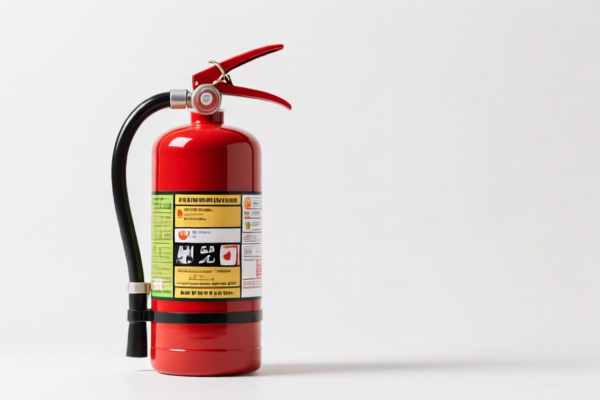
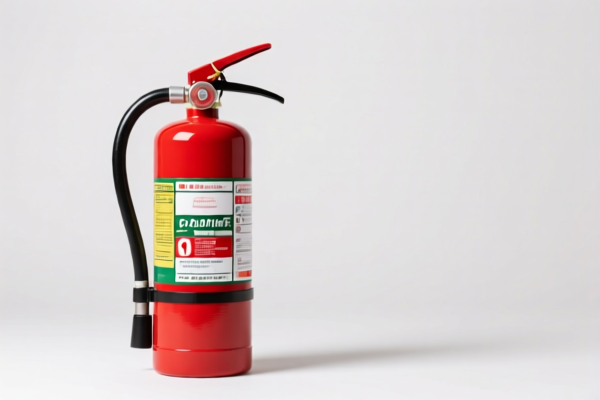
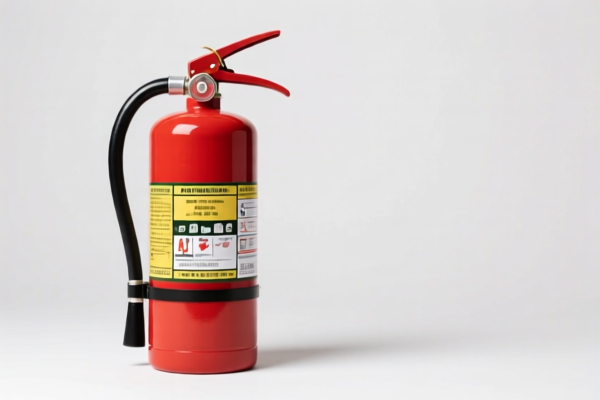
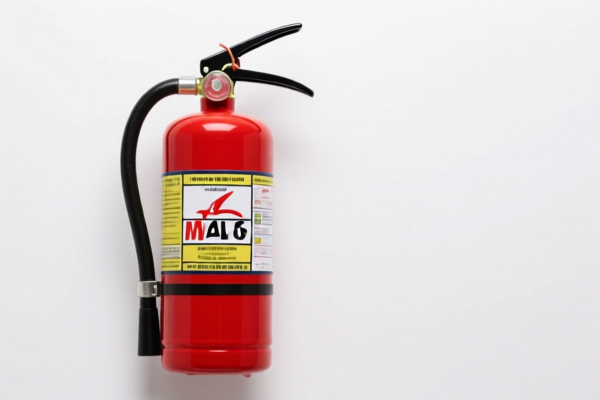
AI Analysis
🚒 Fire Extinguishing Agent Special Filter & Equipment
🌐 HS Code Reference & Customs Clearance Guide | 2026 Latest Tariff Analysis | Professional Clearance Strategy
📌 I. Product Definition & Classification: What Exactly Is This?
The term "Fire Extinguishing Agent Special Filter" is ambiguous in international trade because it can refer to two distinct categories of goods depending on its function and physical form. It is not a fire extinguisher itself, nor is it necessarily a charged grenade.
-
Scenario A: The "Filter/Purifying Machinery" (8421 Series)
- Definition: Mechanical devices used to filter or purify liquids (e.g., foam concentrate, water) or gases (e.g., clean agent vapors) before or during the fire suppression process.
- Key Feature: It is a standalone machine or apparatus with moving parts (pumps, centrifugal separators) or static filtration units designed for liquid/gas purification.
- Usage: Often used in industrial fire suppression systems to clean agents or filter water for sprinklers.
-
Scenario B: The "Fire Extinguisher Preparation/Charge" (3813 Series)
- Definition: Chemical preparations, mixtures, or specific charges contained within extinguishers or grenades. If the "filter" is actually a charged fire-extinguishing grenade or a chemical pack that is the extinguishing agent (or a primary component of it), it falls here.
- Key Feature: Consists wholly of inorganic substances (for specific sub-categories) or other chemical preparations. It is not a mechanical machine but a chemical product/grenade.
⚠️ Critical Distinction Point: - If it is a mechanical device that filters liquids/gases → Go to Section 8421. - If it is a chemical charge, preparation, or charged grenade → Go to Section 3813.
📦 II. HS Code Classification Details (2026 Latest Tariff Authority Comparison)
Based on the provided data, here are the precise classifications for the two interpretations:
| HS Code | Product Description | Applicable Scenario | Key Identifier |
|---|---|---|---|
3813.00.10.00 |
Preparations and charges for fire extinguishers; charged fire-extinguishing grenades: Consisting wholly of inorganic substances | Chemical extinguisher charges, inorganic powder charges, specific chemical grenades | ❌ Not a machine; Chemical/Inorganic Charge |
3813.00.50.00 |
Preparations and charges for fire extinguishers; charged fire-extinguishing grenades: Other | Organic extinguishing agents, foam concentrates, mixed chemical charges, non-inorganic grenades | ❌ Not a machine; Chemical/Organic Charge |
8421.29.00.65 |
Centrifuges, etc.; filtering or purifying machinery for liquids: Other Other: Other: Other | Liquid filtration units for fire suppression systems (e.g., water/foam filters) | ✅ Mechanical; Liquid Filter |
8421.39.01.90 |
Centrifuges, etc.; filtering or purifying machinery for gases: Other Other: Other: Other | Gas purification units for clean agent systems (e.g., FM-200/Novec filtration) | ✅ Mechanical; Gas Filter |
🔍 Important Reminder: - If your product is a mechanical filter (metal/plastic housing, filter element, pumps), it belongs in 8421. - If your product is a chemical pack or charged grenade, it belongs in 3813. - Do not mix mechanical and chemical components in one申报 line if they function independently.
💰 III. 2026 Latest Tariff Rate Details (Including Surtaxes & Policy Add-ons)
✅ Applicable Country: United States (US)
✅ Origin: China (CN)
✅ Effective Time: November 10, 2025 (and subsequent imports)
🎯 1. 3813.00.10.00 —— Fire Extinguisher Charges (Inorganic)
| Item | Content |
|---|---|
| Base Tariff | 0.0% (ad valorem) |
| Section 301 Surtax | +25.0% |
| Total Tariff | 25.0% |
| Tax Calculation | CIF Value × 25% |
| De Minimis Exemption | ❌ Not Eligible (Subject to 301 Tariff) |
| Legal Basis Path | USITC:3813.00.10.00 → SECTION301:3813.00.10.00 |
📌 Explanation: - This code covers chemical charges consisting wholly of inorganic substances. - Even though the base tariff is 0%, the 25% Section 301 surtax applies heavily. - Common Products: Dry powder extinguisher charges (inorganic).
🎯 2. 3813.00.50.00 —— Fire Extinguisher Charges (Other)
| Item | Content |
|---|---|
| Base Tariff | 3.7% (ad valorem) |
| Section 301 Surtax | +25.0% |
| Total Tariff | 28.7% |
| Tax Calculation | CIF Value × 28.7% |
| De Minimis Exemption | ❌ Not Eligible (Subject to 301 Tariff) |
| Legal Basis Path | USITC:3813.00.50.00 → SECTION301:3813.00.50.00 |
📌 Explanation: - This code covers other fire extinguisher preparations (organic, mixed, foam concentrates, etc.). - Higher total tax due to the 3.7% base rate. - Common Products: Foam concentrates, organic chemical charges, non-inorganic grenades.
🎯 3. 8421.29.00.65 —— Liquid Filtering Machinery (Other)
| Item | Content |
|---|---|
| Base Tariff | 0.0% (ad valorem) |
| Section 301 Surtax | +25.0% |
| Total Tariff | 25.0% |
| Tax Calculation | CIF Value × 25% |
| De Minimis Exemption | ❌ Not Eligible (Subject to 301 Tariff) |
| Legal Basis Path | USITC:8421.29.00.65 → SECTION301:8421.29.00.65 |
📌 Explanation: - Mechanical apparatus for purifying liquids. - Common Products: Water filters for fire sprinklers, foam mixing system filters.
🎯 4. 8421.39.01.90 —— Gas Filtering Machinery (Other)
| Item | Content |
|---|---|
| Base Tariff | 0.0% (ad valorem) |
| Section 301 Surtax | +25.0% |
| Total Tariff | 25.0% |
| Tax Calculation | CIF Value × 25% |
| De Minimis Exemption | ❌ Not Eligible (Subject to 301 Tariff) |
| Legal Basis Path | USITC:8421.39.01.90 → SECTION301:8421.39.01.90 |
📌 Explanation: - Mechanical apparatus for purifying gases. - Common Products: Gas purification units for clean agent fire suppression systems.
🛠️ IV. Customs Clearance Practical Advice (Pitfall Avoidance Guide)
✅ 1. Documentation Checklist (All Required)
| Document | Required | Notes |
|---|---|---|
| ✅ Product Specification Sheet | ✔️ | Must clearly state: Chemical composition (if 3813) OR mechanical function/flow rate (if 8421). |
| ✅ Composition List (Ingredients) | ✔️ | Critical for 3813: Must list all chemicals. If "inorganic," provide proof (e.g., Sodium Bicarbonate, Potassium Bicarbonate). |
| ✅ Technical Drawings / Schematics | ✔️ | Critical for 8421: Show filter mechanism, housing, inlet/outlet. |
| ✅ Product Photos | ✔️ | Clear images of label, model, and physical appearance. |
| ✅ Commercial Invoice | ✔️ | Describe accurately: "Fire Extinguisher Chemical Charge" vs. "Liquid Filtration Unit." |
| ✅ Packaging List | ✔️ | Indicate net/gross weight accurately. |
✅ 2. Declaration Tips (Key Mnemonic)
🔥 "Chemical Charge vs. Mechanical Filter! One Mistake, 25% Tax Hit!"
| Situation | Correct Declaration | Wrong Declaration | Consequence |
|---|---|---|---|
| Inorganic Powder Charge | 3813.00.10.00 |
8421.29.00.65 |
Misclassification → Delay/Fine |
| Organic Foam Concentrate | 3813.00.50.00 |
3813.00.10.00 |
Tax Error (3.7% base vs 0%) |
| Liquid Filter Machine | 8421.29.00.65 |
3813.00.50.00 |
Misclassification → Delay |
| Gas Purifier Unit | 8421.39.01.90 |
8421.29.00.65 |
Misclassification → Delay |
✅ 3. Special Case Handling
| Scenario | Handling Advice |
|---|---|
| "Filter" is actually a chemical pack | Declare as 3813. Do NOT call it a "filter" if it’s a chemical charge. Use "Extinguishing Agent Charge." |
| "Filter" is a mechanical device | Declare as 8421. Provide technical specs showing it’s a machine, not a chemical. |
| Mixed Shipment (Machine + Chemical) | Split Declaration! Do not lump them. Machine under 8421, Chemical under 3813. |
| Charged Grenade | Always 3813. Even if it has a mechanical housing, if it’s "charged," it’s a chemical preparation/grenade. |
🌍 V. Global Market Comparison (2026 Latest)
| Country/Region | Recommended HS Code | Tariff Rate | Certification | Notes |
|---|---|---|---|---|
| 🇺🇸 USA | 3813.00.10.00 / 8421.29.00.65 |
25%–28.7% | No specific fire cert required for HS, but UL/ANSI helpful | 301 Tariff applies to all. |
| 🇨🇳 China | 3813.00 / 8421.29 |
0%–3.7% | CCC (if applicable) | No extra surtax. |
| 🇪🇺 EU | 3824.99 / 8421.29 |
0%–6% | CE (if machinery) | Fire safety standards vary. |
| 🇯🇵 Japan | 3824.99 / 8421.29 |
0%–5% | JIS | No 301 surtax. |
📌 Conclusion: - USA is the most expensive market due to 25% Section 301 Surtax. - Classification is critical: 3813 (Chemical) vs. 8421 (Mechanical) changes the base rate (0% vs 3.7%). - Ensure your product description matches the HS Code exactly.
📌 VI. Common Mistakes & Pitfalls (Lessons Learned)
❌ Mistake 1: Calling a chemical charge a "filter"
👉 Result: Customs may classify it under 8421 (0% base) or 3813 (0-3.7% base) incorrectly, leading to audits or penalties.
❌ Mistake 2: Declaring a mechanical filter as a "fire extinguisher preparation"
👉 Result: Incorrect HS Code, potential tax evasion penalty if base rates differ.
❌ Mistake 3: Ignoring the 301 Surtax
👉 Result: Unexpected 25% cost increase at customs. Budget accordingly.
❌ Mistake 4: Vague Description: "Fire Filter"
👉 Result: Customs officer may reclassify based on their discretion, causing delays.
✅ Correct Practice:
- For Chemical: "Inorganic Fire Extinguishing Agent Charge, Consisting Wholly of Inorganic Substances, Model XYZ"
- For Machine: "Liquid Filtering Apparatus for Fire Suppression Systems, Mechanical, Model ABC"
🎯 VII. Conclusion: Precise Classification Saves Money!
🎯 Remember the Mnemonic:
🔹 "Chemical Charge: 3813 (25-28.7%); Mechanical Filter: 8421 (25%); Don't Mix!"
🔹 "HS Code Determines Tariff, 25% Surtax is the Rule!"
📌 Pro Tip:
If your product is exclusively inorganic and used as a fire extinguishing charge, ensure you have laboratory test reports proving the composition to support
3813.00.10.00(0% base rate). For mechanical filters, provide technical drawings to support8421.29.00.65or8421.39.01.90.
📣 Immediate Action:
📞 Contact a Professional Customs Broker
📄 Provide Product Specs + Composition/List
🚀 Apply for Advance Ruling (if possible) to Avoid Risks
✨ Professional Customs Clearance Starts with Accurate Classification!
💼 Every Percent of Tax Matters – Get It Right the First Time!
Customer Reviews
About HS Code Classification
The Harmonized System (HS) is an internationally standardized nomenclature developed by the World Customs Organization (WCO) to classify traded products. Over 200 countries use the HS system as the basis for customs tariffs, trade statistics, and import/export regulations.
Each HS code follows a hierarchical structure:
- Chapter (2 digits) — Broad category of goods (e.g., Chapter 84: Machinery and Mechanical Appliances)
- Heading (4 digits) — More specific grouping within the chapter
- Subheading (6 digits) — Internationally standardized breakdown, used by all WCO member countries
- National subdivisions (8-10 digits) — Country-specific extensions for further classification, such as US HTSUS 10-digit codes
Correct HS code classification is essential for smooth customs clearance, accurate duty payment, and compliance with trade regulations. Misclassification can lead to customs delays, overpayment of duties, or penalties.
When importing from CN to US, the applicable tariff rates may include:
- Most-Favored-Nation (MFN) rate — The standard duty rate applied to WTO members
- General rate — Applied to countries without trade agreements
- Trade remedy duties — Additional tariffs such as Section 301 (anti-dumping), Section 232 (national security), or countervailing duties
The information provided on this page is for reference purposes only. For official classification, please consult with your local customs authority or a licensed customs broker.