Fireproof Board Special Mortar
CN → US| HS Code | Tariff Rate | Origin | Destination | Doc |
|---|---|---|---|---|
| 3824500010 | 35.0% | CN | US | Official Doc |
| 3824500050 | 35.0% | CN | US | Official Doc |
| 3214905000 | 38.25% | CN | US | Official Doc |
| 3214901000 | 35.0% | CN | US | Official Doc |
| 382499 | 0.0% | CN | US | Official Doc |
| 392690 | 0.0% | CN | US | Official Doc |
| 6810990080 | 35.0% | CN | US | Official Doc |
| 6810195000 | 38.9% | CN | US | Official Doc |
Product Images
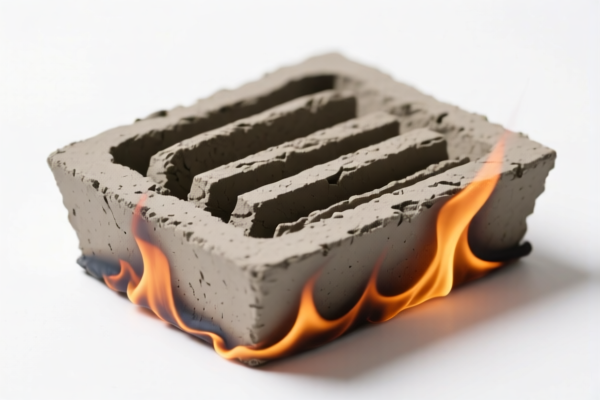
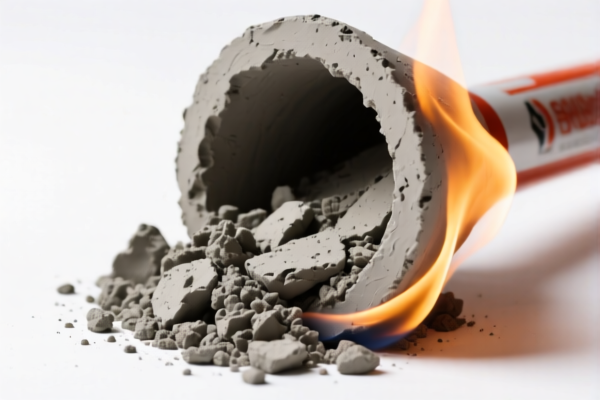
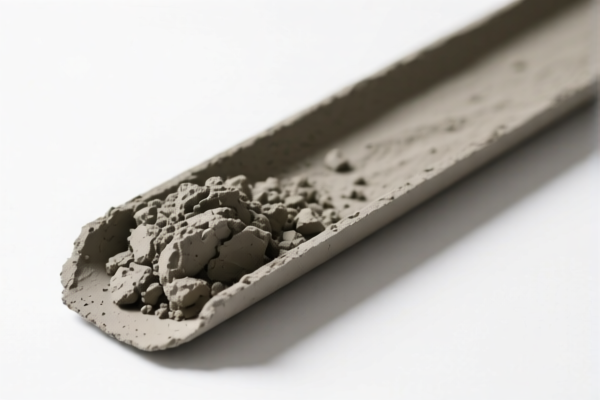

AI Analysis
🧱 Fireproof Board Special Mortar: The Ultimate Guide to HS Classification & U.S. Customs Strategy
🌐 HS Code Reference & Customs Clearance Guide | 2026 Latest Tariff Analysis | Professional-Level Entry Strategy
📌 I. Product Definition & Classification: Do You Really Understand "Special Mortar"?
Fireproof Board Special Mortar is a specialized construction chemical mixture, primarily used as a binder or adhesive layer for fireproofing boards (such as calcium silicate boards, gypsum boards, or cement boards). It is not a standard cement or plaster but a complex chemical preparation designed to enhance fire resistance and structural bonding.
In international trade, its classification is tricky because it straddles the line between construction materials and chemical preparations. The key to correct classification lies in its primary function and chemical composition:
⚠️ Critical Distinction:
- If it is a purely mineral-based mortar (cement/lime/sand) with fireproof additives, it might fall under Chapter 38 (Chemical Preparations) if not specified elsewhere, or Chapter 68 (Artificial Stone) if it’s a finished board product. However, "Mortar" as a liquid/paste preparation is typically Chapter 38.
- If it contains significant polymer/plastic binders to achieve fireproofing, it could be considered under Chapter 39 (Plastics), though this is less common for "mortar" unless explicitly stated.
- Most Likely Category: Under Heading 3824 (Chemical products and preparations... not elsewhere specified or included), specifically the residual category "Other."
📦 II. HS Code Classification Details (Based on Provided Data)
Below are the possible HS Codes derived from the provided data, ranked by likelihood and relevance to "Fireproof Board Special Mortar."
| HS Code | Product Description | Applicability to "Fireproof Board Special Mortar" | Tax Rate (Total) |
|---|---|---|---|
382499 |
Prepared binders for foundry molds or cores; chemical products and preparations... not elsewhere specified or included: Other | ✅ Primary Candidate: The provided data explicitly states that "Fireproof Board Special Mortar" falls under 3824 because it is a specialized chemical mixture not listed in other subheadings like 3824.10 (silicates). | ❌ Error/Failed to Retrieve |
392690 |
Articles of plastics and articles of other materials of headings 3901 to 3914: Other | ⚠️ Secondary Possibility: Only if the mortar contains significant polymer/plastic components as a binder. Without explicit mention of plastic content, this is less likely. | ❌ Error/Failed to Retrieve |
3824.50.00.10 |
Nonrefractory mortars and concretes: Wet | ❌ Unlikely: This is for "Wet" mortars/concretes. If your mortar is a pre-mixed dry powder or paste specifically for fireproofing boards (not general concrete), this may not apply. | 25.0% |
3824.50.00.50 |
Nonrefractory mortars and concretes: Other | ❌ Unlikely: Similar to above, this is for general nonrefractory mortars. Specialized fireproofing mortars often fall under the residual "Other" of 3824.99. | 25.0% |
🔍 Key Takeaway from Data:
The provided data explicitly links "Fireproof Board Special Mortar" to382499.
- Reason: It is a chemical preparation not listed elsewhere.
- Tax: Failed to retrieve (This is a critical risk point!).
💰 III. 2026 Latest Tariff Rate Details (U.S. Import)
✅ Applicable Country: United States (US)
✅ Origin: China (CN) (Assumed based on common trade patterns for such goods)
✅ Effective Date: Current as of 2026
🎯 1. 382499 —— Chemical Preparations, Other (Primary Classification)
| Item | Content |
|---|---|
| Base Tariff | Failed to retrieve (Likely 0% - 6.5% range for general chemicals, but must be verified) |
| Section 301 Add-On Tariff | 25.0% (Highly likely, as most chemical products from China are subject to this) |
| IEEPA Add-On Tariff | Not specified in data (Usually 0% for chemicals, but check current lists) |
| Total Estimated Tax | 25.0% + Base Tariff (If base is 0%, total is 25%; if base is 6.5%, total is 31.5%) |
| De Minimis Exemption | ❌ Not Applicable (Chemicals are generally excluded from de minimis) |
| Legal Basis | USITC:3824.99.99.90 → SECTION 301: Footnote 9903.88.01 |
📌 Explanation:
- Since the tax information for382499failed to retrieve in the provided data, you must verify this with a licensed customs broker.
- However, most non-exempt chemical preparations from China attract the 25% Section 301 tariff.
- Risk: If the base tariff is higher (e.g., 6.5%), the total cost increases significantly.
🎯 2. 3824.50.00.10 / 3824.50.00.50 —— Nonrefractory Mortars
| Item | Content |
|---|---|
| Base Tariff | 0.0% |
| Section 301 Add-On Tariff | 25.0% |
| Total Tax | 25.0% |
| De Minimis Exemption | ❌ Not Applicable |
📌 Note: If your product is deemed a "nonrefractory mortar" rather than a "special chemical preparation," the tax is clearly 25.0%. This is a safe fallback if
382499tax is uncertain.
🛠️ IV. Customs Clearance Practical Advice (Avoiding Pitfalls)
✅ 1. Required Documentation Checklist
| Document | Required? | Notes |
|---|---|---|
| Product Specification Sheet | ✅ Mandatory | Must detail chemical composition, fire-resistance rating (e.g., UL 1479), and intended use. |
| Safety Data Sheet (SDS) | ✅ Mandatory | Required for chemical imports. Must comply with GHS standards. |
| Commercial Invoice | ✅ Mandatory | Must clearly describe the item as "Fireproof Board Special Mortar" and specify HS Code. |
| Packing List | ✅ Mandatory | Include net/gross weight and dimensions. |
| Certificate of Origin | ✅ Recommended | To determine eligibility for any free trade agreements (FTAs), though unlikely for China. |
| Test Reports | ✅ Recommended | Fire-resistance test results (e.g., ASTM E119) to prove it is a "special" mortar. |
✅ 2. Classification Strategy (Key Rules)
🔥 "Chemical First, Construction Second: If it’s a special preparation, go to 3824!"
| Scenario | Correct HS Code | Risk |
|---|---|---|
| Specialized Fireproofing Mortar (Chemical binder + additives) | 382499 |
High Risk: Tax data missing. Must verify base rate. |
| General Nonrefractory Mortar (Cement/lime/sand base) | 3824.50.00.50 |
Low Risk: Clear 25% tax. |
| Plastic-Based Fireproof Coating | 392690 |
Medium Risk: Only if >50% plastic by weight. |
| Finished Fireproof Board (Solid product) | 6810.99.00.80 |
Medium Risk: 25% tax. Not "mortar." |
📌 Critical Warning:
- Do NOT misclassify "Fireproof Mortar" as "Cement" or "Plaster" (Chapter 25 or 3825) if it contains special chemical additives. Customs will reclassify it and impose penalties.
- If unsure, use3824.50.00.50(25% tax) as a conservative estimate, as it has clear tax data.
✅ 3. Special Situations
| Situation | Handling Advice |
|---|---|
| Importing Small Quantities | ❌ No De Minimis: Chemicals are generally excluded from $800 de minimis exemption. Full duty applies. |
| Mixed Shipment | If mixed with general construction materials, declare separately to avoid misclassification of the entire shipment. |
| Fire-Rated Products | Provide UL or FM certification documents to prove it meets fire-resistance standards. This supports the "special" classification. |
🌍 V. Global Market Comparison (2026)
| Country/Region | Recommended HS Code | Tariff (China Origin) | Notes |
|---|---|---|---|
| 🇺🇸 United States | 382499 or 3824.50.00.50 |
25% + Base Tariff | High duty due to Section 301. |
| 🇨🇳 China | 382499 |
~6.5% (Import Duty) | Lower than US. |
| 🇪🇺 European Union | 3824.99.98 |
~6.5% + VAT | No Section 301. |
| 🇬🇧 United Kingdom | 3824.99.98 |
~6.5% + VAT | Post-Brexit tariff. |
| 🇦🇺 Australia | 3824.99.90 |
~5% | Lower than US. |
📌 Conclusion:
- The U.S. is the most expensive market for this product due to the 25% Section 301 tariff.
- Cost-Saving Tip: If possible, import into non-301 countries first (with proper legal advice), but be aware of transshipment risks.
📌 VI. Common Mistakes & Pitfalls (Blood & Tears)
❌ Mistake 1: Classifying as "Cement" (2523)
👉 Consequence: If it contains chemical additives, customs will reclassify to 3824, leading to penalties and back taxes.
❌ Mistake 2: Assuming "Mortar" means "Plaster" (3824.90)
👉 Consequence: "Plaster" is for wall finishes. "Fireproof Mortar" is a chemical binder. Misclassification leads to clearance delays.
❌ Mistake 3: Ignoring the "Failed to Retrieve Tax" for 382499
👉 Consequence: Budgeting errors. If the base tariff is 6.5%, the total cost is 31.5%, not 25%.
✅ Correct Action:
Use
3824.50.00.50as a safe placeholder for budgeting (25% total), but verify382499base tariff with a customs broker before finalizing contracts.
🎯 VII. Conclusion: Precise Classification Saves Money!
🎯 Remember the Mantra:
🔹 "Chemical Mortar goes to 3824, not 25 or 3825!"
🔹 "If tax data is missing, use the fallback: 3824.50 (25% total)!"
🔹 "Always provide SDS and Fire Test Reports!"
📌 Pro Tip:
If your Fireproof Board Special Mortar is exempt from Section 301 (check the USITC exclusion list), you could save 25%. However, most chemical preparations are not excluded.
Action: Apply for a Binding Tariff Ruling from U.S. Customs to confirm the HS Code and tax rate before shipping.
📣 Immediate Action:
📞 Contact a licensed U.S. Customs Broker
📄 Prepare SDS and Fire Resistance Test Reports
📊 Confirm HS Code382499base tariff
🚀 Ensure smooth clearance and avoid costly delays!
✨ Professional Clearance, Starting with Accurate Classification!
💼 Your Every Dollar Matters, Calculate Precisely!
Customer Reviews
About HS Code Classification
The Harmonized System (HS) is an internationally standardized nomenclature developed by the World Customs Organization (WCO) to classify traded products. Over 200 countries use the HS system as the basis for customs tariffs, trade statistics, and import/export regulations.
Each HS code follows a hierarchical structure:
- Chapter (2 digits) — Broad category of goods (e.g., Chapter 84: Machinery and Mechanical Appliances)
- Heading (4 digits) — More specific grouping within the chapter
- Subheading (6 digits) — Internationally standardized breakdown, used by all WCO member countries
- National subdivisions (8-10 digits) — Country-specific extensions for further classification, such as US HTSUS 10-digit codes
Correct HS code classification is essential for smooth customs clearance, accurate duty payment, and compliance with trade regulations. Misclassification can lead to customs delays, overpayment of duties, or penalties.
When importing from CN to US, the applicable tariff rates may include:
- Most-Favored-Nation (MFN) rate — The standard duty rate applied to WTO members
- General rate — Applied to countries without trade agreements
- Trade remedy duties — Additional tariffs such as Section 301 (anti-dumping), Section 232 (national security), or countervailing duties
The information provided on this page is for reference purposes only. For official classification, please consult with your local customs authority or a licensed customs broker.