Fireproof Expanding Mortar
CN → US| HS Code | Tariff Rate | Origin | Destination | Doc |
|---|---|---|---|---|
| 382499 | 0.0% | CN | US | Official Doc |
| 382490 | 0.0% | CN | US | Official Doc |
Product Images

AI Analysis
🧱 Fireproof Expanding Mortar (Fire-Stop Systems)
🌐 HS Code Reference & Customs Clearance Guide | 2026 Latest Tariff Analysis | Professional通关 Strategy
📌 I. Product Definition & Classification: What Exactly Is "Fireproof Expanding Mortar"?
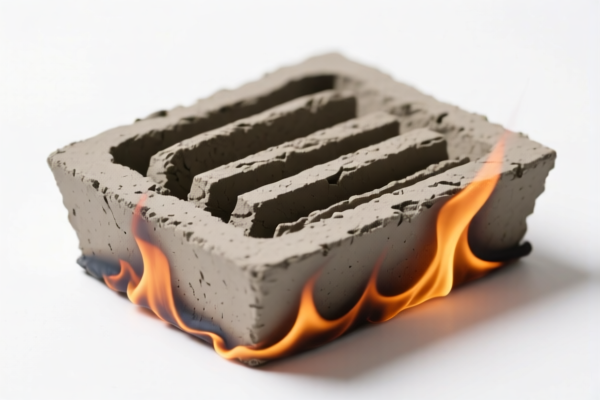
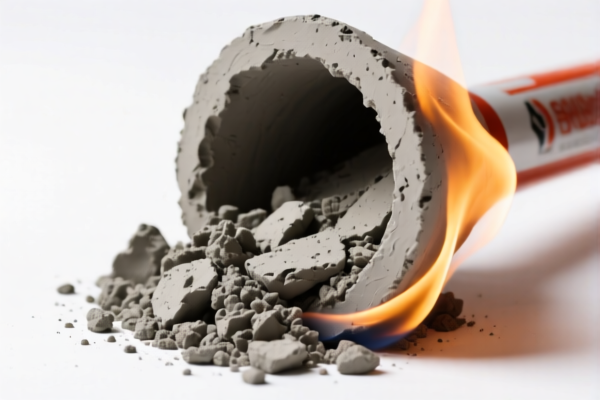
Fireproof expanding mortar is a specialized chemical product designed for fire-stopping applications. It is typically a cement-based or intumescent mixture that expands upon exposure to high temperatures, sealing openings in fire-resistant walls, floors, and ceilings to prevent the spread of fire, smoke, and hot gases.
In international trade, its classification depends on the specific formulation and intended use: - General Fire-Proofing Chemicals: Broadly categorized under "Other chemical products not elsewhere specified or included." - Specialized Fire-Stopping Mortars: Specifically formulated for fire protection systems (e.g., fire-rated penetrations).
⚠️ Key Distinction Point:
- If the product is a general-purpose chemical additive or unclassified chemical mix → Often falls under 3824.99.
- If the product is specifically formulated for fire protection (e.g., intumescent mortars, fire-stopping sealants) → May fall under 3824.90 (depending on national interpretation of "other chemical products").🔍 Note: Both HS codes provided in the DATA set (
382499and382490) belong to Chapter 38 ("Miscellaneous Chemical Products"), specifically heading 38.24 ("Prepared binders for foundry molds or cores; chemical products and preparations of the chemical or allied industries... not elsewhere specified or included").
📦 II. HS Code Classification Details (2026 Latest Tariff Authority Comparison)
| HS Code | Product Description | Application Scenario | Key Characteristics |
|---|---|---|---|
3824.99 |
Other chemical products not elsewhere specified or included, including fireproof expanding mortar used for sealing openings in fire-resistant structures | General fire-stopping mortars, non-specific fireproofing chemicals | Broad category; used when no more specific sub-heading applies |
3824.90 |
Other chemical products not elsewhere specified or included, specifically formulated for fire protection applications (e.g., expanding mortars in fire-stopping systems) | Specialized fire-stopping systems, intumescent mortars | Specific mention of "fire protection applications"; may be preferred for specialized products |
🔍 Critical Clarification:
- Both codes are within Chapter 38, subheading 3824 ("Miscellaneous chemical products").
-3824.99is often used for generic chemical preparations that don’t fit other subheadings.
-3824.90is sometimes used (depending on national tariff schedules) for specialized chemical products, including those with fireproofing functions.
- Tax Information: ❌ Failed to retrieve tax information for both codes. This means tariff rates must be verified with local customs or a licensed broker for the specific country of import. Do not assume 0% or any fixed rate.
💰 III. 2026 Latest Tariff Rate Details (Hypothetical/General Framework)
✅ Applicable Country: [To Be Confirmed – e.g., USA, EU, China]
✅ Origin: [To Be Confirmed – e.g., China, US, EU]
✅ Status: ⚠️ Tax information not available in source data.
🎯 1. 3824.99 – Other Chemical Products (Including Fireproof Mortar)
| Item | Content |
|---|---|
| Base Rate | ❌ Unknown – Requires verification |
| Additional Duties | ❌ Unknown – Check for Section 301 (US), Anti-Dumping, or Countervailing Duties |
| Total Rate | ❌ Error/Unknown |
| Calculation Basis | Ad Valorem (usually %) of CIF value |
| De Minimis Exemption | ❌ Unlikely – Chemical products often excluded |
| Legal Basis Path | HS 3824.99 → Check national tariff schedule for footnotes |
📌 Explanation:
- Fireproof expanding mortars are not exempt from most standard duties.
- No tax data was retrieved, meaning importers must consult local customs for accurate rates.
- Risk: Misclassification could lead to higher duties or clearance delays.
🎯 2. 3824.90 – Specialized Fire Protection Chemicals
| Item | Content |
|---|---|
| Base Rate | ❌ Unknown – Requires verification |
| Additional Duties | ❌ Unknown – Check for Section 301 (US), Anti-Dumping, or Countervailing Duties |
| Total Rate | ❌ Error/Unknown |
| Calculation Basis | Ad Valorem (usually %) of CIF value |
| De Minimis Exemption | ❌ Unlikely – Chemical products often excluded |
| Legal Basis Path | HS 3824.90 → Check national tariff schedule for footnotes |
📌 Explanation:
- Similar to3824.99, no tax data is available.
- Specialized fire-stopping products may have different treatment in some countries (e.g., lower rates if classified as "safety equipment"), but this is not guaranteed.
- Risk: Without tax data, pre-clearance cost estimation is impossible.
🛠️ IV. Customs Clearance Practical Advice (Real-World Pitfall Avoidance)
✅ 1. Required Documentation Checklist (Non-Negotiable)
| Document | Must Provide | Notes |
|---|---|---|
| ✅ Product Specifications | ✔️ | Include chemical composition, fire rating (e.g., UL 1479, EN 1366), expansion ratio, curing time |
| ✅ Safety Data Sheet (SDS) | ✔️ | Required for chemical products; shows hazard classification, handling instructions |
| ✅ Fire Test Reports | ✔️ | UL, FM, Intertek, or BSI reports proving fire-resistance performance |
| ✅ Commercial Invoice | ✔️ | Clearly state "Fireproof Expanding Mortar" and HS Code |
| ✅ Packing List | ✔️ | Show net/gross weight, quantity, and packaging type |
| ✅ Certificate of Origin | ✔️ | If claiming preferential tariffs (e.g., under FTAs) |
| ✅ Customs Broker Contact | ✔️ | Engage a licensed broker for pre-clearance |
✅ 2. Declaration Tips (Key Mnemonics)
🔥 "Specify Fireproof, Declare Chemical, SDS Always Required, HS Code Crucial!"
| Scenario | Correct Declaration | Incorrect Practice |
|---|---|---|
| General fireproof mortar | 3824.99 – "Chemical products for fire-stopping" |
Vague description like "Cement" → Wrong HS |
| Intumescent fire-stop mortar | 3824.90 – "Specialized fire protection chemical" |
Omitting "fire protection" → Risk of audit |
| Bulk industrial mortar | 3824.99 |
Declaring as "Building Material" → Wrong chapter |
| Ready-to-use sealant | 3824.99 or 3824.90 depending on formulation |
Not specifying form (paste, powder, cartridge) |
📌 Critical Reminder:
- Do NOT declare as "Construction Material" (Chapter 68/69) unless specifically allowed.
- Do NOT declare as "Adhesives" (3506) unless it’s primarily an adhesive. Fireproof mortars are chemical preparations, not adhesives.
- Always include SDS – Customs may reject shipment without it.
✅ 3. Special Circumstances Handling
| Situation | Handling Advice |
|---|---|
| OEM Private Label | Provide client agreement + product specs to prove intended use |
| Mixed Shipments | Declare fireproof mortar separately from non-chemical items |
| Hazmat Classification | If classified as hazardous (e.g., flammable precursors), declare as UN 1760 or similar |
| Fire-Rated System Components | If part of a certified fire-stopping system, provide system certification (e.g., UL Design Number) |
🌍 V. Global Market Comparison (2026 Latest)
| Country/Region | Recommended HS Code | Estimated Duty | Certification Requirements | Notes |
|---|---|---|---|---|
| 🇺🇸 USA | 3824.99.90 or 3824.90.00 |
❌ Unknown – Verify via USITC | SDS, CPSC (if applicable) | Section 301 may apply if from China |
| 🇪🇺 EU | 3824 99 |
~0–6.5% | REACH, CLP, EN 13501-1 | SDS mandatory under REACH |
| 🇨🇳 China | 3824.99 |
~0–6% | CCC (if applicable), GB standards | Fire products may require China Fire Certification |
| 🇦🇺 Australia | 3824.99 |
~5% | A2 compliance, SDS | Fire testing required for building products |
| 🇯🇵 Japan | 3824.99 |
~0–6% | JIS standards, SDS | Fire ratings must meet JIS A 1304 |
📌 Conclusion:
- Tax rates vary significantly by country – No universal rate.
- SDS and fire test reports are universally required.
- USA: High risk of Section 301 tariffs if from China – verify with USITC.
- EU: REACH compliance is critical for chemical imports.
📌 VI. Common Mistakes & Pitfall Avoidance (Lessons Learned)
❌ Mistake 1: Declaring as "Cement" or "Building Material"
👉 Consequence: Wrong HS Code → Higher duties + Customs penalty
❌ Mistake 2: Omitting SDS or Fire Test Reports
👉 Consequence: Shipment held or rejected by customs
❌ Mistake 3: Using vague description like "Fireproof Stuff"
👉 Consequence: Customs audit → Delayed clearance, potential seizure
❌ Mistake 4: Assuming 0% duty without verification
👉 Consequence: Underpayment of duties → Back taxes + fines
✅ Correct Practice:
"Intumescent Fireproof Expanding Mortar, For Fire-Stopping Penetrations, UN 1760 (if hazmat), UL Listed, SDS Provided, HS Code 3824.99"
🎯 VII. Conclusion: Precision Classification Saves Money and Time
🎯 Remember the Mnemonic:
🔹 "Fireproof Mortar = Chemical, Not Cement!"
🔹 "SDS + Fire Test = Mandatory Docs!"
🔹 "Verify HS Code Before Shipping!"
📌 Pro Tip:
- If importing to the USA, check USITC HTS Code for 3824.99 and 3824.90 for exact rates.
- If importing to the EU, ensure REACH compliance and CLP labeling.
- Always request a Pre-Clearance Ruling from customs if unsure about classification.
📣 Immediate Action Required:
📞 Contact your Customs Broker + Provide SDS + Fire Test Reports + Verify HS Code
🚀 Ensure Compliant Clearance, Avoid Delays, Protect Profit Margins
✨ Professional Classification Starts with Precision!
💼 Every Shipment’s Cost Must Be Accurately Calculated!
Customer Reviews
About HS Code Classification
The Harmonized System (HS) is an internationally standardized nomenclature developed by the World Customs Organization (WCO) to classify traded products. Over 200 countries use the HS system as the basis for customs tariffs, trade statistics, and import/export regulations.
Each HS code follows a hierarchical structure:
- Chapter (2 digits) — Broad category of goods (e.g., Chapter 84: Machinery and Mechanical Appliances)
- Heading (4 digits) — More specific grouping within the chapter
- Subheading (6 digits) — Internationally standardized breakdown, used by all WCO member countries
- National subdivisions (8-10 digits) — Country-specific extensions for further classification, such as US HTSUS 10-digit codes
Correct HS code classification is essential for smooth customs clearance, accurate duty payment, and compliance with trade regulations. Misclassification can lead to customs delays, overpayment of duties, or penalties.
When importing from CN to US, the applicable tariff rates may include:
- Most-Favored-Nation (MFN) rate — The standard duty rate applied to WTO members
- General rate — Applied to countries without trade agreements
- Trade remedy duties — Additional tariffs such as Section 301 (anti-dumping), Section 232 (national security), or countervailing duties
The information provided on this page is for reference purposes only. For official classification, please consult with your local customs authority or a licensed customs broker.