Fireproof Mortar Intumescent
CN → US| HS Code | Tariff Rate | Origin | Destination | Doc |
|---|---|---|---|---|
| 2530908050 | 10.0% | CN | US | Official Doc |
| 6810990080 | 35.0% | CN | US | Official Doc |
| 6815994110 | 35.0% | CN | US | Official Doc |
| 3214100020 | 38.7% | CN | US | Official Doc |
Product Images
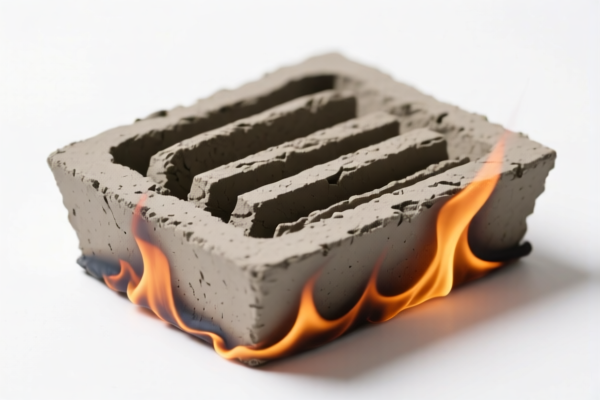
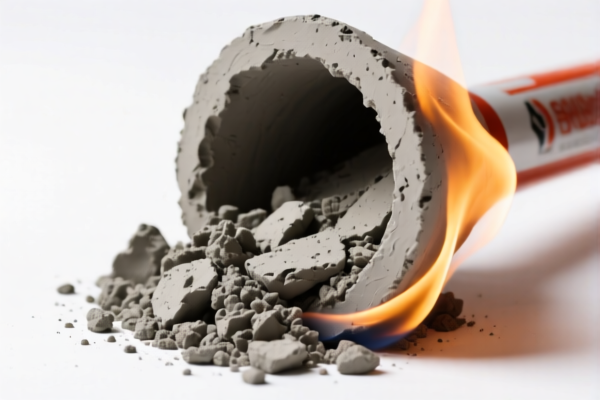
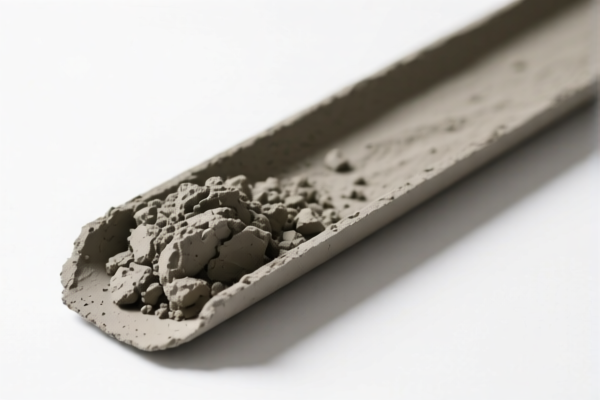

AI Analysis
🧱 Fireproof Mortar & Intumescent Sealants: HS Code Classification & Customs Clearance Guide
🌐 HS Code Reference & Customs Clearance Guide | 2026 Latest Tariff Analysis | Professional Entry Strategy
📌 I. Product Definition & Classification: Do You Really Understand "Fireproof Mortar"?
Fireproof mortar and intumescent sealants are critical passive fire protection materials used in construction, industrial pipelines, and structural steel protection. In international trade, they are classified based on their chemical composition, physical state, and primary function.
Key Distinction: * Fireproof Mortar (Cementitious/Mineral-based): Rigid, paste-like, or powder mixtures used for coating structures. Classified under mineral products or cementitious goods. * Intumescent Sealant/Gou (Polymer/Composite-based): Flexible, rubbery, or putty-like substances that expand upon heating. Classified as prepared binders, adhesives, or composite materials.
⚠️ Critical Classification Point:
- If the product is primarily cementitious/mineral and used as a coating → It may fall under Chapter 68 or Chapter 25.
- If the product is primarily chemical/polymers used as a sealant/gou → It falls under Chapter 32 (Chemical Products).
- Misclassification Risk: Declaring an intumescent sealant as "mortar" can lead to severe underpayment of duties due to different tax rates.
📦 II. HS Code Classification Matrix (Based on Provided Data)
The following classification is strictly derived from the provided data set. Note that the "Total Tax" reflects the cumulative impact of Base Duties, Section 301/Additional Duties, and "122 Clause" tariffs (likely referring to specific US trade action provisions).
| HS Code | Product Description & Logic | Total Tax Rate | Tax Breakdown |
|---|---|---|---|
2530.90.80.50 |
Mineral-Based Fireproof Material Classification: Based on refractory properties, classified as "Other prepared binders for foundry molds/core" or other unlisted mineral products. |
10.0% | Base: 0.0% Additional: 0.0% 122 Clause: 10% |
6810.99.00.80 |
Cementitious/Concrete Fireproof Product Classification: Based on cement, concrete, or similar artificial stone materials, classified as "Other articles." |
35.0% | Base: 0.0% Additional: 25.0% 122 Clause: 10% |
6815.99.41.10 |
Mineral Product Article Classification: Based on mineral product attributes, classified as "Other mineral products." |
35.0% | Base: 0.0% Additional: 25.0% 122 Clause: 10% |
3214.10.00.20 |
Intumescent Sealant/Gou (Composite) Classification: Based on sealant/gou category, classified as "Prepared binders for foundry molds/core" or similar composite filler materials. |
38.7% | Base: 3.7% Additional: 25.0% 122 Clause: 10% |
🔍 Key Observation:
- The chemical/polymer-based sealant (3214) has the highest total tax (38.7%) due to the 3.7% base duty.
- Mineral/cement-based products (6810/6815) have 35.0% tax but 0% base duty.
- The refractory mineral product (2530) has the lowest tax (10.0%), but only applies if the product is strictly classified under this specific refractory subheading.
💰 III. 2026 Tariff Rate Detailed Explanation (Including Surcharges & Policy Add-ons)
✅ Jurisdiction: United States (US)
✅ Origin: China (CN)
✅ Effective Date: Current Trade Actions (Section 301 & Related Clauses)
🎯 1. 3214.10.00.20 – Intumescent Sealant/Gou (Highest Tax Risk)
| Item | Detail |
|---|---|
| Base Duty | 3.7% (Standard for prepared binders/sealants) |
| Additional Duty (Section 301) | +25.0% (Targeting Chinese chemical products) |
| 122 Clause Duty | +10.0% (Specific additional levy on Chinese imports) |
| Total Effective Rate | 38.7% |
| Calculation | CIF Value × 38.7% |
| De Minimis Exemption? | ❌ No (High-value chemical imports are excluded) |
📌 Explanation:
- This code applies to polymer-based, rubbery, or putty-like intumescent materials.
- The 3.7% base duty makes this the most expensive category.
- Common Mistake: Importers often try to classify these as "cement" to avoid the 3.7% base, but customs officers will reject this if the product is flexible or polymer-based.
🎯 2. 6810.99.00.80 & 6815.99.41.10 – Cementitious/Mineral Fireproof Products
| Item | Detail |
|---|---|
| Base Duty | 0.0% (No base duty for many mineral/cement articles) |
| Additional Duty (Section 301) | +25.0% |
| 122 Clause Duty | +10.0% |
| Total Effective Rate | 35.0% |
| Calculation | CIF Value × 35.0% |
| De Minimis Exemption? | ❌ No |
📌 Explanation:
- These codes apply to rigid, cement-based fireproof mortars.
- Although the rate is lower than3214, it is still significantly higher than standard industrial goods.
- Distinction: If the mortar is pre-mixed powder vs. ready-to-use paste, classification may vary, but both fall under Chapter 68 in this dataset.
🎯 3. 2530.90.80.50 – Refractory Mineral Product (Lowest Tax)
| Item | Detail |
|---|---|
| Base Duty | 0.0% |
| Additional Duty (Section 301) | 0.0% |
| 122 Clause Duty | +10.0% |
| Total Effective Rate | 10.0% |
| Calculation | CIF Value × 10.0% |
| De Minimis Exemption? | ❌ No |
📌 Explanation:
- This is a highly specific classification for refractory materials.
- Warning: This classification is only valid if the product is purely mineral-based and meets the "refractory" definition (high heat resistance without chemical binding agents like polymers).
- Many "fireproof mortars" contain polymers for flexibility, which disqualifies them from this code.
🛠️ IV. Customs Clearance Operational Advice (Practical Pitfall Avoidance Guide)
✅ 1. Document Preparation Checklist (Non-Negotiable)
| Document | Required? | Notes |
|---|---|---|
| Product Spec Sheet | ✔️ | Must detail chemical composition (e.g., % cement, % polymer, % intumescent agent). |
| Material Safety Data Sheet (MSDS) | ✔️ | Critical for determining if the product is "chemical" (Ch. 32) or "mineral" (Ch. 25/68). |
| Application Photos | ✔️ | Show if the product is rigid (mortar) or flexible (sealant). |
| Commercial Invoice | ✔️ | Clear description: "Intumescent Fireproof Sealant" or "Cementitious Fireproof Mortar." |
| Origin Certificate | ✔️ | Essential for proving Chinese origin (to apply correct surcharges). |
| Third-Party Test Report | ✔️ | Fire-resistance test report (e.g., UL, FM, Intertek) to confirm fireproof function. |
✅ 2. Classification Strategy (Key Mantras)
🔥 "Check the Base: Polymer = 3214, Cement = 6810/6815, Pure Mineral = 2530."
| Scenario | Correct HS Code | Incorrect Action | Consequence |
|---|---|---|---|
| Flexible, rubbery intumescent sealant | 3214.10.00.20 |
Declare as "cement" | Penalty + Back Taxes (38.7% vs 0-35%) |
| Rigid, cement-based fireproof coating | 6810.99.00.80 or 6815.99.41.10 |
Declare as "polymer sealant" | Overpayment (35% vs 38.7%) |
| High-temp refractory mortar (no polymer) | 2530.90.80.50 |
Declare as "cementitious" | Savings (10% vs 35%) |
⚠️ Critical Warning:
- Do not use generic terms like "Fireproof Paste."
- Explicitly state: "Polymer-Intumescent Sealant" for3214or "Cementitious Fireproof Mortar" for6810/6815.
✅ 3. Special Handling for Intumescent Products
| Issue | Solution |
|---|---|
| Is it a "Chemical" or "Construction Material"? | If it expands (intumesces) due to heat, it is often classified under 3214 (prepared binders/sealants) if polymer-based. Cement-based intumescent mortars may go to 6810. |
| Packaging | Ensure packaging is labeled with fire-resistance ratings (e.g., "1-Hour Fire Rating"). Customs may inspect for compliance. |
| Bulk vs. Retail | Bulk industrial shipments are scrutinized more heavily for misclassification. Provide detailed usage instructions. |
🌍 V. Global Market Comparison (2026 Latest)
| Region | Recommended HS Code | Est. Total Tax (China Origin) | Notes |
|---|---|---|---|
| 🇺🇸 USA | 3214.10.00.20 (Sealant)6810.99.00.80 (Mortar) |
35.0% - 38.7% | High tariffs due to Section 301 + 122 Clause. |
| 🇨🇳 China | 3214.10.00.206810.99.00.80 |
Varies (Export) | No import duty on exports, but VAT refund applies. |
| 🇪🇺 EU | 3214.10.906810.99.90 |
0% - 6.5% | No Section 301 tariffs. Standard EU duty applies. |
| 🇬🇧 UK | 3214.10.906810.99.90 |
0% - 5% | Post-Brexit tariffs may apply, but no US-style surcharges. |
📌 Conclusion:
- The USA imposes the highest barriers due to the 122 Clause and Section 301 tariffs.
- EU/UK tariffs are significantly lower, but certification (CE/UKCA) is required.
📌 VI. Common Mistakes & Pitfall Guide (Lessons from the Field)
❌ Mistake 1: Classifying intumescent sealant (polymer) as "Cement Mortar" to avoid the 3.7% base duty.
👉 Result: Customs will reject the declaration based on MSDS and physical properties. Back taxes + penalties.
❌ Mistake 2: Declaring "Fireproof Mortar" without specifying if it is cement-based or chemical-based.
👉 Result: Uncertainty leads to higher default duties or audits.
❌ Mistake 3: Ignoring the "122 Clause" (10%).
👉 Result: Underpayment of duties. This clause applies to many Chinese industrial inputs.
✅ Correct Practice:
"Polymer-Based Intumescent Fireproof Sealant, 20kg Bucket, Model XYZ, UL Listed" →
3214.10.00.20
"Cement-Based Fireproof Mortar, 25kg Bag, Model ABC, Non-Combustible" →6810.99.00.80
🎯 VII. Conclusion: Precision in Classification Saves Money!
🎯 Remember the Mantra:
🔹 "Polymer = 3214 (38.7%), Cement = 6810 (35.0%), Pure Mineral = 2530 (10.0%)."
🔹 "One percentage point difference is thousands of dollars in savings!"
🔹 "Always provide MSDS and Spec Sheets to prove composition!"
📌 Pro Tip:
If your product is cement-based but contains small amounts of polymers for flexibility, consult a customs broker immediately. Misclassification can lead to seizure of goods.
For high-volume imports, consider applying for a Binding Ruling from US Customs to secure the correct HS Code and tax rate in advance.
📣 Immediate Action:
📞 Contact a Licensed Customs Broker
📄 Provide MSDS + Product Photos
🚀 Secure the Correct HS Code Before Shipment!
✨ Professional Clearance Starts with Accurate Classification!
💼 Every Duty Saved is Profit Earned!
Customer Reviews
About HS Code Classification
The Harmonized System (HS) is an internationally standardized nomenclature developed by the World Customs Organization (WCO) to classify traded products. Over 200 countries use the HS system as the basis for customs tariffs, trade statistics, and import/export regulations.
Each HS code follows a hierarchical structure:
- Chapter (2 digits) — Broad category of goods (e.g., Chapter 84: Machinery and Mechanical Appliances)
- Heading (4 digits) — More specific grouping within the chapter
- Subheading (6 digits) — Internationally standardized breakdown, used by all WCO member countries
- National subdivisions (8-10 digits) — Country-specific extensions for further classification, such as US HTSUS 10-digit codes
Correct HS code classification is essential for smooth customs clearance, accurate duty payment, and compliance with trade regulations. Misclassification can lead to customs delays, overpayment of duties, or penalties.
When importing from CN to US, the applicable tariff rates may include:
- Most-Favored-Nation (MFN) rate — The standard duty rate applied to WTO members
- General rate — Applied to countries without trade agreements
- Trade remedy duties — Additional tariffs such as Section 301 (anti-dumping), Section 232 (national security), or countervailing duties
The information provided on this page is for reference purposes only. For official classification, please consult with your local customs authority or a licensed customs broker.