Fireproof Repair Material (Fast Setting)
CN → US| HS Code | Tariff Rate | Origin | Destination | Doc |
|---|---|---|---|---|
| 3214905000 | 38.25% | CN | US | Official Doc |
| 3214100090 | 38.7% | CN | US | Official Doc |
Product Images


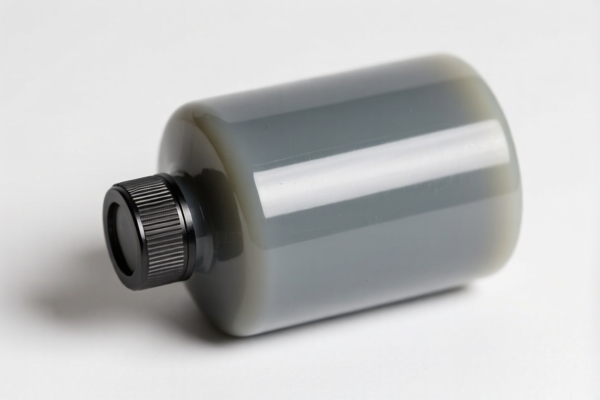
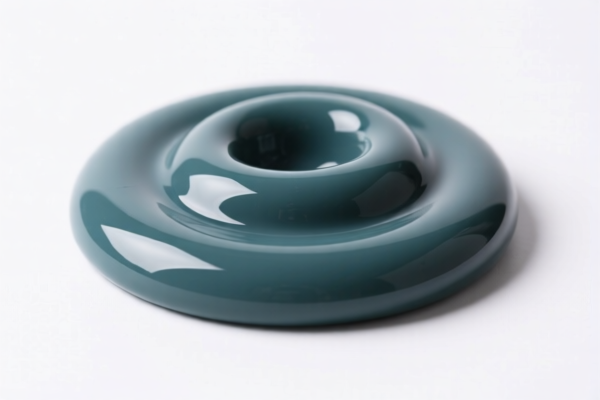
AI Analysis
🧱 Fireproof Repair Material (Fast Setting) – Industrial Masonry & Cementitious Sealant
🌐 HS Code Reference & Customs Clearance Guide | 2026 Latest Tariff Analysis | Professional Compliance Strategy
📌 I. Product Definition & Classification: What Exactly Is "Fireproof Repair Material"?
Fireproof Repair Materials (Fast Setting) are specialized cementitious or silicate-based compounds designed for rapid structural repair, fireproofing, and sealing of high-temperature environments. In international trade, they are primarily classified under Chapter 32, specifically heading 3214, which covers "Glaziers' putty, grafting putty, resin cements, caulking compounds and other mastics; painters' fillings."
These materials are non-refractory surfacing preparations or caulking compounds/mastics used for filling, sealing, or repairing surfaces exposed to heat or fire. They are distinct from pure refractory bricks or cements (Chapter 69 or 25) because they are often pre-mixed, paste-like, or powder-based compounds intended for application as a layer or sealant.
⚠️ Key Distinction:
- If the product is a paste, putty, mastic, or caulking compound for sealing/filling cracks or protecting surfaces →归入 Chapter 32 (3214).
- If the product is a refractory brick or castable refractory cement intended for lining furnaces →归入 Chapter 69 or 25.
- Crucial Note: For "Fast Setting Fireproof Repair Material" sold as a bagged powder to be mixed with water, or a ready-to-use paste for sealing/fireproofing joints, 3214 is the correct classification.
📦 II. HS Code Classification Details (2026 Latest Tariff Authority Cross-Reference)
Based on the provided data, here are the two most relevant HS Codes for this product category:
| HS Code | Product Description | Application Scenario | Tax Rate (US/China) |
|---|---|---|---|
3214.90.50.00 |
Other: Other (General Category for Non-Ref. Surfacing/Mastics) | General fireproofing sealants, mastic fireproofing compounds, non-refractory surfacing for floors/walls | 28.25% |
3214.10.00.90 |
Painters' Fillings (Specific Sub-category) | Specific fireproof paint fillers, glazing putties with fire retardant properties | 0.0% |
🔍 Classification Logic:
-3214.90.50.00: This is the default "catch-all" for other mastics and surfacing preparations not specifically listed elsewhere. Most industrial-grade "fast-setting fireproof repair mortars" or "cementitious fireproof coatings" fall here if they are not strictly "glaziers' putty" or "painters' fillings."
-3214.10.00.90: This code is for Painters' Fillings. If the product is marketed specifically as a "fireproof filler" for painting purposes (e.g., filling holes in drywall before painting, with fire retardant additives), it might qualify here. However, for structural or high-temperature fireproofing, 3214.90.50.00 is safer and more common.📌 Critical Warning:
- Do not classify under Chapter 69 (Ceramics) unless it is a solid refractory brick.
- Do not classify under Chapter 25 (Mineral Products) unless it is raw mineral powder without binding agents.
- The key is the form (putty/mastic/filling) and use (sealing/surfacing).
💰 III. 2026 Latest Tariff Rate Breakdown (Detailed Tax Terms)
✅ Applicable Country: United States (US)
✅ Country of Origin: China (CN)
✅ Effective Date: Current rates as per 2026 data provided
🎯 1. 3214.90.50.00 – Other: Other (Primary Classification)
| Item | Content |
|---|---|
| Base Tariff Rate | 3.25% (ad valorem) |
| Additional Tariff (Section 301/Trade War) | +25.0% |
| Total Tariff Rate | 28.25% |
| Tax Calculation | CIF Value × 28.25% |
| De Minimis Exemption? | ❌ Not Eligible (High tariff rate exceeds de minimis thresholds) |
| Legal Basis Path | HTSUS:3214.90.50.00 → Section 301 Footnote → Total: 28.25% |
📌 Explanation:
- The 3.25% is the standard Most Favored Nation (MFN) duty for this category.
- The 25.0% is an additional tariff imposed under U.S. Trade Law Section 301 on Chinese goods in this HS Code range.
- Total: 28.25%. This is a significant cost factor. You must budget for this in your landed cost calculation.
🎯 2. 3214.10.00.90 – Painters' Fillings (Potential Lower-Tax Option)
| Item | Content |
|---|---|
| Base Tariff Rate | 0.0% |
| Additional Tariff | 0.0% |
| Total Tariff Rate | 0.0% |
| Tax Calculation | $0 |
| De Minimis Exemption? | ✅ Eligible (if under $800 per shipment) |
| Legal Basis Path | HTSUS:3214.10.00.90 → No Additional Duties |
📌 Caution:
- While the tax is 0%, this classification is strictly for "Painters' Fillings."
- If your product is a structural fireproofing mastic or industrial repair mortar, using this code may be flagged as misclassification by CBP (Customs and Border Protection).
- Only use if the product is explicitly a non-structural filler for painting/preparation, not a high-temperature sealant.
🛠️ IV. Customs Clearance Practical Advice (Best Practices & Pitfall Avoidance)
✅ 1. Documentation Checklist (Mandatory)
| Document | Required? | Notes |
|---|---|---|
| ✅ Product Specification Sheet | ✔️ | Must detail: setting time, fire resistance rating (e.g., UL 263), chemical composition |
| ✅ SDS (Safety Data Sheet) | ✔️ | Critical for cementitious/chemical products. Check for hazardous materials flags |
| ✅ Commercial Invoice | ✔️ | Clearly state: "Fireproof Repair Material, Fast Setting, Cementitious Base" |
| ✅ Labeling | ✔️ | Must include HS Code, Country of Origin, Net Weight, and Usage Instructions |
| ✅ Testing Reports | ✔️ | UL, FM, or ASTM E119 fire rating certificates to justify use case |
✅ 2. Declaration Tips (Key Mnemonics)
🔥 "Define Use, Avoid Risk, Fast Set ≠ Refractory Brick!"
| Scenario | Correct Declaration | Error to Avoid |
|---|---|---|
| Industrial Fireproofing Mastic | 3214.90.50.00 - "Cementitious Fireproof Mastic" |
Calling it "Refractory Brick" → Wrong Chapter |
| Drywall Fireproof Filler | 3214.10.00.90 - "Fire Retardant Painters' Filling" |
Calling it "Mastic" → Higher Tax |
| High-Temp Furnace Sealant | 3214.90.50.00 - "High-Temp Caulking Compound" |
Misclassifying as Chapter 69 |
✅ 3. Special Considerations
| Situation | Handling Advice |
|---|---|
| Bulk vs. Retail | Bulk shipments (50kg bags) are more likely to be scrutinized for correct HS. Ensure HS is on pallet labels. |
| Chemical Composition | If the product contains epoxy resins (not cement), it may fall under 3906 (Epoxy Resins). Confirm base binder! |
| Pre-Mixed vs. Powder | Both can be 3214. If pre-mixed with water-based activators, ensure it's not classified as a paint (Chapter 32.09) by mistake. |
| Fire Rating Claims | Do not overstate claims. "Fireproof" is a functional description. Provide test certificates to justify the product's nature. |
🌍 V. Global Market Comparison (2026 Snapshot)
| Market | Recommended HS Code | Duty Rate (China Origin) | Key Requirements |
|---|---|---|---|
| 🇺🇸 USA | 3214.90.50.00 |
28.25% | SDS, UL/FM Reports |
| 🇨🇳 China | 3214.90.50.00 |
~3-5% | CCC (if applicable), MSDS |
| 🇪🇺 EU | 3214.90 |
~4.5% | REACH Compliance, CLP Labeling |
| 🇬🇧 UK | 3214.90 |
~4.5% | UKCA Marking, REACH UK |
📌 Conclusion:
- The U.S. is the most expensive market due to the 25% Section 301 tariff.
- EU/UK offer lower duties but require strict chemical compliance (REACH).
- China has minimal barriers for import if not a strategic restricted material.
📌 VI. Common Errors & Pitfalls (Lessons Learned)
❌ Error 1: Classifying as Refractory Cement (Chapter 25)
👉 Consequence: Misclassification penalty, duty rate mismatch, shipment delay.
✅ Fix: It’s a mastix/filling, not a raw mineral cement.
❌ Error 2: Using 3214.10.00.90 for Structural Fireproofing
👉 Consequence: CBP audit, back-tariffs, fines for undervaluation.
✅ Fix: Only use 3214.10 for painters' fillers. For structural/fire-sealing, use 3214.90.50.00.
❌ Error 3: Ignoring SDS Requirements
👉 Consequence: Denied entry, return to sender.
✅ Fix: Always include SDS with correct hazard classifications.
🎯 VII. Conclusion: Optimize Costs & Ensure Compliance
🎯 Key Takeaway:
🔹 For most fireproof repair materials: Use
3214.90.50.00. Expect 28.25% total duty.
🔹 For cosmetic/non-structural fillers: Consider3214.10.00.90for 0% duty, but ensure product use aligns strictly with "painters' fillings."
🔹 Always verify with a licensed customs broker if the product contains resins or exotic binders.
📌 Pro Tip:
If your product is not a standard mastic or filling, but a specialty chemical coating, consider classifying under 3208 or 3213. However, for "repair materials" in putty/paste form, 3214 is the gold standard.
📣 Action Required:
📞 Consult your customs broker with the SDS and Product Specification.
📄 Request an Advance Ruling if the product is unique or high-value.
🚀 Ensure your commercial invoice clearly states the product name and HS Code to avoid delays.
✨ Precise Classification Saves Thousands!
💼 Don't let misclassification eat your margins!
Customer Reviews
About HS Code Classification
The Harmonized System (HS) is an internationally standardized nomenclature developed by the World Customs Organization (WCO) to classify traded products. Over 200 countries use the HS system as the basis for customs tariffs, trade statistics, and import/export regulations.
Each HS code follows a hierarchical structure:
- Chapter (2 digits) — Broad category of goods (e.g., Chapter 84: Machinery and Mechanical Appliances)
- Heading (4 digits) — More specific grouping within the chapter
- Subheading (6 digits) — Internationally standardized breakdown, used by all WCO member countries
- National subdivisions (8-10 digits) — Country-specific extensions for further classification, such as US HTSUS 10-digit codes
Correct HS code classification is essential for smooth customs clearance, accurate duty payment, and compliance with trade regulations. Misclassification can lead to customs delays, overpayment of duties, or penalties.
When importing from CN to US, the applicable tariff rates may include:
- Most-Favored-Nation (MFN) rate — The standard duty rate applied to WTO members
- General rate — Applied to countries without trade agreements
- Trade remedy duties — Additional tariffs such as Section 301 (anti-dumping), Section 232 (national security), or countervailing duties
The information provided on this page is for reference purposes only. For official classification, please consult with your local customs authority or a licensed customs broker.