Fish Float
CN → US| HS Code | Tariff Rate | Origin | Destination | Doc |
|---|---|---|---|---|
| 9507908000 | 19.0% | CN | US | Official Doc |
| 3926903500 | 16.5% | CN | US | Official Doc |
| 3926909989 | 22.8% | CN | US | Official Doc |
| 6603908100 | 65.2% | CN | US | Official Doc |
| 6603904100 | 17.5% | CN | US | Official Doc |
Product Images
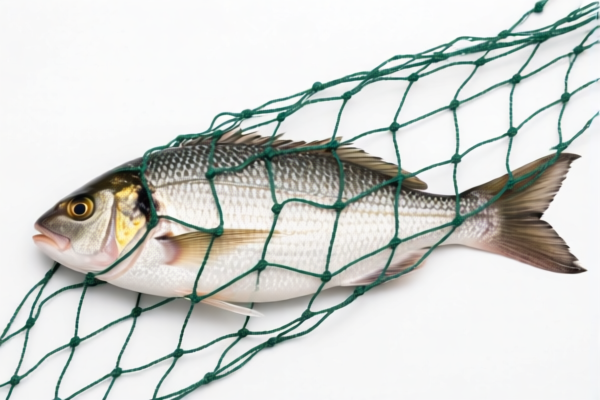
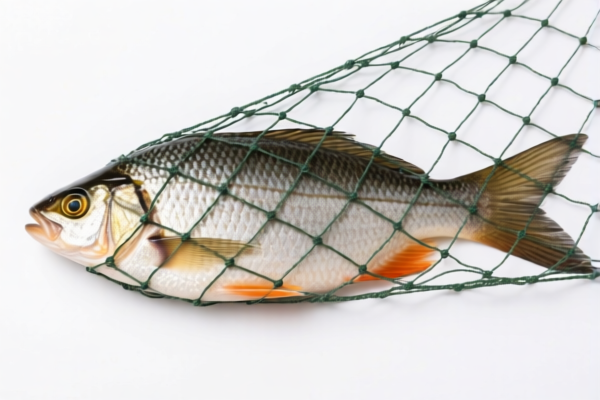
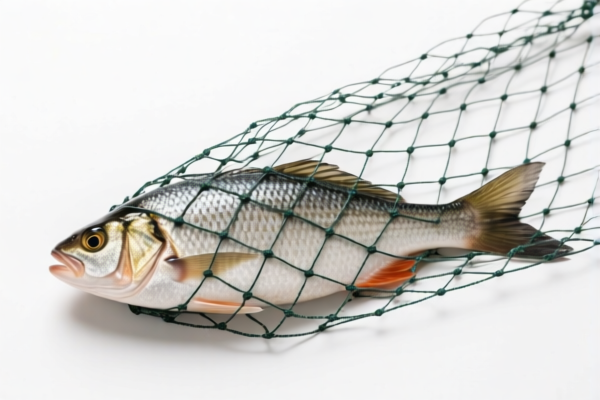
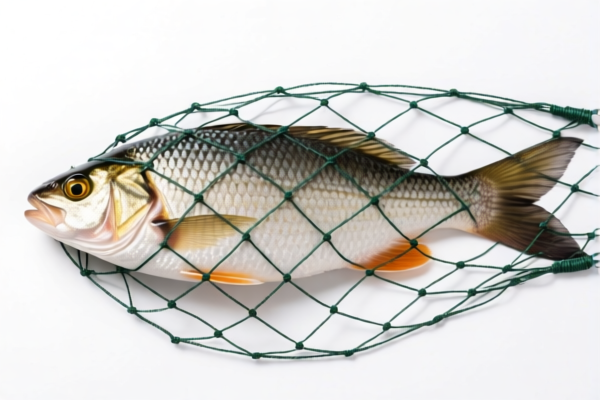
AI Analysis
🎣 Fish Floats (Fishing Floats)
🌐 HS Code Reference & Customs Clearance Guide | 2026 Latest Tariff Analysis | Professional Clearance Strategy
📌 I. Product Definition & Classification: Do You Really Understand "Fish Floats"?
A Fish Float (also known as a bobber or indicator) is a critical accessory in angling, designed to detect bites and keep bait at a specific depth. In international trade, it is not classified as a standalone fishing rod but rather as an accessory or component of fishing gear.
Depending on its material composition and functional role, it can fall into several distinct HS Code categories: * Fishing Accessories: If classified broadly under fishing equipment accessories. * Fishing Gear Parts: If viewed specifically as a spare part or attachment for rods/reels. * Plastic/Composite Goods: If the primary characteristic is its material (plastic/composite) rather than its function. * General Other Articles: If it doesn't fit specific material or functional definitions strictly.
⚠️ Key Classification Divergence:
- Is it a specific fishing accessory (Chapter 95) or a general plastic product (Chapter 39)?
- Is it a part of the rod/reel system or a standalone decorative/functional item?
- Material matters: Plastic vs. Balsa wood vs. Composite materials can shift classification.
📦 II. HS Code Classification Details (Based on Provided Data)
| HS Code | Product Description | Summary/Logic | Total Tax Rate |
|---|---|---|---|
6603.90.81.00 |
Fishing Accessories (Decorative & Others) | Classified as "other" accessories for fishing tackle. No material conflict. | 65.2% |
6603.90.41.00 |
Parts/Attachments for Fishing Gear | Classified as a spare part or attachment for improving fishing gear. | 17.5% |
3926.90.99.89 |
Plastic/Composite Articles | Assumed material is plastic/composite. Classified as "other" plastic articles. | 22.8% |
9507.90.80.00 |
Accessories for Fishing Gear | Classified as an accessory within the "Fishing and Hunting Equipment" category. | 19.0% |
3926.90.35.00 |
Other Plastic Articles | Material inferred as plastic/composite. Classified as "other plastic articles" not specified elsewhere. | 16.5% |
🔍 Critical Observation:
- The highest tax rate (65.2%) applies if classified under6603.90.81.00.
- The lowest tax rate (16.5%) applies if classified under3926.90.35.00.
- A 38.7% tax gap exists between the most and least favorable classifications.
- Material declaration and functional description are the deciding factors.
💰 III. 2026 Latest Tariff Rate Breakdown (Including Additional Taxes)
✅ Applicable Country: United States (US)
✅ Origin: China (CN)
✅ Effective Date: Current rates include Section 301 and IEEPA add-ons as per provided data.
🎯 1. 6603.90.81.00 —— Fishing Accessories (Highest Risk)
| Item | Content |
|---|---|
| Base Duty | 5.2% |
| Section 301 Add-on | 0.0% (as per data) |
| IEEPA/Add-on (122 Clause) | 10% (Steel/Aluminum/Copper) + 50% (Specific 122 Clause Add-on) |
| Total Effective Tax | 65.2% |
| Calculation Basis | CIF Value × 65.2% |
| De Minimis Exemption | ❌ Not Applicable |
| Legal Path | Base Tariff → 122 Clause → Add-on Tariff |
📌 Explanation:
- This classification triggers the 50% add-on tariff under specific trade clauses (likely related to strategic materials or specific trade remedies).
- Result: Extremely high cost. Avoid this classification unless legally mandatory.
🎯 2. 6603.90.41.00 —— Parts/Attachments for Fishing Gear
| Item | Content |
|---|---|
| Base Duty | 0.0% |
| Section 301 Add-on | 7.5% |
| IEEPA/Add-on (122 Clause) | 10% |
| Total Effective Tax | 17.5% |
| Calculation Basis | CIF Value × 17.5% |
| De Minimis Exemption | ❌ Not Applicable |
| Legal Path | Base Tariff → Section 301 → IEEPA |
📌 Note:
- Zero base duty makes this competitive.
- However, Section 301 (7.5%) and IEEPA (10%) still apply.
- Suitable if the float is clearly defined as a functional part rather than a general accessory.
🎯 3. 3926.90.99.89 —— Plastic/Composite Articles
| Item | Content |
|---|---|
| Base Duty | 5.3% |
| Section 301 Add-on | 7.5% |
| IEEPA/Add-on (122 Clause) | 10% |
| Total Effective Tax | 22.8% |
| Calculation Basis | CIF Value × 22.8% |
| De Minimis Exemption | ❌ Not Applicable |
| Legal Path | Base Tariff → Section 301 → IEEPA |
📌 Note:
- If the float is primarily plastic, this classification is reasonable.
- 22.8% total tax is moderate.
- Ensure material composition is clearly declared as plastic/composite.
🎯 4. 9507.90.80.00 —— Fishing Gear Accessories (Recommended?)
| Item | Content |
|---|---|
| Base Duty | 9.0% |
| Section 301 Add-on | 0.0% |
| IEEPA/Add-on (122 Clause) | 10% |
| Total Effective Tax | 19.0% |
| Calculation Basis | CIF Value × 19.0% |
| De Minimis Exemption | ❌ Not Applicable |
| Legal Path | Base Tariff → IEEPA |
📌 Note:
- Section 301 is 0% here, which is a significant advantage.
- 19.0% total tax is one of the lowest among functional fishing classifications.
- Highly Recommended if the product is clearly identified as a fishing accessory.
🎯 5. 3926.90.35.00 —— Other Plastic Articles (Lowest Tax)
| Item | Content |
|---|---|
| Base Duty | 6.5% |
| Section 301 Add-on | 0.0% |
| IEEPA/Add-on (122 Clause) | 10% |
| Total Effective Tax | 16.5% |
| Calculation Basis | CIF Value × 16.5% |
| De Minimis Exemption | ❌ Not Applicable |
| Legal Path | Base Tariff → IEEPA |
📌 Note:
- Lowest total tax rate (16.5%).
- Section 301 is 0%.
- Prerequisite: Product must be materially defined as plastic/composite and not explicitly covered under Chapter 95 (Fishing Gear) in a more specific way.
- Risk: Customs may reclassify if they deem it primarily a "fishing accessory" (Chapter 95).
🛠️ IV. Customs Clearance Practical Advice (Actionable Strategies)
✅ 1. Documentation Checklist (Mandatory)
| Document | Required | Notes |
|---|---|---|
| ✅ Product Specification Sheet | ✔️ | Include material (e.g., "Plastic/ABS"), dimensions, buoyancy type. |
| ✅ Commercial Invoice | ✔️ | Clearly state "Fish Float" and HS Code. |
| ✅ Packing List | ✔️ | Ensure quantity matches invoice. |
| ✅ Product Photos | ✔️ | Show the float attached to a line or rod to prove use case. |
| ✅ Material Declaration | ✔️ | Explicitly state "Made of Plastic" or "Composite Material" if claiming Chapter 39. |
| ✅ Origin Certificate | ✔️ | If applicable for other countries (US does not have FTAs with China). |
✅ 2. Classification Strategy (Key Tips)
🔥 "Material Defines Chapter 39, Function Defines Chapter 95!"
| Scenario | Recommended HS Code | Tax Rate | Why? |
|---|---|---|---|
| Plastic Float, clearly for fishing | 9507.90.80.00 |
19.0% | Best balance: Functional fishing accessory, no Section 301. |
| Plastic Float, generic plastic article | 3926.90.35.00 |
16.5% | Lowest tax, but risk of reclassification if function is obvious. |
| Part of a Rod System | 6603.90.41.00 |
17.5% | Good if sold as a replacement part. |
| High-value/Decorative Float | 6603.90.81.00 |
65.2% | AVOID. Extremely high tax due to 50% add-on. |
✅ 3. Special Considerations
| Situation | Advice |
|---|---|
| Mixed Materials | If made of wood + plastic, prioritize material composition for Chapter 39, or function for Chapter 95. Consult customs broker. |
| Balsa Wood Floats | Chapter 39 may not apply. Consider Chapter 44 (Wood) or Chapter 95. Check current tariffs. |
| Electronic Fish Finders | Not fish floats. These are 9015.80.00.00 or similar. Do not mix. |
| De Minimis | ❌ Not Eligible. All these codes are subject to full duties. No $800 exemption. |
🌍 V. Global Market Comparison (2026)
| Country | Recommended HS Code | Approx. Total Tax | Notes |
|---|---|---|---|
| 🇺🇸 USA | 9507.90.80.00 or 3926.90.35.00 |
16.5% - 19.0% | Best options. Avoid 6603.90.81.00. |
| 🇨🇳 China | 9507.90.80.00 |
~9% | Lower base tax. No Section 301/IEEPA. |
| 🇪🇺 EU | 9507.90.80.00 |
~6.5% | Lower base tax. No Section 301. |
| 🇬🇧 UK | 9507.90.80.00 |
~6.5% | Similar to EU post-Brexit. |
📌 Conclusion:
- US Market is the most challenging due to add-on tariffs.
- Chapter 95 (9507.90.80.00) is the safest for fishing-specific items with no Section 301.
- Chapter 39 (3926.90.35.00)is cheapest but carries reclassification risk.
📌 VI. Common Mistakes & Pitfalls (Learn from Others)
❌ Mistake 1: Classifying under 6603.90.81.00 without knowing the 50% add-on.
👉 Result: 65.2% tax. Massive cost increase.
❌ Mistake 2: Declaring "Plastic Toy" to get lower tax, but product is clearly a fishing float.
👉 Result: Customs reclassification + penalties + delays.
❌ Mistake 3: Ignoring Section 301 and IEEPA.
👉 Result: Underpayment of duties + interest + fines.
✅ Correct Approach:
For Plastic Fish Floats:
- Primary Choice:9507.90.80.00(19.0%) – Functional, clear, no Section 301.
- Alternative Choice:3926.90.35.00(16.5%) – If material is dominant, and you can justify it as a "plastic article" rather than a "fishing accessory."
- Avoid:6603.90.81.00(65.2%) unless absolutely necessary.
🎯 VII. Conclusion: Smart Classification Saves Money!
🎯 Key Takeaway:
🔹 "Function leads to Chapter 95, Material leads to Chapter 39. Chapter 95 has no Section 301, but Chapter 39 has lower base tax. Choose wisely!"
🔹 "Avoid6603.90.81.00at all costs – the 50% add-on is a profit killer."
📌 Pro Tip:
If you are importing large volumes, consider applying for an Advance Ruling from US Customs (CBP) to lock in your HS Code and tax rate. This provides legal certainty and prevents post-import audits.
📣 Immediate Action:
📞 Contact your customs broker with product photos and material specs.
📝 Declare clearly: "Plastic Fish Float, Fishing Accessory, Model XYZ."
🚀 Save up to 48% in tariffs by choosing9507.90.80.00over6603.90.81.00!
✨ Professional Clearance Starts with Accurate Classification!
💼 Every dollar saved on duty is pure profit!
Customer Reviews
About HS Code Classification
The Harmonized System (HS) is an internationally standardized nomenclature developed by the World Customs Organization (WCO) to classify traded products. Over 200 countries use the HS system as the basis for customs tariffs, trade statistics, and import/export regulations.
Each HS code follows a hierarchical structure:
- Chapter (2 digits) — Broad category of goods (e.g., Chapter 84: Machinery and Mechanical Appliances)
- Heading (4 digits) — More specific grouping within the chapter
- Subheading (6 digits) — Internationally standardized breakdown, used by all WCO member countries
- National subdivisions (8-10 digits) — Country-specific extensions for further classification, such as US HTSUS 10-digit codes
Correct HS code classification is essential for smooth customs clearance, accurate duty payment, and compliance with trade regulations. Misclassification can lead to customs delays, overpayment of duties, or penalties.
When importing from CN to US, the applicable tariff rates may include:
- Most-Favored-Nation (MFN) rate — The standard duty rate applied to WTO members
- General rate — Applied to countries without trade agreements
- Trade remedy duties — Additional tariffs such as Section 301 (anti-dumping), Section 232 (national security), or countervailing duties
The information provided on this page is for reference purposes only. For official classification, please consult with your local customs authority or a licensed customs broker.