Fish Scoop
CN → US| HS Code | Tariff Rate | Origin | Destination | Doc |
|---|---|---|---|---|
| 9507906000 | 65.0% | CN | US | Official Doc |
| 5608192090 | 40.0% | CN | US | Official Doc |
| 3926909989 | 22.8% | CN | US | Official Doc |
| 3926901000 | 20.9% | CN | US | Official Doc |
| 5608110090 | 43.0% | CN | US | Official Doc |
Product Images
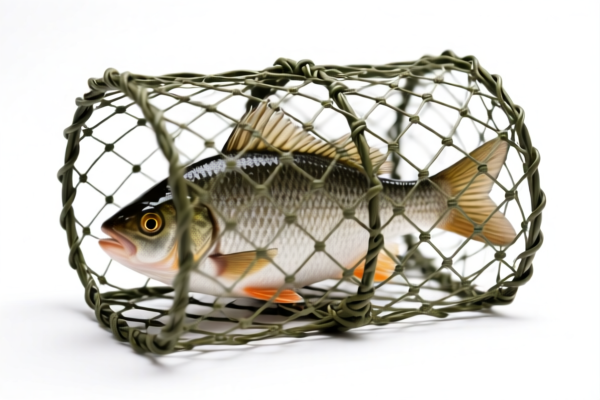



AI Analysis
🎣 Fish Scoop / Aquarium Net (鱼缸捞网)
🌐 HS Code Reference & Customs Clearance Guide | 2026 Latest Tariff Analysis | Professional Clearance Strategy
📌 I. Product Definition and Classification: Do You Really Understand the "Fish Scoop"?
A Fish Scoop (also known as an Aquarium Net or Fishing Dip Net) is a common tool used in aquaculture, fishing, and household aquarium maintenance. In international trade, its classification is highly sensitive to material composition and specific usage, leading to significantly different tariff rates.
Based on the provided data, there are 4 distinct HS Code options, ranging from 20.9% to 65.0% total tax rates. The key differentiator is whether it is classified as a textile net, a plastic article, or a specific fishing tool.
⚠️ Key Distinction Point:
- If made of textile materials (nylon/polyester mesh) → Classify under Chapter 56 (Textile Nets) → High Tariff (40-43%) due to trade remedies.
- If made of plastic (polymer mesh/handle) → Classify under Chapter 39 (Plastics) → Lower Tariff (20.9-22.8%).
- If considered a specific fishing device → Classify under 9507 (Fishing Gear) → Highest Tariff (65%).
📦 II. HS Code Classification Details (2026 Latest Tariff Authority Comparison)
| HS Code | Product Description | Matching Basis | Total Tax Rate |
|---|---|---|---|
9507.90.60.00 |
Fishing gear: Fishing dip nets, butterfly nets, and similar nets | Purpose-driven: Specifically matches "fishing dip nets" and "butterfly nets" in the classification explanation. | 65.0% |
5608.19.20.90 |
Manufactured nets of textile materials (Other) | Material & Form: Net shape + usage (scooping); assumed synthetic textile (nylon/PE). | 40.0% |
3926.90.99.89 |
Other articles of plastics | Material Assumption: Assumed plastic (nylon/polymer) material; generic plastic article. | 22.8% |
3926.90.10.00 |
Other plastic articles | Material Assumption: Mainly nylon/plastic; matches "Other articles of plastics" as accessories/tools. | 20.9% |
🔍 Critical Reminder:
-9507.90.60.00is the most precise functional classification for fishing nets but carries the highest risk and cost (65%).
-3926.90.10.00offers the lowest tariff (20.9%) but requires convincing evidence that the product is primarily a "plastic article" rather than a textile net.
- Textile classifications (5608) are subject to significant trade remedy tariffs (Section 301/122 clauses).
💰 III. 2026 Latest Tariff Rate Breakdown (Including Additional Taxes & Policy Surcharges)
✅ Applicable Country: United States (US)
✅ Country of Origin: China (CN)
✅ Effective Time: Current trade policies (Section 301 & Section 232/122)
🎯 1. 9507.90.60.00 —— Fishing Gear (Fishing Dip Nets)
| Item | Content |
|---|---|
| Base Tariff | 5.0% |
| Section 301 Tariff | +10% (122 Clause: Steel, Aluminum, Copper Products) |
| Additional Section 301 Tariff | +50% (Targeted high-tariff items) |
| Total Rate | 65.0% |
| Tax Calculation | CIF Value × 65% |
| De Minimis Exemption | ❌ Not Available (High-risk category) |
| Legal Basis Path | USITC:9507.90.60.00 → SECTION_301:122_CLAUSE → SECTION_301:50% |
📌 Explanation:
- This classification treats the item as a specialized fishing device.
- The 50% additional tariff is the dominant cost driver.
- Warning: This is the most expensive option. Only use if no other classification applies.
🎯 2. 5608.19.20.90 —— Manufactured Nets (Textile Materials)
| Item | Content |
|---|---|
| Base Tariff | 5.0% |
| Section 301 Tariff | +25% |
| Additional Section 301 Tariff (122 Clause) | +10% |
| Total Rate | 40.0% |
| Tax Calculation | CIF Value × 40% |
| De Minimis Exemption | ❌ Not Available |
| Legal Basis Path | IEEPA:9901.25 → USITC:5608.19.20.90 → FOOTNOTE:9903.88.01 |
📌 Note:
- Classified as a textile net.
- Subject to standard 25% Section 301 tariff.
- The 10% additional is applied due to specific clause interpretations.
- Risk: Customs may challenge the "textile" nature if the mesh is very coarse or plastic-coated.
🎯 3. 3926.90.99.89 —— Other Plastic Articles
| Item | Content |
|---|---|
| Base Tariff | 5.3% |
| Section 301 Tariff | +7.5% |
| Additional Section 301 Tariff (122 Clause) | +10% |
| Total Rate | 22.8% |
| Tax Calculation | CIF Value × 22.8% |
| De Minimis Exemption | ❌ Not Available (Generally applicable to plastics) |
| Legal Basis Path | USITC:3926.90.99.89 → SECTION_301:7.5% → SECTION_301:122_CLAUSE |
📌 Explanation:
- A "catch-all" for plastic articles not specifically listed.
- Lower base tariff (5.3%) and lower Section 301 rate (7.5%) compared to textiles.
- Strategy: Use this if the product is predominantly plastic (e.g., plastic handle + plastic mesh).
🎯 4. 3926.90.10.00 —— Other Plastic Articles (Best Rate Option)
| Item | Content |
|---|---|
| Base Tariff | 3.4% |
| Section 301 Tariff | +7.5% |
| Additional Section 301 Tariff (122 Clause) | +10% |
| Total Rate | 20.9% |
| Tax Calculation | CIF Value × 20.9% |
| De Minimis Exemption | ❌ Not Available |
| Legal Basis Path | USITC:3926.90.10.00 → SECTION_301:7.5% → SECTION_301:122_CLAUSE |
📌 Note:
- Lowest Total Tariff (20.9%).
- Matches "Other articles of plastics" as accessories/tools.
- Condition: Must prove the item is primarily a plastic product rather than a textile net. If the netting is clearly woven fiber, this classification may be rejected.
🛠️ IV. Customs Clearance Practical Advice (Pitfall Avoidance Guide)
✅ 1. Prepare the Following Documents (Non-negotiable)
| Document | Must Provide | Explanation |
|---|---|---|
| ✅ Product Specification Sheet | ✔️ | Include dimensions, material composition (e.g., "Handle: ABS Plastic; Net: Nylon Mesh"), weight. |
| ✅ Material Composition Report | ✔️ | Critical for choosing between 5608 (Textile) and 3926 (Plastic). |
| ✅ Product Photos (Clear) | ✔️ | Show the entire product, close-up of mesh, and handle connection. |
| ✅ Commercial Invoice | ✔️ | Describe as "Aquarium Net" or "Fishing Dip Net, Plastic Handle". Avoid generic "Net". |
| ✅ Packing List | ✔️ | Ensure net count matches invoice. |
✅ 2. Declaration Strategy (Key Mantra)
🔥 "Material Defines Code, Purpose Defines Risk: Plastic Wins, Fishing Gear Loses!"
| Scenario | Correct Declaration | Wrong Practice |
|---|---|---|
| Aquarium Net (Household Use) | 3926.90.10.00 or 3926.90.99.89 (Plastic focus) |
Declare as 9507.90.60.00 → 65% Tax! |
| Professional Fishing Net (Outdoor) | 9507.90.60.00 (Functional focus) |
Declare as 3926 → Misclassification Penalty |
| Net with Wooden Handle | 3926.90.99.89 (Plastic dominant) |
Ignore handle material → Dispute |
| Pure Textile Mesh Net | 5608.19.20.90 (Textile focus) |
Claim as "Plastic" → Customs Rejection |
✅ 3. Special Handling Cases
| Situation | Handling Suggestion |
|---|---|
| Mixed Material (Plastic Handle + Textile Net) | Consult a broker. If textile is >50% by weight/value, lean toward 5608. If plastic is dominant, 3926 may be defended. |
| OEM Custom Nets | Provide design drawings. If the net is non-standard, 9507 might be argued, increasing risk. |
| Small Hobbyist Nets | Still subject to tariffs. Do not assume "de minimis" applies to high-tariff goods. |
| Precedent Cases | Check CBP rulings. Many aquarium nets are classified under 3926 if the mesh is fine and handle is plastic. |
🌍 V. Global Market Clearance Comparison (2026 Latest)
| Country/Region | Recommended HS Code | Tariff Rate | Certification Required | Notes |
|---|---|---|---|---|
| 🇺🇸 USA | 3926.90.10.00 |
20.9% | N/A | Lowest US tariff for plastic nets. |
| 🇺🇸 USA | 9507.90.60.00 |
65.0% | N/A | Highest risk; only for commercial fishing gear. |
| 🇨🇳 China | 5608.19.20.90 |
5% - 10% | CCC (if applicable) | Lower import tariffs, but export from US is the concern. |
| 🇪🇺 EU | 5608.19.90 |
0% - 5% | CE (if electrical) | No Section 301/122 tariffs. |
| 🇬🇧 UK | 5608.19.90 |
0% - 5% | UKCA | Post-Brexit trade agreements may apply. |
📌 Conclusion:
- USA is the most challenging market due to Section 301 and 122 clauses.
- Plastic classification (3926) is the safest and cheapest for household/aquarium nets in the US.
- Avoid9507unless you are a professional fishing equipment supplier with specific justification.
📌 VI. Common Mistakes & Pitfall Guide (Lessons Learned)
❌ Mistake 1: Declaring an aquarium net as Fishing Gear (9507).
👉 Consequence: 65% Tax.
👉 Solution: Emphasize "Aquarium", "Household", "Plastic Handle" in description.
❌ Mistake 2: Claiming Textile Nets (5608) are Plastic (3926).
👉 Consequence: Customs audit, potential penalties for misclassification.
👉 Solution: Provide material test reports showing fiber composition.
❌ Mistake 3: Ignoring Section 122 Tariffs.
👉 Consequence: Unexpected 10% additional tax on top of base rates.
👉 Solution: Include 122 clause in cost analysis. All provided codes have a 10% 122 clause surcharge.
✅ Correct Approach:
"Plastic Handle Aquarium Net, with Nylon Mesh, for Home Fish Tank Use, Model ABC"
HS Code:3926.90.10.00
Total Tax: 20.9%
🎯 VII. Conclusion: Professional Declaration, Cost Saving, Efficient Clearance!
🎯 Remember the Mantra:
🔹 "Household Nets → Plastic Code (20.9%) → Save Money!"
🔹 "Professional Fishing Gear → Fishing Code (65%) → High Cost!"
🔹 "Textile Nets → 40% Tax → Avoid if Plastic Option Exists!"
📌 Tips:
- If your fish scoop is primarily plastic (handle + fine mesh), always argue for 3926.90.10.00.
- If the product is large, heavy-duty, and for commercial fishing, be prepared for 9507.90.60.00 (65%).
- Request an Advance Ruling from CBP if the product is ambiguous.
📣 Immediate Action:
📞 Contact a professional customs broker.
📝 Provide material composition and product photos.
🚀 Optimize your HS Code to save up to 44% in taxes!
✨ Professional clearance starts with accurate classification!
💼 Every dollar saved is profit earned!
Customer Reviews
About HS Code Classification
The Harmonized System (HS) is an internationally standardized nomenclature developed by the World Customs Organization (WCO) to classify traded products. Over 200 countries use the HS system as the basis for customs tariffs, trade statistics, and import/export regulations.
Each HS code follows a hierarchical structure:
- Chapter (2 digits) — Broad category of goods (e.g., Chapter 84: Machinery and Mechanical Appliances)
- Heading (4 digits) — More specific grouping within the chapter
- Subheading (6 digits) — Internationally standardized breakdown, used by all WCO member countries
- National subdivisions (8-10 digits) — Country-specific extensions for further classification, such as US HTSUS 10-digit codes
Correct HS code classification is essential for smooth customs clearance, accurate duty payment, and compliance with trade regulations. Misclassification can lead to customs delays, overpayment of duties, or penalties.
When importing from CN to US, the applicable tariff rates may include:
- Most-Favored-Nation (MFN) rate — The standard duty rate applied to WTO members
- General rate — Applied to countries without trade agreements
- Trade remedy duties — Additional tariffs such as Section 301 (anti-dumping), Section 232 (national security), or countervailing duties
The information provided on this page is for reference purposes only. For official classification, please consult with your local customs authority or a licensed customs broker.