Fish Silk Stretch Line
CN → US| HS Code | Tariff Rate | Origin | Destination | Doc |
|---|---|---|---|---|
| 5606000010 | 43.0% | CN | US | Official Doc |
| 5606000090 | 43.0% | CN | US | Official Doc |
| 5404110000 | 41.9% | CN | US | Official Doc |
| 5404198040 | 41.9% | CN | US | Official Doc |
Product Images
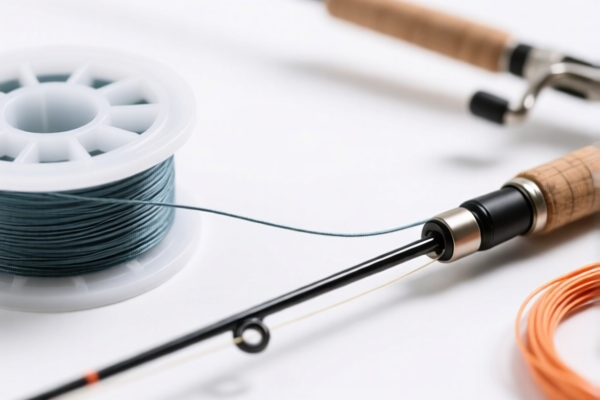
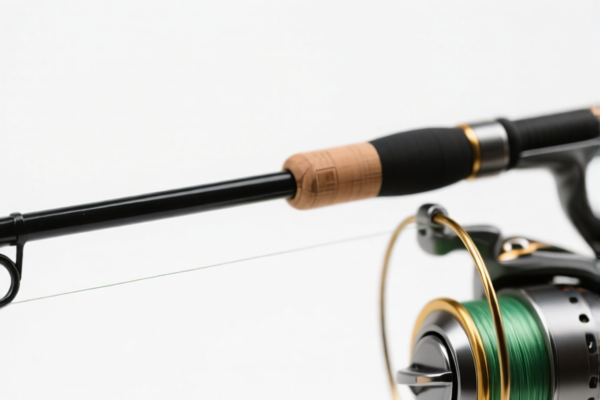
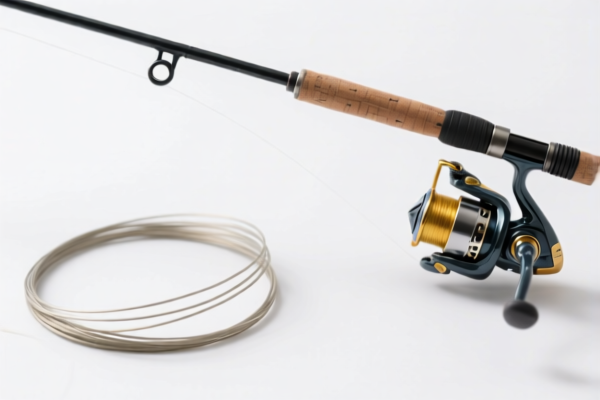

AI Analysis
🎣 Fish Silk Stretch Line (Elastic Fishing Lines)
🌐 HS Code Reference & Clearance Guide | 2026 Latest Tariff Analysis | Professional Clearance Strategy
📌 I. Product Definition and Classification: What Exactly is "Fish Silk"?
"Fish Silk" (also known as Elastic Fishing Line or Stretch Line) is a specialized type of fishing line designed to absorb shock and prevent breakage when fighting large, strong fish. It is not made of actual silk, but is typically composed of synthetic monofilaments or gimped yarns with elastic properties.
In international trade, these products fall under Chapter 54 (Man-made filaments) or Chapter 56 (Yarns). The classification depends heavily on the physical structure: * Monofilament Type: Single continuous synthetic strand with elasticity (elastomeric). * Gimped Yarn Type: Multiple strands twisted or braided to create stretch.
⚠️ Key Distinction:
- If the product is a single strand with elastic properties → Classified under Chapter 54 (Monofilament).
- If the product is multi-strand, twisted, or braided to create elasticity → Classified under Chapter 56 (Gimped Yarn).
📦 II. HS Code Classification Details (2026 Latest Tariff Authority Comparison)
Based on the provided data <DATA>, here are the precise classifications for "Fish Silk Stretch Line":
| HS Code | Product Description | Applicable Scenario | Structure Type |
|--------|--------------------------|-----------------------------|
| 5404.11.00.00 | Synthetic monofilament of ≥67 decitex; no cross-section >1mm; Elastomeric | Elastic monofilament fishing lines (single strand) | ✅ Single Strand (Monofilament) |
| 5404.19.80.40 | Synthetic monofilament; Other; Of polyesters | Non-elastic polyester monofilaments (less common for "stretch" lines unless specific composite) | ✅ Single Strand (Monofilament) |
| 5606.00.00.10 | Gimped yarn, strip/ch. 5404/5405 gimped; Chenille; Loop wale-yarn; Containing elastomeric filaments | Elastic braided/twisted fishing lines (multi-strand) | ✅ Multi-strand (Gimped/Braided) |
| 5606.00.00.90 | Gimped yarn, strip/ch. 5404/5405 gimped; Chenille; Loop wale-yarn; Other | Non-elastomeric gimped yarns (not stretch) | ✅ Multi-strand (Non-elastic) |
🔍 重点提醒:
- "Fish Silk" is rarely a single material. Most commercial "stretch lines" are elastomeric monofilaments (5404.11.00.00) or gimped yarns with elastomeric cores (5606.00.00.10).
- If the line is pure polyester and not elastomeric, it falls under5404.19.80.40. However, true "stretch" lines usually require elastomeric properties, making5404.11.00.00or5606.00.00.10the most likely candidates.
💰 III. 2026 Latest Tariff Rate Details (Including Additional Taxes)
✅ Applicable Country: United States (US)
✅ Origin: China (CN)
✅ Effective Date: From 2025-11-10 onwards
🎯 1. 5404.11.00.00 —— Elastomeric Synthetic Monofilament (≥67 decitex)
| Item | Content |
|---|---|
| Base Tariff | 0.0% |
| USITC Additional Tax | 0.0% |
| IEEPA Additional Tax | 0.0% |
| Total Tariff | 0.0% |
| Tax Calculation | CIF Value × 0% = $0 |
| De Minimis Eligible? | ✅ Yes (if value < $800, no tax/duty at all) |
| Legal Basis Path | HTSUS:5404.11.00.00 |
📌 Explanation:
- This HS code has zero additional tariffs (Section 301/IEEPA) applied to it for Chinese origin goods.
- This is a highly favorable classification for cost efficiency.
- Ensure the product meets the ≥67 decitex and <1mm cross-section criteria.
🎯 2. 5404.19.80.40 —— Other Synthetic Monofilament (Of Polyesters)
| Item | Content |
|---|---|
| Base Tariff | 0.0% |
| USITC Additional Tax | 0.0% |
| IEEPA Additional Tax | 0.0% |
| Total Tariff | 0.0% |
| Tax Calculation | CIF Value × 0% = $0 |
| De Minimis Eligible? | ✅ Yes (if value < $800) |
| Legal Basis Path | HTSUS:5404.19.80.40 |
📌 Explanation:
- Also enjoys 0% total duty.
- Note: This code is for non-elastomeric polyester monofilaments. If your "fish silk" is stretchy, do not use this code; it may be considered misclassification.
🎯 3. 5606.00.00.10 —— Gimped Yarn Containing Elastomeric Filaments
| Item | Content |
|---|---|
| Base Tariff | 0.0% |
| USITC Additional Tax | 0.0% |
| IEEPA Additional Tax | 0.0% |
| Total Tariff | 0.0% |
| Tax Calculation | CIF Value × 0% = $0 |
| De Minimis Eligible? | ✅ Yes (if value < $800) |
| Legal Basis Path | HTSUS:5606.00.00.10 |
📌 Explanation:
- If your fishing line is braided or twisted (gimped) and contains elastic fibers (like Spandex/Lycra core), it falls here.
- Also 0% duty. No additional tariffs.
🎯 4. 5606.00.00.90 —— Other Gimped Yarn (Non-Elastomeric)
| Item | Content |
|---|---|
| Base Tariff | 0.0% |
| USITC Additional Tax | 0.0% |
| IEEPA Additional Tax | 0.0% |
| Total Tariff | 0.0% |
| Tax Calculation | CIF Value × 0% = $0 |
| De Minimis Eligible? | ✅ Yes (if value < $800) |
| Legal Basis Path | HTSUS:5606.00.00.90 |
📌 Explanation:
- For non-stretch gimped yarns. Also 0% duty.
🛠️ IV. Clearance Practical Advice (Battle-Tested Pitfall Avoidance)
✅ 1. Preparation Checklist (Essential Documents)
| Document | Required | Explanation |
|---|---|---|
| ✅ Product Spec Sheet | ✔️ | Must specify: Material (Nylon, Polyester, Elastomer), Decitex, Diameter, Elasticity (%) |
| ✅ Material Composition | ✔️ | Clearly state if it contains elastomeric filaments (e.g., "50% Nylon, 50% Spandex core") |
| ✅ Product Photos | ✔️ | Show the line's texture (smooth for mono, braided for gimped) and packaging |
| ✅ Commercial Invoice | ✔️ | Use precise descriptions: "Elastomeric Synthetic Monofilament Fishing Line" |
| ✅ Packaging List | ✔️ | Indicate unit of sale (spools, reels, per meter) |
✅ 2. Declaration Tips (Key Mantra)
🔥 "Mono vs. Gimped, Elastomeric vs. Other! Name it right, save time and fight!"
| Scenario | Correct Declaration | Wrong Practice |
|---|---|---|
| Single Strand, Stretchy | 5404.11.00.00 (Elastomeric Mono) |
Misdeclaring as "Gimped Yarn" → Audit Risk |
| Braided/Twisted, Stretchy | 5606.00.00.10 (Gimped w/ Elastomer) |
Misdeclaring as "Mono" → HS Code Error |
| Non-Stretch Polyester Line | 5404.19.80.40 |
Using 5404.11.00.00 (Incorrect) |
| General "Fishing Line" | Specify Structure | Vague "Fishing Line" → Customs Delay |
✅ 3. Special Cases
| Scenario | Handling Advice |
|---|---|
| Composite Lines | If the line has a core + coating, declare based on the essential character (usually the core). |
| Small Samples (De Minimis) | For shipments < $800, all these codes qualify for 0% duty and often expedited clearance via Section 321. |
| Labeling | Ensure packaging clearly states "Elastomeric" if claiming 5404.11.00.00 or 5606.00.00.10. |
🌍 V. Global Market Clearance Comparison (2026 Latest)
| Country/Region | Recommended HS Code | Tariff | Certification | Notes |
|---|---|---|---|---|
| 🇺🇸 USA | 5404.11.00.00 / 5606.00.00.10 |
0% | None Specific | No Section 301 or IEEPA tariffs for these codes. |
| 🇨🇳 China | 5404.11.00.00 |
5-8% | N/A | Import duty for Chinese imports. |
| 🇪🇺 EU | 5404.11 / 5606.00 |
6.5% | REACH | Standard MFN rate. |
| 🇯🇵 Japan | 5404.11 / 5606.00 |
3-6% | JIS | Varies by specific type. |
📌 Conclusion:
- USA is the most favorable market for these specific HS codes due to 0% additional tariffs.
- Unlike electronics or steel, fishing lines (synthetic filaments/yarns) are not targeted by recent trade wars.
📌 VI. Common Mistakes & Pitfall Guide (Blood & Tears Lessons)
❌ Mistake 1: Declaring an elastomeric monofilament as a general polyester monofilament (5404.19).
👉 Consequence: Misclassification audit. Although tax is 0% in both cases now, compliance risk remains. Customs may question why "elastic" properties weren't declared.
❌ Mistake 2: Using Gimped Yarn code for a single strand line.
👉 Consequence: Customs may reject declaration for not matching physical structure. Gimped implies twisted/braided.
❌ Mistake 3: Vague description "Fishing Line".
👉 Consequence: Customs officer will classify based on best judgment, potentially assigning a higher duty or requiring detailed sample submission for testing.
❌ Mistake 4: Ignoring Decitex/Diameter limits.
👉 Consequence: If monofilament diameter >1mm, it may fall under 5404.90 (Other), which might have different tax treatments in other years or regions.
✅ Correct Approach:
"Elastomeric Synthetic Monofilament Fishing Line, 150lb Test, 0.8mm Diameter, 67+ Decitex, Nylon/Spandex Blend"
🎯 VII. Conclusion: Precision Classification, Zero Duty, Smooth Clearance!
🎯 Remember the Mantra:
🔹 "Mono or Gimped? Elastomeric or Not? 0% Duty, Just Don't Get It Wrong!"
🔹 "0% Tax in US for these codes, but Compliance is Key!"
📌 Pro Tip:
If your shipment is under $800, use the De Minimis (Section 321) pathway with these HS codes for fastest, duty-free clearance.
Always ensure your Commercial Invoice explicitly states the material composition (e.g., "Contains Elastomeric Filaments") to support the HS code selection.
📣 Immediate Action:
📞 Confirm product structure (Mono vs. Gimped)
📄 Prepare Spec Sheet with Decitex & Diameter
🚀 Ship with 0% Duty confidence!
✨ Professional clearance starts with accurate classification!
💼 Every dollar saved in duty is pure profit!
Customer Reviews
About HS Code Classification
The Harmonized System (HS) is an internationally standardized nomenclature developed by the World Customs Organization (WCO) to classify traded products. Over 200 countries use the HS system as the basis for customs tariffs, trade statistics, and import/export regulations.
Each HS code follows a hierarchical structure:
- Chapter (2 digits) — Broad category of goods (e.g., Chapter 84: Machinery and Mechanical Appliances)
- Heading (4 digits) — More specific grouping within the chapter
- Subheading (6 digits) — Internationally standardized breakdown, used by all WCO member countries
- National subdivisions (8-10 digits) — Country-specific extensions for further classification, such as US HTSUS 10-digit codes
Correct HS code classification is essential for smooth customs clearance, accurate duty payment, and compliance with trade regulations. Misclassification can lead to customs delays, overpayment of duties, or penalties.
When importing from CN to US, the applicable tariff rates may include:
- Most-Favored-Nation (MFN) rate — The standard duty rate applied to WTO members
- General rate — Applied to countries without trade agreements
- Trade remedy duties — Additional tariffs such as Section 301 (anti-dumping), Section 232 (national security), or countervailing duties
The information provided on this page is for reference purposes only. For official classification, please consult with your local customs authority or a licensed customs broker.