Fish Tank Air Pump Hose
CN → US| HS Code | Tariff Rate | Origin | Destination | Doc |
|---|---|---|---|---|
| 4009120050 | 20.0% | CN | US | Official Doc |
| 3917320020 | 38.1% | CN | US | Official Doc |
| 8414596595 | 37.3% | CN | US | Official Doc |
| 4009110000 | 37.5% | CN | US | Official Doc |
| 3917320050 | 38.1% | CN | US | Official Doc |
Product Images
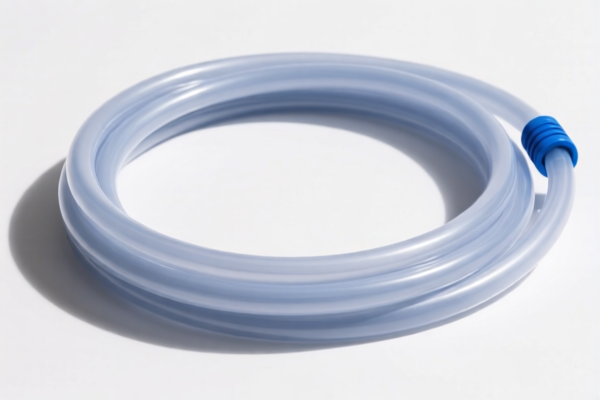
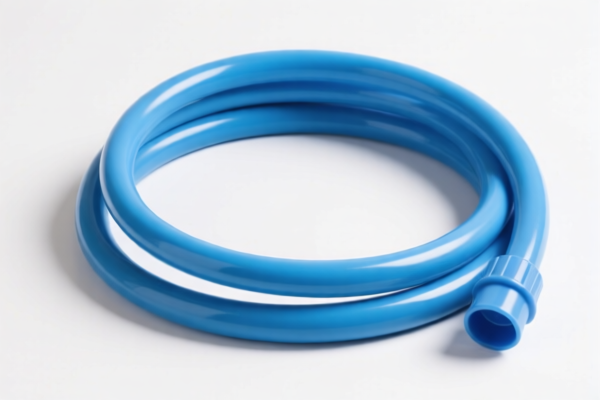
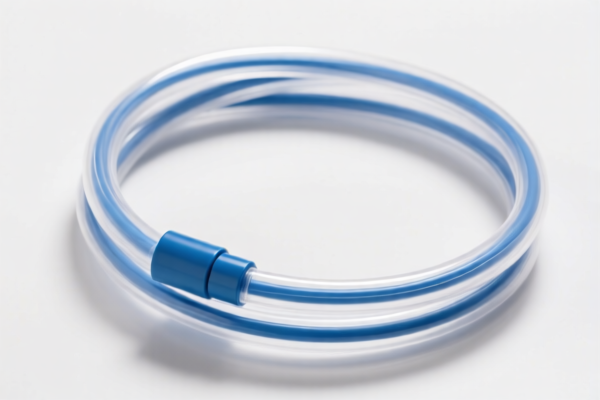

AI Analysis
🐠 Fish Tank Air Pump Hose: HS Code Classification & Tariff Breakdown
🌐 HS Code Reference & Customs Clearance Guide | 2026 Latest Tariff Analysis | Professional Strategy for Aquarium Accessories
📌 I. Product Definition: What Exactly is an "Air Pump Hose"?
In the aquarium and aquatic equipment industry, the "hose" is the critical connector that delivers oxygen from the air pump to the air stones or diffusers. However, customs authorities classify these hoses strictly by their material composition, not their function. A minor difference in material (e.g., Rubber vs. Plastic) can shift the HS Code and drastically alter the tax burden.
⚠️ Key Distinction Point:
- If the hose is made of Vulcanized Rubber (elastic, durable, high-temp resistant) → It falls under Chapter 40.
- If the hose is made of Plastic (PVC, PE, Silicone-based polymers) → It falls under Chapter 39.
- If the hose is declared as a Part of an Air Pump Machine (not just the tube itself) → It may fall under Chapter 84.
📦 II. HS Code Classification Details (2026 Latest Tariff Authority Cross-Reference)
Below is the precise mapping of Fish Tank Air Pump Hoses to their respective HS Codes and corresponding tax structures.
| HS Code | Product Description | Material Key | Total Tax Rate | Tax Composition Breakdown |
|---|---|---|---|---|
4009.12.00.50 |
Vulcanized Rubber Hose for Aquarium Air Pumps | Vulcanized Rubber | 20.0% | Base: 2.5% + Section 301: 7.5% + Section 122: 10% |
3917.32.00.20 |
Plastic Hose (PE/PVC/etc.) for Aquarium Air Pumps | Polyethylene/PVC | 38.1% | Base: 3.1% + Section 301: 25.0% + Section 122: 10% |
8414.59.65.95 |
Parts of Air Pumps (Hoses like PVC/Silicone) | PVC/Silicone (as Part) | 37.3% | Base: 2.3% + Section 301: 25.0% + Section 122: 10% |
4009.11.00.00 |
Hose of Vulcanized Rubber (General) | Vulcanized Rubber | 37.5% | Base: 2.5% + Section 301: 25.0% + Section 122: 10% |
3917.32.00.50 |
Other Plastic Tubes/Pipes/Hoses | Other Plastics | 38.1% | Base: 3.1% + Section 301: 25.0% + Section 122: 10% |
🔍 Critical Insight:
- The "Rubber Penalty" Trap: While Base Duties for Rubber (4009) are lower (2.5%), if classified under4009.11(General Rubber Hose), it attracts a 25% Section 301 tariff, pushing the total to 37.5%.
- The "Platinum Penalty": Plastic hoses (3917) and Pump Parts (8414) face a flat 25% Section 301 tariff, resulting in higher total rates (37.3% - 38.1%).
- The Sweet Spot?: Only4009.12.00.50(Specific Rubber Hose) enjoys a reduced Section 301 rate of 7.5%, resulting in the lowest total tax of 20.0%.
💰 III. 2026 Latest Tariff Rate Detailed Explanation (Includes Surcharges & Policy Add-ons)
✅ Applicable Country: United States (US)
✅ Origin: China (CN)
✅ Effective Date: 2025/2026 (Current Enforcement)
🎯 1. 4009.12.00.50 — The Lowest Tax Option (Specific Rubber Hose)
| Item | Content |
|---|---|
| Base Duty | 2.5% |
| Section 301 Surcharge | +7.5% (Reduced rate for this specific subheading) |
| Section 122 Surcharge | +10.0% (Counter-Evasion/Dumping measure) |
| Total Tax Rate | 20.0% |
| Calculation Method | CIF Value × 20% |
| De Minimis Exemption | ❌ Not Eligible (Denied) |
| Legal Authority Path | Section 122: 1252 → Section 301: Footnote 9903.88.01 → HS: 4009.12.00.50 |
📌 Why is this the best?
This code specifically targets "vulcanized rubber hose" for aquariums. Unlike general rubber hoses, it benefits from a lowered Section 301 rate (7.5% instead of 25%). This saves you 17.5% in duties compared to other rubber or plastic options.
🎯 2. 3917.32.00.20 & 3917.32.00.50 — Plastic Hoses (High Tax)
| Item | Content |
|---|---|
| Base Duty | 3.1% |
| Section 301 Surcharge | +25.0% (Standard heavy tariff) |
| Section 122 Surcharge | +10.0% |
| Total Tax Rate | 38.1% |
| Calculation Method | CIF Value × 38.1% |
| De Minimis Exemption | ❌ Not Eligible |
| Legal Authority Path | Section 122: 1252 → Section 301: Footnote 9903.88.01 → HS: 3917.32.xx.50 |
📌 Warning:
Plastic hoses (PVC/PE) are heavily taxed due to the standard 25% Section 301 rate. The slight difference in base duty (3.1%) is negligible against the high surcharge. Avoid this classification if possible unless the product is exclusively plastic.
🎯 3. 8414.59.65.95 — Parts of Air Pumps (High Tax)
| Item | Content |
|---|---|
| Base Duty | 2.3% |
| Section 301 Surcharge | +25.0% |
| Section 122 Surcharge | +10.0% |
| Total Tax Rate | 37.3% |
| Calculation Method | CIF Value × 37.3% |
| De Minimis Exemption | ❌ Not Eligible |
| Legal Authority Path | Section 122: 1252 → Section 301: Footnote 9903.88.01 → HS: 8414.59.65.95 |
📌 Risk Alert:
Declaring a hose as a "Part of an Air Pump" (Chapter 84) is risky. While the base duty is low (2.3%), it still attracts the full 25% Section 301 tariff. Furthermore, if the hose is sold separately from the pump, Customs may reject this classification, forcing a re-classification to Chapter 39 or 40, causing delays.
🎯 4. 4009.11.00.00 — General Rubber Hose (High Tax)
| Item | Content |
|---|---|
| Base Duty | 2.5% |
| Section 301 Surcharge | +25.0% |
| Section 122 Surcharge | +10.0% |
| Total Tax Rate | 37.5% |
| Calculation Method | CIF Value × 37.5% |
| De Minimis Exemption | ❌ Not Eligible |
📌 Trap:
Many importers mistakenly use4009.11(General Rubber Hose). Do NOT use this for aquarium hoses if you can use4009.12. The 17.5% tax difference is significant.4009.11is for generic industrial rubber hoses, not specifically designed aquarium tubing.
🛠️ IV. Customs Clearance Practical Advice (Pitfall Avoidance Guide)
✅ 1. Documentation Checklist (Non-Negotiable)
| Document | Required | Purpose |
|---|---|---|
| ✅ Product Specification Sheet | ✔️ | Must explicitly state Material Composition (e.g., "100% Vulcanized Rubber" vs. "PVC"). |
| ✅ High-Res Photos | ✔️ | Show cross-section of the hose. Rubber looks different from Plastic. |
| ✅ Commercial Invoice | ✔️ | Description should match the HS Code exactly (e.g., "Vulcanized Rubber Aquarium Hose"). |
| ✅ Bill of Lading | ✔️ | Ensure goods are not mixed with other non-declared items. |
| ✅ Fiber/Material Test Report | ✔️ | If Customs questions the material, a lab report proving "Vulcanized Rubber" can save you from the 25% tariff. |
✅ 2. Declaration Strategy (Key Mantras)
🔥 "Material is King, Code is Queen, Rubber 40-12 is the Key!"
| Scenario | Correct Declaration | Incorrect Declaration | Consequence |
|---|---|---|---|
| Hose is Rubber | 4009.12.00.50 (20%) |
4009.11.00.00 (37.5%) |
Overpay by 17.5% |
| Hose is Plastic | 3917.32.00.20 (38.1%) |
8414.59.65.95 (37.3%) |
Minor savings, but risk of rejection if sold separately. |
| Hose is Silicone | Treat as Plastic (3917) or Rubber (4009) depending on chemical structure. |
8414 (Part of pump) |
Misclassification leads to audit. |
| Hose + Pump Sold Together | Declare Pump (8414) + Hose (4009 or 3917) separately. |
Combine into one generic "Aquarium Kit" | Risk of penalty for vague description. |
✅ 3. Special Case Handling
| Situation | Handling Advice |
|---|---|
| Silicone Hoses | Silicone is often classified as Plastic (3917) unless it meets specific vulcanized rubber standards. Check MSDS. If it's standard medical-grade silicone, it's likely 38.1% tax. |
| Reinforced Hoses | If the hose has a wire or fabric core, it may still fall under 4009 or 3917, but ensure the description highlights the outer material. |
| OEM/White Label | Do not use the brand name of the pump manufacturer (e.g., "Hygger Hose") if it's a generic hose. Use generic terms like "Aquarium Aeration Tubing." |
🌍 V. Global Market Comparison (2026 Latest)
| Country/Region | Recommended HS Code | Estimated Tax (China Origin) | Certification | Note |
|---|---|---|---|---|
| 🇺🇸 USA | 4009.12.00.50 |
20.0% | CPC (Chemical Products) | Lowest US rate. |
| 🇨🇳 China | 4009.12.00.50 |
~2.5% - 5% | CCC (if applicable) | No Section 301/122. |
| 🇪🇺 EU | 4009.12 |
~3.5% - 4.5% | REACH | No high surcharges. |
| 🇬🇧 UK | 4009.12 |
~3.5% - 4.5% | UKCA | Post-Brexit rules apply. |
| 🇨🇦 Canada | 4009.12 |
~0% - 5% | Various | MFN rates apply. |
📌 Conclusion:
The USA is the most aggressive market with Section 122 and Section 301 tariffs.
China, EU, UK, Canada, and Australia do not have these punitive surcharges, making the tax burden much lower.
Strategy: If you are shipping to the US, ensure your hose is made of Vulcanized Rubber to qualify for4009.12.00.50(20%). Avoid Plastic or Generic Rubber classifications to save millions on duty costs for large volumes.
📌 VI. Common Errors & Pitfalls (Lessons Learned from Blood & Tears)
❌ Error 1: Declaring a Plastic Hose as "Rubber" to get 20% tax.
👉 Consequence: Customs tests the material, finds it's PVC, fines you, and retroactively charges the 38.1% + penalties.
Fix: Be honest. If it's PVC, pay the 38.1% or consider switching suppliers to Rubber.
❌ Error 2: Using 4009.11.00.00 for Aquarium Hose.
👉 Consequence: You pay 37.5% tax instead of 20%. This is a 17.5% loss on every dollar.
Fix: Use 4009.12.00.50 explicitly.
❌ Error 3: Declaring Hose as a "Part of Air Pump" (8414) when sold separately.
👉 Consequence: Customs rejects it because a standalone hose is not a "part of a machine" in the same way a valve is.
Fix: Classify by material (Chapter 40 or 39).
🎯 VII. Conclusion: Smart Classification, High Profit!
🎯 Remember the Mantra:
🔹 "Rubber 40-12, Twenty Percent Tax, That's the Max!"
🔹 "Plastic 39-17, Thirty-Eight, That's the Pain!"
🔹 "Never Mix Materials, Or You'll Lose the Game!"
📌 Pro Tip:
If your product is Silicone, consult a laboratory to determine if it can be classified as Vulcanized Rubber (4009.12.00.50). If it qualifies, you save 18% in duties. If not, it will be taxed as Plastic (3917) at 38.1%.
Action:
📞 Contact a Customs Broker
📄 Provide Material MSDS
🚀 Apply for Advance Ruling if possible
✨ Professional Customs Clearance Starts with Accurate Classification!
💼 Your Margin Depends on Your HS Code!
Customer Reviews
About HS Code Classification
The Harmonized System (HS) is an internationally standardized nomenclature developed by the World Customs Organization (WCO) to classify traded products. Over 200 countries use the HS system as the basis for customs tariffs, trade statistics, and import/export regulations.
Each HS code follows a hierarchical structure:
- Chapter (2 digits) — Broad category of goods (e.g., Chapter 84: Machinery and Mechanical Appliances)
- Heading (4 digits) — More specific grouping within the chapter
- Subheading (6 digits) — Internationally standardized breakdown, used by all WCO member countries
- National subdivisions (8-10 digits) — Country-specific extensions for further classification, such as US HTSUS 10-digit codes
Correct HS code classification is essential for smooth customs clearance, accurate duty payment, and compliance with trade regulations. Misclassification can lead to customs delays, overpayment of duties, or penalties.
When importing from CN to US, the applicable tariff rates may include:
- Most-Favored-Nation (MFN) rate — The standard duty rate applied to WTO members
- General rate — Applied to countries without trade agreements
- Trade remedy duties — Additional tariffs such as Section 301 (anti-dumping), Section 232 (national security), or countervailing duties
The information provided on this page is for reference purposes only. For official classification, please consult with your local customs authority or a licensed customs broker.