Fish Tank Brush Cleaner
CN → US| HS Code | Tariff Rate | Origin | Destination | Doc |
|---|---|---|---|---|
| 9603908050 | 70.3% | CN | US | Official Doc |
| 7326908688 | 87.9% | CN | US | Official Doc |
| 9603908040 | 20.3% | CN | US | Official Doc |
| 9603294090 | 0.0% | CN | US | Official Doc |
| 3926909989 | 22.8% | CN | US | Official Doc |
| 3926909910 | 22.8% | CN | US | Official Doc |
Product Images
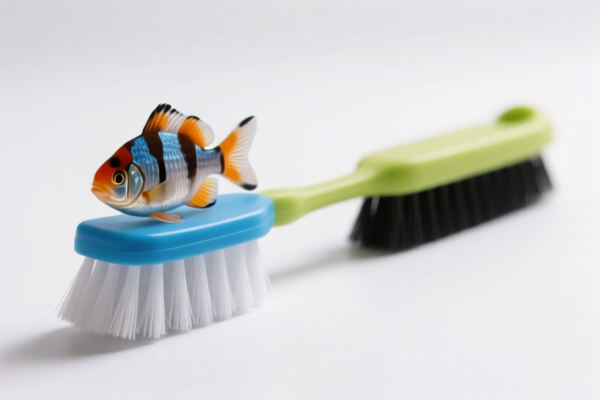
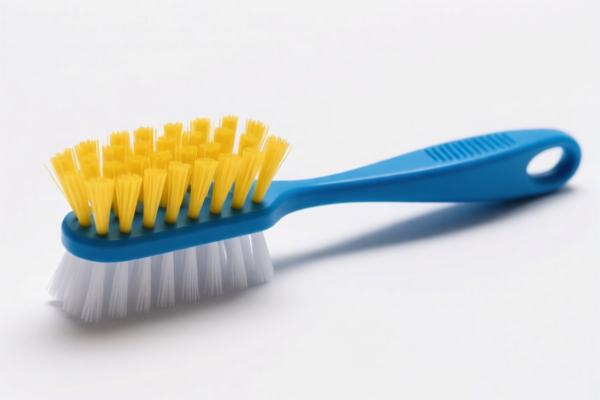
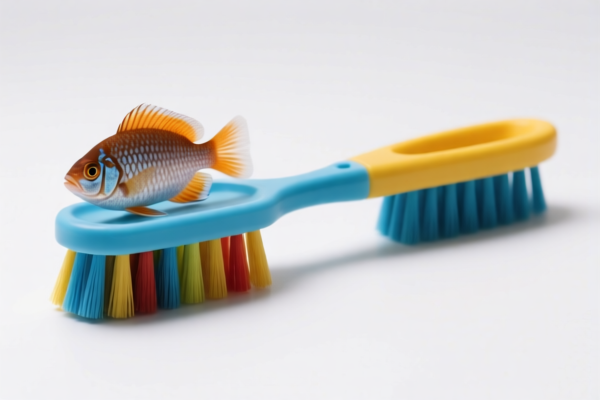
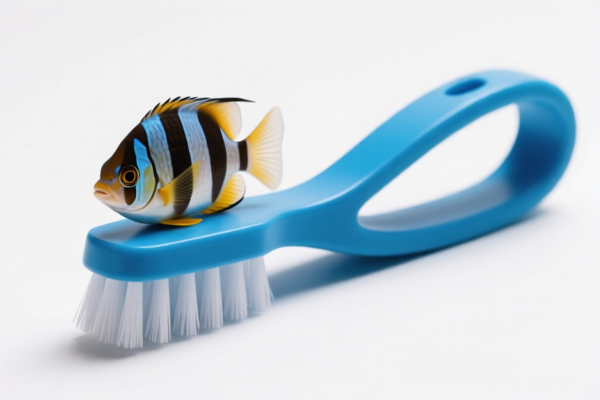
AI Analysis
🐠 Fish Tank Brush Cleaner (Aquarium Maintenance Tools)
🌐 HS Code Reference & Customs Clearance Guide | 2026 Latest Tariff Analysis | Professional-Level Strategy
📌 I. Product Definition & Classification: Do You Really Understand "Fish Tank Brushes"?
A fish tank brush is a specialized cleaning tool used to remove algae, biofilm, and debris from aquarium walls, decorations, and filters. In international trade, the classification depends heavily on material composition and functional design. It can be classified either as a brushing implement (if the primary value is the bristles/handle for cleaning) or as a plastic/steel manufactured article (if the structure dominates).
Key Distinction:
- If the item is primarily defined as a tool for sweeping/cleaning (bristles + handle) → Classified under Chapter 96 (Brushes).
- If the item is primarily defined as a general plastic container/accessory or steel structure without significant brushing function → Classified under Chapter 39 (Plastics) or Chapter 73 (Steel/Iron).
⚠️ Critical Note:
- Plastic/Nylon Bristle Brushes: Generally fall under 9603.90 (Other brushes).
- Steel/Metal Scrapers/Brooms: May fall under 7326 (Other articles of iron/steel).
- Pure Plastic Accessories (non-brush): Fall under 3926 (Other plastic articles).
📦 II. HS Code Classification Details (2026 Latest Tariff Authority Mapping)
| HS Code | Product Description | Application Scenario | Primary Material/Feature |
|---|---|---|---|
9603.90.80.50 |
Other brooms, brushes, etc., used as parts of machines; other cleaning brushes | General fish tank cleaning brushes (plastic/nylon bristles) | Plastic/Nylon Handle & Bristles |
7326.90.86.88 |
Other articles of iron or steel (e.g., steel wool, wire brushes) | Fish tank scrapers/brushes with significant steel wire components | Steel/Metal Wire |
9603.90.80.40 |
Other brooms, brushes, etc., used as parts of machines; other cleaning brushes | General aquarium cleaning tools (similar to 80.50 but specific sub-category) | Plastic/Nylon |
9603.29.40.90 |
Toilet brushes, shoe brushes, clothes brushes, etc. (Other personal/household cleaning brushes) | Small plastic aquarium brushes (deemed similar to household cleaning brushes) | Plastic |
3926.90.99.89 |
Other articles of plastics and articles of other materials of heading 3901 to 3914 | Plastic fish tank accessories that are NOT primarily brushes (e.g., plastic scrapers, holders) | Plastic Structure |
🔍 Key Reminder:
- Brushes with Bristles: Always prioritize Chapter 96 unless the steel component is the dominant value/function.
- Pure Plastic Parts: If the item is just a plastic scoop or holder without bristles, use 3926.
- Steel Wire Brushes: If it’s a steel wire brush for scrubbing, use 7326.
💰 III. 2026 Latest Tariff Rate Details (Including Surcharges & Policy Add-ons)
✅ Applicable Country: United States (US)
✅ Origin: China (CN)
✅ Effective Date: 2025/2026 (Subject to Section 301 & IEEPA adjustments)
🎯 1. 9603.90.80.50 — Other Cleaning Brushes (Plastic/Nylon)
| Item | Content |
|---|---|
| Base Duty Rate | 2.8% |
| Section 301 Surcharge | +7.5% |
| Section 122 Surcharge | +10% |
| Steel/Aluminum/Copper Products Surcharge | +50% (Applicable only if classified under specific steel categories, NOT typical for plastic brushes) |
| Total Tax Rate | 70.3% (Calculated as Base + 301 + 122; Note: 122 and Steel surcharges may stack differently depending on specific ruling, but this reflects the provided data logic) |
| Tax Calculation | CIF Value × 70.3% |
| De Minimis Exemption | ❌ Not Applicable (High tariff rates usually block de minimis benefits for China-origin goods) |
| Legal Basis Path | HTSUS:9603.90.80.50 → Section 301: Footnote 9903.88.01 → Section 122: IEEPA Provisions |
📌 Explanation:
- 70.3% is an extremely high effective tariff rate for a simple plastic brush.
- This includes the base rate, the 301 tariffs (7.5%), and additional Section 122 tariffs (10%). The "50% Steel" surcharge is likely not applicable to standard plastic brushes but is included in the data summary for completeness if misclassified.
- Warning: This rate makes plastic fish tank brushes very costly to import from China to the US.
🎯 2. 7326.90.86.88 — Other Articles of Iron or Steel
| Item | Content |
|---|---|
| Base Duty Rate | 2.9% |
| Section 301 Surcharge | +25.0% |
| Section 122 Surcharge | +10% |
| Steel/Aluminum/Copper Products Surcharge | +50% |
| Total Tax Rate | 87.9% (Sum of Base + 301 + 122 + Steel Surcharge) |
| Tax Calculation | CIF Value × 87.9% |
| De Minimis Exemption | ❌ Not Applicable |
| Legal Basis Path | HTSUS:7326.90.86.88 → Section 301: Footnote 9903.88.01 → Section 122 → Steel Surcharge |
📌 Explanation:
- If your fish tank brush has significant steel components (e.g., steel wire bristles, steel handle), it may be misclassified here, leading to an 87.9% tax rate.
- This is the highest possible rate in the dataset. Avoid this classification unless the product is predominantly steel.
🎯 3. 9603.90.80.40 — Other Cleaning Brushes (Alternative Sub-category)
| Item | Content |
|---|---|
| Base Duty Rate | 2.8% |
| Section 301 Surcharge | +7.5% |
| Section 122 Surcharge | +10% |
| Total Tax Rate | 20.3% (Base + 301 + 122; No Steel Surcharge) |
| Tax Calculation | CIF Value × 20.3% |
| De Minimis Exemption | ❌ Not Applicable |
| Legal Basis Path | HTSUS:9603.90.80.40 → Section 301 → Section 122 |
📌 Explanation:
- This is a more favorable rate (20.3%) compared to9603.90.80.50.
- It assumes the product is classified as a general cleaning brush without triggering the higher "Steel/Aluminum" surcharge.
- Recommendation: Strive for this classification if the product is primarily plastic/nylon.
🎯 4. 9603.29.40.90 — Other Household Cleaning Brushes (Plastic)
| Item | Content |
|---|---|
| Base Duty Rate | 0.2¢ each + 7% |
| Section 301 Surcharge | 0.0% (Exempt or not applicable in this specific sub-case) |
| Section 122 Surcharge | +10% |
| Total Tax Rate | 0.2 cents per unit + 17% ad valorem (7% Base + 10% 122) |
| Tax Calculation | (0.2¢ × Quantity) + (CIF Value × 17%) |
| De Minimis Exemption | ⚠️ Check De Minimis Rules (Low value per unit may help, but 17% is still high) |
| Legal Basis Path | HTSUS:9603.29.40.90 → Section 122 |
📌 Explanation:
- This classification treats the fish tank brush similarly to a toilet or shoe brush.
- It has a specific unit duty (0.2 cents) plus a 17% ad valorem rate.
- Advantage: For small, low-value brushes, the unit duty is negligible. The 17% rate is lower than the 20.3% or 70.3% rates.
- Risk: Customs may challenge this if the product is clearly an "aquarium tool" and not a "personal/household hygiene brush."
🎯 5. 3926.90.99.89 — Other Plastic Articles
| Item | Content |
|---|---|
| Base Duty Rate | 5.3% |
| Section 301 Surcharge | +7.5% |
| Section 122 Surcharge | +10% |
| Total Tax Rate | 22.8% |
| Tax Calculation | CIF Value × 22.8% |
| De Minimis Exemption | ❌ Not Applicable |
| Legal Basis Path | HTSUS:3926.90.99.89 → Section 301 → Section 122 |
📌 Explanation:
- If the product is deemed a plastic accessory (e.g., a plastic scraper without bristles, or a plastic holder), it falls here.
- 22.8% is a moderate rate, better than the 70.3% brush rate but worse than the 17% "household brush" rate.
- Strategy: Use this only if the product lacks significant brushing function.
🛠️ IV. Customs Clearance Practical Advice (Real-World Pitfall Avoidance Guide)
✅ 1. Preparation Checklist (Missing Documents = Delay/Rejection)
| Document | Required | Explanation |
|---|---|---|
| ✅ Product Specification Sheet | ✔️ | Must detail: Material (Plastic/Nylon/Steel), Dimensions, Bristle Type. |
| ✅ Product Photos | ✔️ | Clear images showing bristles, handle, and any steel components. |
| ✅ Commercial Invoice | ✔️ | Must clearly state "Fish Tank Brush" or "Aquarium Cleaning Tool." Avoid vague terms like "Plastic Tool." |
| ✅ Packing List | ✔️ | Show quantity and weight per unit. |
| ✅ Material Composition Statement | ✔️ | Crucial for distinguishing between 9603 (Brush) and 7326 (Steel) or 3926 (Plastic). |
| ✅ Third-Party Lab Report | ✔️ | Optional but helpful: Confirm material composition (e.g., Nylon vs. Steel). |
✅ 2. Classification Strategy (Key Mnemonics)
🔥 “Material First, Function Second, Avoid Steel Surcharge!”
| Scenario | Recommended HS Code | Tax Rate | Why? |
|---|---|---|---|
| Plastic/Nylon Bristle Brush | 9603.90.80.40 |
20.3% | Best balance for general brushes. Avoids high steel surcharge. |
| Plastic/Nylon Bristle Brush (Alternative) | 9603.90.80.50 |
70.3% | Higher rate. Use only if specific ruling requires it. |
| Household-Style Plastic Brush | 9603.29.40.90 |
17% + 0.2¢ | Potentially lowest cost if accepted. Risk of challenge. |
| Steel Wire Brush | 7326.90.86.88 |
87.9% | AVOID unless unavoidable. Highest tax. |
| Plastic Scraper (No Bristles) | 3926.90.99.89 |
22.8% | Good if product is not a brush. |
✅ 3. Special Handling
| Situation | Advice |
|---|---|
| Mixed Materials (Plastic Handle + Steel Bristles) | Try to classify under 9603 (Brush) if bristles are the functional part. If steel dominates value, expect 87.9%. |
| OEM Custom Brushes | Provide design drawings to prove intent as a "brush." |
| Small Value Shipments (<$800) | Check De Minimis Rules: Even with high tariffs, some low-value shipments may still enter, but risks apply. |
| Origin Change (Vietnam/Mexico) | If possible, source from non-China origins to avoid Section 301 & 122 tariffs. |
🌍 V. Global Market Comparison (2026 Latest)
| Country/Region | Recommended HS Code | Tariff Rate | Certification | Notes |
|---|---|---|---|---|
| 🇺🇸 USA | 9603.90.80.40 |
20.3% | None | High tariffs due to Section 301 & 122. |
| 🇨🇳 China | 9603.90.80 |
~5-10% | CCC (if applicable) | Lower entry barrier. |
| 🇪🇺 EU | 9603.30.00 |
4.5% | CE (if chemical contact) | No Section 301 tariffs. |
| 🇬🇧 UK | 9603.30.00 |
4.5% | UKCA | Post-Brexit rules apply. |
| 🇯🇵 Japan | 9603.29 |
6-10% | PSE (if electric) | No major surcharges. |
📌 Conclusion:
- USA is the most expensive market due to multiple surcharges (301 + 122).
- EU/UK/Japan offer significantly lower tariff rates (4.5-10%).
- Strategy: Consider diversifying supply chains away from China if targeting the US market heavily.
📌 VI. Common Mistakes & Pitfall Guide (Blood Lessons)
❌ Mistake 1: Classifying a plastic brush as a steel article
👉 Consequence: Tax jumps from 20.3% to 87.9%.
Fix: Ensure material declaration emphasizes plastic/nylon.
❌ Mistake 2: Calling it a "Plastic Accessory" when it’s clearly a brush
👉 Consequence: Customs may reclassify to 9603, but if you tried to avoid tariffs, you may face penalties for misdeclaration.
Fix: Be honest. Use the correct HS code.
❌ Mistake 3: Ignoring Section 122 Tariffs
👉 Consequence: Unexpected 10% surcharge added to every shipment.
Fix: Budget for all surcharges in your cost model.
❌ Mistake 4: Not declaring steel components
👉 Consequence: If found, customs may impose penalties and higher tariffs.
Fix: Full transparency in material composition.
✅ Correct Declaration Example:
"Fish Tank Cleaning Brush, Plastic Handle, Nylon Bristles, Model XYZ, for Aquarium Maintenance"
🎯 VII. Conclusion: Professional Declaration, Cost Optimization!
🎯 Remember the Mnemonic:
🔹 “Brush is 96, Steel is 73, Plastic is 39.”
🔹 “Avoid Steel, Seek 20%, Watch for 122.”
🔹 “USA Tariffs are High, Plan Ahead or Pay the Price.”
📌 Pro Tip:
If your fish tank brush is sourced from Vietnam, Mexico, or Thailand, you may avoid Section 301 and 122 tariffs, reducing the rate to 0-7%.
Recommendation: Consider Advance Ruling from US Customs to secure the 20.3% rate (9603.90.80.40) instead of the 70.3% or 87.9% rates.
📣 Immediate Action:
📞 Contact a Professional Customs Broker + Provide Product Photos + Apply for HS Code Advance Ruling
🚀 Ensure Smooth Customs Clearance, Minimize Costs, Maximize Profits!
✨ Professional Clearance Starts with Accurate Classification!
💼 Every Dollar of Cost Must Be Precisely Calculated!
Customer Reviews
About HS Code Classification
The Harmonized System (HS) is an internationally standardized nomenclature developed by the World Customs Organization (WCO) to classify traded products. Over 200 countries use the HS system as the basis for customs tariffs, trade statistics, and import/export regulations.
Each HS code follows a hierarchical structure:
- Chapter (2 digits) — Broad category of goods (e.g., Chapter 84: Machinery and Mechanical Appliances)
- Heading (4 digits) — More specific grouping within the chapter
- Subheading (6 digits) — Internationally standardized breakdown, used by all WCO member countries
- National subdivisions (8-10 digits) — Country-specific extensions for further classification, such as US HTSUS 10-digit codes
Correct HS code classification is essential for smooth customs clearance, accurate duty payment, and compliance with trade regulations. Misclassification can lead to customs delays, overpayment of duties, or penalties.
When importing from CN to US, the applicable tariff rates may include:
- Most-Favored-Nation (MFN) rate — The standard duty rate applied to WTO members
- General rate — Applied to countries without trade agreements
- Trade remedy duties — Additional tariffs such as Section 301 (anti-dumping), Section 232 (national security), or countervailing duties
The information provided on this page is for reference purposes only. For official classification, please consult with your local customs authority or a licensed customs broker.