Fish Tank Supplies
CN → US| HS Code | Tariff Rate | Origin | Destination | Doc |
|---|---|---|---|---|
| 6913905000 | 23.5% | CN | US | Official Doc |
| 6913903000 | 17.5% | CN | US | Official Doc |
| 3926400010 | 15.3% | CN | US | Official Doc |
| 3926909989 | 22.8% | CN | US | Official Doc |
| 6913905000 | 23.5% | CN | US | Official Doc |
Product Images
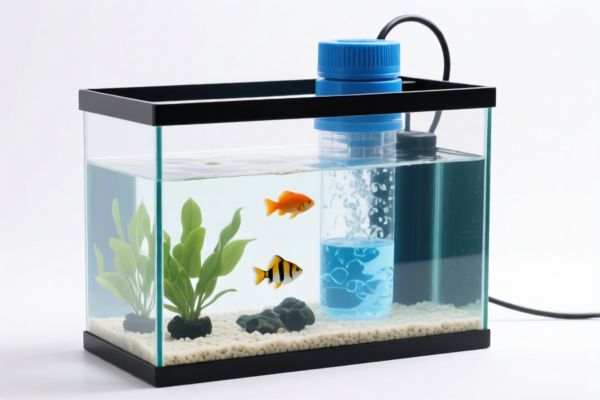
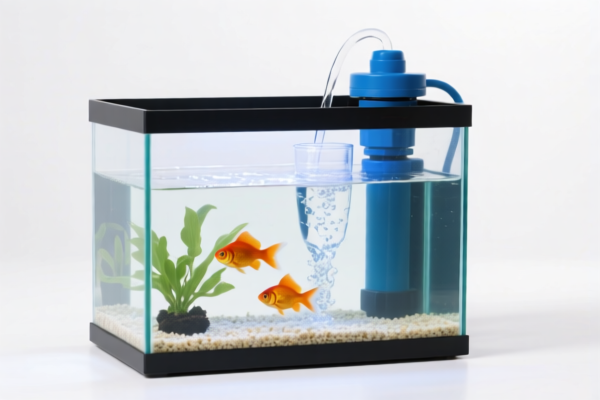
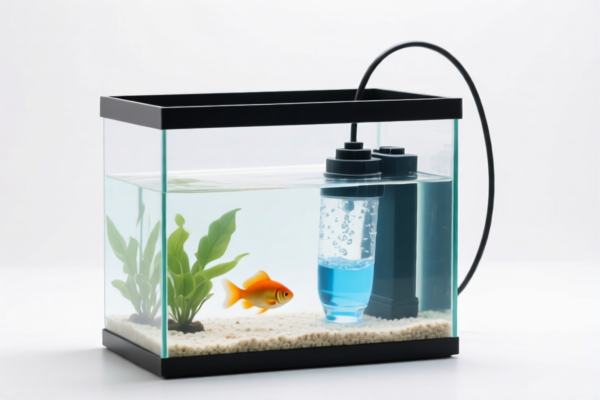

AI Analysis
🐠 Fish Tank Supplies (Aquarium Accessories)
🌐 HS Code Reference & Customs Clearance Guide | 2026 Latest Tariff Analysis | Strategic Import Strategy
📌 I. Product Definition & Classification: Do You Really Know "Fish Tank Supplies"?
Fish tank supplies, generally referred to as aquarium accessories, are essential components for maintaining aquatic ecosystems. In international trade, these items are strictly categorized based on their material and primary function. They are rarely treated as a single entity; instead, they fall into two main distinct groups:
- Ceramic/Stone Decorations: Statues, castles, and ornaments made primarily of ceramic, pottery, or stone, used purely for aesthetic purposes.
- Plastic/Resin Decorations: Artificial plants, caves, and ornaments made from polymers, often used for decoration or hiding spots.
⚠️ Key Distinction Point:
- If the item is Ceramic and used as Decoration → It falls under Chapter 69.
- If the item is Plastic/Resin and used as Decoration → It falls under Chapter 39.
- Note: Functional items like filters or pumps are excluded from this dataset, which focuses on decorative supplies.
📦 II. HS Code Classification Details (2026 Latest Tariff Authority对照)
Based on the provided dataset, here are the specific HS Codes applicable to decorative fish tank supplies.
| HS Code | Product Description | Primary Material | Usage Scenario | Total Tax Rate (US Import from CN) |
|---|---|---|---|---|
6913.90.50.00 |
Other Decorative Ceramic Articles | Ceramic | Aesthetic decorations (statues, ornaments) | 23.5% |
6913.90.30.00 |
Other Ceramic Articles (Inferred) | Ceramic | Decorative items where material is inferred as ceramic | 17.5% |
3926.40.00.10 |
Statues and Other Ornamental Articles | Plastic/Resin | Ornamental plastic decorations | 15.3% |
3926.90.99.89 |
Other Plastic Articles | Plastic/Resin | General plastic items, not specifically identified as statues | 22.8% |
🔍 Critical Insight:
- Ceramic Decorations generally carry a higher base tariff (6%) but are subject to the same additional tariffs. However, one variant (6913.90.30.00) has a 0% base tariff, significantly reducing the total cost.
- Plastic Decorations (3926.40.00.10) offer the lowest total tax rate (15.3%) because the base tariff is low (5.3%) and there are no Section 301 additional tariffs (7.5%), only the IEEPA tariff.
💰 III. 2026 Latest Tariff Rate Breakdown (Detailed Tax Clauses)
✅ Applicable Country: United States (US)
✅ Origin: China (CN)
✅ Effective Date: Post-November 2025 Importation
🎯 1. 6913.90.50.00 —— Other Decorative Ceramic Articles
| Item | Content |
|---|---|
| Base Tariff | 6.0% (ad valorem) |
| Section 301 Additional Tariff | +7.5% (USITC Footnote) |
| IEEPA Additional Tariff | +10% (Targeting Chinese/HSR Products, effective Nov 10, 2025) |
| Total Tax Rate | 23.5% |
| Tax Calculation | CIF Value × 23.5% |
| De Minimis Eligibility | ❌ No (Subject to high duties, de minimis does not apply to restricted materials/high-tariff goods) |
| Legal Path | IEEPA:9903.01.25 → USITC:6913.90.50.00 → Section 301 Footnote |
📌 Explanation:
- This is the standard classification for ceramic figurines (e.g., ceramic fish, ceramic castles).
- The 6% base rate makes it more expensive than plastic equivalents before additional tariffs.
- Total 23.5% includes the 10% IEEPA tariff and 7.5% Section 301 tariff.
🎯 2. 6913.90.30.00 —— Other Ceramic Articles (Optimized Rate)
| Item | Content |
|---|---|
| Base Tariff | 0.0% |
| Section 301 Additional Tariff | +7.5% |
| IEEPA Additional Tariff | +10% |
| Total Tax Rate | 17.5% |
| Tax Calculation | CIF Value × 17.5% |
| De Minimis Eligibility | ❌ No |
| Legal Path | IEEPA:9903.01.24 → USITC:6913.90.30.00 → Section 301 Footnote |
📌 Strategic Note:
- If the ceramic item can be classified under6913.90.30.00instead of.50, you save 6% on the base tariff.
- This requires precise documentation showing the item falls under "Other ceramic articles" rather than specifically "Decorative."
- Total 17.5% is significantly cheaper than.50.
🎯 3. 3926.40.00.10 —— Statues and Ornamental Plastic Articles (Lowest Tax)
| Item | Content |
|---|---|
| Base Tariff | 5.3% |
| Section 301 Additional Tariff | 0.0% (Exempt from Section 301) |
| IEEPA Additional Tariff | +10% |
| Total Tax Rate | 15.3% |
| Tax Calculation | CIF Value × 15.3% |
| De Minimis Eligibility | ❌ No |
| Legal Path | IEEPA:9903.01.24 → USITC:3926.40.00.10 |
📌 Why This is the Best Option:
- Plastic/Resin decorations (e.g., plastic plants, resin caves) often qualify here.
- No Section 301 Tariff: Unlike ceramic or general plastics, this specific subheading is exempt from the 7.5% additional tariff.
- Lowest Total Rate: At 15.3%, this is the most cost-effective classification for decorative aquarium supplies.
🎯 4. 3926.90.99.89 —— Other Plastic Articles (Higher Risk)
| Item | Content |
|---|---|
| Base Tariff | 5.3% |
| Section 301 Additional Tariff | +7.5% |
| IEEPA Additional Tariff | +10% |
| Total Tax Rate | 22.8% |
| Tax Calculation | CIF Value × 22.8% |
| De Minimis Eligibility | ❌ No |
| Legal Path | IEEPA:9903.01.24 → USITC:3926.90.99.89 → Section 301 |
📌 Warning:
- If the customs officer determines your plastic item is not a "statue/ornament" but a generic "other plastic article," it falls here.
- The 7.5% Section 301 tariff applies, raising the total to 22.8%.
- Always ensure your product is declared as "Ornamental/Decorative" to qualify for3926.40.00.10.
🛠️ IV. Customs Clearance Practical Advice (Battle-Tested Pitfall Guide)
✅ 1. Documentation Checklist (Non-Negotiable)
| Document | Required | Explanation |
|---|---|---|
| ✅ Product Specifications | ✔️ | Must clearly state material (Ceramic vs. Plastic) and use (Decoration). |
| ✅ Material Declaration | ✔️ | Explicitly state "100% Ceramic" or "100% Resin/Plastic." Do not say "Mixed." |
| ✅ Product Photos | ✔️ | Show the item clearly. If it looks like a statue, declare it as such. |
| ✅ Commercial Invoice | ✔️ | Description: "Ceramic Aquarium Ornament" or "Plastic Decorative Statue." Avoid vague terms like "Tank Accessories." |
| ✅ HS Code Pre-Ruling | ✔️ | Highly recommended for plastic items to secure 3926.40.00.10 over .99. |
✅ 2. Declaration Strategy (Key Mnemonic)
🔥 “Ceramic Check Base, Plastic Check Section, Ornament Avoids Section 301!”
| Scenario | Correct Declaration | Incorrect Declaration | Result |
|---|---|---|---|
| Ceramic Statue | 6913.90.30.00 (If possible) or 6913.90.50.00 |
9032.90.00.00 (Generic) |
Risk of penalty + wrong tax |
| Plastic Statue/Ornament | 3926.40.00.10 |
3926.90.99.89 |
Save 7.5% Tax! |
| General Plastic Part | 3926.90.99.89 |
3926.40.00.10 |
Pay extra 7.5% |
📌 Critical Tip:
- For Plastic items, always argue that they are "Statues and Other Ornamental Articles" (3926.40). This exempts you from the 7.5% Section 301 tariff.
- If you declare them as "Other plastic articles" (3926.90), you pay the 7.5% penalty.
✅ 3. Special Circumstances
| Situation | Handling Advice |
|---|---|
| Mixed Materials (Ceramic + Resin) | Declare based on essential character. If >50% by weight/value is ceramic, use Chapter 69. |
| Packaged as a Set | The entire set is classified under the item that gives it its essential character. |
| Artificial Plants | If plastic, declare as 3926.40.00.10 (Ornamental). If ceramic pots, use Chapter 69. |
| Stone/Resin Mix | If primarily resin, use Chapter 39. If primarily stone, it may fall under Chapter 68 or 69 depending on processing. |
🌍 V. Global Market Comparison (2026 Latest)
| Country/Region | Recommended HS Code | Total Tariff (CN Origin) | Certification | Notes |
|---|---|---|---|---|
| 🇺🇸 USA | 3926.40.00.10 |
15.3% | None specific | Best rate if classified as Ornamental |
| 🇺🇸 USA | 6913.90.30.00 |
17.5% | None specific | Best ceramic rate |
| 🇪🇺 EU | 6913.90.50 |
~10-15% | CE (if electrical) | No Section 301/IEEPA |
| 🇨🇳 China | 3926.40 |
~5% | None | Low base rate |
| 🇯🇵 Japan | 3926.40 |
~10% | None | Stable rates |
📌 Conclusion:
- The US market has unique tariffs (Section 301 + IEEPA).
- Plastic Ornamental items (3926.40.00.10) are the most tax-efficient due to the exemption from Section 301 tariffs.
- Ceramic items are consistently taxed higher due to higher base rates.
📌 VI. Common Mistakes & Pitfalls (Lessons Learned)
❌ Mistake 1: Declaring Plastic Decorations as "Other Plastic Articles" (3926.90)
👉 Consequence: You pay an extra 7.5% Section 301 tariff.
💡 Fix: Always use "Ornamental/Statue" language in the commercial invoice to justify 3926.40.00.10.
❌ Mistake 2: Using vague terms like "Aquarium Accessories"
👉 Consequence: Customs may classify it under a default higher-tariff code or demand manual classification.
💡 Fix: Use precise terms: "Ceramic Fish Ornament" or "Plastic Decorative Statue."
❌ Mistake 3: Assuming De Minimis Applies
👉 Consequence: IEEPA and Section 301 tariffs do not allow de minimis exemption for these goods from China.
💡 Fix: Budget for full tariff payment regardless of package size.
✅ Correct Declaration Example:
"Plastic Ornamental Statue for Aquarium Use, Model XYZ, 100% Resin, Decorative Purpose Only, HS 3926.40.00.10"
🎯 VII. Conclusion: Precise Classification Saves Money!
🎯 Remember the Mantra:
🔹 "Plastic Ornament, Avoid Section 301!"
🔹 "Ceramic Base is High, 17.5% is the Target."
🔹 "Vague Descriptions Lead to Penalties, Specificity Pays Dividends."
📌 Pro Tip:
If you are importing Plastic Fish Tank Decorations, insist on the HS Code 3926.40.00.10. This saves you 7.5% compared to generic plastic codes. For Ceramic, try to negotiate classification under 6913.90.30.00 to save the 6% base tariff.
📣 Immediate Action:
📞 Consult with your customs broker to verify if your plastic items qualify as "Ornamental Articles."
📄 Update your commercial invoices to use specific descriptive terms ("Statue," "Ornament") rather than generic ones ("Accessory").
🚀 Optimize your tax burden from 22.8% down to 15.3%!
✨ Professional Clearance, Starting with Accurate Classification!
💼 Every percent saved is pure profit!
Customer Reviews
About HS Code Classification
The Harmonized System (HS) is an internationally standardized nomenclature developed by the World Customs Organization (WCO) to classify traded products. Over 200 countries use the HS system as the basis for customs tariffs, trade statistics, and import/export regulations.
Each HS code follows a hierarchical structure:
- Chapter (2 digits) — Broad category of goods (e.g., Chapter 84: Machinery and Mechanical Appliances)
- Heading (4 digits) — More specific grouping within the chapter
- Subheading (6 digits) — Internationally standardized breakdown, used by all WCO member countries
- National subdivisions (8-10 digits) — Country-specific extensions for further classification, such as US HTSUS 10-digit codes
Correct HS code classification is essential for smooth customs clearance, accurate duty payment, and compliance with trade regulations. Misclassification can lead to customs delays, overpayment of duties, or penalties.
When importing from CN to US, the applicable tariff rates may include:
- Most-Favored-Nation (MFN) rate — The standard duty rate applied to WTO members
- General rate — Applied to countries without trade agreements
- Trade remedy duties — Additional tariffs such as Section 301 (anti-dumping), Section 232 (national security), or countervailing duties
The information provided on this page is for reference purposes only. For official classification, please consult with your local customs authority or a licensed customs broker.