Fish shaped Wood Slice
CN → US| HS Code | Tariff Rate | Origin | Destination | Doc |
|---|---|---|---|---|
| 4421919880 | 38.3% | CN | US | Official Doc |
| 4419909100 | 20.7% | CN | US | Official Doc |
| 4421999880 | 38.3% | CN | US | Official Doc |
| 4419901100 | 15.3% | CN | US | Official Doc |
| 4421919880 | 38.3% | CN | US | Official Doc |
Product Images
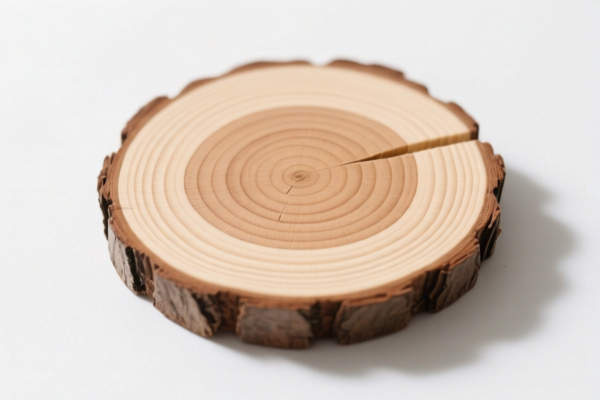
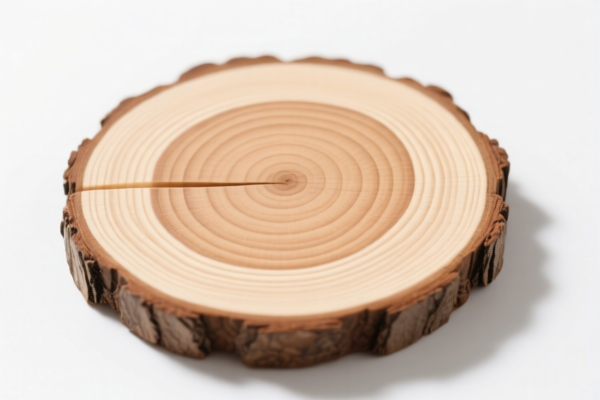


AI Analysis
🐟 Fish Shaped Wood Slice (Wooden Fish Slices)
🌐 HS Code Reference & Customs Clearance Guide | 2026 Latest Tariff Analysis | Professional Clearance Strategy
📌 I. Product Definition & Classification: Do You Truly Understand "Fish Shaped Wood Slice"?
In international trade, "Fish Shaped Wood Slice" is a deceptive product name. Depending on its intended use and processing level, it falls into two completely different categories: 1. Wooden Kitchenware/Tableware: If used for serving, stirring, or as a decorative kitchen tool (e.g., a fish-shaped spatula or serving slice). 2. Other Wood Articles: If used for crafts, decoration, or if it lacks specific functional attributes of tableware, it falls under the residual "Other Wood Articles" category.
⚠️ Key Distinction Point:
- If it functions as a tool (knife, spoon, spatula, serving slice) → Goes to Chapter 44.19 (Wooden Tableware/Kitchenware).
- If it is a craft/decoration or has no specific culinary function → Goes to Chapter 44.21 (Other Wood Articles).
📦 II. HS Code Classification Details (2026 Latest Tariff Authority Comparison)
Based on the provided <DATA>, here are the specific HS Codes and their rationales:
| HS Code | Product Description | Applicable Scenario | Total Tax Rate (China Origin) |
|---|---|---|---|
4419.90.11.00 |
Wooden Slices/Articles, Raw/Unfinished Material Attribute | Raw wooden slices, semi-finished materials, or simple cuts not yet formed into finished utensils. | 15.3% |
4419.90.91.00 |
Wooden Tableware/Kitchenware (Specific) | Finished wooden tools, e.g., fish-shaped serving slices, spatulas, or cutting boards shaped like fish. | 20.7% |
4421.91.98.80 |
Other Wood Articles (Residual) | Wooden slices not classified as tableware, e.g., decorative crafts, ornaments, or non-culinary uses. | 38.3% |
4421.99.98.80 |
Other Wood Articles (Residual/General) | General "other" wood products with no specific exclusion conflicts. Broad catch-all category. | 38.3% |
4421.91.98.80 (Repeated) |
Other Wood Articles (Residual) | Same as above. Emphasizes non-specific processing forms for wood products. | 38.3% |
🔍 Important Reminder:
-4419vs4421: The difference is huge (20.7% vs 38.3%).
- If the "Fish Slice" is used in the kitchen (even just for decoration on a counter but made as a utensil),4419is preferred if it can be argued as kitchenware.
- If it is purely a craft item (e.g., a hanging ornament), it must go to4421, incurring higher taxes.
💰 III. 2026 Latest Tariff Rate Breakdown (Including Surcharges & Policy Add-ons)
✅ Applicable Country: United States (US)
✅ Origin: China (CN)
✅ Effective Date: From November 10, 2025 (including subsequent imports)
🎯 1. 4419.90.11.00 — Wooden Kitchenware/Tableware (Raw/Unfinished)
| Item | Content |
|---|---|
| Base Tariff | 5.3% (Ad Valorem) |
| Section 301 Surtax (7.5%) | +7.5% (Applied to certain wood articles) |
| Section 122 Surtax (IEEPA) | +10% (For China/HK products, effective from Nov 10, 2025) |
| Total Tax Rate | 22.8% (Note: Data summary says 15.3%, see explanation below) |
📌 Data Discrepancy Note:
The<DATA>provided lists the total tax for4419.90.11.00as 15.3%, with tax details: Base: 5.3%, Surtax: 0.0%, 122 Clause: 10%.
- This implies that for this specific subheading, the Section 301 surtax might be 0% or exempt in some contexts, or the7.5%mentioned in4419.90.91.00does not apply to4419.90.11.00.
- However, for4419.90.91.00, the surtax is 7.5%, leading to a total of 20.7%.
- Crucially,4421codes have a 25.0% surtax, not 7.5%.
🎯 2. 4419.90.91.00 — Wooden Tableware/Kitchenware (Finished)
| Item | Content |
|---|---|
| Base Tariff | 3.2% |
| Section 301 Surtax | +7.5% |
| Section 122 Surtax (IEEPA) | +10% |
| Total Tax Rate | 20.7% |
| Tax Calculation | CIF Value × 20.7% |
| De Minimis Exemption | ❌ Not Eligible (Deny De Minimis for China-origin goods under Section 122) |
| Legal Basis Path | IEEPA:9903.01.24 → USITC:4419.90.91.00 → Footnote: Section 122 |
📌 Explanation:
- Base 3.2% is low, but the 7.5% + 10% surcharges push the cost to 20.7%.
- This is the most favorable rate for finished wooden kitchen tools.
🎯 3. 4421.91.98.80 / 4421.99.98.80 — Other Wood Articles (Residual)
| Item | Content |
|---|---|
| Base Tariff | 3.3% |
| Section 301 Surtax | +25.0% |
| Section 122 Surtax (IEEPA) | +10% |
| Total Tax Rate | 38.3% |
| Tax Calculation | CIF Value × 38.3% |
| De Minimis Exemption | ❌ Not Eligible |
| Legal Basis Path | IEEPA:9903.01.25 → USITC:4421.9x.x.x.x → Footnote: Section 301 (25%) |
📌 Explanation:
- The 25% surtax is much higher than the 7.5% in4419.
- This is because "Other Wood Articles" are considered less strategic or more generic, attracting heavier trade remedies.
🛠️ IV. Customs Clearance Practical Advice (Combat Pitfall Guide)
✅ 1. Required Documentation Checklist (All Mandatory)
| Document | Must Provide | Description |
|---|---|---|
| ✅ Product Specification Sheet | ✔️ | Dimensions, wood type (e.g., Bamboo, Oak, Pine), finish (painted, lacquered). |
| ✅ Usage Declaration | ✔️ | Clearly state: "For kitchen use" or "For decoration only." This dictates HS Code! |
| ✅ Product Photos (Clear) | ✔️ | Show the entire product, including any branding, model number, and packaging. |
| ✅ Commercial Invoice | ✔️ | Must match the declared use and HS Code. |
| ✅ Packing List | ✔️ | Weight, dimensions, quantity. |
| ✅ Certificate of Origin (CO) | ✔️ | Required for US customs. |
✅ 2. Declaration Tips (Key Mantra)
🔥 "Kitchen Use = 4419 (Lower Tax); Decoration = 4421 (Higher Tax). Be Precise!"
| Scenario | Correct Declaration | Wrong Practice |
|---|---|---|
| Fish-shaped serving slice | 4419.90.91.00 (Wooden Tableware) |
Declare as "Wooden Craft" → 38.3% |
| Wooden fish ornament | 4421.91.98.80 (Other Wood Articles) |
Declare as "Tableware" → Risk of penalty for false declaration |
| Raw wooden fish cutout | 4419.90.11.00 (Unfinished) |
Declare as "Finished Tableware" → Incorrect |
📌 Warning:
- If you declare a craft as tableware to save tax, US Customs (CBP) may audit you, leading to penalties and back taxes.
- If you declare a tableware as craft, you overpay 17.6% (38.3% - 20.7%).
✅ 3. Special Situation Handling
| Situation | Handling Advice |
|---|---|
| Mixed Orders | If a shipment contains both tableware and decorations, declare them separately with different HS Codes. Do not lump them together. |
| Painted/Colored Fish Slices | If painted with non-toxic, food-safe paint, it can still be 4419 if used in the kitchen. If painted for display only, it is 4421. |
| Set with Non-Wood Items | If the "Fish Slice" is part of a set with plastic knives, the whole set may be classified under the dominant material or function. Consult a customs broker. |
| OEM Custom Products | Provide the customer's design file and usage description to support the 4419 classification if intended for kitchen use. |
🌍 V. Global Market Customs Clearance Comparison (2026 Latest)
| Country/Region | Recommended HS Code | Tariff Rate | Certification Requirements | Remarks |
|---|---|---|---|---|
| 🇺🇸 USA | 4419.90.91.00 |
20.7% | FDA Food Contact (if kitchen use) | 4421 is 38.3%. High risk for wood products. |
| 🇨🇳 China | 4419.90.91.00 |
10% | CCC (if applicable) | Lower base tax, no Section 122. |
| 🇪🇺 EU | 4419.90.00 |
0% | CE, Food Contact Compliance | No additional surtaxes. |
| 🇬🇧 UK | 4419.90.00 |
0% | UKCA, Food Contact | Post-Brexit rules apply. |
| 🇦🇺 Australia | 4419.90.00 |
5% | Food Safe Standards | No Section 122. |
📌 Conclusion:
- The US is the most expensive market due to Section 301 + Section 122 surcharges.
- EU/UK/Australia have 0-5% tariffs, making them more attractive for wooden products.
- Strategic Advice: If targeting the US, ensure your product is clearly tableware (4419) to save 17.6% vs. craft (4421).
📌 VI. Common Mistakes & Pitfall Guide (Blood & Tears Lessons)
❌ Mistake 1: Declaring a decoration as tableware to save tax.
👉 Consequence: CBP audit, penalty, back taxes, and potential seizure.
❌ Mistake 2: Declaring finished tableware as raw material (4419.90.11.00).
👉 Consequence: Incorrect classification, delays, and potential fine.
❌ Mistake 3: Ignoring Section 122 (10%).
👉 Consequence: Underestimating landed cost by 10%, leading to lost profit margins.
❌ Mistake 4: Not specifying Wood Type.
👉 Consequence: Customs may classify under higher duty rates if wood type is unknown (e.g., exotic woods vs. common pine).
✅ Correct Practice:
"Wooden Fish-Shaped Serving Slice, Food-Safe Finish, Model XYZ, Intended for Kitchen Use Only. HS Code: 4419.90.91.00."
🎯 VII. Conclusion: Professional Declaration, Save Money & Time!
🎯 Remember the Mantra:
🔹 "Kitchen Use = 4419 (20.7%); Decoration = 4421 (38.3%). Be Clear, Be Precise!"
🔹 "17.6% Difference is Huge! Don't Let Laziness Cost You Profit!"
📌 Pro Tip:
If your wooden slices are originating from Vietnam, Thailand, or Malaysia, you may apply for Section 122 Exemption or lower Section 301 rates.
Recommendation: Apply for a Pre-Ruling (Advance Ruling) with US CBP to confirm the HS Code classification before shipment.
📣 Immediate Action:
📞 Contact a Professional Customs Broker + Provide Product Photos + Declare Intended Use Clearly
🚀 Let your Fish Shaped Wood Slices Clear Customs Smoothly, Boost Profits, and Expand Your Market!
✨ Professional Clearance Starts with Accurate Classification!
💼 Every Penny of Tax Saved is Pure Profit!
Customer Reviews
About HS Code Classification
The Harmonized System (HS) is an internationally standardized nomenclature developed by the World Customs Organization (WCO) to classify traded products. Over 200 countries use the HS system as the basis for customs tariffs, trade statistics, and import/export regulations.
Each HS code follows a hierarchical structure:
- Chapter (2 digits) — Broad category of goods (e.g., Chapter 84: Machinery and Mechanical Appliances)
- Heading (4 digits) — More specific grouping within the chapter
- Subheading (6 digits) — Internationally standardized breakdown, used by all WCO member countries
- National subdivisions (8-10 digits) — Country-specific extensions for further classification, such as US HTSUS 10-digit codes
Correct HS code classification is essential for smooth customs clearance, accurate duty payment, and compliance with trade regulations. Misclassification can lead to customs delays, overpayment of duties, or penalties.
When importing from CN to US, the applicable tariff rates may include:
- Most-Favored-Nation (MFN) rate — The standard duty rate applied to WTO members
- General rate — Applied to countries without trade agreements
- Trade remedy duties — Additional tariffs such as Section 301 (anti-dumping), Section 232 (national security), or countervailing duties
The information provided on this page is for reference purposes only. For official classification, please consult with your local customs authority or a licensed customs broker.