Fishing Gear Satchel Photography Bag
CN → USProduct Images
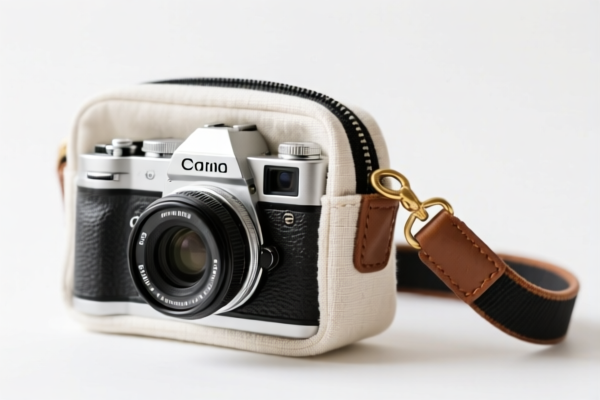
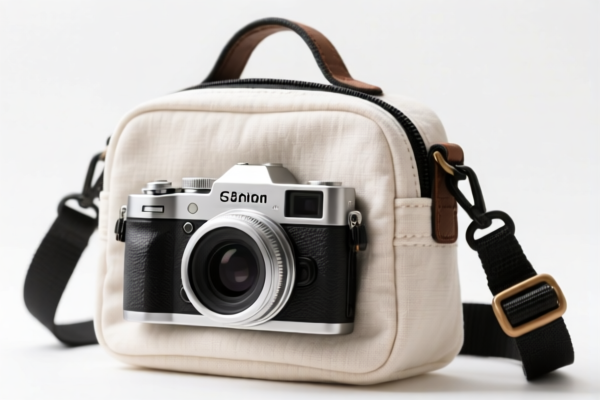
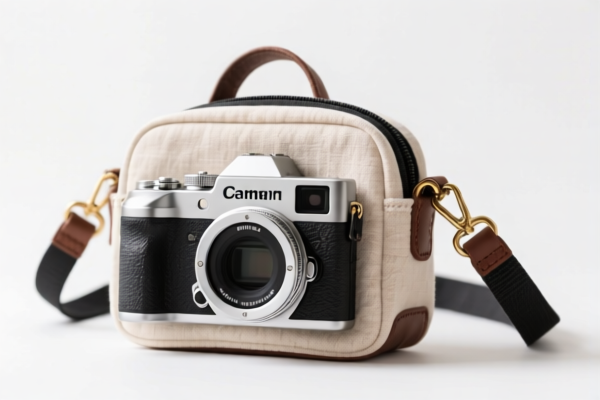
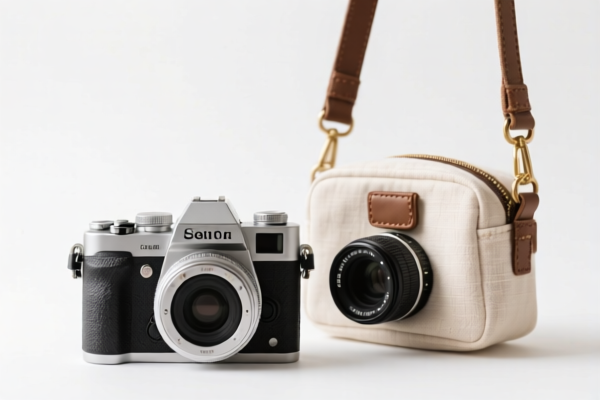
AI Analysis
🎒 Fishing Gear Satchel Photography Bag
🌐 HS Code Reference & Clearance Guide | 2026 Latest Tariff Analysis | Professional Customs Strategy
📌 I. Product Definition & Classification: What is a "Fishing Gear Satchel Photography Bag"?
This product is a specialized carrying case designed for two distinct but overlapping purposes: storing fishing equipment (rods, reels, lures) and photography gear (cameras, lenses, tripods).
In international trade, this item is classified based on its primary material composition and intended use:
- Primary Classification (Textile/Plastic Bags): If the bag is made primarily of fabric, leather, or synthetic materials (nylon, polyester, canvas) and is designed as a general-purpose satchel or backpack, it falls under Heading 4202 or 4203.
- Specific Classification (Camera Bags): If the bag is specifically designed for camera equipment with molded interiors, it may still fall under 4202 but with specific subheading considerations for "trunks, suitcases, handbags... and similar containers."
- Material-Specific Nuance:
- Nylon/Polyester Outer: Likely 4202.92 (with outer surface of textile materials).
- Leather Outer: Likely 4202.12 (with outer surface of leather).
- Plastic Sheet Material: If made entirely of plastic (e.g., hard-shell case), it may fall under 3926. However, "Satchel" implies fabric/flexible material, so 4202 is the standard.
⚠️ Key Distinction Point:
- If the bag is primarily for camera protection (even if marketed for fishing), it is often classified under 4202.92 (other containers).
- Do not classify as "Fishing Gear" (e.g., rod holders) which would be 9013 or 9504, unless the bag itself is considered a part/accessory of a machine (which is rare for bags). Bags are almost always Chapter 42.
📦 II. HS Code Classification Details (2026 Latest Tariff Authority Match)
| HS Code | Product Description | Applicable Scenario | Material Type |
|---|---|---|---|
4202.92.00.00 |
Trunks, suitcases, handbags, canvas bags... with outer surface of textile materials | Most common: Nylon/Polyester fishing/photography satchels | ✅ Textile (Nylon/Polyester) |
4202.12.00.00 |
Trunks, suitcases, handbags... with outer surface of leather | Premium leather camera/fishing bags | ✅ Leather |
4202.32.00.00 |
Articles of apparel and clothing accessories... of textile materials | Sometimes used if it's a soft pouch/pouch-style | ✅ Textile |
9006.99.00.00 |
Parts and accessories of cameras | ❌ Incorrect - Bags are not considered "parts" of the camera | ❌ No |
4205.00.20.00 |
Other articles of leather or composition leather | If made of synthetic leather (PU) | ✅ Synthetic Leather |
🔍 Critical Reminder:
- Never classify a bag as an accessory to the fishing rod or camera under 9013 or 9006. Customs explicitly classifies containers under Chapter 42.
- The term "Satchel" or "Camera Bag" confirms it is a container (Heading 4202).
- Material matters: Check the outer layer. Is it nylon? Polyester? Leather? This determines the 6-8 digit subheading.
💰 III. 2026 Latest Tariff Rate Breakdown (Including Additional Duties)
✅ Applicable Country: United States (US)
✅ Origin: China (CN)
✅ Effective Date: November 10, 2025 (and subsequent imports)
🎯 1. 4202.92.00.00 —— Handbags, Satchels, Backpacks (Textile Material)
| Item | Details |
|---|---|
| Basic Duty Rate | 3.2% (ad valorem) |
| USITC Additional Duty (Section 301) | +7.5% (Footnote 9917.01.22) |
| IEEPA Additional Duty | +10% (针对中国/香港产品,自2025年11月10日起) |
| Total Effective Rate | 20.7% |
| Tax Calculation | CIF Value × 20.7% |
| De Minimis Eligibility | ❌ No (deny_de_minimis) |
| Legal Basis Path | IEEPA:9917.01.10 → USITC:4202.92.00.00 → FOOTNOTE:9917.01.22 |
📌 Explanation:
- 3.2% Base: Standard MFN rate for textile-based bags.
- 7.5% Section 301: Applies to most goods from China, including bags and luggage.
- 10% IEEPA: New 2025 tariff on Chinese-origin goods.
- Total: 20.7%. This is a high tariff for a soft-sided bag.
- No De Minimis: Items over $800 are subject to full duty calculation.
🎯 2. 4202.12.00.00 —— Leather Bags
| Item | Details |
|---|---|
| Basic Duty Rate | 3.2% |
| USITC Additional Duty (Section 301) | +7.5% |
| IEEPA Additional Duty | +10% |
| Total Effective Rate | 20.7% |
| De Minimis Eligibility | ❌ No |
| Legal Basis Path | IEEPA:9917.01.10 → USITC:4202.12.00.00 → FOOTNOTE:9917.01.22 |
📌 Note:
- Leather and textile bags have similar additional duty structures in the 2026 framework.
- If made of synthetic leather (PU), it may fall under 4205.00.20.00, which has the same tariff treatment.
🛠️ IV. Customs Clearance Practical Advice (Avoid Pitfalls)
✅ 1. Required Documentation Checklist
| Document | Mandatory | Explanation |
|---|---|---|
| ✅ Commercial Invoice | ✔️ | Must clearly state "Fishing/Photography Bag" and material composition (e.g., "100% Nylon Outer, EVA Interior"). |
| ✅ Packing List | ✔️ | Detail contents: e.g., "1x Bag, Empty" or "1x Bag with Camera Inside" (if shipped together). |
| ✅ Material Declaration | ✔️ | Specify outer material (Textile, Leather, Plastic). Incorrect material leads to reclassification. |
| ✅ Product Photos | ✔️ | Show brand label, size, and internal compartments to prove it's a bag, not a fishing rod or camera. |
| ✅ Country of Origin Certificate | ✔️ | Crucial for applying correct tariffs and avoiding anti-dumping penalties. |
| ✅ FCC/CE (if electronics included) | ❌ | Only if the bag contains electronic components (e.g., heated lining). Standard bags do not need this. |
✅ 2. Declaration Tips (Key Mantra)
🔥 "Material First, Function Second, No Gadgets Inside!"
| Scenario | Correct Declaration | Wrong Practice |
|---|---|---|
| Empty Bag | 4202.92.00.00 |
Declare as "Camera Accessory" → 0% but risk of penalty |
| Bag with Camera Inside | Declare Bag under 4202 and Camera under 9006 separately | Bundle as "Set" → Complex valuation, higher risk |
| Bag with Fishing Rods Inside | Declare Bag under 4202 and Rods under 9306/9503 | Bundle as "Fishing Set" → Misclassification |
| Bag with Electronics (e.g., GPS) | Must declare electronic item separately | Bundle as "Smart Bag" → Incorrect HS |
✅ 3. Special Cases
| Scenario | Handling Advice |
|---|---|
| OEM Custom Bags | Provide design sketches showing material composition. Avoid claiming "Specialized" to avoid extra scrutiny. |
| Bag with Detachable Straps/Compartments | Still classified as a single unit (bag). Do not separate straps into "accessories" (4205) unless sold separately. |
| Hard-Shell Camera Case | If made of rigid plastic, may be 3926.90 (Plastic articles). Check material. If plastic, duty may differ slightly. |
| Branded vs. Unbranded | No difference in HS code, but branded items may face higher scrutiny for IP violations. |
🌍 V. Global Market Comparison (2026 Latest)
| Country/Region | Recommended HS Code | Tariff (CN Origin) | Certification Requirements | Remarks |
|---|---|---|---|---|
| 🇺🇸 USA | 4202.92.00.00 |
20.7% | None (General) | High tariff due to 301 + IEEPA |
| 🇨🇳 China | 4202.92.00.00 |
10% - 15% | None | Lower base rate, no additional duties |
| 🇪🇺 EU | 4202.92.00.00 |
12% | CE (if safety standard applied) | No Section 301 equivalent, but high base rate |
| 🇬🇧 UK | 4202.92.00.00 |
12% | None | Post-Brexit tariff alignment with EU |
| 🇦🇺 Australia | 4202.92.00.00 |
5% | C-Tick (if applicable) | Low base rate, no major additional duties |
📌 Conclusion:
- USA is the most expensive market due to 20.7% total duties.
- EU/UK have higher base rates (12%) but no 301-style penalties.
- Australia/Canada offer more competitive rates (5-8%).
- Strategy: Consider shipping to non-US markets or using third-party logistics in Vietnam/Mexico for IEEPA exemption (if eligible).
📌 VI. Common Mistakes & Pitfalls (Blood & Tears Lessons)
❌ Mistake 1: Declaring as "Fishing Accessory" under 9013.90.80.00
👉 Consequence: Customs will reclassify to 4202, assess back-tariffs (20.7% vs 0% or lower), and impose fines.
❌ Mistake 2: Declaring as "Camera Bag" under 9006.99.00.00 (Parts of Camera)
👉 Consequence: This HS code is for lenses, flashes, not bags. Bags are Chapter 42. Misclassification leads to audit.
❌ Mistake 3: Ignoring Material Composition
👉 Consequence: Declaring "Synthetic" when it's "Real Leather" or vice versa. Leads to duty underpayment penalties.
❌ Mistake 4: Not Separating Electronics Inside
👉 Consequence: If a GPS device is in the bag, it must be declared separately. Bundling can delay customs clearance.
✅ Correct Practice:
"Camera/Fishing Satchel, Model XYZ, Outer Material: 100% Nylon, Interior: EVA Foam Padding, Dimensions: 15x10x8 inches, Made in China"
🎯 VII. Conclusion: Professional Declaration Saves Money!
🎯 Remember the Mantra:
🔹 "Bags are Chapter 42, Not 9006 or 9306!"
🔹 "Material Matters: Textile vs. Leather Changes the Code!"
🔹 "USA Tariff is 20.7%, Plan Ahead for Costs!"
📌 Pro Tip:
If your bags are originating from Vietnam, Mexico, or Thailand, you may qualify for IEEPA exemption, reducing the tariff to 3.2% - 7.5%.
Recommend Advance Ruling (Ruling Letter) from US Customs for large volumes.
📣 Immediate Action:
📞 Consult a Customs Broker + Provide Material Spec Sheet + Apply for Pre-Ruling
🚀 Ensure your Fishing/Photography Bag clears smoothly, avoids penalties, and maximizes profit margins!
✨ Professional Classification Starts with Precision!
💼 Your Every Penny Saved in Duty is Pure Profit!
Customer Reviews
About HS Code Classification
The Harmonized System (HS) is an internationally standardized nomenclature developed by the World Customs Organization (WCO) to classify traded products. Over 200 countries use the HS system as the basis for customs tariffs, trade statistics, and import/export regulations.
Each HS code follows a hierarchical structure:
- Chapter (2 digits) — Broad category of goods (e.g., Chapter 84: Machinery and Mechanical Appliances)
- Heading (4 digits) — More specific grouping within the chapter
- Subheading (6 digits) — Internationally standardized breakdown, used by all WCO member countries
- National subdivisions (8-10 digits) — Country-specific extensions for further classification, such as US HTSUS 10-digit codes
Correct HS code classification is essential for smooth customs clearance, accurate duty payment, and compliance with trade regulations. Misclassification can lead to customs delays, overpayment of duties, or penalties.
When importing from CN to US, the applicable tariff rates may include:
- Most-Favored-Nation (MFN) rate — The standard duty rate applied to WTO members
- General rate — Applied to countries without trade agreements
- Trade remedy duties — Additional tariffs such as Section 301 (anti-dumping), Section 232 (national security), or countervailing duties
The information provided on this page is for reference purposes only. For official classification, please consult with your local customs authority or a licensed customs broker.