Fishing Line Elastic Line
CN → US| HS Code | Tariff Rate | Origin | Destination | Doc |
|---|---|---|---|---|
| 9507902000 | 21.2% | CN | US | Official Doc |
| 5402459030 | 43.0% | CN | US | Official Doc |
| 5402459010 | 43.0% | CN | US | Official Doc |
| 9507908000 | 19.0% | CN | US | Official Doc |
| 5402113010 | 43.8% | CN | US | Official Doc |
| 3916902000 | 38.1% | CN | US | Official Doc |
Product Images
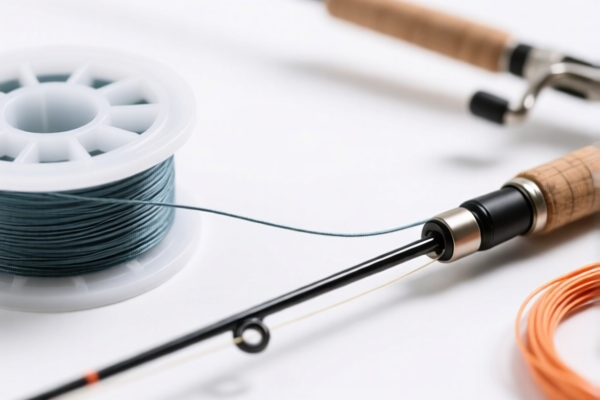
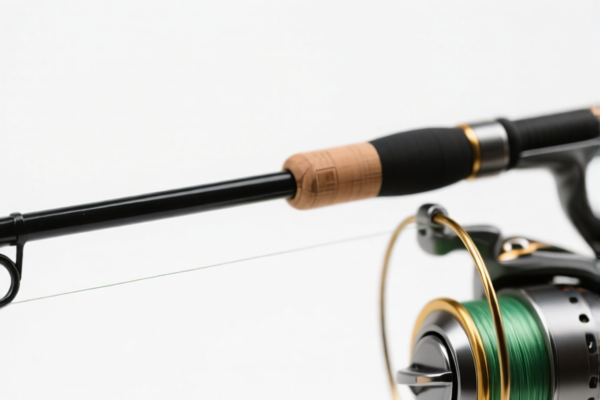
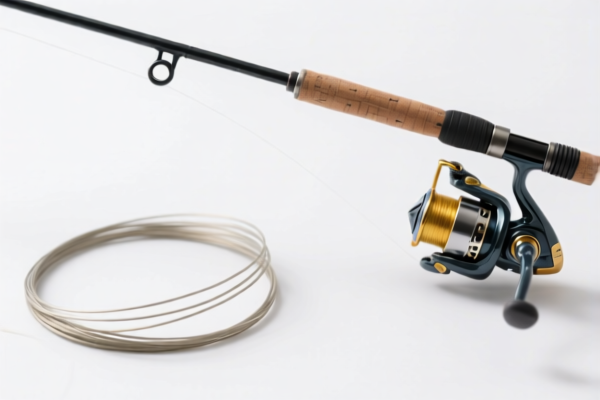

AI Analysis
🎣 Fishing Line / Elastic Line
🌐 HS Code Reference & Customs Clearance Guide | 2026 Latest Tariff Analysis | Professional Clearance Strategy
📌 I. Product Definition & Classification: Do You Really Understand "Fishing Line"?
"Fishing Line" (or "Elastic Line") is a critical accessory in angling, used primarily for catching fish. In international trade, it is generally classified based on its material (nylon/polyamide, which falls under synthetic fibers or plastics) and its intended use (as a component of fishing tackle).
The classification dilemma lies in whether it is treated as a general synthetic filament (Chapter 54) or a specific fishing tackle accessory (Chapter 95). The following analysis breaks down the six possible HS Codes from the provided data, explaining the logic, tax implications, and clearance risks for each.
⚠️ Key Distinction Point:
- If classified under Chapter 95 (Fishing Tackle): Generally lower base duty, but subject to specific Section 301/IEEPA surcharges.
- If classified under Chapter 54 (Synthetic Filaments): Higher base duty due to material-specific tariffs, compounded by additional trade restrictions.
📦 II. HS Code Classification Details (2026 Latest Tariff Authority Comparison)
| HS Code | Product Description | Application Scenario | Total Tax Rate | Key Logic |
|---|---|---|---|---|
| 9507.90.20.00 | Fishing Line, Retained Packaging | Retail-packaged fishing lines; Nylon material | 21.2% | Matches use (fishing line) and material (nylon); fits retail packaging definition in Ch. 95. |
| 9507.90.80.00 | Other Fishing Tackle Accessories | Nylon fishing line as a general accessory | 19.0% | "Nylon fishing line" infers material (nylon) and use (fishing); falls under "other fishing accessories." |
| 3916.90.20.00 | Plastic Monofilament/Rods | Nylon as plastic, line as monofilament form | 38.1% | Nylon is plastic; line form fits monofilament; logic similar to racket strings. |
| 5402.11.30.10 | Synthetic Filament Strands (Nylon) | Nylon/polyamide filaments, single/multi-filament | 43.8% | Material is nylon (polyamide); form is single/multi-filament; fits Ch. 54 material definition. |
| 5402.45.90.10 | Other Synthetic Filament Strands | Nylon fishing line, inferred as partially oriented | "Nylon" matches material; "fishing line" matches filament form; no specific twist instruction. | |
| 5402.45.90.30 | Other Synthetic Filament Strands | Nylon/polyamide filament, generic category | 43.0% | Material is nylon (polyamide); form fits synthetic filament long strand characteristics. |
🔍 Priority Insight:
- Lowest Tax Rate:9507.90.80.00(19.0%) and9507.90.20.00(21.2%) are significantly lower than Chapter 54 codes.
- Highest Risk: Chapter 54 codes (5402.45.90.30,5402.45.90.10,5402.11.30.10) attract the highest total tax rates (~43-44%) due to higher base duties and trade surcharges.
- Regulatory Warning: All codes are subject to USITC 25% Additional Duties (Section 301) and IEEPA 10% Additional Duties (if applicable to China-origin goods), as indicated in the tax details.
💰 III. 2026 Latest Tariff Rate Breakdown (Including Additional Taxes & Policy Surcharges)
✅ Applicable Country: United States (US)
✅ Origin: China (CN) (Inferred from tax structure: Base + 25% USITC + 10% IEEPA)
✅ Effective Date: November 10, 2025 onwards
🎯 1. 9507.90.80.00 —— Other Fishing Tackle Accessories (Recommended for Cost Efficiency)
| Item | Content |
|---|---|
| Base Duty | 9.0% |
| USITC Additional Duty (Section 301) | +25.0% |
| IEEPA Additional Duty | +10.0% |
| Total Tax Rate | 19.0% |
| Tax Calculation | CIF Value × 19.0% |
| De Minimis Eligibility | ❌ No (Due to additional duties) |
| Legal Basis Path | IEEPA:9903.01.24 → USITC:9507.90.80.00 → FOOTNOTE:9903.88.01 |
📌 Explanation:
- This is the lowest total tax rate among all options.
- The classification hinges on defining the fishing line as a "fishing tackle accessory" rather than a raw material.
- Critical: Ensure the product is marketed and packaged as a finished fishing accessory, not as raw nylon filament.
🎯 2. 9507.90.20.00 —— Fishing Line, Retail Packaging
| Item | Content |
|---|---|
| Base Duty | 3.7% |
| USITC Additional Duty (Section 301) | +7.5% |
| IEEPA Additional Duty | +10.0% |
| Total Tax Rate | 21.2% |
| Tax Calculation | CIF Value × 21.2% |
| De Minimis Eligibility | ❌ No |
| Legal Basis Path | IEEPA:9903.01.24 → USITC:9507.90.20.00 → FOOTNOTE:9903.88.01 |
📌 Note:
- Slightly higher than9507.90.80.00due to the specific "retail packaging" clause triggering a different base rate structure.
- If the product is sold in standard retail spools/packages, this code is applicable.
🎯 3. 3916.90.20.00 —— Plastic Monofilament
| Item | Content |
|---|---|
| Base Duty | 3.1% |
| USITC Additional Duty (Section 301) | +25.0% |
| IEEPA Additional Duty | +10.0% |
| Total Tax Rate | 38.1% |
| Tax Calculation | CIF Value × 38.1% |
| De Minimis Eligibility | ❌ No |
📌 Warning:
- Classifying fishing line as "plastic monofilament" triggers the full 25% USITC surcharge, significantly increasing costs.
- This classification is risky if the primary intent is clearly fishing.
🎯 4. 5402.11.30.10, 5402.45.90.10, 5402.45.90.30 —— Synthetic Filaments (High Tax Zone)
| Item | Content |
|---|---|
| Base Duty | 8.0% - 8.8% |
| USITC Additional Duty (Section 301) | +25.0% |
| IEEPA Additional Duty | +10.0% |
| Total Tax Rate | 43.0% - 43.8% |
| Tax Calculation | CIF Value × ~43% |
| De Minimis Eligibility | ❌ No |
📌 Critical Alert:
- These codes fall under Chapter 54 (Synthetic Filaments).
- They attract the highest total tax burden due to the combination of higher base duties and mandatory 25% USITC surcharge.
- Avoid unless the product is strictly bulk raw nylon filament with no fishing-specific features.
🛠️ IV. Customs Clearance Practical Advice (Battle-Tested Pitfall Guide)
✅ 1. Essential Documentation Checklist
| Document | Required | Notes |
|---|---|---|
| ✅ Product Specification Sheet | ✔️ | Must specify material (e.g., "Nylon 6,6"), diameter, breaking strength, and intended use ("Fishing"). |
| ✅ Product Photos | ✔️ | Show the product on a reel/spool, packaging, and any branding indicating "Fishing." |
| ✅ Commercial Invoice | ✔️ | Use precise description: "Nylon Fishing Line, for Angling, Retail Packaged" |
| ✅ Packing List | ✔️ | Detail the number of spools, weight, and dimensions. |
| ✅ HS Code Pre-Ruling (Optional but Recommended) | ❓ | Apply for an Advance Ruling from CBP to confirm 9507.90.80.00 vs. 5402 classification. |
✅ 2. Declaration Strategy (Key Mantra)
🔥 "Define Use, Not Just Material! Fishing Line = Fishing Tackle, Not Raw Nylon!"
| Scenario | Correct Declaration | Wrong Declaration |
|---|---|---|
| Finished Fishing Line | 9507.90.80.00 (Accessory) or 9507.90.20.00 (Retail) |
5402.45.90.30 (Synthetic Filament) → 43% Tax |
| Bulk Raw Nylon Filament | 5402.11.30.10 or 5402.45.90.30 |
9507.90.80.00 → Misclassification Risk |
| OEM Private Label | Clearly state "Fishing Tackle" on invoice | Generic "Plastic String" → Audit Risk |
✅ 3. Special Case Handling
| Scenario | Handling Advice |
|---|---|
| Elastic/Stretchy Line | If it has significant elastic properties, emphasize "fishing line" use to stay in Ch. 95. Do not declare as "elastic fabric" or "rubber." |
| Multi-Purpose Line | If marketed for both fishing and crafting, provide proof of primary use (e.g., fishing-specific packaging). |
| China Origin | Expect 25% USITC + 10% IEEPA. Total ~19-21% for Ch. 95, ~43% for Ch. 54. No de minimis exemption. |
🌍 V. Global Market Comparison (2026 Latest)
| Country/Region | Recommended HS Code | Total Tax (China Origin) | Certification | Notes |
|---|---|---|---|---|
| 🇺🇸 USA | 9507.90.80.00 |
19.0% | N/A | Avoid Ch. 54 to save ~24%. |
| 🇨🇳 China | 5402.45.90.30 |
8.0% | N/A | Lower tax in China, but export data must match. |
| 🇪🇺 EU | 3916.90.90 |
3.5% | REACH | No 25% surcharge, but check Ecodesign rules. |
| 🇬🇧 UK | 3916.90.90 |
3.5% | UKCA | Post-Brexit trade terms apply. |
📌 Conclusion:
- USA is the most critical market for tariff optimization.
- Classifying as Fishing Tackle (Ch. 95) saves ~24% in duties compared to classifying as Synthetic Filament (Ch. 54).
📌 VI. Common Errors & Pitfalls (Blood-Learnings)
❌ Mistake 1: Declaring "Fishing Line" as "Nylon Filament" (5402.45.90.30)
👉 Consequence: Tax jumps from 19.0% to 43.0% → Profit Margin Erosion!
❌ Mistake 2: Using vague description "Plastic String"
👉 Consequence: CBP may assign the highest applicable rate or initiate an audit → Delays + Penalties!
❌ Mistake 3: Assuming "De Minimis" applies
👉 Consequence: All listed codes for China-origin goods are subject to additional duties and not eligible for $800 de minimis exemption.
✅ Correct Practice:
"Nylon Fishing Line, 10lb Test, Spooled, for Recreational Angling"
Use this description to anchor classification to Chapter 95.
🎯 VII. Conclusion: Professional Declaration, Cost Savings, Efficient Clearance!
🎯 Remember the Mantra:
🔹 "Fishing Line = Fishing Tackle (Ch. 95), Not Raw Nylon (Ch. 54)!"
🔹 "Tax Difference: 19% vs. 43% – Choose Wisely!"
🔹 "No De Minimis for China Origin – Plan Ahead!"
📌 Pro Tip:
If your fishing line is originating from Vietnam, Thailand, or Malaysia, you may apply for IEEPA Exemption, reducing the total tax significantly.
Recommendation: Apply for an Advance Ruling (CBP Ruling Letter) to secure the 9507.90.80.00 classification and avoid post-clearance audits.
📣 Immediate Action:
📞 Consult a licensed customs broker + Provide product images + Apply for HS Code Pre-Ruling
🚀 Let your fishing line clear smoothly, maximize profit, and dominate the market!
✨ Professional Customs Clearance Starts with Accurate Classification!
💼 Every Cent of Duty Saved is Profit Earned!
Customer Reviews
About HS Code Classification
The Harmonized System (HS) is an internationally standardized nomenclature developed by the World Customs Organization (WCO) to classify traded products. Over 200 countries use the HS system as the basis for customs tariffs, trade statistics, and import/export regulations.
Each HS code follows a hierarchical structure:
- Chapter (2 digits) — Broad category of goods (e.g., Chapter 84: Machinery and Mechanical Appliances)
- Heading (4 digits) — More specific grouping within the chapter
- Subheading (6 digits) — Internationally standardized breakdown, used by all WCO member countries
- National subdivisions (8-10 digits) — Country-specific extensions for further classification, such as US HTSUS 10-digit codes
Correct HS code classification is essential for smooth customs clearance, accurate duty payment, and compliance with trade regulations. Misclassification can lead to customs delays, overpayment of duties, or penalties.
When importing from CN to US, the applicable tariff rates may include:
- Most-Favored-Nation (MFN) rate — The standard duty rate applied to WTO members
- General rate — Applied to countries without trade agreements
- Trade remedy duties — Additional tariffs such as Section 301 (anti-dumping), Section 232 (national security), or countervailing duties
The information provided on this page is for reference purposes only. For official classification, please consult with your local customs authority or a licensed customs broker.