Fishing Material
CN → US| HS Code | Tariff Rate | Origin | Destination | Doc |
|---|---|---|---|---|
| 5607491500 | 42.0% | CN | US | Official Doc |
| 7326908688 | 87.9% | CN | US | Official Doc |
| 9507100080 | 16.0% | CN | US | Official Doc |
| 9507908000 | 19.0% | CN | US | Official Doc |
| 3926909989 | 22.8% | CN | US | Official Doc |
Product Images
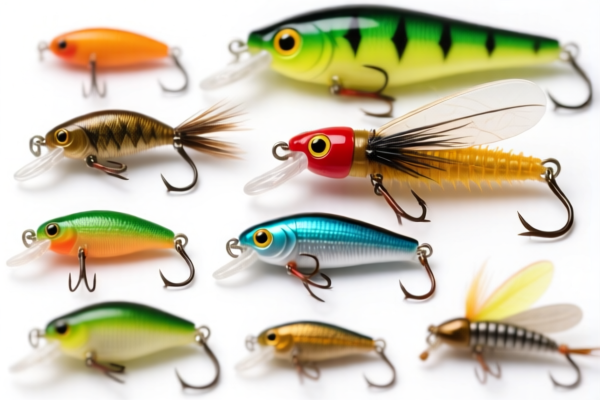
AI Analysis
🎣 Fishing Material (Tackle & Accessories)
🌐 HS Code Reference & Customs Clearance Guide | 2026 Latest Tariff Analysis | Professional Level通关 Strategy
📌 I. Product Definition & Classification: What Exactly Is "Fishing Material"?
In international trade, "Fishing Material" is a broad, ambiguous term. It is not a single HS Code but a category that splits into three distinct paths based on Material and Function:
- Soft Goods (Ropes/Strings): If the material is primarily polyethylene or polypropylene used for tying, netting, or as fishing line.
- Hard Goods (Metal Parts): If the material includes hooks, swivels, or weights made of steel, aluminum, or copper.
- General Accessories: If the material refers to general attachments (lures, floats, clips) that do not fit specific material categories.
⚠️ Critical Distinction:
- If it is rope/string → Look at Chapter 56.
- If it is metal hardware → Look at Chapter 73.
- If it is fishing gear accessories → Look at Chapter 95.
- If it is plastic parts → Look at Chapter 39.
📦 II. HS Code Classification Details (2026 Latest Tariff Authoritative Comparison)
Based on the provided data, here are the 5 possible classifications for "Fishing Material" depending on its specific composition:
| HS Code | Product Description | Application Scenario | Key Material/Feature |
|---|---|---|---|
5607.49.15.00 |
Ropes/Cords made of Polyethylene or Polypropylene | Fishing nets, main lines, mooring ropes | ✅ Poly/PP Material |
7326.90.86.88 |
Other articles of iron/steel (Fishing parts/pieces) | Metal hooks, lead weights, metal swivels | ✅ Steel/Metal Material |
9507.10.00.80 |
Fishing Rods (Parts/Attachments included) | Rod components, reel seats, rod tips | ✅ Fishing Gear Specific |
9507.90.80.00 |
Other Fishing Gear (Parts & Accessories) | General lures, floats, clips, baits | ✅ Catch-all Fishing Accessory |
3926.90.99.89 |
Other Plastic Articles (No specific name) | Plastic floats, plastic connectors, jig heads | ✅ Plastic Material |
🔍 Key Reminder:
- "Fishing Material" is too vague. You must specify the primary material (Plastic, Metal, Rope) in your declaration. - If it is a mixed package (e.g., a box containing ropes + hooks), customs may force you to classify by principal value or principal function, often leading to the highest duty rate if not declared separately.
💰 III. 2026 Latest Tariff Rate Breakdown (Including Additional Taxes & Policy Surcharges)
✅ Applicable Country: USA (US)
✅ Origin: China (CN)
✅ Effective Time: 2025/2026 (Current Trade War Era)
🎯 1. 5607.49.15.00 —— Ropes of Polyethylene/Polypropylene
| Item | Detail |
|---|---|
| Basic Duty | 7.0% |
| Section 301 Duty (25%) | +25.0% |
| 122 Clause Duty | +10.0% |
| Total Tax Rate | 42.0% |
| Calculation | CIF Value × 42% |
| De Minimis Exemption | ❌ Not Eligible |
| Legal Basis | Standard MFN + Section 301 + IEEPA 122 |
📌 Explanation:
- Fishing ropes are considered general industrial textiles.
- They bear the full brunt of Section 301 tariffs.
- Cost Impact: High. If importing bulk fishing lines, expect 42% duty.
🎯 2. 7326.90.86.88 —— Other Articles of Iron/Steel
| Item | Detail |
|---|---|
| Basic Duty | 2.9% |
| Section 301 Duty (25%) | +25.0% |
| 122 Clause Duty | +10.0% |
| Section 232/Steel Tariff | +50.0% (For Steel/Aluminum/Copper products under specific clauses) |
| Total Tax Rate | 87.9% |
| Calculation | CIF Value × 87.9% |
| De Minimis Exemption | ❌ Not Eligible |
| Legal Basis | Heavy penalties for metal articles from China |
📌 Warning:
- This is the most expensive classification.
- If your "fishing material" includes metal hooks, weights, or splits, and you classify them here, you face ~88% tax.
- This often applies to small metal hardware if not properly declared as "parts of fishing rods" (which might be cheaper, see below).
🎯 3. 9507.10.00.80 —— Fishing Rods (Parts & Attachments)
| Item | Detail |
|---|---|
| Basic Duty | 6.0% |
| Section 301 Duty | 0.0% |
| 122 Clause Duty | +10.0% |
| Total Tax Rate | 16.0% |
| Calculation | CIF Value × 16% |
| De Minimis Exemption | ❌ Not Eligible |
| Legal Basis | Specific to "Fishing Rods" and their specific parts |
📌 Explanation:
- If the "material" is actually a part of a fishing rod (e.g., a reel seat, a rod tip, or a specialized guide), it may qualify for this lower rate.
- Strategy: If you are selling high-end components, try to prove they are "Parts of Fishing Rods" rather than general "Metal Articles."
🎯 4. 9507.90.80.00 —— Other Fishing Gear (Parts & Accessories)
| Item | Detail |
|---|---|
| Basic Duty | 9.0% |
| Section 301 Duty | 0.0% |
| 122 Clause Duty | +10.0% |
| Total Tax Rate | 19.0% |
| Calculation | CIF Value × 19% |
| De Minimis Exemption | ❌ Not Eligible |
| Legal Basis | Catch-all for fishing accessories not elsewhere specified |
📌 Explanation:
- This is the best rate for general accessories (lures, floats, clips) that are not purely metal/rope/plastic commodities.
- It avoids the 25% Section 301 tax because it is categorized under "Fishing Gear" specifically.
- Recommendation: For general plastic/mixed accessories, aim for this code.
🎯 5. 3926.90.99.89 —— Other Plastic Articles
| Item | Detail |
|---|---|
| Basic Duty | 5.3% |
| Section 301 Duty | +7.5% |
| 122 Clause Duty | +10.0% |
| Total Tax Rate | 22.8% |
| Calculation | CIF Value × 22.8% |
| De Minimis Exemption | ❌ Not Eligible |
| Legal Basis | General plastic goods |
📌 Explanation:
- If the material is predominantly plastic (e.g., plastic floats, plastic jigs), this code is applicable.
- Lower than metal (7326) but higher than fishing-specific (9507).
- Use this if the item is clearly a plastic artifact and not a "fishing accessory" per se.
🛠️ IV. Customs Clearance Practical Advice (Battle-Tested Pitfall Guide)
✅ 1. Preparation Checklist (Non-negotiable)
| Document | Required? | Note |
|---|---|---|
| ✅ Product Specs | ✔️ | Must specify: Material (Plastic/Steel/Rope), Use (Fishing), Form (Hook/Line/Float). |
| ✅ Photos | ✔️ | Clear images showing the item. Do not use generic stock photos. |
| ✅ Composition Ratio | ✔️ | If mixed, state % of each material. |
| ✅ HS Code Justification | ✔️ | Explain why it fits the code (e.g., "Used exclusively for fishing"). |
| ✅ Commercial Invoice | ✔️ | Clearly state "Fishing Accessories" or "Fishing Ropes," NOT just "Material." |
✅ 2. Declaration Tips (Key Mantras)
🔥 "Material First, Function Second, Don't Split, Don't Hide!"
| Scenario | Correct Declaration | Wrong Action |
|---|---|---|
| Metal Hooks/Weights | 9507.90.80.00 (If justified as fishing accessory) |
7326.90.86.88 → 87.9% Tax (Avoid!) |
| Fishing Line/Rope | 5607.49.15.00 |
Declare as "Plastic" → Risk of misclassification |
| Plastic Floats | 9507.90.80.00 (Preferred) or 3926.90.99.89 |
Declare as "Toys" or "General Plastic" |
| Mixed Box (Hooks + Line) | Split line items by HS Code | One line item → Customs picks highest tax |
✅ 3. Special Cases
| Situation | Handling Advice |
|---|---|
| OEM Custom Lures | Provide design specs. If unique, argue for 9507.90.80.00 to avoid higher plastic/metal duties. |
| Large Batches of Rope | Ensure it is not classified as "Netting" (5608) which may have different rules. |
| Electronic Lures | If they have batteries/light, they may be classified as 8543 (Electrical), not fishing gear! |
🌍 V. Global Market Comparison (2026 Latest)
| Country/Region | Recommended HS Code | Tariff (China Origin) | Certification | Note |
|---|---|---|---|---|
| 🇺🇸 USA | 9507.90.80.00 |
19.0% | None | Best balance of cost & compliance |
| 🇺🇸 USA | 7326.90.86.88 |
87.9% | N/A | AVOID unless no other option |
| 🇨🇳 China | 9507.90.80.00 |
5% | N/A | Low import duty |
| 🇪🇺 EU | 9507.90.80.00 |
0% - 10% | CE/RoHS | No trade war tariffs |
| 🇦🇺 Australia | 9507.90.80.00 |
5% | N/A | Low tariff |
📌 Conclusion:
- USA is the high-risk market due to Section 301 & 122 tariffs.
- Always aim for9507.90.80.00if possible, as it is specific to "Fishing Gear" and avoids the 25% Section 301 surcharge.
- Never declare metal fishing parts as general steel articles (7326) unless you want to pay 87.9%.
📌 VI. Common Errors & Pitfalls (Lessons Learned)
❌ Mistake 1: Declaring "Fishing Hooks" as "Steel Parts" (7326)
👉 Consequence: 87.9% Tax instead of 19%. Loss of profit margin.
❌ Mistake 2: Declaring "Fishing Line" as "Plastic" (3926)
👉 Consequence: Potential misclassification audit. If it's technically polypropylene rope, it should be 5607.
❌ Mistake 3: Mixing Metal and Plastic in one HS Code
👉 Consequence: Customs may break it down or reject the declaration. Separate line items!
❌ Mistake 4: Using "Material" as the Product Name
👉 Consequence: Vague descriptions lead to delays. Use "Fishing Tackle: Plastic Lures" or "Fishing Ropes: Polypropylene".
✅ Correct Practice:
"Fishing Accessories: Plastic Lures, Model XYZ, 10g, Assorted Colors" →
9507.90.80.00
"Fishing Ropes: 10mm Polypropylene, 100m Roll" →5607.49.15.00
🎯 VII. Conclusion: Precise Classification Saves Money!
🎯 Remember the Mantra:
🔹 "Fishing Gear First (9507), Metal Second (7326), Rope Third (5607)."
🔹 "Avoid 87.9% like the plague!"
🔹 "Specificity is your best shield against customs."
📌 Pro Tip:
If your product is high-value (e.g., premium metal rods or specialized electronic lures), consider applying for a Binding Ruling (ISF/Pre-classification) with US Customs. It costs money but provides legal certainty on whether you pay 19% or 87.9%.
📣 Immediate Action:
📞 Contact your freight forwarder with specific material details.
🚀 Declare Function + Material clearly.
💰 Optimize for9507.90.80.00to save ~69% in taxes compared to metal articles!
✨ Professional Clearance Starts with Precise Classification!
💼 Every percentage point saved is pure profit!
Customer Reviews
About HS Code Classification
The Harmonized System (HS) is an internationally standardized nomenclature developed by the World Customs Organization (WCO) to classify traded products. Over 200 countries use the HS system as the basis for customs tariffs, trade statistics, and import/export regulations.
Each HS code follows a hierarchical structure:
- Chapter (2 digits) — Broad category of goods (e.g., Chapter 84: Machinery and Mechanical Appliances)
- Heading (4 digits) — More specific grouping within the chapter
- Subheading (6 digits) — Internationally standardized breakdown, used by all WCO member countries
- National subdivisions (8-10 digits) — Country-specific extensions for further classification, such as US HTSUS 10-digit codes
Correct HS code classification is essential for smooth customs clearance, accurate duty payment, and compliance with trade regulations. Misclassification can lead to customs delays, overpayment of duties, or penalties.
When importing from CN to US, the applicable tariff rates may include:
- Most-Favored-Nation (MFN) rate — The standard duty rate applied to WTO members
- General rate — Applied to countries without trade agreements
- Trade remedy duties — Additional tariffs such as Section 301 (anti-dumping), Section 232 (national security), or countervailing duties
The information provided on this page is for reference purposes only. For official classification, please consult with your local customs authority or a licensed customs broker.