Fitness Clothing
CN → US| HS Code | Tariff Rate | Origin | Destination | Doc |
|---|---|---|---|---|
| 6211325050 | 25.6% | CN | US | Official Doc |
| 6109901049 | 49.5% | CN | US | Official Doc |
| 6109100027 | 34.0% | CN | US | Official Doc |
| 6211335035 | 33.5% | CN | US | Official Doc |
Product Images
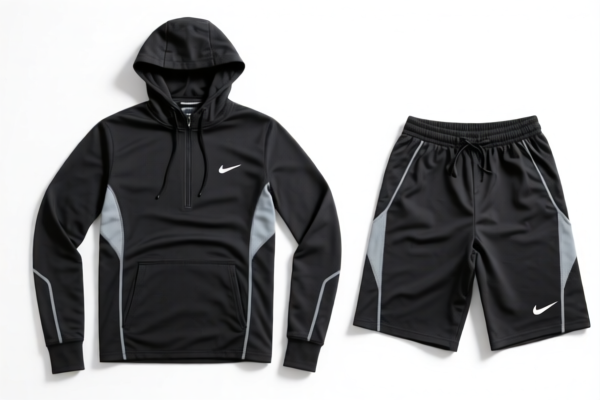
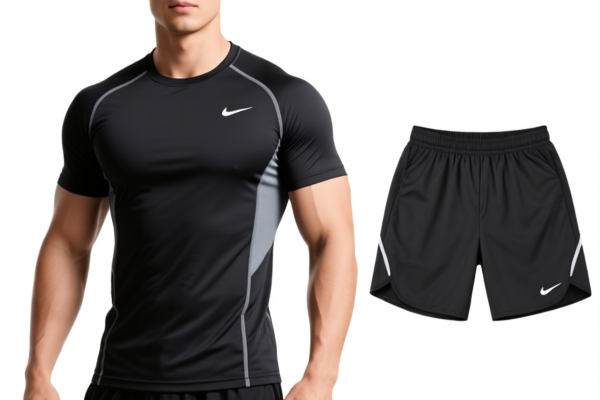
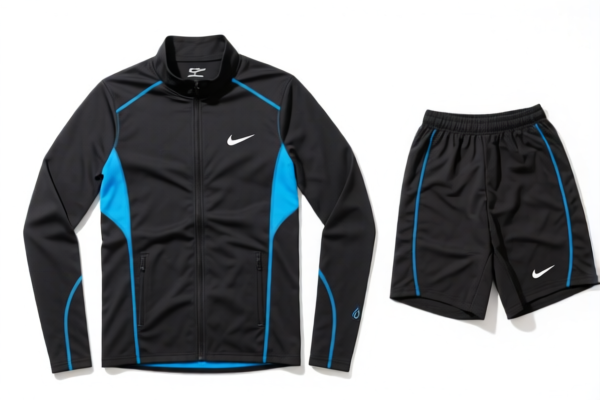
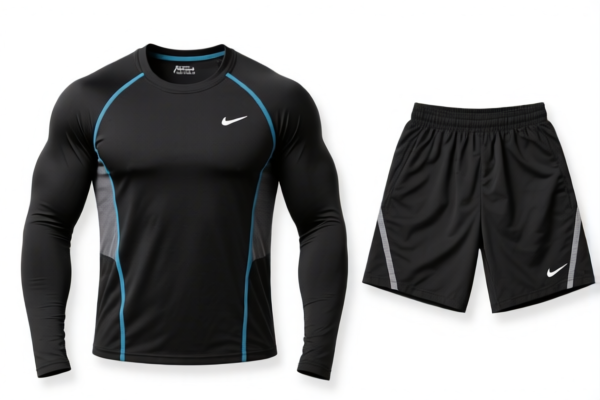
AI Analysis
🧢 Fitness Clothing (Activewear & Sportswear)
🌐 HS Code Reference & Customs Clearance Guide | 2026 Latest Tariff Analysis | Professional Entry Strategies
📌 One, Product Definition and Classification: Do You Truly Understand “Fitness Clothing”?
Fitness Clothing, broadly referred to as activewear or sportswear, encompasses garments designed for physical exercise, sports, and leisure activities. In international trade, the classification hinges primarily on manufacturing method (knitted vs. woven) and material composition (Cotton vs. Synthetic fibers).
1. Knitted/Crochet Clothing (Chapter 61): Garments made from knitted or crocheted fabrics (e.g., sweatshirts, t-shirts, leggings). These are generally more flexible and breathable.
2. Woven Clothing (Chapter 62): Garments made from woven fabrics (e.g., track jackets, windbreakers, suits). These are typically more structured and durable.
⚠️ Key Distinction Point:
- If the item is knitted/crocheted (like a standard sports t-shirt or sweatshirt) → Look at Chapter 61 (6109.xxxx).
- If the item is woven (like a windbreaker or a tailored tracksuit) → Look at Chapter 62 (6211.xxxx).
- Material Conflict: You must ensure the inferred material does not conflict with the specific duty-paid categories for cotton or synthetic fibers.
📦 Two, HS Code Classification Details (2026 Latest Tariff Authority Comparison)
| HS Code | Product Description | Application Scenario | Material Inference |
|---|---|---|---|
6211.32.50.50 |
Other Men’s or Boys’ Woven Sports Suits | Woven tracksuits, athletic suit sets | Default material; does not conflict with Cotton category |
6109.90.10.49 |
Other T-Shirts, Singlets, and Other Vests, Knitted/Crocheted | Knitted sports shirts, casual athletic tops | Man-made fibers or Cotton (Knitted category) |
6109.10.00.27 |
T-Shirts, Singlets, and Other Vests, Knitted/Crocheted, of Cotton | Cotton sports t-shirts, gym vests | Cotton (Knitted category) |
6211.33.50.35 |
Other Men’s or Boys’ Woven Tracksuits | Woven tracksuits, synthetic athletic wear | Man-made fibers or Other Fibers |
🔍 Key Reminder:
- Knitted (6109) items are generally subject to higher base tariffs but differ in structure from Woven (6211) items. - Woven (6211) items are classified as "Sports Suits" or "Tracksuits" if they meet the specific definition of matching sets or intended for sports. - If the product is a simple knitted t-shirt,6109applies. If it’s a woven jacket or suit,6211applies.
💰 Three, 2026 Latest Tariff Rate Detail (Including Surcharges & Policy Add-ons)
✅ Applicable Country: United States (US)
✅ Origin: China (CN)
✅ Effective Date: Current rates apply (including Section 301 and Section 232/IEEPA implications)
🎯 1. 6211.32.50.50 — Men’s/Boys’ Woven Sports Suits (Default Material)
| Item | Content |
|---|---|
| Base Tariff | 8.1% (Ad Valorem) |
| Section 301 Surcharge (421a) | +7.5% (Specific to certain Chinese goods) |
| Section 232 / IEEPA Surcharge | +10% (Specific to certain imports) |
| Total Tax Rate | 25.6% |
| Tax Calculation | CIF Value × 25.6% |
| De Minimis Eligibility | ❌ Not Eligible (Deny De Minimis) |
| Legal Basis Path | USITC:6211.32.50.50 → Section 301: 7.5% → IEEPA/232: 10% |
📌 Explanation:
- This classification applies to woven sports suits where the material is not explicitly excluded from the default category. - The 7.5% is a specific additional duty often applied under recent trade acts. - The 10% is a significant add-on for Chinese-origin goods under emergency economic powers or steel/aluminum-related provisions if applicable to the fabric type. - Total 25.6% is a moderate-to-high burden, requiring careful cost calculation.
🎯 2. 6109.90.10.49 — Other Knitted/Crocheted T-Shirts (Man-made/Cotton)
| Item | Content |
|---|---|
| Base Tariff | 32.0% (Ad Valorem) |
| Section 301 Surcharge (421a) | +7.5% |
| Section 232 / IEEPA Surcharge | +10% |
| Total Tax Rate | 49.5% |
| Tax Calculation | CIF Value × 49.5% |
| De Minimis Eligibility | ❌ Not Eligible (Deny De Minimis) |
| Legal Basis Path | USITC:6109.90.10.49 → Section 301: 7.5% → IEEPA/232: 10% |
📌 Warning:
- This is the highest tariff in the dataset. - Knitted t-shirts (6109) often carry high base duties due to historical protectionist policies for apparel. - The 49.5% total rate is extremely high. Importers should consider if the value-added justifies this cost, or if alternative materials/structures (e.g., woven6211) are feasible.
🎯 3. 6109.10.00.27 — Knitted/Crocheted T-Shirts of Cotton
| Item | Content |
|---|---|
| Base Tariff | 16.5% (Ad Valorem) |
| Section 301 Surcharge (421a) | +7.5% |
| Section 232 / IEEPA Surcharge | +10% |
| Total Tax Rate | 34.0% |
| Tax Calculation | CIF Value × 34.0% |
| De Minimis Eligibility | ❌ Not Eligible (Deny De Minimis) |
| Legal Basis Path | USITC:6109.10.00.27 → Section 301: 7.5% → IEEPA/232: 10% |
📌 Note:
- Cotton knitted shirts have a lower base rate (16.5%) compared to synthetic/other knitted shirts (32.0%). - However, the total 34.0% is still significant. - Choosing Cotton over Man-made fibers (for knitted tees) saves 15.5% in total tax.
🎯 4. 6211.33.50.35 — Men’s/Boys’ Woven Tracksuits (Man-made/Other Fibers)
| Item | Content |
|---|---|
| Base Tariff | 16.0% (Ad Valorem) |
| Section 301 Surcharge (421a) | +7.5% |
| Section 232 / IEEPA Surcharge | +10% |
| Total Tax Rate | 33.5% |
| Tax Calculation | CIF Value × 33.5% |
| De Minimis Eligibility | ❌ Not Eligible (Deny De Minimis) |
| Legal Basis Path | USITC:6211.33.50.35 → Section 301: 7.5% → IEEPA/232: 10% |
📌 Advantage:
- Woven tracksuits (6211.33) have a base rate of 16.0%, which is lower than knitted tees (6109). - Total 33.5% is competitive compared to knitted alternatives. - Ideal for windbreakers, zip-up hoodies, and athletic suit sets.
🛠️ Four, Customs Clearance Practical Advice (Combat Pitfall Guide)
✅ 1. Prepare Documentation Checklist (No Exception)
| Document | Must Provide | Description |
|---|---|---|
| ✅ Product Spec Sheet | ✔️ | Fabric type (Cotton vs. Polyester), Knitted vs. Woven, Size, Color |
| ✅ Material Composition Tag | ✔️ | Exact percentage (e.g., 80% Poly, 20% Elastane) |
| ✅ Product Photos | ✔️ | Clear view of labels, seams, and structure (knit weave visible?) |
| ✅ Commercial Invoice | ✔️ | Must specify "Sports Suit", "Tracksuit", or "T-Shirt" accurately |
| ✅ Packing List | ✔️ | Match invoice quantities exactly |
| ✅ Origin Certificate | ✔️ | Proof of China origin (to confirm surcharges apply) |
✅ 2. Declaration Tips (Key Mantras)
🔥 “Knit vs. Woven Decide Duty, Material Defines Base!”
| Scenario | Correct Declaration | Error Consequence |
|---|---|---|
| Woven Tracksuit | 6211.33.50.35 (33.5%) |
If declared as 6109 → Wrong class, potential penalty |
| Knitted Cotton Tee | 6109.10.00.27 (34.0%) |
If declared as 6211 → Wrong class, penalty |
| Knitted Synthetic Tee | 6109.90.10.49 (49.5%) |
High tax trap! Check if material is actually woven |
| Woven Sports Suit (Default) | 6211.32.50.50 (25.6%) |
Lowest risk for woven suits if material is ambiguous |
✅ 3. Special Handling Cases
| Situation | Handling Advice |
|---|---|
| OEM Fitness Wear | Provide design sheets to prove "Sports Suit" intent (not general apparel) |
| Mixed Material Garments | Declare dominant fiber content. If cotton >50%, may qualify for 6109.10 |
| Sets (Top + Bottom) | If sold as a set, declare as "Sports Suit" (6211) for lower base rates |
| Sample vs. Bulk | Samples still subject to duty; ensure commercial invoice reflects true value |
🌍 Five, Global Market Comparison (2026 Latest)
| Country/Region | Recommended HS Code | Tariff (China Origin) | Certification | Note |
|---|---|---|---|---|
| 🇺🇸 USA | 6211.32.50.50 |
25.6% | None | Highest total tax for knitted tees (49.5%) |
| 🇨🇳 China | 6211.33.50.35 |
0-16% (MFN) | CCC | No surcharges for domestic trade |
| 🇪🇺 EU | 6109.10.00 |
0-12% | CE | No Section 301/IEEPA equivalent |
| 🇦🇺 Australia | 6211.32 |
5-10% | ACCC | Lower base rates |
| 🇯🇵 Japan | 6109.90 |
0-15% | PSE | Variable based on fiber |
📌 Conclusion:
- USA imposes the heaviest burden due to the combination of base tariffs + 7.5% + 10% surcharges. - Knitted t-shirts (6109.90) are the most expensive (49.5%). - Woven sports suits (6211.32) offer the most favorable rate (25.6%) among the options.
📌 Six, Common Errors & Pitfall Guide (Lessons Learned)
❌ Error 1: Declaring a Knitted T-shirt as a Woven Jacket
👉 Consequence: Wrong HS Code → Customs delays, fines, and potential reclassification to higher tariff.
❌ Error 2: Ignoring the 7.5% + 10% Surcharges
👉 Consequence: Profit margin wiped out. Many importers only budget for base duty.
❌ Error 3: Confusing Sports Suits with General Apparel
👉 Consequence: If not declared as "Sports," may fall into higher general apparel categories.
❌ Error 4: Using "T-shirt" for a Tracksuit
👉 Consequence: Under-declaration of value/type → Penalty.
✅ Correct Practice:
"Men’s Woven Polyester Tracksuit, Zip-up, 2-Piece, Black, Size M, Origin: China"
HS: 6211.33.50.35
🎯 Seven, Conclusion: Professional Declaration, Cost Savings!
🎯 Remember the Mantra:
🔹 "Woven Suits Win (25.6%), Knitted Tees Lose (49.5%)."
🔹 "Add 17.5% to Every Base Rate for China Origin!" (7.5% + 10%)
📌 Pro Tip:
If you can convert a Knitted T-shirt product line into a Woven Tracksuit or Woven Sports Suit design, you may save ~24% in total duty.
Always request an Advance Ruling from US Customs if the product structure is ambiguous.
📣 Immediate Action:
📞 Contact a licensed customs broker.
📄 Provide fabric swatches and product photos.
🚀 Optimize your HS Code to6211.32.50.50or6211.33.50.35for maximum savings!
✨ Professional clearance starts with precise classification!
💼 Every dollar saved in duty is pure profit!
Customer Reviews
About HS Code Classification
The Harmonized System (HS) is an internationally standardized nomenclature developed by the World Customs Organization (WCO) to classify traded products. Over 200 countries use the HS system as the basis for customs tariffs, trade statistics, and import/export regulations.
Each HS code follows a hierarchical structure:
- Chapter (2 digits) — Broad category of goods (e.g., Chapter 84: Machinery and Mechanical Appliances)
- Heading (4 digits) — More specific grouping within the chapter
- Subheading (6 digits) — Internationally standardized breakdown, used by all WCO member countries
- National subdivisions (8-10 digits) — Country-specific extensions for further classification, such as US HTSUS 10-digit codes
Correct HS code classification is essential for smooth customs clearance, accurate duty payment, and compliance with trade regulations. Misclassification can lead to customs delays, overpayment of duties, or penalties.
When importing from CN to US, the applicable tariff rates may include:
- Most-Favored-Nation (MFN) rate — The standard duty rate applied to WTO members
- General rate — Applied to countries without trade agreements
- Trade remedy duties — Additional tariffs such as Section 301 (anti-dumping), Section 232 (national security), or countervailing duties
The information provided on this page is for reference purposes only. For official classification, please consult with your local customs authority or a licensed customs broker.