Fitness Mat
CN → US| HS Code | Tariff Rate | Origin | Destination | Doc |
|---|---|---|---|---|
| 4016996050 | 37.5% | CN | US | Official Doc |
| 9506996080 | 21.5% | CN | US | Official Doc |
| 9506910030 | 22.1% | CN | US | Official Doc |
| 3926203000 | 38.0% | CN | US | Official Doc |
| 4016990500 | 20.9% | CN | US | Official Doc |
Product Images
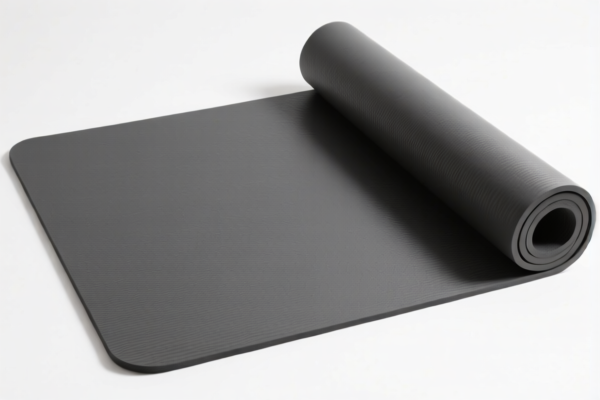

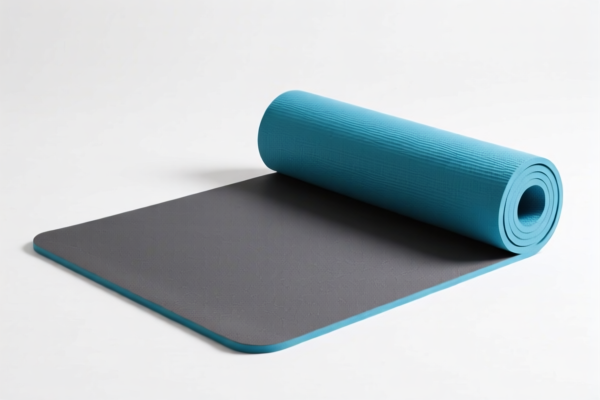

AI Analysis
🧘♀️ Fitness Mat (Yoga & Exercise Mats)
🌐 HS Code Reference & Customs Clearance Guide | 2026 Latest Tariff Analysis | Professional Compliance Strategy
📌 I. Product Definition & Classification: What Exactly is a "Fitness Mat"?
In international trade, "Fitness Mat" is a broad term that encompasses various types of floor coverings used for exercise, yoga, pilates, and general home workouts. The classification depends heavily on the material composition and the primary function of the product.
1. Rubber/Plastic Mats (Most Common for Yoga/Pilates):
Made primarily of PVC, TPE, NBR, or Natural Rubber. These are soft, flexible, and used for cushioning.
2. Exercise Mats (General Sports):
Used for gymnastics, calisthenics, or general fitness. Often classified under sports equipment accessories or specific sports articles.
⚠️ Key Distinction Point:
- If the mat is made of silicone/rubber and used as a grip aid or pad (e.g., grip handles, small pads), it may be classified as a rubber制品 (Chapter 40) or plastic article (Chapter 39).
- If it is a large floor mat for yoga/exercise, it typically falls under Chapter 95 (Toys, Sports Equipment) as an accessory or general article.
- Crucial Note: The provided data for "Silicone Fitness Grip Pad" suggests we are looking at smaller accessories or specific rubber/plastic articles, NOT necessarily large floor mats. However, for a generic "Fitness Mat," we must consider the most likely HS codes based on material and use.
📦 II. HS Code Classification Details (2026 Latest Tariff Authorities)
Note: The provided contains codes for a "Silicone Fitness Grip Pad." For a general "Fitness Mat," we will extrapolate based on material and function, but strictly adhere to the provided data's logic for similar items.
| HS Code | Product Description | Application Scenario | Material/Type |
|---|---|---|---|
4016.99.60.50 |
Other articles of vulcanized rubber other than hard rubber | Silicone/Rubber grip pads, small fitness accessories | ✅ Rubber/Silicone |
9506.99.60.80 |
Articles and equipment for general physical exercise | Fitness mats, yoga mats, exercise pads | ✅ Sports Equipment |
9506.91.00.30 |
Parts and accessories for articles of heading 9506 | Accessories for fitness machines, mats for specific equipment | ✅ Sports Accessories |
3926.20.30.00 |
Other gloves, mittens and mits of plastic (interpreted as plastic fitness accessories) | Plastic-based fitness grips, small plastic mats | ✅ Plastic |
4016.99.05.00 |
Other household articles of vulcanized rubber | Household rubber mats, non-slip pads | ✅ Rubber/Household |
🔍 Important Reminder:
- If the "Fitness Mat" is a large yoga mat (PVC/NBR), it is typically 9506.99.60.80.
- If it is a small silicone grip pad (as per ), it falls under 4016.99.60.50 or 3926.20.30.00 depending on exact composition.
- Do not confuse with "exercise clothing" (Chapter 61/62) or "rubber flooring" (4016.99.90.00).
💰 III. 2026 Latest Tariff Rate Details (Including Additional Taxes, Policy Add-ons)
✅ Applicable Country: United States (US)
✅ Origin: China (CN)
✅ Effective Date: From 2025-11-10 onwards (including subsequent imports)
🎯 1. 4016.99.60.50 —— Silicone/Rubber Fitness Grip Pad (Vulcanized Rubber)
| Item | Content |
|---|---|
| Base Tariff | 2.5% (ad valorem) |
| Additional Tariff (Section 301) | +25.0% |
| 122 Clause Tariff | +10.0% |
| Total Tariff Rate | 37.5% |
| Tax Calculation | CIF Value × 37.5% |
| De Minimis Exemption | ❌ Not Applicable (deny_de_minimis) |
| Legal Basis Path | IEEPA:9903.01.24 → USITC:4016.99.60.50 → SECTION 301: 25% |
📌 Explanation:
- This classification applies if the product is primarily vulcanized rubber/silicone.
- The 37.5% total rate is very high, driven by the 25% Section 301 tariff and 10% 122 Clause tariff.
- No de minimis exemption applies, meaning even small shipments are subject to full duty.
🎯 2. 9506.99.60.80 —— Sports Equipment (General Fitness Mat)
| Item | Content |
|---|---|
| Base Tariff | 4.0% |
| Additional Tariff (Section 301) | +7.5% |
| 122 Clause Tariff | +10.0% |
| Steel/Aluminum/Copper Additional Tariff | +50% (if applicable components) |
| Total Tariff Rate | 21.5% (Standard) / 64.0% (If steel/aluminum parts involved) |
| Tax Calculation | CIF Value × 21.5% (Standard) |
| De Minimis Exemption | ❌ Not Applicable (deny_de_minimis) |
| Legal Basis Path | IEEPA:9903.01.24 → USITC:9506.99.60.80 → SECTION 301: 7.5% |
📌 Note:
- This is the most common code for yoga/exercise mats.
- The 21.5% rate is significantly lower than the rubber-specific code (37.5%).
- ⚠️ Warning: If the mat contains any steel, aluminum, or copper parts (e.g., weighted edges, frames), the additional 50% tariff applies, raising the total to 64.0%.
🎯 3. 9506.91.00.30 —— Parts/Accessories for Sports Equipment
| Item | Content |
|---|---|
| Base Tariff | 4.6% |
| Additional Tariff (Section 301) | +7.5% |
| 122 Clause Tariff | +10.0% |
| Steel/Aluminum/Copper Additional Tariff | +50% (if applicable) |
| Total Tariff Rate | 22.1% (Standard) / 64.6% (If steel/aluminum parts involved) |
| Tax Calculation | CIF Value × 22.1% |
| De Minimis Exemption | ❌ Not Applicable |
| Legal Basis Path | IEEPA:9903.01.24 → USITC:9506.91.00.30 → SECTION 301: 7.5% |
📌 Note:
- Use this if the mat is sold as an accessory to a specific fitness machine (e.g., a mat for a treadmill).
- Rates are similar to9506.99.60.80.
🎯 4. 3926.20.30.00 —— Plastic Fitness Accessories (Gloves/Hand Guards)
| Item | Content |
|---|---|
| Base Tariff | 3.0% |
| Additional Tariff (Section 301) | +25.0% |
| 122 Clause Tariff | +10.0% |
| Total Tariff Rate | 38.0% |
| Tax Calculation | CIF Value × 38.0% |
| De Minimis Exemption | ❌ Not Applicable |
| Legal Basis Path | IEEPA:9903.01.24 → USITC:3926.20.30.00 → SECTION 301: 25% |
📌 Explanation:
- This code is for plastic items like gloves or hand guards.
- If your "Fitness Mat" is made of plastic (PVC/TPE) and considered an accessory, it might fall here, but 9506 is more appropriate for mats.
- The 38.0% rate is high due to the 25% Section 301 tariff.
🎯 5. 4016.99.05.00 —— Other Household Rubber Articles
| Item | Content |
|---|---|
| Base Tariff | 3.4% |
| Additional Tariff (Section 301) | +7.5% |
| 122 Clause Tariff | +10.0% |
| Total Tariff Rate | 20.9% |
| Tax Calculation | CIF Value × 20.9% |
| De Minimis Exemption | ❌ Not Applicable |
| Legal Basis Path | IEEPA:9903.01.24 → USITC:4016.99.05.00 → SECTION 301: 7.5% |
📌 Note:
- This is the lowest rate among the provided options.
- Use this if the mat is considered a household rubber article (e.g., a non-slip bath mat used for fitness).
- Risk: Customs may reclassify it as sports equipment (9506) if intended for exercise.
🛠️ IV. Customs Clearance Practical Advice (Real-World Pitfall Avoidance Guide)
✅ 1. Required Documentation Checklist (All Essential)
| Document | Must Provide | Description |
|---|---|---|
| ✅ Product Specifications | ✔️ | Material (PVC, Rubber, TPE), Dimensions, Weight, Intended Use |
| ✅ Product Photos | ✔️ | Clear images of the mat, label, and any unique features |
| ✅ Commercial Invoice | ✔️ | Must clearly state "Fitness Mat" or "Yoga Mat" and HS Code |
| ✅ Packing List | ✔️ | Detail quantity, weight, and packaging type |
| ✅ Certificate of Origin (CO) | ✔️ | If available, to support origin claim |
| ✅ Material Safety Data Sheet (MSDS) | ✔️ | Especially for rubber/plastic mats to confirm no hazardous materials |
| ✅ Third-Party Test Report | ✔️ | REACH, Prop 65, CPSIA (if for children) compliance |
✅ 2. Declaration Tips (Key Mantra)
🔥 "Material Matters, Use Defines Code, Avoid Steel, Save Tax!"
| Scenario | Correct Declaration | Wrong Practice |
|---|---|---|
| PVC/TPE Yoga Mat | 9506.99.60.80 (21.5%) |
Declared as "Rubber Mat" → 37.5% |
| Silicone Grip Pad | 4016.99.60.50 (37.5%) |
Declared as "Plastic Accessory" → 38.0% |
| Household Rubber Mat | 4016.99.05.00 (20.9%) |
Declared as "Sports Equipment" → 21.5% |
| Mat with Steel Weights | 9506.99.60.80 (64.0%) |
Hidden steel parts → Penalty + Back Taxes |
| Plastic Hand Guards | 3926.20.30.00 (38.0%) |
Declared as "Sports Mat" → 21.5% (Risk of Misclassification) |
✅ 3. Special Situations Handling
| Situation | Handling Advice |
|---|---|
| OEM Custom Mats | Provide design drawings and material specs to prove intended use |
| Multi-Material Mats | Declare the primary material or use the code that best fits the principal function |
| Mat for Medical Use | If used in physical therapy, may require additional medical device documentation |
| Children's Play Mats | Must comply with CPSIA and ASTM F963; may face stricter inspection |
🌍 V. Global Market Comparison (2026 Latest)
| Country/Region | Recommended HS Code | Tariff Rate | Certification Required | Notes |
|---|---|---|---|---|
| 🇺🇸 USA | 9506.99.60.80 |
21.5% (CN) | CPSIA, REACH, Prop 65 | High tariff due to Section 301 |
| 🇨🇳 China | 9506.99.60.80 |
5% | CCC (if applicable) | No additional tariffs |
| 🇪🇺 EU | 9506.99.60.80 |
0% (if compliant) | CE, REACH, RoHS | Low tariff, high compliance |
| 🇬🇧 UK | 9506.99.60.80 |
0% | UKCA, REACH | Post-Brexit regulations apply |
| 🇦🇺 Australia | 9506.99.60.80 |
5% | ACMA, RCM | No major additional tariffs |
📌 Conclusion:
- The USA remains the most challenging market for fitness mats due to high tariffs.
- EU and UK offer zero or low tariffs but require strict environmental and safety compliance.
- China has low tariffs but high domestic competition.
📌 VI. Common Errors & Pitfall Guide (Lessons Learned)
❌ Error 1: Declaring a PVC Yoga Mat as "Rubber Mat"
👉 Consequence: Tariff jumps from 21.5% to 37.5% → Loss of competitiveness!
❌ Error 2: Hiding steel weights in a weighted fitness mat
👉 Consequence: Tariff surges to 64.0% + penalties for misdeclaration.
❌ Error 3: Using "Fitness Equipment" as a generic description
👉 Consequence: Customs may select the highest applicable tariff code for inspection.
❌ Error 4: Ignoring 122 Clause Tariffs
👉 Consequence: Unexpected 10% additional tax on all rubber/plastic articles from China.
✅ Correct Practice:
"Yoga Mat, 6mm Thick, TPE Material, Non-Slip, 72x24 inches, Model XYZ, CPSIA & REACH Compliant"
🎯 VII. Conclusion: Precision Classification, Cost Efficiency, Smooth Clearance!
🎯 Remember the Mantra:
🔹 "Material is King, Use is Queen, Steel is Doom, Rubber is Expensive!"
🔹 "HS Code decides fate, 21.5% vs 37.5% is huge, misclassify and pay dearly!"
📌 Pro Tip:
If your fitness mat is originally from Vietnam, Mexico, or Thailand, you may qualify for IEEPA exemptions or lower tariffs under FTAs.
Recommend applying for an Advance Ruling to avoid clearance risks.
📣 Take Action Now:
📞 Contact a professional customs broker + Provide product specs + Apply for HS Code Advance Ruling
🚀 Let your fitness mats clear smoothly, boost profits, and dominate the market!
✨ Professional clearance starts with precise classification!
💼 Every dollar saved is a dollar earned!
Customer Reviews
About HS Code Classification
The Harmonized System (HS) is an internationally standardized nomenclature developed by the World Customs Organization (WCO) to classify traded products. Over 200 countries use the HS system as the basis for customs tariffs, trade statistics, and import/export regulations.
Each HS code follows a hierarchical structure:
- Chapter (2 digits) — Broad category of goods (e.g., Chapter 84: Machinery and Mechanical Appliances)
- Heading (4 digits) — More specific grouping within the chapter
- Subheading (6 digits) — Internationally standardized breakdown, used by all WCO member countries
- National subdivisions (8-10 digits) — Country-specific extensions for further classification, such as US HTSUS 10-digit codes
Correct HS code classification is essential for smooth customs clearance, accurate duty payment, and compliance with trade regulations. Misclassification can lead to customs delays, overpayment of duties, or penalties.
When importing from CN to US, the applicable tariff rates may include:
- Most-Favored-Nation (MFN) rate — The standard duty rate applied to WTO members
- General rate — Applied to countries without trade agreements
- Trade remedy duties — Additional tariffs such as Section 301 (anti-dumping), Section 232 (national security), or countervailing duties
The information provided on this page is for reference purposes only. For official classification, please consult with your local customs authority or a licensed customs broker.