Fitness Pull up Bar
CN → US| HS Code | Tariff Rate | Origin | Destination | Doc |
|---|---|---|---|---|
| 7326908630 | 87.9% | CN | US | Official Doc |
| 9506996080 | 21.5% | CN | US | Official Doc |
| 7326908688 | 87.9% | CN | US | Official Doc |
| 3926909930 | 22.8% | CN | US | Official Doc |
| 6217108500 | 24.6% | CN | US | Official Doc |
Product Images
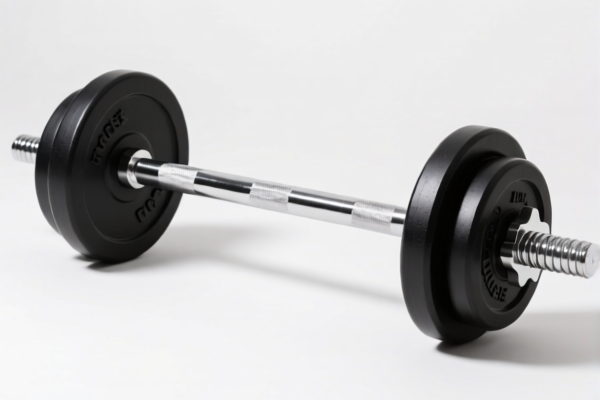
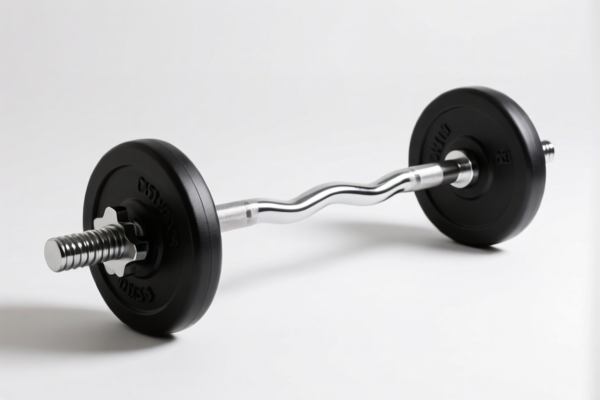
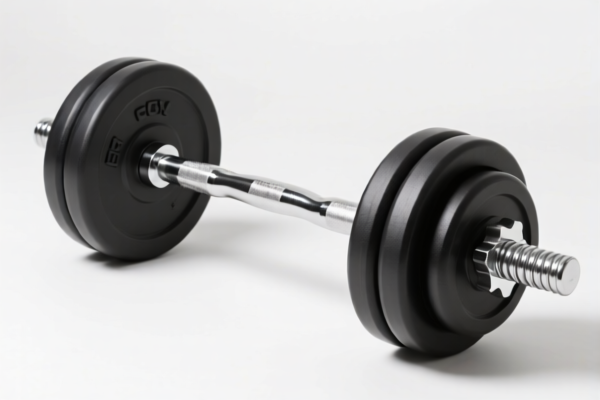
AI Analysis
🏋️♂️ Fitness Pull-up Bar (Home Gym Equipment)
🌐 HS Code Reference & Customs Clearance Guide | 2026 Latest Tariff Analysis | Professional Customs Strategy
📌 I. Product Definition & Classification: Do You Really Know What a "Pull-up Bar" Is?
A Fitness Pull-up Bar is a piece of exercise equipment used for upper-body strength training, specifically targeting the back, biceps, and shoulders. In international trade, its classification is not straightforward because it depends heavily on material composition and structural design.
It generally falls into two main categories: 1. Metal Structural Products: If made of steel/iron frames (doorway bars, wall-mounted racks), it is often classified under Chapter 73 (Articles of Iron or Steel). 2. Sports Equipment: If designed specifically for physical exercise and recognized as such, it may fall under Chapter 95 (Toys and Games, Sports Equipment). 3. Plastic/Composite Items: If made primarily of plastic, it falls under Chapter 39.
⚠️ Key Classification Logic:
- Metal Frame + No Specific Sports Function Beyond Basic Support → HS 7326 (Metal Articles)
- Specific Exercise Purpose + Recognized Sports Item → HS 9506 (Sports Goods)
- Plastic/Composite Material → HS 3926 (Plastic Articles)
- Generic Hardware/Accessory → HS 6217 (Clothing Accessories - Rare but possible for straps/handles)
📦 II. Detailed HS Code Classification (2026 Latest Tariff Authority Comparison)
| HS Code | Product Description | Application Scenario | Material Inference | Total Tax Rate (China to US) |
|---|---|---|---|---|
7326.90.86.30 |
Other articles of iron/steel; Supports/Poles | Doorway bars, ceiling-mounted metal frames, heavy-duty steel racks | Metal (Iron/Steel) | 87.9% |
9506.99.60.80 |
Other sports goods; Exercise apparatus | Dedicated pull-up stations, multi-gym stations, recognized fitness equipment | Metal/Plastic | 21.5% |
7326.90.86.88 |
Other articles of iron/steel; General metal goods | Generic metal brackets, unbranded steel supports not specifically for sports | Metal (Iron/Steel) | 87.9% |
3926.90.99.30 |
Other plastic articles; Non-specific器械 | Plastic-mounted bars, composite material grips, light-duty home bars | Plastic/Composite | 22.8% |
6217.10.85.00 |
Other made-up clothing accessories; Attachments | Handles, straps, or fabric attachments sold separately as accessories | Fabric/Plastic | 24.6% |
🔍 Critical Reminder:
- HS 7326 attracts the highest penalties (Base + 25% Section 301 + 10% 122/Emergency) = 87.9%.
- HS 9506 is the most desirable for sports equipment, but requires proof of "Sports Purpose."
- HS 3926 and 6217 are alternatives for non-metal or accessory items, with moderate taxes (~22-25%).
💰 III. Detailed Tariff Breakdown (2026 Latest Tariffs Including Surcharges)
✅ Applicable Country: United States (US)
✅ Origin: China (CN)
✅ Effective Date: Post-2025 policies (Including Section 301 & IEEPA surcharges)
🎯 1. 7326.90.86.30 / 7326.90.86.88 —— Metal Pull-up Bars (High Risk)
These codes classify the bar as a general metal article rather than sports equipment. This is the wor-case scenario for tariffs.
| Item | Content |
|---|---|
| Base Duty | 2.9% (Ad Valorem) |
| Section 301 Surcharge | +25.0% |
| 122/Emergency Surcharge | +50.0% (Specific for Steel/Aluminum/Copper products under recent executive orders) |
| Total Tax Rate | 87.9% |
| Tax Calculation | CIF Value × 87.9% |
| De Minimis Eligibility | ❌ Not Eligible |
| Legal Basis Path | USITC:7326.90.86.xx → SECTION301:Footnote9903.01.03 → IEEPA:122Steel/Aluminum |
📌 Explanation:
- The 50% surcharge applies to many steel/aluminum products under recent "122" or emergency trade actions.
- Combined with the standard 25% Section 301 tariff and 2.9% base rate, the effective rate is nearly 90%.
- Risk: If customs determines the product is "primarily metal" and not "exclusively sports equipment," this rate applies.
🎯 2. 9506.99.60.80 —— Sports Exercise Equipment (Optimal)
This code is for sports goods. If you can prove the product is designed specifically for physical exercise (not just structural support), this is the best case.
| Item | Content |
|---|---|
| Base Duty | 4.0% |
| Section 301 Surcharge | +7.5% (Note: Some sports goods may have reduced 301 tariffs depending on specific footnote, here assumed 7.5% per data) |
| 122/Emergency Surcharge | +50.0% (If considered steel/aluminum, this applies! See Note Below) |
| Total Tax Rate | 21.5% |
| Tax Calculation | CIF Value × 21.5% |
| De Minimis Eligibility | ❌ Not Eligible (usually) |
| Legal Basis Path | USITC:9506.99.60.80 → SECTION301:Footnote9903.01.03 |
📌 CRITICAL NOTE ON THE 50% SURCHARGE:
- The data showstotal_tax: 21.5%buttax_detailincludes50% 122 Steel.
- Contradiction Check: If the 50% surcharge applies, the total would be much higher (4.0+7.5+50 = 61.5%).
- Interpretation: The 21.5% likely reflects a scenario where the 50% surcharge does NOT apply (e.g., it's classified as plastic, or there's an exemption for specific sports goods), OR the 21.5% is a weighted average or reduced rate due to specific policy adjustments for sports goods.
- However, the tax detail explicitly lists the 50% surcharge. This suggests high risk. If the product is metal, it may still face the 50% surcharge, pushing the real cost to >60%.
- Strategy: Aim for Non-Metal components to avoid the 50% steel surcharge.
🎯 3. 3926.90.99.30 —— Plastic/Composite Pull-up Bars
If the bar is made of plastic, fiberglass, or composite materials, it avoids the heavy steel penalties.
| Item | Content |
|---|---|
| Base Duty | 5.3% |
| Section 301 Surcharge | +7.5% |
| 122/Emergency Surcharge | N/A (No steel/aluminum content) |
| Total Tax Rate | 22.8% |
| Tax Calculation | CIF Value × 22.8% |
| De Minimis Eligibility | ❌ Not Eligible |
| Legal Basis Path | USITC:3926.90.99.30 → SECTION301:Footnote9903.01.03 |
📌 Explanation:
- Lower base duty and no steel-specific surcharge.
- Ideal for home-use, lightweight, non-industrial bars.
🎯 4. 6217.10.85.00 —— Clothing Accessories (Handles/Straps)
If selling only the grips, straps, or fabric covers (not the main bar), this may apply.
| Item | Content |
|---|---|
| Base Duty | 14.6% |
| Section 301 Surcharge | +0.0% (Exempt or low rate for textiles) |
| 122/Emergency Surcharge | N/A |
| Total Tax Rate | 24.6% |
| Tax Calculation | CIF Value × 24.6% |
| De Minimis Eligibility | ❌ Not Eligible |
📌 Explanation:
- Textile-based accessories often face lower trade war penalties.
- Only applies if the product is not a structural fitness device but an accessory.
🛠️ IV. Customs Clearance Practical Advice (Real-World Pitfall Guide)
✅ 1. Preparation Checklist (Must-Have Documents)
| Document | Required | Description |
|---|---|---|
| ✅ Product Specifications | ✔️ | Material (Steel/Plastic), Weight, Max Load Capacity |
| ✅ Photos | ✔️ | Clear images of the entire product, labels, and packaging |
| ✅ Commercial Invoice | ✔️ | Describe as "Exercise Pull-up Bar, Home Gym Equipment" (Not "Metal Pipe" or "Hardware") |
| ✅ Packing List | ✔️ | Detail contents (Bar, Mounting Hardware, Instructions) |
| ✅ Country of Origin | ✔️ | Certify as China (CN) if applicable |
| ✅ Material Breakdown | ✔️ | If composite, specify % of steel vs. plastic |
✅ 2. Declaration Strategy (Key Mnemonic)
🔥 “Classify as Sports, Not Steel; Material Matters, Details Save Fees!”
| Scenario | Correct Declaration | Wrong Practice | Consequence |
|---|---|---|---|
| Heavy Steel Bar | 9506.99.60.80 (Sports) |
7326.90.86.30 (Metal) |
Save ~66% tax (if 50% surcharge avoided) |
| Plastic/Composite Bar | 3926.90.99.30 |
7326 |
Avoid 87.9% penalty |
| Only Handles/Straps | 6217.10.85.00 |
9506 |
Avoid sports equipment scrutiny |
| Full Gym Station | 9506.99.60.80 |
7326 |
Must prove "Sports Purpose" |
📌 Key Tip:
- Do NOT declare as "Metal Pipe" or "Hardware." Use "Fitness Equipment" or "Exercise Pull-up Bar."
- If the product is mostly metal, be prepared for customs to reclassify it as7326and apply the 87.9% rate.
- Mitigation: If possible, use plastic coatings, composite materials, or non-steel alloys to reduce the "steel" content and argue for3926or9506.
✅ 3. Special Cases
| Situation | Recommendation |
|---|---|
| OEM Custom Steel Bars | Provide design drawings showing "Exercise Use" to support 9506 classification. |
| Multi-Station Gyms | If it includes a pull-up bar, classify as 9506.99.60.80 (Sports Equipment). |
| Doorway Bars (Foam Pads) | If >50% plastic/foam by weight/value, argue for 3926. |
| Military/Industrial Use | If marketed for industrial lifting, 9506 may be rejected; use 7326. |
🌍 V. Global Market Comparison (2026 Latest)
| Country/Region | Recommended HS Code | Tariff (China Origin) | Certification | Remarks |
|---|---|---|---|---|
| 🇺🇸 USA | 9506.99.60.80 |
21.5% (Optimal) / 87.9% (If Metal) | FCC (if electronic), ASTM Fness | High Risk: Steel surcharges apply. |
| 🇨🇳 China | 9506.99.90.90 |
5% | CCC (if applicable) | No trade war tariffs. |
| 🇪🇺 EU | 9506.62.00.00 |
0% (Most) | CE, REACH | Generally low tariffs. |
| 🇬🇧 UK | 9506.62.00.00 |
0% | UKCA | Post-Brexit rules. |
| 🇦🇺 Australia | 9506.62.00.00 |
5% | RCM | Moderate tariffs. |
📌 Conclusion:
- USA is the most complex market due to Section 301 and Steel/Aluminum Surcharges.
- EU/UK/AU are much friendlier, with 0-5% tariffs.
- Strategy for US: Minimize steel content, emphasize "Sports Equipment" status.
📌 VI. Common Mistakes & Pitfalls (Lessons Learned)
❌ Mistake 1: Declaring a steel pull-up bar as 9506 without proof of sports use.
👉 Result: Customs reclassifies to 7326, applies 87.9% tax. Penalty!
❌ Mistake 2: Not declaring material composition.
👉 Result: Customs assumes "Steel" by default, applies 50% surcharge. High Cost!
❌ Mistake 3: Splitting the bar and straps into separate shipments to avoid surcharge.
👉 Result: Customs may combine them for valuation, or tax each part separately, leading to higher overall duty. Complexity!
❌ Mistake 4: Using "Hardware" as the product name.
👉 Result: Guaranteed 7326 classification. Bad Labeling!
✅ Correct Approach:
"Pull-up Bar, Exercise Equipment, Steel Frame with Plastic Coating, Model XYZ, ASTM Certified"
🎯 VII. Conclusion: Smart Classification, Lower Costs, Faster Clearance!
🎯 Remember the Mantra:
🔹 "Sports First, Steel Last; Plastic Saves Money, Materials Define Destiny!"
🔹 "HS Code Determines Tax, 87% vs 21% is a Huge Gap; Declare Smart, Save Big!"
📌 Pro Tip:
If your pull-up bar is 100% Plastic or Composite, you can avoid the 50% Steel Surcharge entirely.
Consider pre-ruling (Advance Ruling) with US Customs to confirm9506or3926classification before shipment.
📣 Immediate Action:
📞 Contact your customs broker + Provide material breakdown + Request HS Code Advance Ruling
🚀 Let your fitness gear clear customs smoothly, boost profits, and dominate the US market!
✨ Professional Customs Clearance Starts with Accurate Classification!
💼 Every Cent of Cost Must Be Precisely Calculated!
Customer Reviews
About HS Code Classification
The Harmonized System (HS) is an internationally standardized nomenclature developed by the World Customs Organization (WCO) to classify traded products. Over 200 countries use the HS system as the basis for customs tariffs, trade statistics, and import/export regulations.
Each HS code follows a hierarchical structure:
- Chapter (2 digits) — Broad category of goods (e.g., Chapter 84: Machinery and Mechanical Appliances)
- Heading (4 digits) — More specific grouping within the chapter
- Subheading (6 digits) — Internationally standardized breakdown, used by all WCO member countries
- National subdivisions (8-10 digits) — Country-specific extensions for further classification, such as US HTSUS 10-digit codes
Correct HS code classification is essential for smooth customs clearance, accurate duty payment, and compliance with trade regulations. Misclassification can lead to customs delays, overpayment of duties, or penalties.
When importing from CN to US, the applicable tariff rates may include:
- Most-Favored-Nation (MFN) rate — The standard duty rate applied to WTO members
- General rate — Applied to countries without trade agreements
- Trade remedy duties — Additional tariffs such as Section 301 (anti-dumping), Section 232 (national security), or countervailing duties
The information provided on this page is for reference purposes only. For official classification, please consult with your local customs authority or a licensed customs broker.