Fittings for Brake Hoses
CN → US| HS Code | Tariff Rate | Origin | Destination | Doc |
|---|---|---|---|---|
| 7307199080 | 41.2% | CN | US | Official Doc |
| 8481809050 | 37.0% | CN | US | Official Doc |
| 7307995045 | 89.3% | CN | US | Official Doc |
| 3917400095 | 40.3% | CN | US | Official Doc |
| 3917400010 | 40.3% | CN | US | Official Doc |
Product Images
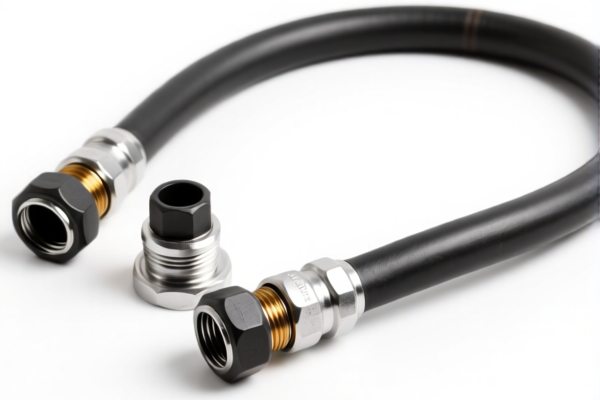
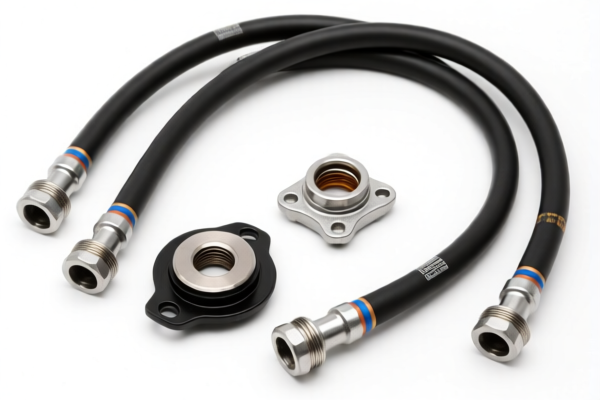
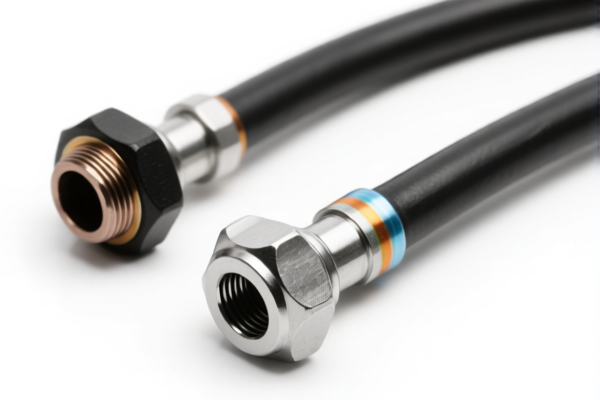
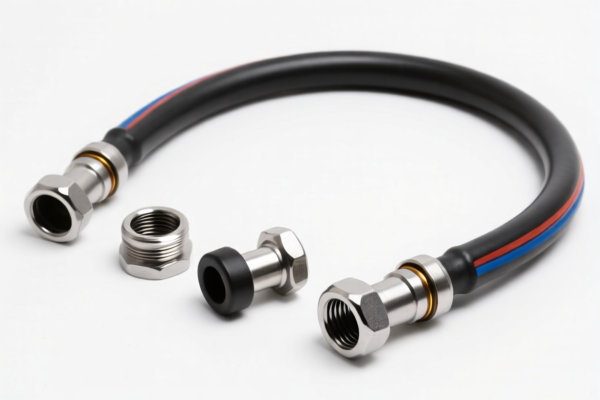
AI Analysis
🛑 Fittings for Brake Hoses (Brake Hose Fittings)
🌐 HS Code Reference & Clearance Guide | 2026 Latest Tariff Analysis | Professional Customs Strategy
📌 I. Product Definition & Classification: What Exactly Are "Brake Hose Fittings"?
Brake hose fittings are critical safety components in automotive, industrial, and aviation braking systems. They serve as the connection points between flexible brake hoses and rigid brake lines or calipers. In international trade, these fittings are classified based on their material composition and functional role.
There are two primary categories for classification:
1. Pipe Accessories (Fittings/Connectors):
These are purely mechanical connectors (elbows, tees, couplings) used to join pipes or hoses. If made of metal (iron/steel), they typically fall under Chapter 73.
2. Valves and Similar Devices:
Some brake hose fittings incorporate check valves, pressure regulators, or complex joining mechanisms that function as "valves." These may fall under Chapter 84.
3. Plastic Connectors:
If the fitting is made entirely of plastic (often for auxiliary brake lines or fluid reservoirs), they fall under Chapter 39.
⚠️ Key Distinction Point:
- Metal Material? → Likely Chapter 73 (Iron/Steel) or Chapter 84 (if functioning as a valve).
- Plastic Material? → Chapter 39.
- Function? → Is it just a connector (7307) or does it control flow/pressure (8481)?
📦 II. HS Code Classification Details (2026 Latest Tariff Authority Comparison)
Based on the provided data, here are the potential HS Codes and their corresponding tax implications. Note that the Total Tax Rate varies significantly based on the specific material and sub-classification.
| HS Code | Product Description | Applicable Scenario | Material | Total Tax Rate |
|---|---|---|---|---|
7307.19.90.80 |
Pipe Fittings: Other, of Iron or Steel | Standard metal brake hose connectors, elbows, couplings | Iron/Steel | 41.2% |
8481.80.90.50 |
Valves, Taps, Cockes: Other | Brake hose fittings functioning as valves or similar devices | Metal | 37.0% |
7307.99.50.45 |
Pipe Fittings: Other, of Iron or Steel (Other) | Generic metal pipe fittings, default assumption for non-standard steel | Steel/Iron | 89.3% |
3917.40.00.95 |
Pipes, Tubes, Hoses & Fittings: Plastic | Plastic brake hose connectors or accessories | Plastic | 40.3% |
3917.40.00.10 |
Pipes, Tubes, Hoses & Fittings: Plastic (Other) | Other plastic pipe accessories | Plastic | 40.3% |
🔍 Critical Reminder:
- HS Code7307.99.50.45has a MASSIVE tax rate (89.3%). This is often a "default" or catch-all category for steel fittings that don't fit neatly into7307.19. Avoid this code if possible by specifying the exact type of fitting under7307.19.90.80.
- Valve vs. Fitting: If the fitting is a simple connector, use 7307. If it has a valve function, use 8481. The tax rates differ (41.2% vs 37.0%), but the key is accurate functional description.
- Plastic Fittings: Always use 3917.40. The tax rate is consistent at 40.3%.
💰 III. 2026 Latest Tariff Rate Breakdown (Including Additional Taxes, Policy Surcharges)
✅ Applicable Country: United States (US)
✅ Origin: China (CN)
✅ Effective Date: November 10, 2025 (and subsequent imports)
🎯 1. 7307.19.90.80 — Pipe Fittings, of Iron or Steel
| Item | Content |
|---|---|
| Base Duty Rate | 6.2% (ad valorem) |
| Section 301 Additional Duty | +25.0% |
| Section 122 Duty | +10.0% |
| Total Tax Rate | 41.2% |
| Tax Calculation | CIF Value × 41.2% |
| De Minimis Exemption | ❌ Not Eligible (deny_de_minimis) |
| Legal Basis Path | USITC:7307.19.90.80 → Section 301: 25% → Section 122: 10% |
📌 Explanation:
- Base 6.2%: Standard duty for steel pipe fittings.
- 25% Section 301: Trump-era tariffs on Chinese goods, largely maintained.
- 10% Section 122: Additional tariff on certain steel/aluminum products under national security grounds.
- Total 41.2%: High cost for steel brake fittings. Ensure you are not misclassified under the 89.3% category.
🎯 2. 8481.80.90.50 — Valves, Taps, and Similar Devices
| Item | Content |
|---|---|
| Base Duty Rate | 2.0% (ad valorem) |
| Section 301 Additional Duty | +25.0% |
| Section 122 Duty | +10.0% |
| Total Tax Rate | 37.0% |
| Tax Calculation | CIF Value × 37.0% |
| De Minimis Exemption | ❌ Not Eligible (deny_de_minimis) |
| Legal Basis Path | USITC:8481.80.90.50 → Section 301: 25% → Section 122: 10% |
📌 Explanation:
- Base 2.0%: Lower base duty for valves.
- Same Surcharges: 301 (25%) and 122 (10%) apply.
- Total 37.0%: Slightly cheaper than steel fittings (41.2%) if the product can be legitimately classified as a valve.
🎯 3. 7307.99.50.45 — Pipe Fittings, of Iron or Steel (Other)
| Item | Content |
|---|---|
| Base Duty Rate | 4.3% (ad valorem) |
| Section 301 Additional Duty | +25.0% |
| Section 122 Duty | +10.0% |
| Steel/Aluminum/Copper Additional Duty | +50.0% (Note: This may be included in the 89.3% total) |
| Total Tax Rate | 89.3% |
| Tax Calculation | CIF Value × 89.3% |
| De Minimis Exemption | ❌ Not Eligible (deny_de_minimis) |
| Legal Basis Path | USITC:7307.99.50.45 → Section 301: 25% → Section 122: 10% → Steel Surcharge: 50% |
📌 CRITICAL WARNING:
- This category carries an extremely high tariff of 89.3%.
- The 50% steel surcharge is a major penalty for misclassified or unspecified steel fittings.
- Action: Avoid this code. Use7307.19.90.80(41.2%) by providing specific product descriptions.
🎯 4. 3917.40.00.95 & 3917.40.00.10 — Plastic Fittings
| Item | Content |
|---|---|
| Base Duty Rate | 5.3% (ad valorem) |
| Section 301 Additional Duty | +25.0% |
| Section 122 Duty | +10.0% |
| Total Tax Rate | 40.3% |
| Tax Calculation | CIF Value × 40.3% |
| De Minimis Exemption | ❌ Not Eligible (deny_de_minimis) |
| Legal Basis Path | USITC:3917.40.00.95/10 → Section 301: 25% → Section 122: 10% |
📌 Explanation:
- Base 5.3%: Standard duty for plastic pipes/fittings.
- Same Surcharges: 301 (25%) and 122 (10%) apply.
- Total 40.3%: Competitive rate for plastic brake hose fittings. No steel surcharge applies.
🛠️ IV. Clearance Practical Advice (Real-World Pitfall Guide)
✅ 1. Document Checklist (Non-Negotiable)
| Document | Mandatory? | Description |
|---|---|---|
| ✅ Product Specification Sheet | ✔️ | Must clearly state material (Iron, Steel, Plastic) and function (Connector, Valve). |
| ✅ Technical Drawings | ✔️ | Show connections, thread types, and pressure ratings. |
| ✅ Product Photos (Labeled) | ✔️ | Clearly show the item, brand, model number, and any markings. |
| ✅ Commercial Invoice | ✔️ | Must specify "Brake Hose Fittings" and correct HS Code. |
| ✅ Packing List | ✔️ | Detail quantities and weights. |
| ✅ Origin Certificate (CO) | ✔️ | Required to prove Chinese origin (subject to tariffs). |
| ✅ Third-Party Certification | ✔️ | If applicable (e.g., DOT, SAE, ISO standards for brake safety). |
✅ 2. Declaration Tips (Key Mantra)
🔥 "Material First, Function Second, Specificity Saves Money!"
| Scenario | Correct Declaration | Wrong Practice |
|---|---|---|
| Steel Fittings | Brake Hose Fittings, Steel, Pipe Fittings, HS 7307.19.90.80 |
Vague "Metal Fittings" → Risk 7307.99.50.45 (89.3%) |
| Plastic Fittings | Brake Hose Fittings, Plastic, HS 3917.40.00.95 |
Vague "Plastic Parts" → Risk incorrect classification |
| Valve Function | Brake Hose Fitting with Integrated Valve, HS 8481.80.90.50 |
Calling it a "connector" when it's a valve → Potential audit |
| Mixed Shipments | Separate HS Codes for Steel and Plastic | Mixing in one line item → Customs rejection |
✅ 3. Special Circumstances Handling
| Scenario | Handling Advice |
|---|---|
| OEM/Custom Parts | Provide customer PO and technical drawings to justify specific HS Code. |
| Brake Fittings with Rubber Ends | The metal/steel part determines the classification. Declare as steel/plastic fitting. |
| High-Pressure Fittings | Emphasize pressure rating to justify valve classification if applicable. |
| Misclassification Risk | If unsure, apply for Advance Ruling to lock in the HS Code and tax rate. |
🌍 V. Global Market Clearance Comparison (2026 Latest)
| Country/Region | Recommended HS Code | Tariff Rate | Certification Requirements | Notes |
|---|---|---|---|---|
| 🇺🇸 USA | 7307.19.90.80 / 3917.40.00.95 |
37%-89.3% | DOT, SAE, ISO | High tariffs on Chinese steel/plastic. |
| 🇨🇳 China | 7307.19.90.80 / 3917.40.00.95 |
5%-10% | CCC (if applicable) | No additional surcharges. |
| 🇪🇺 EU | 7307.19.90.80 / 3917.40.00.95 |
0%-4.5% | ECE R23, ISO 4090 | No surcharges. Easier clearance. |
| 🇬🇧 UK | 7307.19.90.80 / 3917.40.00.95 |
0%-4.5% | ECE R23 | Post-Brexit rules apply. |
| 🇯🇵 Japan | 7307.19.90.80 / 3917.40.00.95 |
0%-5% | JASO, JIS | No surcharges. |
📌 Conclusion:
- USA is the most challenging market due to high Section 301 and Section 122 tariffs.
- Steel fittings (41.2% or 89.3%) are expensive. Consider sourcing from non-Chinese origins if possible, or ensure precise classification to avoid the 89.3% penalty.
- Plastic fittings (40.3%) are slightly cheaper but still subject to significant surcharges.
📌 VI. Common Errors & Pitfall Guide (Lessons Learned)
❌ Error 1: Declaring steel brake fittings as "General Machinery Parts"
👉 Consequence: Misclassification → Audit, back taxes, fines.
❌ Error 2: Using vague descriptions like "Metal Fittings"
👉 Consequence: Customs may default to 7307.99.50.45 → 89.3% Tax!
❌ Error 3: Mixing plastic and steel fittings in one line item
👉 Consequence: Customs may reject the entry or apply the highest tax rate to all items.
❌ Error 4: Ignoring the "Section 122" 10% surcharge on steel
👉 Consequence: Underestimating costs by 10% → Profit margin erosion.
✅ Correct Practice:
"Brake Hose Fittings, Steel, Pipe Fittings, for Automotive Use, Model XYZ, Compliant with SAE J1401"
🎯 VII. Conclusion: Precision in Classification, Savings in Cost!
🎯 Remember the Mantra:
🔹 "Steel vs. Plastic? Function vs. Connector? Avoid the 89% Trap!"
🔹 "HS Code Determines Fate, 1% Difference Means Thousands Saved!"
📌 Pro Tip:
If your brake hose fittings are originating from Vietnam, Mexico, Thailand, or Malaysia, you may qualify for IEEPA Exemptions or lower tariffs.
Recommend Advance Ruling Application to lock in the correct HS Code and avoid unexpected 89.3% penalties.
📣 Take Action Now:
📞 Contact Professional Customs Brokers + Provide Product Specs + Apply for HS Code Advance Ruling
🚀 Let your brake fittings clear smoothly, efficiently, and cost-effectively!
✨ Professional Clearance Starts with Accurate Classification!
💼 Every Cent of Your Cost Deserves to Be Calculated Precisely!
Customer Reviews
About HS Code Classification
The Harmonized System (HS) is an internationally standardized nomenclature developed by the World Customs Organization (WCO) to classify traded products. Over 200 countries use the HS system as the basis for customs tariffs, trade statistics, and import/export regulations.
Each HS code follows a hierarchical structure:
- Chapter (2 digits) — Broad category of goods (e.g., Chapter 84: Machinery and Mechanical Appliances)
- Heading (4 digits) — More specific grouping within the chapter
- Subheading (6 digits) — Internationally standardized breakdown, used by all WCO member countries
- National subdivisions (8-10 digits) — Country-specific extensions for further classification, such as US HTSUS 10-digit codes
Correct HS code classification is essential for smooth customs clearance, accurate duty payment, and compliance with trade regulations. Misclassification can lead to customs delays, overpayment of duties, or penalties.
When importing from CN to US, the applicable tariff rates may include:
- Most-Favored-Nation (MFN) rate — The standard duty rate applied to WTO members
- General rate — Applied to countries without trade agreements
- Trade remedy duties — Additional tariffs such as Section 301 (anti-dumping), Section 232 (national security), or countervailing duties
The information provided on this page is for reference purposes only. For official classification, please consult with your local customs authority or a licensed customs broker.