Fixed Resistors
CN → US| HS Code | Tariff Rate | Origin | Destination | Doc |
|---|---|---|---|---|
| 8534000095 | 35.0% | CN | US | Official Doc |
| 8533290000 | 35.0% | CN | US | Official Doc |
| 8533210090 | 35.0% | CN | US | Official Doc |
Product Images
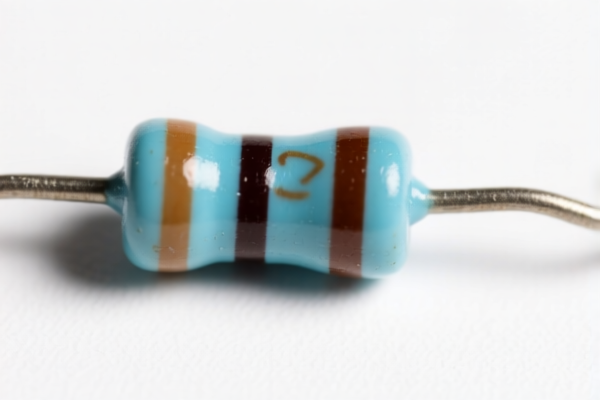
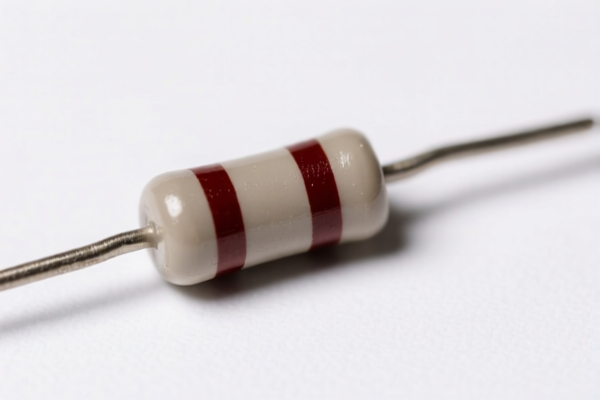
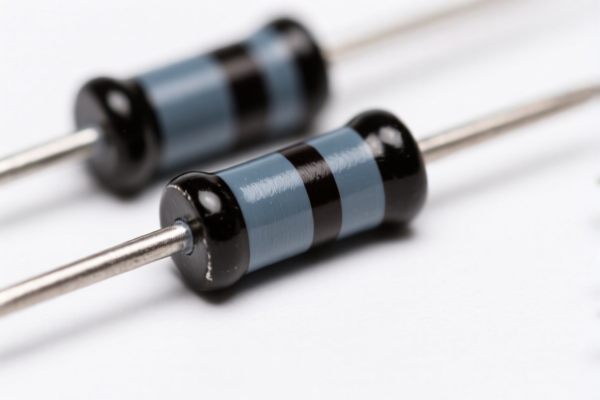
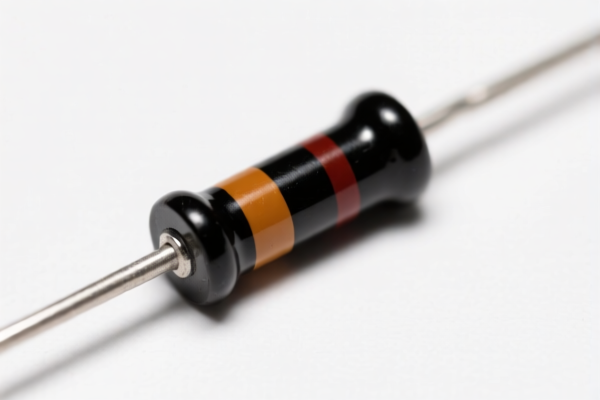
AI Analysis
⚡️ Fixed Resistors (Electrical Resistance Components)
🌐 HS Code Reference & Customs Clearance Guide | 2026 Latest Tariff Analysis | Professional Strategy for High-Tax Environment
📌 Part I: Product Definition & Classification: Do You Really Understand "Fixed Resistors"?
Fixed resistors are fundamental electronic components that limit current flow and divide voltages in electrical circuits. In international trade, their classification depends heavily on power rating, material composition, and whether they are mounted on Printed Circuit Boards (PCBs).
The Critical Distinction: * Through-Hole/SMD Resistors (Loose Components) Discrete components, usually falling under Chapter 85 (Electrical machinery, equipment...). * Resistors Mounted on PCBs: If the resistor is an integral part of a printed circuit assembly, it may fall under 8534 (Printed Circuits).
⚠️ Key Classification Point:
- If the item is a standalone resistor (not part of a PCB assembly) → Generally 8533.
- If the item is a resistor network/network array or part of a Printed Circuit Board → May fall under 8534.
- High Power vs. Low Power: Power ratings often dictate the specific sub-heading within 8533.
📦 Part II: HS Code Classification Details (2026 Latest Tariff Authority Mapping)
Based on the provided data, here are the three most relevant HS Codes for Fixed Resistors. Note that the final code depends on the specific product attributes (power, mounting, material).
| HS Code | Product Description | Classification Logic | Total Tax Rate |
|---|---|---|---|
| 8534.00.00.95 | Printed Circuits containing Resistors | Applies if the resistors are part of a Printed Circuit Board (PCB) or "Other Printed Circuits". This is a "catch-all" for PCB assemblies. | 35.0% |
| 8533.29.00.00 | Other Fixed Electrical Resistors | Matches "Electrical Resistors" falling under "Other Fixed Resistors" (not wire-wound, not variable). Typically for standard low-power metal film/carbon film resistors. | 35.0% |
| 8533.21.00.90 | Other Fixed Resistors (Fallback) | Used when power rating and material are unspecified. Applies the "Other" fallback rule under Heading 8533. | 35.0% |
🔍 Critical Reminder:
- Do not confuse Loose Resistors with PCBs: If you are shipping individual resistors in a reel or bag, use 8533. If you are shipping a PCB with resistors soldered on it, use 8534.
- Unspecified Parameters: If your documentation does not clearly state the power rating (Watts) or material (Ceramic, Metal Film, Wire-wound), customs will apply the fallback "Other" category (8533.21.00.90). Always provide specs!
💰 Part III: 2026 Latest Tariff Rate Breakdown (Including Additional Duties & Policy Surcharges)
✅ Applicable Country: United States (US)
✅ Country of Origin: China (CN)
✅ Effective Date: Current rates apply to imports entering the US.
🎯 1. 8534.00.00.95 – Other Printed Circuits
| Item | Detail |
|---|---|
| Base Duty Rate | 0.0% (Most Favored Nation) |
| Section 301 Additional Duty | +25.0% |
| Section 122 Tariff (IEEPA) | +10.0% |
| Total Effective Tax Rate | 35.0% |
| Tax Calculation | CIF Value × 35% |
| De Minimis Exemption | ❌ Not Eligible (Section 301 goods are excluded from de minimis relief) |
| Legal Basis Path | Section 301: 8534.00.00.95 → IEEPA Section 122: 10% |
📌 Explanation:
- The 0% base rate is standard for printed circuits from China under normal MFN terms.
- The +25% is the standard Section 301 tariff on Chinese electronics.
- The +10% is a specific surcharge (referenced as "Section 122" in the data, often linked to recent executive orders or specific trade acts targeting Chinese tech components).
- Total: 35%. This is a significant cost factor for PCB imports.
🎯 2. 8533.29.00.00 – Other Fixed Resistors (Standard)
| Item | Detail |
|---|---|
| Base Duty Rate | 0.0% |
| Section 301 Additional Duty | +25.0% |
| Section 122 Tariff (IEEPA) | +10.0% |
| Total Effective Tax Rate | 35.0% |
| Tax Calculation | CIF Value × 35% |
| De Minimis Exemption | ❌ Not Eligible |
| Legal Basis Path | Section 301: 8533.29.00.00 → IEEPA Section 122: 10% |
📌 Explanation:
- This code covers standard fixed resistors (e.g., 1/4 Watt Metal Film).
- Like PCBs, these are subject to the full 35% tariff burden.
- No preferential rate applies for Chinese-origin resistors.
🎯 3. 8533.21.00.90 – Other Fixed Resistors (Fallback/Unspecified)
| Item | Detail |
|---|---|
| Base Duty Rate | 0.0% |
| Section 301 Additional Duty | +25.0% |
| Section 122 Tariff (IEEPA) | +10.0% |
| Total Effective Tax Rate | 35.0% |
| Tax Calculation | CIF Value × 35% |
| De Minimis Exemption | ❌ Not Eligible |
| Legal Basis Path | Section 301: 8533.21.00.90 → IEEPA Section 122: 10% |
📌 Explanation:
- Warning: This code is applied when the power rating or material is not clearly declared.
- Customs officials will default to this "Other" category if specifications are missing.
- The tax rate is identical (35%), but misclassification risk is higher if you claim a different code without proof.
🛠️ Part IV: Customs Clearance Practical Advice (Avoid Pitfalls)
✅ 1. Required Documentation Checklist (Non-Negotiable)
| Document | Must Provide | Purpose |
|---|---|---|
| ✅ Product Specification Sheet | ✔️ | Must explicitly state: Resistance Value (Ω), Power Rating (Watts), Tolerance (%), and Material (e.g., Metal Film, Carbon Composition). |
| ✅ Product Photos | ✔️ | Clear images showing the component body, color bands (if axial), or markings (if SMD). |
| ✅ Commercial Invoice | ✔️ | Description must match HS Code logic: e.g., "Fixed Resistors, 0.25W, Metal Film, Unmounted" vs. "PCB Assembly with Resistors". |
| ✅ Certificate of Origin (CO) | ✔️ | To prove origin (China) and confirm applicability of Section 301/122 tariffs. |
| ✅ Packing List | ✔️ | Detail quantity and weight. |
✅ 2. Declaration Tips (Key Mantra)
🔥 "Specs are King! No Watts, No Material = Fallback Code!"
| Scenario | Correct Declaration | Wrong Practice |
|---|---|---|
| Loose Resistors (0.25W, Metal Film) | 8533.29.00.00 |
Declaring as "Electronic Parts" vaguely |
| Loose Resistors (Specs Missing) | 8533.21.00.90 |
Guessing a lower-tax code |
| PCB with Resistors Soldered | 8534.00.00.95 |
Declaring as "Resistors" → Wrong Classification! |
| Variable Resistors (Potentiometers) | Different Code (8533.31.xx) | Declaring as "Fixed Resistors" → Audit Risk! |
⚠️ Critical Note:
- Do not split shipments: If you ship a PCB, do not list the resistors separately. Declare the PCB under 8534.
- Do not guess specs: If the power rating is unknown, use8533.21.00.90. Do not assume it's a high-power resistor to try and find a different code, as this leads to penalties.
🌍 Part V: Global Market Comparison (2026)
| Country/Region | Recommended HS Code | Base Duty | US-Specific Surcharge | Total Impact for US Imports |
|---|---|---|---|---|
| 🇺🇸 USA | 8533.29.00.00 / 8534.00.00.95 | 0% | +35% (25% Sec 301 + 10% Sec 122) | Extremely High |
| 🇨🇳 China | 8533.29.00.00 | 0% | N/A | Low (Domestic Trade) |
| 🇪🇺 EU | 8533.40.80 (Varies) | 0% | N/A | Low (No Section 301) |
| 🇬🇧 UK | 8533.40.80 | 0% | N/A | Low |
| 🇻🇳 Vietnam | 8533.29.00.00 | 0% | N/A | Low (If Origin is Vietnam) |
📌 Conclusion:
- The US market is the only major destination applying this 35% combined tariff.
- For non-US markets (EU, UK, Asia), resistors and PCBs often enter with 0% or low duty.
- Supply Chain Strategy: Consider sourcing from Vietnam, Malaysia, or Mexico to avoid Section 301/122 tariffs when exporting to the US.
📌 Part VI: Common Errors & Pitfalls (Lessons Learned)
❌ Error 1: Declaring a PCB with Resistors as "Resistors" (8533)
👉 Consequence: Customs may reclassify to 8534 (if they prefer) or reject the declaration. Do not mix component types in one line item.
❌ Error 2: Failing to declare Power Rating
👉 Consequence: Customs defaults to 8533.21.00.90. While the tax is the same, it may trigger a technical query delaying clearance.
❌ Error 3: Not distinguishing Fixed vs. Variable
👉 Consequence: Potentiometers (Variable) fall under 8533.31 or 8533.39. Misclassifying as Fixed Resistors can lead to audit flags.
✅ Best Practice:
"Fixed Resistors, 10kΩ, 0.25W, Metal Film, Unmounted, 10,000 pcs, Model XYZ"
OR
"Printed Circuit Board, Double Sided, With Surface Mount Components (Resistors/Capacitors), Model ABC"
🎯 Part VII: Conclusion: Professional Declaration, Cost Efficiency!
🎯 Remember the Mantra:
🔹 "Loose Resistors → 8533; PCBs → 8534. No Specs → Fallback Code."
🔹 "35% is the US Reality: 25% Sec 301 + 10% Sec 122. Plan Your Supply Chain!"
📌 Pro Tip:
If you are importing into the US, verify the origin. If resistors are sourced from Vietnam or Mexico, they may be exempt from Section 301/122 duties, reducing your total tax to 0% (Base) + Local Duties (if any).
Always request a Certificate of Origin from your supplier!
📣 Immediate Action:
📞 Consult a Licensed Customs Broker
📄 Prepare Detailed Tech Specs (Power, Material, Resistance)
🚀 Optimize Your Supply Chain to Avoid the 35% US Tax Burden!
✨ Precision Classification Saves Money!
💼 Your Bottom Line Depends on the First 8 Digits of Your HS Code!
Customer Reviews
About HS Code Classification
The Harmonized System (HS) is an internationally standardized nomenclature developed by the World Customs Organization (WCO) to classify traded products. Over 200 countries use the HS system as the basis for customs tariffs, trade statistics, and import/export regulations.
Each HS code follows a hierarchical structure:
- Chapter (2 digits) — Broad category of goods (e.g., Chapter 84: Machinery and Mechanical Appliances)
- Heading (4 digits) — More specific grouping within the chapter
- Subheading (6 digits) — Internationally standardized breakdown, used by all WCO member countries
- National subdivisions (8-10 digits) — Country-specific extensions for further classification, such as US HTSUS 10-digit codes
Correct HS code classification is essential for smooth customs clearance, accurate duty payment, and compliance with trade regulations. Misclassification can lead to customs delays, overpayment of duties, or penalties.
When importing from CN to US, the applicable tariff rates may include:
- Most-Favored-Nation (MFN) rate — The standard duty rate applied to WTO members
- General rate — Applied to countries without trade agreements
- Trade remedy duties — Additional tariffs such as Section 301 (anti-dumping), Section 232 (national security), or countervailing duties
The information provided on this page is for reference purposes only. For official classification, please consult with your local customs authority or a licensed customs broker.