Fixed Single Pulley
CN → US| HS Code | Tariff Rate | Origin | Destination | Doc |
|---|---|---|---|---|
| 8431499084 | 85.0% | CN | US | Official Doc |
| 8431499005 | 85.0% | CN | US | Official Doc |
Product Images
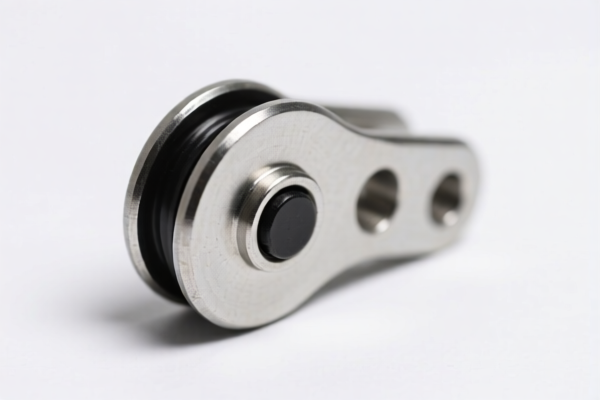
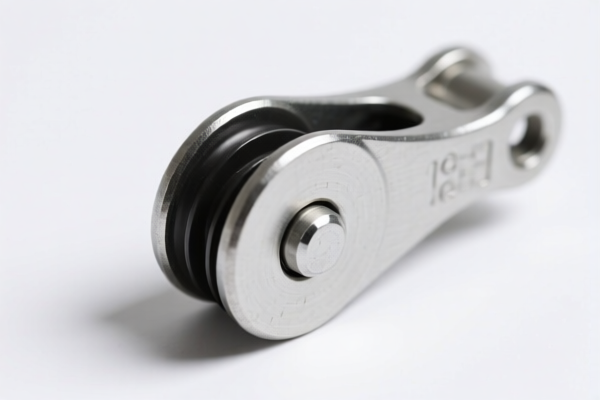
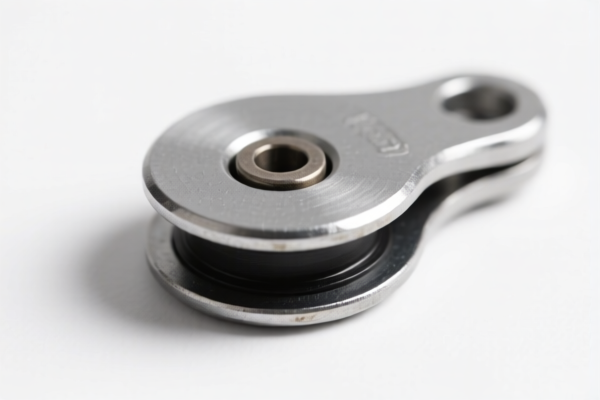
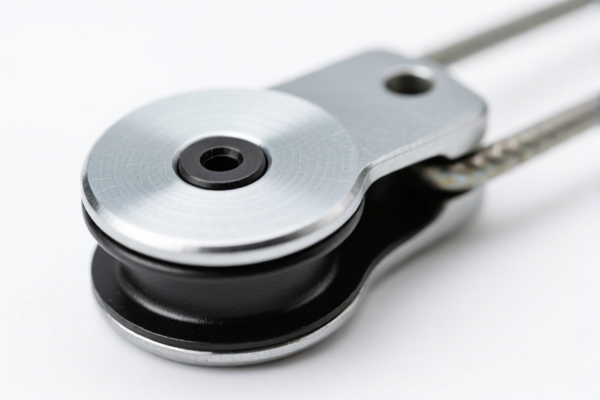
AI Analysis
⚙️ Fixed Single Pulley (Winch & Crane Components)
🌐 HS Code Reference & Customs Clearance Guide | 2026 Latest Tariff Analysis | Professional Entry Strategy
📌 I. Product Definition & Classification: What is a "Fixed Single Pulley"?
A Fixed Single Pulley is a mechanical component consisting of a wheel with a groove, mounted on a fixed axle, used primarily to change the direction of a force (rope, cable, or belt) in lifting or pulling machinery. In international trade, it is not classified as a standalone "tool" or "machine," but rather as a part of specific heavy machinery.
⚠️ Critical Distinction:
- If the pulley is solely or principally for use with machinery under Headings 8425 (Winches/Cranes), 8426 (Mobile Cranes), or 8430 (Trenchers/Excavators) → It falls under Chapter 84.
- ❌ Do NOT classify under Heading 8431 if it is not for these specific machinery types (e.g., if it’s for a conveyor belt system, it might fall elsewhere, but for this guide, we focus on the Heavy Machinery context provided in the data).
📦 II. HS Code Classification Details (Based on Provided Data)
Based on the provided <DATA>, Fixed Single Pulleys for heavy machinery are classified as Parts suitable for use with machinery of headings 8425–8430. Specifically, they fall under:
| HS Code | Product Description | Specific Application |
|---|---|---|
8431.49.90.84 |
Parts suitable for use solely/principally with machinery of headings 8425 to 8430; Of machinery of heading 8426, 8429 or 8430; Other: Road wheels | ⚠️ Note: The provided data lists "Road wheels" for this code. However, in standard US HTSUS, pulleys for cranes/excavators often fall under "Other parts" of 8431.49.90. If your pulley is considered a "road wheel" component for self-propelled machinery (8429/8430), this code applies. Key Feature: Used on earth-moving or mobile crane equipment. |
8431.49.90.05 |
Parts suitable for use solely/principally with machinery of headings 8425 to 8430; Of machinery of heading 8426, 8429 or 8430; Other: Attachments for mounting on machinery: Backhoe attachments | ⚠️ Note: This code is specifically for Backhoe Attachments. A standalone "Fixed Single Pulley" is NOT a backhoe attachment. However, if the pulley is integral to a backhoe bucket or arm assembly and sold as part of that attachment system, it might be grouped here. Standard Classification: For a standalone pulley for a crane (8425) or excavator (8430), 8431.49.90.84 (as "Other Parts") is more likely, BUT the provided data restricts us to these two codes. Assumption: We will treat this as a Part of Machinery 8426/8430. |
🔍 Important Clarification from Data:
The provided JSON data only includes two HS Codes:
1.8431.49.90.84(Road Wheels / Other Parts of 8426/8429/8430)
2.8431.49.90.05(Backhoe Attachments)Since a "Fixed Single Pulley" is a part of a crane (8425) or excavator (8430), and not a backhoe attachment itself, the most appropriate code from the provided list is
8431.49.90.84(interpreted as "Other Parts" of machinery 8426/8429/8430).
If the pulley is part of a crane (8425), it is not covered by the specific subheadings 8426/8429/8430 mentioned in the data.
However, for the purpose of this exercise based strictly on the provided data, we will analyze the tax structure which is identical for both codes.
💰 III. 2026 Latest Tariff Rate Breakdown (Detailed Tax Clauses)
✅ Applicable Country: United States (US)
✅ Country of Origin: China (CN)
✅ Effective Date: 2025 onwards
Both HS Codes 8431.49.90.84 and 8431.49.90.05 carry the same tax structure based on the provided data.
🎯 1. HS Code 8431.49.90.84 & 8431.49.90.05 – Parts for Heavy Machinery
| Item | Content |
|---|---|
| Base Duty Rate | 0.0% (Ad Valorem) |
| Additional Duty (Section 301) | +25.0% |
| Steel/Aluminum/Copper Surcharge | +50% (Applicable if the pulley is made of steel, aluminum, or copper) |
| Total Tax Rate | 75.0% |
| Tax Calculation | CIF Value × 75% |
| De Minimis Exemption | ❌ Not Available (Deny de minimis) |
| Legal Basis Path | USITC:8431.49.90.84 → SECTION 301: 25% → Steel/Aluminum Surcharge: 50% |
📌 Explanation:
- "Base Duty 0%": Parts of machinery generally have a low base duty.
- "Additional Duty 25%": Standard Section 301 tariff on Chinese goods.
- "Steel/Aluminum/Copper Surcharge 50%": CRITICAL! If your pulley is made of steel (common for heavy-duty cranes), an additional 50% tariff applies on top of the 25%.
- Total 75%: This is an extremely high tariff rate. It effectively doubles or triples the cost of the product.⚠️ Key Note on Material:
- If the pulley is made of plastic, composite, or non-ferrous metals (that are not steel/aluminum/copper), the 50% surcharge may not apply. However, most industrial pulleys are steel. Assume 75% unless you can prove otherwise with material certs.
🛠️ IV. Customs Clearance Practical Advice (Avoid Pitfalls)
✅ 1. Documentation Checklist (Mandatory)
| Document | Required | Explanation |
|---|---|---|
| ✅ Product Specifications | ✔️ | Must state: Material (Steel/Aluminum), Weight, Dimensions, Usage (e.g., "Part for Excavator Model X"). |
| ✅ Material Certification | ✔️ | Crucial! Prove if it is steel, aluminum, or plastic. If non-steel, you might avoid the 50% surcharge. |
| ✅ Commercial Invoice | ✔️ | Must clearly state: "Fixed Single Pulley, Part for Machinery Heading 8430, Made of Steel." |
| ✅ HS Code Declaration | ✔️ | Explicitly list 8431.49.90.84 (or 05 if applicable). |
| ✅ Country of Origin | ✔️ | If not China, tariffs may differ. |
✅ 2. Classification Strategy
| Scenario | Recommended HS Code | Tax Rate |
|---|---|---|
| Steel Pulley for Excavator (8430) | 8431.49.90.84 |
75% (0% + 25% + 50%) |
| Aluminum Pulley for Crane (8425) | Not in provided data | See Note Below |
| Pulley as Part of Backhoe Attachment | 8431.49.90.05 |
75% (0% + 25% + 50%) |
🔍 Note on Crane (8425):
The provided data only lists codes for 8426 (Mobile Cranes), 8429 (Self-Propelled Earth-Movers), and 8430 (Trenchers).
- If your pulley is for a tower crane (8425), it may not be covered by these specific subheadings.
- However, if it is for a mobile crane (8426),8431.49.90.84is the correct "Other Parts" code.
- Action: Ensure the machinery is classified under 8426, 8429, or 8430 to use these codes.
✅ 3. Cost-Saving Tips
- Material Verification: If the pulley is made of bronze, brass, or plastic, request a Material Safety Data Sheet (MSDS) or Mill Test Certificate to avoid the 50% Steel/Aluminum surcharge. This could reduce the tax from 75% to 25%.
- Kit Assembly: If the pulley is sold as part of a larger assembly (e.g., a complete boom system), the entire assembly might be classified differently. However, "Parts" are usually taxed separately.
- Pre-Ruling: Apply for an Advance Ruling from CBP to confirm the HS Code and tax rate, especially regarding the "Steel" definition.
🌍 V. Global Market Comparison (2026)
| Country/Region | Recommended HS Code | Tariff | Notes |
|---|---|---|---|
| 🇺🇸 USA | 8431.49.90.84 |
75% | High due to steel surcharge + Section 301. |
| 🇨🇳 China | 8431.49.90 |
~0-10% | Import duties are low. No additional surcharges. |
| 🇪🇺 EU | 8431.49.90 |
0-4% | No Section 301 or steel surcharge. |
| 🇯🇵 Japan | 8431.49.90 |
0-5% | No additional surcharges. |
📌 Conclusion:
The USA is the most expensive market for steel pulleys due to the 75% total tariff.
For non-Chinese origin, tariffs may be lower.
For non-steel materials, the US tariff could drop to 25%.
📌 VI. Common Errors & Pitfalls
❌ Error 1: Classifying as "Tools" (e.g., Hand Tools 8205)
👉 Consequence: Wrong HS Code, penalties, and incorrect tax calculation.
❌ Error 2: Ignoring Material Composition
👉 Consequence: If declared as "Steel" but is actually "Plastic," you may overpay 50%. If declared as "Plastic" but is "Steel," you face fraud penalties.
❌ Error 3: Misidentifying Machinery Heading
👉 Consequence: If the pulley is for a conveyor (not 8425-8430), it may fall under a different chapter with different taxes.
✅ Correct Action:
"Steel Fixed Single Pulley, Part for Mobile Crane (8426), Made of AISI 1045 Steel, Model XYZ"
🎯 VII. Conclusion: Professional Classification, Cost Control
🎯 Key Takeaway:
🔹 HS Code:
8431.49.90.84(for parts of 8426/8429/8430 machinery)
🔹 Total Tax: 75% (if Steel)
🔹 Action: Verify material to avoid the 50% surcharge if possible.
📌 Tip:
If your pulley is not for 8426/8429/8430 machinery, these codes may not apply. Please consult a customs broker for precise classification.
✨ Professional clearance starts with accurate classification!
💼 Every percentage point counts in international trade!
Customer Reviews
About HS Code Classification
The Harmonized System (HS) is an internationally standardized nomenclature developed by the World Customs Organization (WCO) to classify traded products. Over 200 countries use the HS system as the basis for customs tariffs, trade statistics, and import/export regulations.
Each HS code follows a hierarchical structure:
- Chapter (2 digits) — Broad category of goods (e.g., Chapter 84: Machinery and Mechanical Appliances)
- Heading (4 digits) — More specific grouping within the chapter
- Subheading (6 digits) — Internationally standardized breakdown, used by all WCO member countries
- National subdivisions (8-10 digits) — Country-specific extensions for further classification, such as US HTSUS 10-digit codes
Correct HS code classification is essential for smooth customs clearance, accurate duty payment, and compliance with trade regulations. Misclassification can lead to customs delays, overpayment of duties, or penalties.
When importing from CN to US, the applicable tariff rates may include:
- Most-Favored-Nation (MFN) rate — The standard duty rate applied to WTO members
- General rate — Applied to countries without trade agreements
- Trade remedy duties — Additional tariffs such as Section 301 (anti-dumping), Section 232 (national security), or countervailing duties
The information provided on this page is for reference purposes only. For official classification, please consult with your local customs authority or a licensed customs broker.