Fixed Volume Measuring Cup
CN → US| HS Code | Tariff Rate | Origin | Destination | Doc |
|---|---|---|---|---|
| 3924104000 | 13.4% | CN | US | Official Doc |
| 3924102000 | 24.0% | CN | US | Official Doc |
| 7013496090 | 24.7% | CN | US | Official Doc |
| 7013492090 | 40.0% | CN | US | Official Doc |
| 3924104000 | 13.4% | CN | US | Official Doc |
Product Images
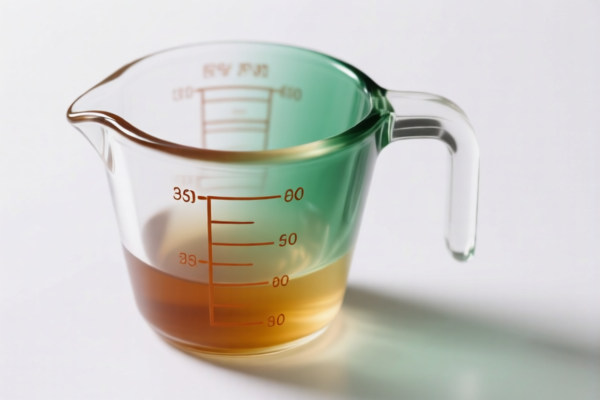
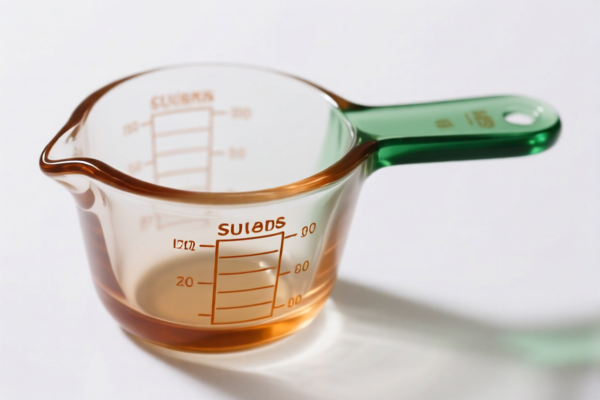
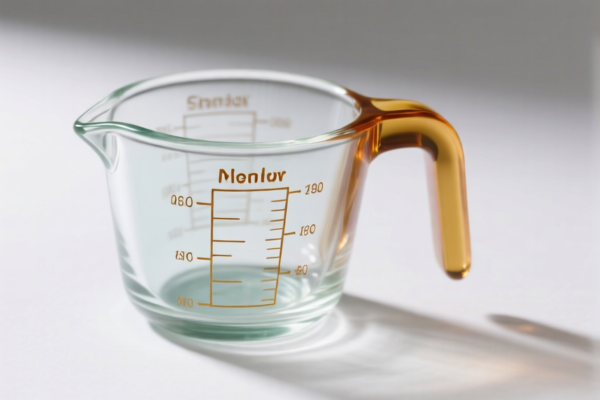
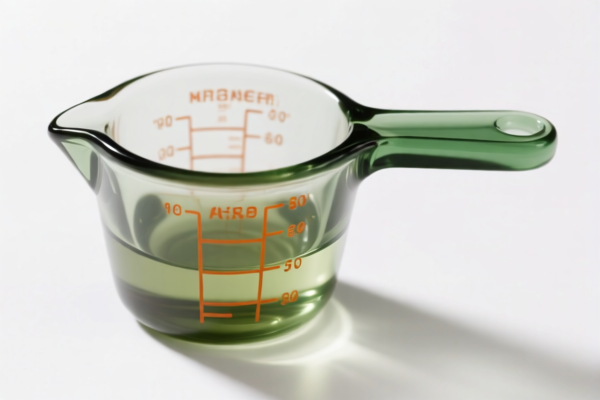
AI Analysis
🥣 Fixed Volume Measuring Cup (Plastic & Glass)
🌐 HS Code Reference & Customs Clearance Guide | 2026 Latest Tariff Analysis | Professional Entry Strategy
📌 I. Product Definition & Classification: Do You Know Your "Cup"?
A Fixed Volume Measuring Cup is a kitchen utensil designed to measure specific quantities of liquid or dry ingredients. In international trade, the classification depends strictly on the material and the specific design intent.
The key distinction lies between general kitchenware and specific measuring instruments.
⚠️ Key Classification Point:
- Plastic Cups: Generally classified under Chapter 39 (Plastics). Whether it is a "cup" (3924.10.20) or a "measuring cup/tableware" (3924.10.40) depends on the exact shape and declared use.
- Glass Cups: Classified under Chapter 70 (Glass). The tax burden varies significantly based on whether it is deemed a "drinking glass" or a "kitchen measuring vessel."
📦 II. HS Code Classification Details (2026 Latest Tariff Authority Comparison)
Based on the provided data, here is the breakdown for the four distinct classifications.
| HS Code | Product Description | Tax Rate | Tax Breakdown Details |
|---|---|---|---|
3924.10.40.00 |
Plastic Measuring Cup (Tableware/Cookware Category) | 13.4% | Base: 3.4% Add-on: 0.0% Section 301 (122 Clause): 10% |
3924.10.20.00 |
Plastic Cup (General Kitchen Utensil/Container) | 24.0% | Base: 6.5% Add-on: 7.5% Section 301 (122 Clause): 10% |
7013.49.60.90 |
Glass Measuring Cup (Kitchen Utensil) | 24.7% | Base: 7.2% Add-on: 7.5% Section 301 (122 Clause): 10% |
7013.49.20.90 |
Glass Cup (Table/Kitchen Use, Non-Measuring Specific) | 40.0% | Base: 22.5% Add-on: 7.5% Section 301 (122 Clause): 10% |
🔍 Critical Insight:
- Plastic vs. Glass: Plastic cups generally have lower base tariffs than glass cups.
- "Measuring" vs. "General": Classifying a plastic item as3924.10.40(Measuring Cup/Tableware) saves 10.6% compared to3924.10.20(General Cup).
- Glass Trap: Glass measuring cups (7013.49.60) are taxed at 24.7%, while general glass cups (7013.49.20) jump to 40.0%. Misclassification here is costly.
💰 III. 2026 Latest Tariff Rate Details (Including Surtaxes)
✅ Applicable Country: United States (US)
✅ Origin: China (CN)
✅ Effective Time: Current rates apply to imports from China.
🎯 1. 3924.10.40.00 — Plastic Measuring Cup (Best Case for Plastic)
| Item | Detail |
|---|---|
| Base Tariff | 3.4% |
| Section 301 Surcharge | 10.0% (122 Clause) |
| Other Surtaxes | 0.0% |
| Total Effective Rate | 13.4% |
| Calculation | CIF Value × 13.4% |
| De Minimis Exemption | ❌ No (Deemed higher than standard low-value thresholds for this category in many contexts, though technically subject to specific trade rules. Note: Data shows no exemption mentioned, assume full duty). |
| Legal Basis | Standard HTSUS 3924.10.40 + Section 301 Footnote 122. |
📌 Explanation:
- This is the most tax-efficient classification for plastic measuring cups.
- The "122 Clause" refers to specific USITC exclusions or inclusions under Section 301. Here, it adds 10%.
- Savings: Compared to general plastic cups (3924.10.20), you save 10.6% by correctly identifying it as a "Measuring Cup" or "Tableware" rather than a generic "Cup."
🎯 2. 3924.10.20.00 — Plastic Cup (General Kitchen Use)
| Item | Detail |
|---|---|
| Base Tariff | 6.5% |
| Section 301 Surcharge | 7.5% |
| Section 301 (122 Clause) | 10.0% |
| Total Effective Rate | 24.0% |
| Calculation | CIF Value × 24.0% |
| De Minimis Exemption | ❌ No |
| Legal Basis | Standard HTSUS 3924.10.20 + Section 301 Footnotes. |
📌 Warning:
- If you declare a plastic measuring cup simply as "Plastic Cup," you may be assessed this higher rate.
- Risk: Customs may argue that if it's used for measuring, it falls under 40, not 20.
🎯 3. 7013.49.60.90 — Glass Measuring Cup
| Item | Detail |
|---|---|
| Base Tariff | 7.2% |
| Section 301 Surcharge | 7.5% |
| Section 301 (122 Clause) | 10.0% |
| Total Effective Rate | 24.7% |
| Calculation | CIF Value × 24.7% |
| De Minimis Exemption | ❌ No |
| Legal Basis | Standard HTSUS 7013.49.60 + Section 301 Footnotes. |
📌 Explanation:
- Glass measuring cups are taxed slightly higher than their plastic counterparts.
- Ensure the product is clearly a measuring device (with volume markings) to qualify for this rate rather than the generic glass cup rate.
🎯 4. 7013.49.20.90 — Glass Cup (Table/Kitchen)
| Item | Detail |
|---|---|
| Base Tariff | 22.5% |
| Section 301 Surcharge | 7.5% |
| Section 301 (122 Clause) | 10.0% |
| Total Effective Rate | 40.0% |
| Calculation | CIF Value × 40.0% |
| De Minimis Exemption | ❌ No |
| Legal Basis | Standard HTSUS 7013.49.20 + Section 301 Footnotes. |
📌 Critical Warning:
- This is the highest tariff in the list.
- Why so high? Glass tableware often faces higher base tariffs.
- Pitfall: If your glass cup has volume measurements, do NOT use this code. Use7013.49.60.90instead to save 15.3%.
🛠️ IV. Customs Clearance Practical Advice (Battle-Tested Pitfall Guide)
✅ 1. Preparation Checklist (Non-Negotiable)
| Document | Required | Description |
|---|---|---|
| ✅ Product Spec Sheet | ✔️ | Must explicitly state "Fixed Volume Measuring Cup" vs. "Drinking Cup." |
| ✅ Product Photos | ✔️ | Show volume markings (ml/cups). This is the #1 evidence for classification. |
| ✅ Commercial Invoice | ✔️ | Description must match HS Code intent (e.g., "Plastic Measuring Cup" not just "Plastic Cup"). |
| ✅ Packing List | ✔️ | Ensure no mixed materials confuse customs (e.g., plastic cup with metal lid). |
| ✅ Country of Origin | ✔️ | Must be China (CN) for these specific tax rates. |
✅ 2. Declaration Tips (Key Mnemonics)
🔥 "Markings Matter! Measuring = 40/60, Drinking = 20/20."
| Scenario | Correct HS Code | Wrong Code | Consequence |
|---|---|---|---|
| Plastic Cup with Volume Marks | 3924.10.40.00 (13.4%) |
3924.10.20.00 (24.0%) |
Overpaid 10.6%. Can apply for refund post-clearance if caught early. |
| Plastic Cup, No Marks | 3924.10.20.00 (24.0%) |
3924.10.40.00 |
Customs may reject "Measuring" claim, stick to 24%. |
| Glass Cup with Volume Marks | 7013.49.60.90 (24.7%) |
7013.49.20.90 (40.0%) |
Overpaid 15.3%. Huge penalty risk if audited. |
| Glass Cup, No Marks | 7013.49.20.90 (40.0%) |
7013.49.60.90 |
Safe, but expensive. Ensure no markings exist. |
✅ 3. Special Cases
| Situation | Recommendation |
|---|---|
| Transparent Plastic with Etched Lines | Clearly declare as "Measuring Cup." The etched lines prove function. |
| Set of Cups (e.g., 1 cup, 1/2 cup) | Declare as "Measuring Cup Set." Classify under the primary measuring item (3924.10.40). |
| Glass with Metal Lid | If the lid is integral, classify by the main body (Glass). If detachable, ensure invoice separates them if possible, but usually, the "cup" dominates. |
| OEM Custom Shapes | Provide 3D drawings showing volume calibration marks. |
🌍 V. Global Market Comparison (2026 Snapshot)
| Country | Recommended HS Code | Est. Total Tax (China Origin) | Notes |
|---|---|---|---|
| 🇺🇸 USA | 3924.10.40 / 7013.49.60 |
13.4% - 24.7% | High Section 301 taxes apply. |
| 🇨🇳 China | 3924.10 / 7013.49 |
Low (5-10%) | No Section 301. |
| 🇪🇺 EU | 3924.10 / 7013.49 |
Moderate (4-9%) | No Section 301. VAT applies separately. |
| 🇨🇦 Canada | 3924.10 / 7013.49 |
Low | Generally favorable. |
📌 Conclusion:
- The US market is the most challenging due to Section 301 (122 Clause) taxes.
- Accuracy is profit. Misclassifying a measuring cup as a general cup can cost you 10-15% more in duties.
📌 VI. Common Errors & Pitfalls (Lessons Learned)
❌ Error 1: Describing a plastic measuring cup simply as "Plastic Cup" on the invoice.
👉 Result: Customs defaults to 3924.10.20.00 (24.0%).
👉 Fix: Use precise terminology: "Plastic Measuring Cup, with Volume Markings."
❌ Error 2: Ignoring volume markings on glass products.
👉 Result: Classifying as 7013.49.20.90 (40.0%) instead of 7013.49.60.90 (24.7%).
👉 Fix: Always highlight calibration marks in product descriptions.
❌ Error 3: Assuming all "Kitchenware" is treated equally.
👉 Result: Failure to distinguish between "Measuring Instruments" and "General Utensils."
👉 Fix: Use the "Function Test": Does it measure? Yes → Use Measuring HS Code.
🎯 VII. Conclusion: Precision Leads to Profit
🎯 Remember the Mnemonic:
🔹 "Plastic Measure = 13.4%, Plastic General = 24.0%."
🔹 "Glass Measure = 24.7%, Glass General = 40.0%."
🔹 "Markings Define the Margin!"
📌 Pro Tip:
If your product is fixed volume (e.g., a single 1-cup measure), emphasize "Fixed Volume" in the description. This strengthens the argument for 3924.10.40.00 or 7013.49.60.90.
📣 Immediate Action:
📞 Before Shipping:
1. Verify product photos show volume markings.
2. Draft invoice with precise description: "Fixed Volume Plastic Measuring Cup, [Capacity] ml/cups."
3. Confirm HS Code with a licensed customs broker for your specific shipment.
✨ Professional Clearance Starts with Precise Classification!
💼 Your Bottom Line Depends on These 13 Digits!
Customer Reviews
About HS Code Classification
The Harmonized System (HS) is an internationally standardized nomenclature developed by the World Customs Organization (WCO) to classify traded products. Over 200 countries use the HS system as the basis for customs tariffs, trade statistics, and import/export regulations.
Each HS code follows a hierarchical structure:
- Chapter (2 digits) — Broad category of goods (e.g., Chapter 84: Machinery and Mechanical Appliances)
- Heading (4 digits) — More specific grouping within the chapter
- Subheading (6 digits) — Internationally standardized breakdown, used by all WCO member countries
- National subdivisions (8-10 digits) — Country-specific extensions for further classification, such as US HTSUS 10-digit codes
Correct HS code classification is essential for smooth customs clearance, accurate duty payment, and compliance with trade regulations. Misclassification can lead to customs delays, overpayment of duties, or penalties.
When importing from CN to US, the applicable tariff rates may include:
- Most-Favored-Nation (MFN) rate — The standard duty rate applied to WTO members
- General rate — Applied to countries without trade agreements
- Trade remedy duties — Additional tariffs such as Section 301 (anti-dumping), Section 232 (national security), or countervailing duties
The information provided on this page is for reference purposes only. For official classification, please consult with your local customs authority or a licensed customs broker.