Flame Retardant Polyurethane Textile Board
CN → US| HS Code | Tariff Rate | Origin | Destination | Doc |
|---|---|---|---|---|
| 5903202000 | 35.0% | CN | US | Official Doc |
| 9610000000 | 13.5% | CN | US | Official Doc |
| 5903201500 | 35.0% | CN | US | Official Doc |
| 3921135000 | 39.2% | CN | US | Official Doc |
| 5911900080 | 38.8% | CN | US | Official Doc |
Product Images
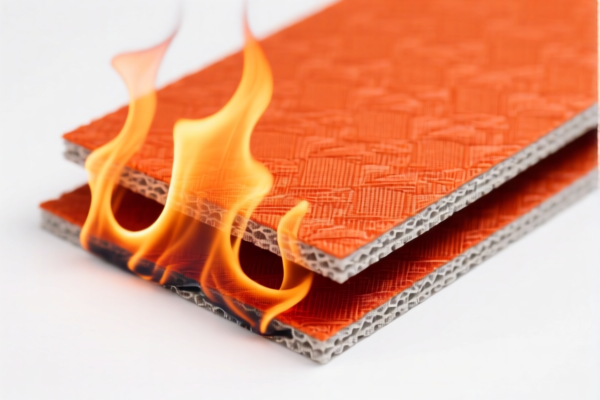
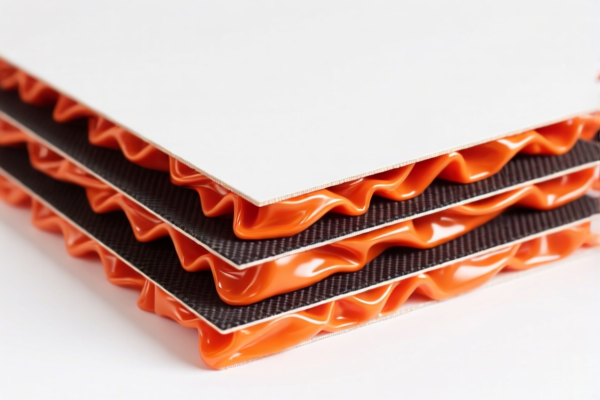
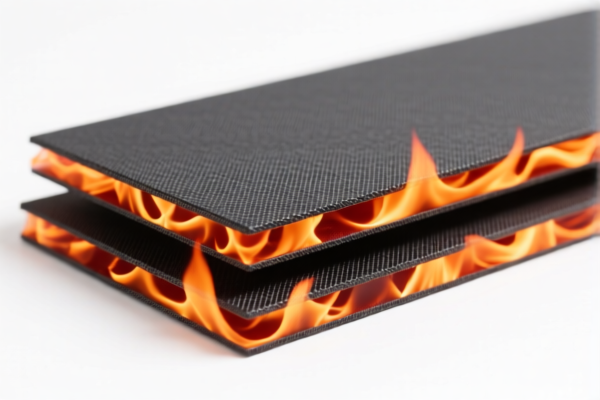
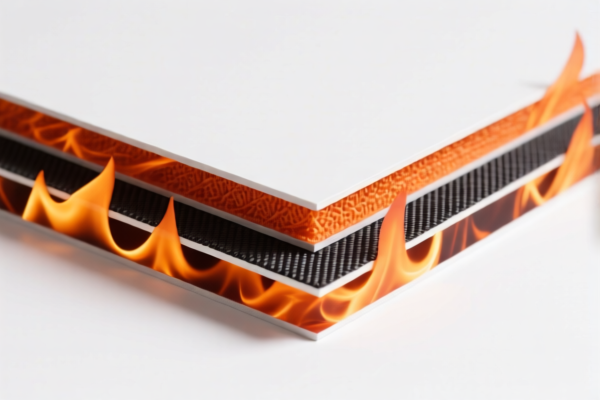
AI Analysis
🔥 Flame Retardant Polyurethane Textile Board (FR PU Textile Board)
🌐 HS Code Classification & Clearance Guide | 2026 Latest Tariff Analysis | Strategic Customs Compliance 📌 I. Product Definition & Classification Logic: Why So Many Codes?
Flame Retardant Polyurethane Textile Board is a composite material combining the structural integrity of textiles with the chemical properties of Polyurethane (PU), treated for fire resistance. In international trade, its classification depends heavily on material dominance and physical form.
⚠️ Critical Distinction:
- Is it a Textile Material (PU-coated/faced fabric)? → Chapter 59
- Is it a Plastic Plate/Sheet (PU Foam/Plastic core)? → Chapter 39
- Is it a Specialized Technical Textile? → Chapter 59 (Technical Goods)
- Is it a Miscellaneous Plate (Non-textile specific)? → Chapter 96
The ambiguity between "Textile Board" and "PU Board" creates significant tariff variance (13.5% vs. 39.2%).
📦 II. HS Code Classification Matrix (Based on Provided Data)
| HS Code | Product Description | Classification Logic | Physical Form | Material Focus |
|---|---|---|---|---|
5903.20.20.00 |
Flame Retardant PU Textile Board (Polyurethane Coated) | Textile Base: Recognized as textile materials impregnated/coated with plastic. | Board/Sheet | PU Coating/Impregnation |
9610.00.00.00 |
Flame Retardant PU Textile Board (Plate Object) | Miscellaneous Plate: Classified as a general plate/object due to shape, overriding textile features. | Plate-like Object | PU Composition |
5903.20.15.00 |
Flame Retardant PU Textile Board (Coated/Membrane) | Textile Base: Specifically for coated or laminated textile materials. | Textile Board | Coating/Membrane Layer |
3921.13.50.00 |
Wear-Resistant PU Textile Board (PU Foam/Category) | Plastic Plate: Classified under plastic plates/sheets/bars, ignoring textile substrate. | Board | PU Foam/Plastic Nature |
5911.90.00.80 |
Wear-Resistant PU Textile Board (Technical Textile) | Technical Textile: For specialized industrial/technical use of textile products. | Textile Board | Technical Application |
🔍 Key Insight:
- Codes starting with5903treat the product as a Textile with plastic coating.
- Code9610treats it as a General Plate.
- Code3921treats it as a Plastic product.
- Code5911treats it as a Specialized Technical Textile.
💰 III. 2026 Tariff Rate Breakdown (Detailed Tax Clause Analysis)
✅ Applicable Market: United States (US)
✅ Origin: China (CN)
✅ Effective Date: 2025/2026 (Post-Rule Updates)
🎯 1. 5903.20.20.00 & 5903.20.15.00 —— Polyurethane-Coated Textile Materials
These two codes share identical tax structures in the provided data, reflecting their similar nature as coated textiles.
| Tax Component | Rate | Explanation |
|---|---|---|
| Base Duty | 0.0% | Free entry for many textile/plastic coatings under certain conditions. |
| Section 301 Duty | +25.0% | "Trump Tariffs" / USITC Additional Duty on Chinese goods. |
| Section 122 Duty | +10.0% | Additional duty under specific trade remedy clauses (often related to national security or specific bilateral agreements). |
| Total Effective Rate | 35.0% | High Risk Category |
📌 Why High?
Despite a 0% base rate, the 35% total is driven entirely by additional duties. This highlights that even if the product looks like a simple coated fabric, the geopolitical tariff burden is substantial.
🎯 2. 9610.00.00.00 —— Miscellaneous Plates and Objects
This is the most cost-effective classification if legally justifiable by shape/form.
| Tax Component | Rate | Explanation |
|---|---|---|
| Base Duty | 3.5% | Standard MFN rate for miscellaneous plastic/textile plates. |
| Section 301 Duty | 0.0% | Exempt from the 25% surcharge in this dataset. |
| Section 122 Duty | +10.0% | Still applies (likely due to origin or specific clause). |
| Total Effective Rate | 13.5% | Lowest Cost Option |
📌 Strategy:
If the product can be defined primarily as a "plate-like object" rather than a "textile material," you save 21.5% in tariffs. This is a huge margin in manufacturing.
🎯 3. 3921.13.50.00 —— Polyurethane Plates/Sheets/Foam
| Tax Component | Rate | Explanation |
|---|---|---|
| Base Duty | 4.2% | Standard rate for polyurethane plates/foams. |
| Section 301 Duty | +25.0% | Applies to plastic imports from China. |
| Section 122 Duty | +10.0% | Additional duty applies. |
| Total Effective Rate | 39.2% | Highest Cost Option |
📌 Warning:
Classifying as "Plastic" triggers the highest tax burden. Avoid this unless the textile component is negligible.
🎯 4. 5911.90.00.80 —— Technical Textile Products
| Tax Component | Rate | Explanation |
|---|---|---|
| Base Duty | 3.8% | Standard rate for technical textiles. |
| Section 301 Duty | +25.0% | Applies to Chinese technical textiles. |
| Section 122 Duty | +10.0% | Additional duty applies. |
| Total Effective Rate | 38.8% | High Cost Option |
📌 Note:
While the base duty is low, the additional duties make this nearly as expensive as the plastic classification.
🛠️ IV. Customs Clearance Practical Advice
✅ 1. Strategic Classification Recommendation
| Goal | Recommended HS Code | Reason |
|---|---|---|
| Minimize Tariff | 9610.00.00.00 |
Lowest total rate (13.5%). Justify by emphasizing rigid plate shape and non-textile functionality. |
| Maximize Accuracy (Textile) | 5903.20.20.00 |
If the product is fundamentally a textile with PU coating, this is the most accurate "Textile" code. Rate: 35%. |
| Avoid | 3921.13.50.00 |
Highest rate (39.2%). Only use if the textile layer is minimal and the product is primarily PU foam. |
✅ 2. Documentation & Declaration Tips
- Product Name: Use precise terms.
- For
9610: "Rigid Polyurethane Plate, Flame Retardant, Non-Woven Composite" - For
5903: "Polyurethane-Coated Flame Retardant Textile Board"
- For
- Composition Statement: Clearly state the percentage of textile vs. polyurethane.
- If PU > 50% by weight, customs may lean towards Chapter 39 or 96.
- If Textile > 50%, Chapter 59 is more appropriate.
- Flame Retardancy Proof: Provide UL94 V-0 or equivalent test reports. This confirms the "Flame Retardant" claim, which may be required for specific safety certifications (e.g., automotive, construction) but does not directly change HS Code unless it defines the material nature.
- Section 122 Clause: Be aware that 10% is applied across all codes in the dataset. This suggests a specific trade restriction or duty program affecting all similar imports. Ensure your Certificate of Origin is flawless to avoid misclassification penalties.
✅ 3. Risk Mitigation
- Pre-Ruling: Apply for an Advance Ruling from US Customs and Border Protection (CBP) before shipment. The difference between 13.5% and 39.2% is significant.
- Material Composition: If the "Textile Board" is actually a thin fabric laminated to a thick PU foam, classify as
3921or9610depending on rigidity. If it’s a woven fabric coated with PU, use5903. - 122 Clause Compliance: Verify if the 10% 122-duty applies to your specific country of manufacture and product type. Some exemptions may exist for specific industries.
🌍 V. Global Market Comparison (Hypothetical based on Data)
| Market | Recommended Code | Est. Total Rate | Key Consideration |
|---|---|---|---|
| 🇺🇸 USA | 9610.00.00.00 |
13.5% | Best option if shape-based classification holds. |
| 🇺🇸 USA | 5903.20.20.00 |
35.0% | Standard textile classification. |
| 🇺🇸 USA | 3921.13.50.00 |
39.2% | Avoid unless technically unavoidable. |
| 🇪🇺 EU | N/A | Not in Data | EU may classify differently (e.g., Chapter 59 or 39 with 0-4% base). |
| 🇨🇳 China | N/A | Not in Data | Import duties may vary; focus on US export strategy. |
📌 Conclusion for US Importers:
9610.00.00.00is the strategic winner for cost efficiency, provided the product’s physical form (plate-like, rigid) can be justified over its textile composition.
📌 VI. Common Errors & Pitfalls
❌ Error 1: Classifying a rigid PU plate as a "Textile" (5903) without justification.
👉 Consequence: Higher tax (35% vs 13.5%).
❌ Error 2: Declaring "Textile Board" when the product is >90% PU Foam.
👉 Consequence: Misclassification, potential fines, and retroactive duties.
❌ Error 3: Ignoring the 10% Section 122 Duty.
👉 Consequence: Unexpected cost addition to all HS codes. Must be budgeted for in all scenarios.
❌ Error 4: Using vague descriptions like "Plastic Sheet" for a textile composite.
👉 Consequence: Customs may reclassify to 3921 (39.2%) or 5903 (35%) based on their own assessment.
✅ Correct Approach:
"Polyurethane-Coated Flame Retardant Textile Board, Rigid Form, 50% PU / 50% Textile Base"
→ Supports either5903or9610depending on the dominant feature argument.
🎯 VII. Final Recommendations
- Prioritize
9610.00.00.00if the board is rigid and plate-like. The 13.5% rate is the most competitive. - Use
5903.20.20.00if the product is fundamentally a textile material. Accept the 35% rate for accuracy. - Avoid
3921and5911due to higher total tariffs (38.8% - 39.2%). - Always include Section 122 (10%) in your cost calculations regardless of HS Code.
- Seek Pre-Ruling: Given the 25%+10% burden, a CBP Advance Ruling is highly recommended to lock in the 13.5% rate if possible.
📣 Action Item:
📞 Contact your customs broker immediately with product samples and technical specs.
📄 Request an Advance Ruling for9610.00.00.00to secure the lowest tariff.
💡 Save up to 25.7% in duties by choosing the correct classification!
✨ Precision in Classification is Profit in Trade!
💼 Don't let tariff ambiguity eat your margins!
Customer Reviews
About HS Code Classification
The Harmonized System (HS) is an internationally standardized nomenclature developed by the World Customs Organization (WCO) to classify traded products. Over 200 countries use the HS system as the basis for customs tariffs, trade statistics, and import/export regulations.
Each HS code follows a hierarchical structure:
- Chapter (2 digits) — Broad category of goods (e.g., Chapter 84: Machinery and Mechanical Appliances)
- Heading (4 digits) — More specific grouping within the chapter
- Subheading (6 digits) — Internationally standardized breakdown, used by all WCO member countries
- National subdivisions (8-10 digits) — Country-specific extensions for further classification, such as US HTSUS 10-digit codes
Correct HS code classification is essential for smooth customs clearance, accurate duty payment, and compliance with trade regulations. Misclassification can lead to customs delays, overpayment of duties, or penalties.
When importing from CN to US, the applicable tariff rates may include:
- Most-Favored-Nation (MFN) rate — The standard duty rate applied to WTO members
- General rate — Applied to countries without trade agreements
- Trade remedy duties — Additional tariffs such as Section 301 (anti-dumping), Section 232 (national security), or countervailing duties
The information provided on this page is for reference purposes only. For official classification, please consult with your local customs authority or a licensed customs broker.