Flame retardant wood pellet fuel blocks
CN → US| HS Code | Tariff Rate | Origin | Destination | Doc |
|---|---|---|---|---|
| 4401310000 | 35.0% | CN | US | Official Doc |
| 4401394210 | 35.0% | CN | US | Official Doc |
Product Images
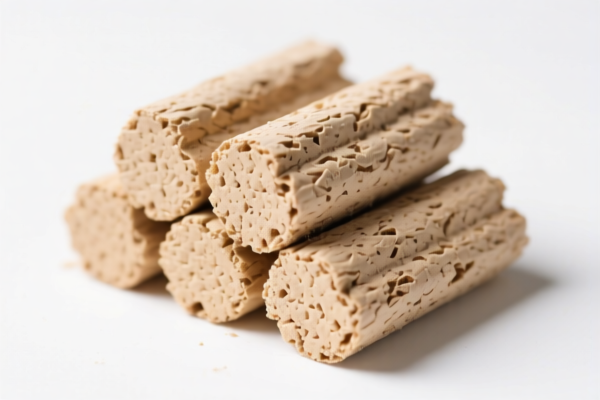
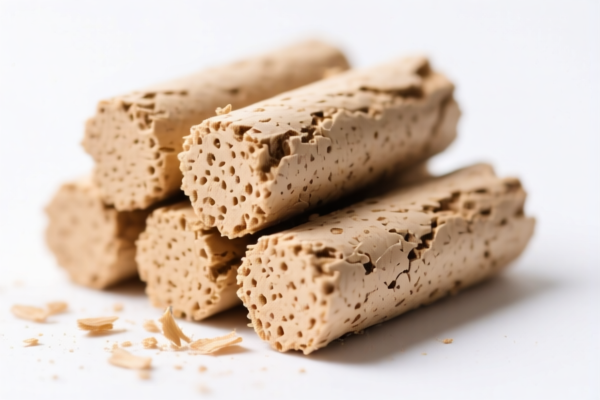
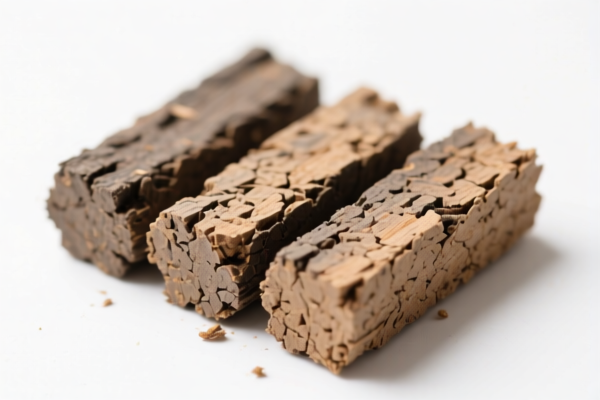
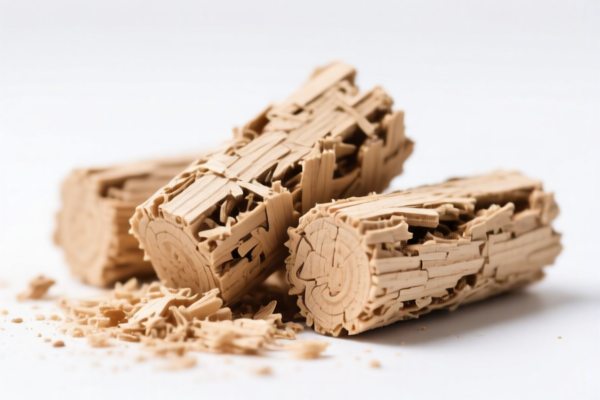
AI Analysis
🔥 Flame Retardant Wood Pellet Fuel Blocks
🌐 HS Code Reference & Clearance Guide | 2026 Latest Tariff Analysis | Professional Customs Strategy
📌 I. Product Definition & Classification: What Exactly Are "Flame Retardant Wood Pellets"?
Wood pellet fuel blocks, specifically those treated or formulated to be flame retardant, fall under the broader category of agglomerated wood waste and scrap. Despite the "flame retardant" chemical treatment, if the product remains essentially wood pellets used for heating or fuel, it is classified based on its physical form and primary material (wood), not solely on its chemical additives, unless the treatment fundamentally changes its identity to a non-wood chemical product (which is rare for fuel blocks).
Key Classification Distinction:
- Wood Pellets: Agglomerated wood sawdust/waste, shaped into cylinders (pellets).
→ HS Code: 4401.31.00.00
- Other Agglomerated Wood Waste (Non-Pellet Forms): E.g., briquettes, logs, or irregular shapes.
→ HS Code: 4401.39.42.10 (Other Sawdust) or related subheadings for "Other" agglomerated forms.
⚠️ Critical Clarification:
- "Flame Retardant" is a functional descriptor, not a classifier change. As long as the base material is wood and the form is a pellet, it goes to4401.31.00.00.
- If the product is a briquette (rectangular, compressed block) rather than a cylindrical pellet, it may fall under4401.39.42.10("Other Sawdust" in agglomerated form).
- Do not misclassify as chemical fire retardants (Chapter 38) if the primary use is fuel. Customs focuses on primary use and form.
📦 II. HS Code Classification Details (2026 Latest Tariff Authority Comparison)
| HS Code | Product Description | Form Type | Primary Use | Flammability Status |
|---|---|---|---|---|
4401.31.00.00 |
Wood Pellets – Sawdust and wood waste/agglomerated in pellets | Cylindrical Pellets | Fuel/Energy | Treated (Flame Retardant) but still fuel |
4401.39.42.10 |
Other Agglomerated Wood Waste – Other Sawdust (e.g., briquettes, logs, faggots) | Briquettes/Blocks | Fuel/Energy | Treated (Flame Retardant) but still fuel |
🔍 Key Takeaway:
- If your product is cylindrical pellets → Use4401.31.00.00.
- If your product is rectangular blocks/briquettes → Use4401.39.42.10.
- The "Flame Retardant" label does not change the HS code to Chapter 38 (Chemicals) because the essential character remains wood fuel.
💰 III. 2026 Latest Tariff Rate Breakdown (Including Additional Duties & Policy Surcharges)
✅ Applicable Country: United States (US)
✅ Country of Origin: China (CN)
✅ Effective Date: November 10, 2025 (and subsequent imports)
🎯 1. 4401.31.00.00 – Wood Pellets
| Item | Content |
|---|---|
| Base Duty Rate | 0% (ad valorem) |
| Section 301 Additional Duty | +25% (from USITC Footnote 9903.31.00.00) |
| Total Duty Rate | 25% |
| Tax Calculation | CIF Value × 25% |
| De Minimis Exemption Eligibility | ❌ Not Eligible (Section 301 goods are excluded from de minimis relief) |
| Legal Authority Path | USITC:4401.31.00.00 → FOOTNOTE:9903.31.00.00 → Section 301: 19 U.S.C. 1628 |
📌 Explanation:
- The 25% additional duty is imposed under Section 301 of the Trade Act of 1974 against Chinese imports.
- No base duty (0%) applies to wood pellets from China, but the 25% surcharge makes it significant.
- Flame retardant treatment does not exempt you from this duty.
🎯 2. 4401.39.42.10 – Other Agglomerated Wood Waste (e.g., Briquettes)
| Item | Content |
|---|---|
| Base Duty Rate | 0% (ad valorem) |
| Section 301 Additional Duty | +25% (from USITC Footnote 9903.39.42.10) |
| Total Duty Rate | 25% |
| Tax Calculation | CIF Value × 25% |
| De Minimis Exemption Eligibility | ❌ Not Eligible |
| Legal Authority Path | USITC:4401.39.42.10 → FOOTNOTE:9903.39.42.10 → Section 301: 19 U.S.C. 1628 |
📌 Note:
- Same tariff structure as pellets. The 25% surcharge applies regardless of whether it’s a pellet or a briquette.
- Critical: Ensure your product description clearly states "Wood Briquettes" or "Wood Pellets" to avoid customs confusion.
🛠️ IV. Customs Clearance Practical Advice (Real-World Pitfall Guide)
✅ 1. Required Documentation Checklist (Mandatory)
| Document | Mandatory? | Notes |
|---|---|---|
| ✅ Product Specification Sheet | ✔️ | Must state: Material (100% Wood), Form (Pellets/Briquettes), Treatment (Flame Retardant Chemicals Used), Net/Gross Weight, HS Code |
| ✅ Safety Data Sheet (SDS) | ✔️ | Critical for "Flame Retardant" products. Must show no hazardous chemical classification under DOT/IMO. If classified as hazardous, additional fees apply. |
| ✅ Commercial Invoice | ✔️ | Must clearly describe: "Wood Pellets/Briquettes, Flame Retardant Treated, for Fuel Use, HS Code: 4401.31.00.00" |
| ✅ Packing List | ✔️ | Detail packaging type (bags, pallets), total quantity, volume |
| ✅ Certificate of Origin | ✔️ | Required for Section 301 duty calculation. If not from China, may qualify for lower rates. |
| ✅ Customs Entry Type | ✔️ | Type 86 or Type 01 entry. Ensure Section 301 exclusion is checked if applicable (none for wood pellets). |
✅ 2. Declaration Strategy (Key Phrases)
🔥 "Form is King, Use is Fuel, Treat is Treated, Duty is 25%!"
| Situation | Correct Declaration | Incorrect Declaration |
|---|---|---|
| Cylindrical Wood Pellets | "Wood Pellets, Flame Retardant Treated, 4401.31.00.00" |
"Fire Retardant Chemicals" → Misclassification Risk |
| Rectangular Wood Briquettes | "Wood Briquettes, Flame Retardant Treated, 4401.39.42.10" |
"Fuel Bricks" → Vague, leads to inspection delay |
| Product with Hazardous Chemicals | Declare as Hazardous if SDS indicates Class 9 or higher | Ignore SDS → Penalties, Rejection, or Destruction |
✅ 3. Special Scenarios
| Situation | Handling Advice |
|---|---|
| Flame Retardant Chemicals Hazardous | If the treatment makes the product hazardous under DOT 49 CFR, you must file a Hazardous Materials Declaration (HazMat). This may incur additional handling fees and special packaging requirements. |
| Non-Chinese Origin | If manufactured in Vietnam, Thailand, or Mexico, you may avoid the 25% Section 301 duty. Ensure Certificate of Origin clearly states the country of manufacture. |
| Mixed Shipments (Pellets + Briquettes) | Separate HS Codes on Invoice. Do not combine. Misleading description can lead to full audit. |
| "Flame Retardant" Claim Without Proof | Provide SDS and test reports. If customs suspects false labeling, they may reclassify or penalize. |
🌍 V. Global Market Comparison (2026 Latest)
| Country/Region | Recommended HS Code | Duty Rate (China Origin) | Certification Requirement | Notes |
|---|---|---|---|---|
| 🇺🇸 USA | 4401.31.00.00 or 4401.39.42.10 |
25% (Section 301) | SDS, DOT HazMat (if applicable) | Highest duty risk due to Section 301 |
| 🇨🇳 China | 4401.31.00.00 |
0% | CCC (if applicable) | No additional duties |
| 🇪🇺 EU | 4401.31.00.00 |
0% (if from FTA partner) | CE, REACH | Wood pellets often duty-free under GSP |
| 🇬🇧 UK | 4401.31.00.00 |
0% | UKCA | Post-Brexit rules apply |
| 🇦🇺 Australia | 4401.31.00.00 |
5% | Biosecurity Permit | Strict biosecurity controls on wood products |
📌 Conclusion:
- USA is the most costly market due to 25% Section 301 duty.
- EU/UK are favorable with 0% duty (if eligible).
- Biosecurity is a key concern in Australia, NZ, and Canada for wood products.
📌 VI. Common Mistakes & Pitfalls (Lessons Learned)
❌ Mistake 1: Classifying "Flame Retardant Wood Pellets" as chemical fire retardants (Chapter 38).
👉 Consequence: Incorrect HS code → 25% duty may not apply, but penalties for misdeclaration. Customs will reclassify and charge 25% + fines.
❌ Mistake 2: Ignoring SDS for HazMat.
👉 Consequence: If the flame retardant chemical is hazardous, you must declare HazMat. Failure to do so → Refusal of Entry, Fines, or Destruction.
❌ Mistake 3: Mixing Pellets and Briquettes in one HS Code.
👉 Consequence: Customs may reject or audit the entire shipment. Always separate by form.
❌ Mistake 4: Not providing Certificate of Origin.
👉 Consequence: Cannot prove non-Chinese origin → 25% duty applied even if made elsewhere.
✅ Correct Approach:
"Wood Pellets, Flame Retardant Treated, for Heating Use, HS Code: 4401.31.00.00, SDS Attached, Origin: China"
🎯 VII. Conclusion: Precise Classification, Smooth Clearance, Cost Efficiency!
🎯 Remember:
🔹 "Pellets = 4401.31, Briquettes = 4401.39, Duty = 25% (US), SDS = Mandatory!"
🔹 "Flame Retardant ≠ Chemicals, It’s Still Wood Fuel!"
🔹 "Origin Matters: China = 25%, Vietnam = 0% (Check FTA)!"
📌 Pro Tip:
If your wood pellets are manufactured in Vietnam, Thailand, or Mexico, you can avoid the 25% Section 301 duty. Ensure your Supplier provides a valid Certificate of Origin and Bill of Lading reflecting the true country of manufacture.
📣 Immediate Action:
📞 Consult a Customs Broker + Provide SDS + Product Photos + Pre-Apply for Ruling
🚀 Ensure Smooth Clearance, Avoid Delays, Save Costs!
✨ Professional Clearance Starts with Accurate Classification!
💼 Every Dollar Saved is a Dollar Earned!
Customer Reviews
About HS Code Classification
The Harmonized System (HS) is an internationally standardized nomenclature developed by the World Customs Organization (WCO) to classify traded products. Over 200 countries use the HS system as the basis for customs tariffs, trade statistics, and import/export regulations.
Each HS code follows a hierarchical structure:
- Chapter (2 digits) — Broad category of goods (e.g., Chapter 84: Machinery and Mechanical Appliances)
- Heading (4 digits) — More specific grouping within the chapter
- Subheading (6 digits) — Internationally standardized breakdown, used by all WCO member countries
- National subdivisions (8-10 digits) — Country-specific extensions for further classification, such as US HTSUS 10-digit codes
Correct HS code classification is essential for smooth customs clearance, accurate duty payment, and compliance with trade regulations. Misclassification can lead to customs delays, overpayment of duties, or penalties.
When importing from CN to US, the applicable tariff rates may include:
- Most-Favored-Nation (MFN) rate — The standard duty rate applied to WTO members
- General rate — Applied to countries without trade agreements
- Trade remedy duties — Additional tariffs such as Section 301 (anti-dumping), Section 232 (national security), or countervailing duties
The information provided on this page is for reference purposes only. For official classification, please consult with your local customs authority or a licensed customs broker.