Flange Plastic Pipe Fittings
CN → US| HS Code | Tariff Rate | Origin | Destination | Doc |
|---|---|---|---|---|
| 3917400050 | 40.3% | CN | US | Official Doc |
| 3926902500 | 24.0% | CN | US | Official Doc |
| 3926305000 | 22.8% | CN | US | Official Doc |
| 3917400095 | 40.3% | CN | US | Official Doc |
Product Images
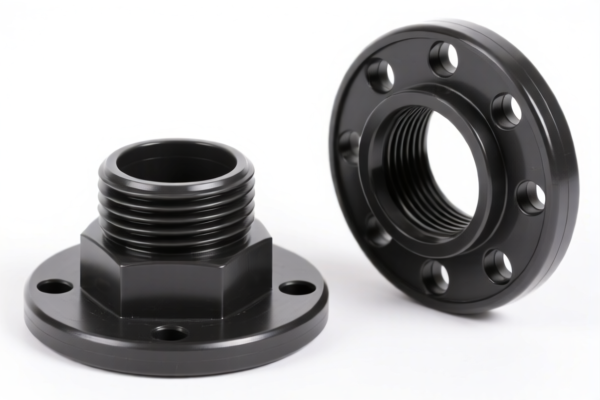
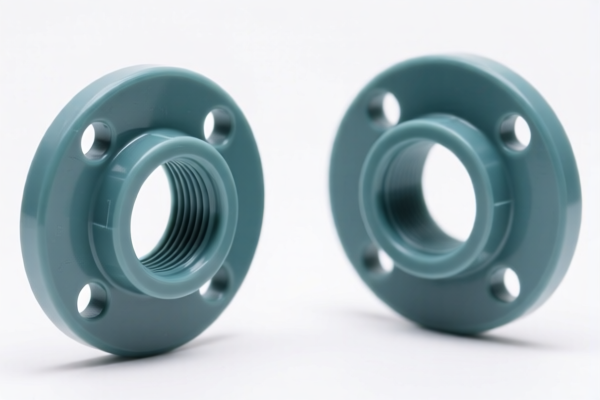
AI Analysis
🖥️ Flange Plastic Pipe Fittings (Plastic Flanged Pipe Accessories)
🌐 HS Code Reference & Customs Clearance Guide | 2026 Latest Tariff Analysis | Professional-Level Clearance Strategy
📌 I. Product Definition & Classification: Do You Really Understand "Flange Plastic Pipe Fittings"?
Flange plastic pipe fittings are crucial components in fluid transportation systems, used to connect pipes, valves, pumps, and other equipment. In international trade, they are primarily classified based on their material (plastic), structure (flange type), and function (pipeline accessories).
Plastic Pipe Fittings (General): Standard connectors, elbows, tees, etc., without special flange structures or with simple flanges.
Flange-Specific Fittings: Products with integrated flanges for bolted connections, often requiring specific classification based on whether they are strictly "pipe parts" or "other plastic articles."
⚠️ Key Distinction Point:
- If the product is primarily a pipe fitting with a flange (functional core is piping), it typically falls under Chapter 39, Heading 3917 (Plastic pipes, tubes, and hoses, with or without their fittings).
- If the product is deemed a general plastic part/accessory not specifically listed as pipe fittings, it may fall under Chapter 39, Heading 3926 (Other articles of plastic and articles of other materials of headings 3901 to 3914).
📦 II. HS Code Classification Details (2026 Latest Tariff Authoritative Comparison)
| HS Code | Product Description | Application Scenario | Flange Specifics |
|---|---|---|---|
3917.40.00.50 |
Plastic flange pipe fittings, material is plastic, form is flange pipe fittings, matches the classification "Plastic pipe fittings and accessories (flanges)" | Industrial piping systems, chemical plants, water treatment | ✅ Specific Flange Fittings |
3926.90.25.00 |
Plastic flange pipe fittings, material is plastic, form is pipe fittings, belongs to "Other parts/components of plastic articles" | General plumbing, non-standard applications | ❌ Classified as General Plastic Part |
3926.30.50.00 |
Plastic flange pipe fittings, material is plastic, purpose as pipe fitting product in the "connector" category | Connector components, assembly kits | ❌ Classified as Connector/Accessory |
3917.40.00.95 |
Plastic flange pipe fittings, material is plastic, form is flange and pipe fittings, complies with material and accessory attributes in classification explanations | Mixed-use piping systems, export to US | ✅ Specific Flange Fittings |
🔍 Important Reminder:
- The core difference lies in whether the customs authority recognizes the item strictly as a "Pipe Fitting" (Heading 3917) or a "General Plastic Article/Part" (Heading 3926).
- 3917 generally applies to items specifically designed for connecting pipes.
- 3926 is a "catch-all" for plastic items not more specifically described elsewhere.
- Misclassification Risk: Declaring as 3926 when it should be 3917 (or vice versa) can lead to significant tariff differences due to US Section 301 and IEEPA tariffs.
💰 III. 2026 Latest Tariff Rate Details (Including Additional Taxes, Policy Add-ons)
✅ Applicable Country: United States (US)
✅ Origin: China (CN)
✅ Effective Time: From November 10, 2025 (including subsequent imports)
🎯 1. 3917.40.00.50 —— Plastic Flange Pipe Fittings (Specific Flange Classification)
| Item | Content |
|---|---|
| Base Duty Rate | 5.3% (ad valorem) |
| Section 301 Additional Duty | +25.0% |
| IEEPA Additional Duty | +10.0% (Targeting Chinese/HK products, effective from Nov 10, 2025) |
| Total Duty Rate | 40.3% |
| Tax Calculation | CIF Value × 40.3% |
| De Minimis Exemption Applicable? | ❌ No (deny_de_minimis) |
| Legal Basis Path | IEEPA:9903.01.25 → IEEPA:9903.01.24 → USITC:3917.40.00.50 → FOOTNOTE:301 |
📌 Explanation:
- The 25% Section 301 duty applies to most plastic pipe fittings from China under the "List 4B" or similar trade action categories.
- The 10% IEEPA duty is an additional surcharge on Chinese-origin goods, bringing the total burden to 40.3%.
- This is a high-cost category; accurate declaration as 3917.40.00.50 is critical.
🎯 2. 3926.90.25.00 —— Other Plastic Articles (Flange Fittings as General Parts)
| Item | Content |
|---|---|
| Base Duty Rate | 6.5% (ad valorem) |
| Section 301 Additional Duty | +7.5% |
| IEEPA Additional Duty | +10.0% |
| Total Duty Rate | 24.0% |
| Tax Calculation | CIF × 24.0% |
| De Minimis Exemption Applicable? | ❌ No |
| Legal Basis Path | IEEPA:9903.01.25 → IEEPA:9903.01.24 → USITC:3926.90.25.00 → FOOTNOTE:301 |
📌 Note:
- If customs accepts the classification as a "general plastic part" (3926), the Section 301 rate is significantly lower (7.5% vs 25%).
- However, this classification is risky. Customs may challenge it if the item is clearly a pipe fitting. If challenged, back taxes and penalties will apply.
- Savings Potential: 16.3% difference in total duty compared to the 3917 classification.
🎯 3. 3926.30.50.00 —— Plastic Connectors/Accessories
| Item | Content |
|---|---|
| Base Duty Rate | 5.3% (ad valorem) |
| Section 301 Additional Duty | +7.5% |
| IEEPA Additional Duty | +10.0% |
| Total Duty Rate | 22.8% |
| Tax Calculation | CIF × 22.8% |
| De Minimis Exemption Applicable? | ❌ No |
| Legal Basis Path | IEEPA:9903.01.25 → IEEPA:9903.01.24 → USITC:3926.30.50.00 → FOOTNOTE:301 |
📌 Note:
- Similar to 3926.90.25.00, this classification benefits from a lower Section 301 rate (7.5%).
- Applicable if the product is marketed or used primarily as a "connector" rather than a structural pipe fitting.
🎯 4. 3917.40.00.95 —— Other Plastic Pipe Fittings (Flange & Pipe Mix)
| Item | Content |
|---|---|
| Base Duty Rate | 5.3% (ad valorem) |
| Section 301 Additional Duty | +25.0% |
| IEEPA Additional Duty | +10.0% |
| Total Duty Rate | 40.3% |
| Tax Calculation | CIF × 40.3% |
| De Minimis Exemption Applicable? | ❌ No |
| Legal Basis Path | IEEPA:9903.01.25 → IEEPA:9903.01.24 → USITC:3917.40.00.95 → FOOTNOTE:301 |
📌 Note:
- This is the same high tariff rate as 3917.40.00.50.
- The difference between.50and.95is often nuanced (specific product definition vs. "other"). Both attract the full 301 IEEPA surcharge.
- Risk: If you declare as.95but customs believes it fits.50or vice versa, it’s a minor administrative issue. But declaring it as 3926 to get the lower rate is the major risk.
🛠️ IV. Customs Clearance Practical Advice (Real-World Pitfall Avoidance Guide)
✅ 1. Required Documentation Checklist (All Required)
| Document | Must Provide | Description |
|---|---|---|
| ✅ Product Specification Sheet | ✔️ | Material type (PPR, PVC, PE, etc.), dimensions, pressure rating, flange standard (ANSI, DIN, JIS) |
| ✅ Product Photos (With Flange) | ✔️ | Clear view of the flange face, bolt holes, and connection ends |
| ✅ Commercial Invoice | ✔️ | Must describe as "Plastic Pipe Fitting, Flanged" or "Plastic Flange Adapter" |
| ✅ Packing List | ✔️ | Quantity, weight, dimensions |
| ✅ Certificate of Origin (CO) | ✔️ | Required for tariff calculation |
| ✅ Material Safety Data Sheet (MSDS) | ✔️ | If applicable for chemical resistance |
✅ 2. Declaration Tips (Key Mantra)
🔥 "Flange is Key, Material is Core, Classification is Gold!"
| Scenario | Correct Declaration | Wrong Practice |
|---|---|---|
| Standard Flanged Pipe Fitting | 3917.40.00.50 or .95 (High Tax) |
Misdeclare as "Plastic Part" (3926) → High Audit Risk |
| General Plastic Connector with Flange | 3926.30.50.00 (Lower Tax) |
Declare as "Pipe Fitting" → Higher Tax |
| Mixed Shipment | Separate HS Codes | Combine into one HS Code → Misdeclaration Penalty |
| OEM Custom Fittings | Provide Design Drawings | Generic Description "Plastic Pipe" → Delayed Release |
✅ 3. Special Case Handling
| Scenario | Handling Advice |
|---|---|
| High-End Industrial Flanges | Provide engineering drawings showing they are integral to pipe systems → Support 3917 classification |
| Export to US | Beware of 40.3% vs 22.8%. If structurally a "general plastic article," argue for 3926. However, this requires strong technical justification. |
| Small Value Shipment | Still subject to de minimis denial for Chinese plastic fittings. Do not rely on $800 exemption. |
| Third-Party Transshipment | High Risk. US Customs will look for Chinese origin. Transshipment through Vietnam/Malaysia without substantial transformation is illegal and carries severe penalties. |
🌍 V. Global Market Clearance Comparison (2026 Latest)
| Country/Region | Recommended HS Code | Duty Rate | Certification Required | Notes |
|---|---|---|---|---|
| 🇺🇸 USA | 3917.40.00.50 |
40.3% (China) | None specific | High tariffs due to Section 301 & IEEPA |
| 🇺🇸 USA | 3926.90.25.00 |
24.0% (China) | None specific | Lower rate but higher audit risk |
| 🇨🇳 China | 3917.40.00 |
~5-10% | CCC (if applicable) | No additional punitive tariffs |
| 🇪🇺 EU | 3917.40 |
~2.5% | REACH, RoHS | No major punitive tariffs |
| 🇦🇺 Australia | 3917.40 |
~5% | ADR (if hazardous) | Moderate duty |
📌 Conclusion:
- The USA imposes the highest barriers due to layered tariffs (Base + 301 + IEEPA).
- Cost Optimization: There is a 16-17.5% duty difference between classifying as "Pipe Fitting" (3917) and "Other Plastic Article" (3926).
- Strategic Advice: Consult with a customs broker to determine if your specific product fits the "General Plastic Article" criteria to legally reduce costs.
📌 VI. Common Errors & Pitfall Guide (Lessons Learned)
❌ Error 1: Declaring all flanged fittings as 3926.90.25.00 to save taxes.
👉 Consequence: Customs audit finds the item is functionally a pipe fitting → Back taxes of 16.3% + penalties.
❌ Error 2: Ignoring the IEEPA 10% surcharge in cost calculations.
👉 Consequence: Profit margin eroded unexpectedly. Total cost is not just Base + 301.
❌ Error 3: Vague product description: "Plastic Pipes."
👉 Consequence: Customs may assign the wrong code or detain shipment for inspection.
❌ Error 4: Assuming de minimis ($800) applies.
👉 Consequence: All plastic pipe fittings from China are excluded from de minimis exemption under current US law.
✅ Correct Action:
"Plastic Flanged Pipe Fitting, PPR Material, ANSI 150#, for Water Supply System, Model XYZ"
🎯 VII. Conclusion: Professional Declaration, Save Time, Reduce Costs!
🎯 Remember the Mantra:
🔹 "Pipe Fitting (3917) = 40.3% Tax; Plastic Part (3926) = 22.8-24.0% Tax."
🔹 "One Percent Difference in Code, Thousands of Dollars in Savings."
🔹 "Do Not Guess. Document Everything. Declare Accurately."
📌 Pro Tip:
If your flange fittings are high-value or high-volume, consider:
1. Advance Ruling (APA): Apply for a binding ruling from US CBP on the correct HS Code.
2. Supply Chain Diversification: If legally possible, source from non-China origins to avoid Section 301 and IEEPA tariffs (Tariff may drop to 0-5% base rate).
3. Product Redesign: If the flange is easily removable or considered an "accessory," negotiate with customs on a 3926 classification with proper technical evidence.
📣 Immediate Action:
📞 Contact a Licensed Customs Broker
📝 Provide Detailed Product Specs & Photos
🚀 Apply for HS Code Pre-Ruling to Avoid Surprises
✨ Professional Clearance Starts with Accurate Classification!
💼 Every Cent Saved is Pure Profit!
Customer Reviews
About HS Code Classification
The Harmonized System (HS) is an internationally standardized nomenclature developed by the World Customs Organization (WCO) to classify traded products. Over 200 countries use the HS system as the basis for customs tariffs, trade statistics, and import/export regulations.
Each HS code follows a hierarchical structure:
- Chapter (2 digits) — Broad category of goods (e.g., Chapter 84: Machinery and Mechanical Appliances)
- Heading (4 digits) — More specific grouping within the chapter
- Subheading (6 digits) — Internationally standardized breakdown, used by all WCO member countries
- National subdivisions (8-10 digits) — Country-specific extensions for further classification, such as US HTSUS 10-digit codes
Correct HS code classification is essential for smooth customs clearance, accurate duty payment, and compliance with trade regulations. Misclassification can lead to customs delays, overpayment of duties, or penalties.
When importing from CN to US, the applicable tariff rates may include:
- Most-Favored-Nation (MFN) rate — The standard duty rate applied to WTO members
- General rate — Applied to countries without trade agreements
- Trade remedy duties — Additional tariffs such as Section 301 (anti-dumping), Section 232 (national security), or countervailing duties
The information provided on this page is for reference purposes only. For official classification, please consult with your local customs authority or a licensed customs broker.