Flared Pipe Fitting
CN → US| HS Code | Tariff Rate | Origin | Destination | Doc |
|---|---|---|---|---|
| 7307923030 | 85.0% | CN | US | Official Doc |
| 7307923010 | 85.0% | CN | US | Official Doc |
| 3917400095 | 40.3% | CN | US | Official Doc |
| 3917400010 | 40.3% | CN | US | Official Doc |
Product Images
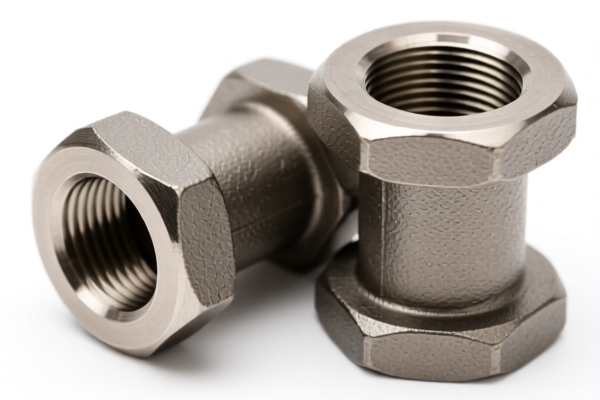
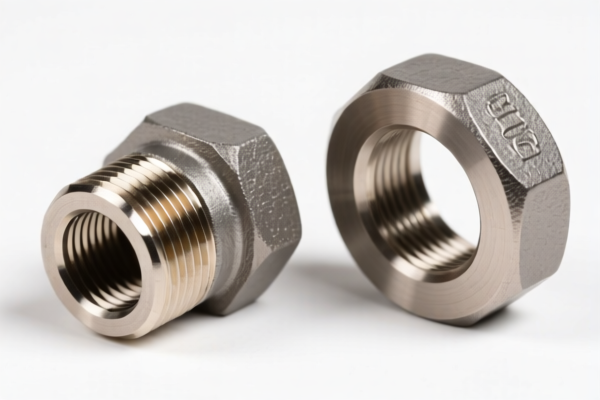
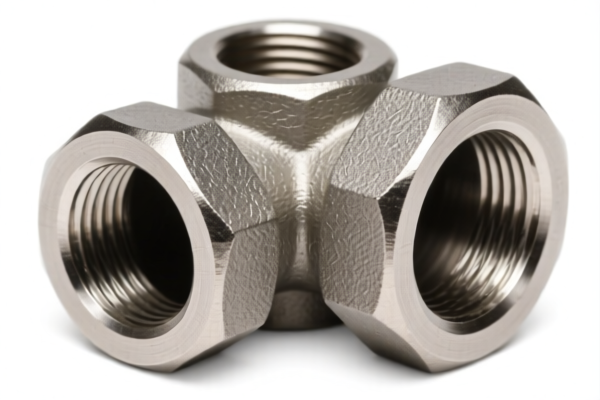
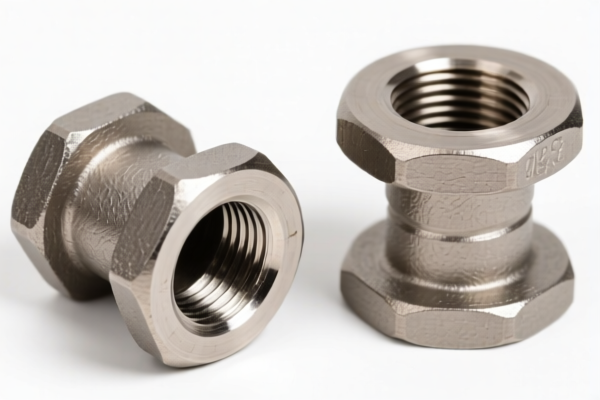
AI Analysis
🔩 Flared Pipe Fitting (Plastics & Steel Variants)
🌐 HS Code Reference & Customs Clearance Guide | 2026 Latest Tariff Breakdown | Professional Clearance Strategy
📌 I. Product Definition & Classification: What is a "Flared Pipe Fitting"?
A Flared Pipe Fitting is a connection component used to join tubes, pipes, or hoses, typically by expanding the end of the pipe (flaring) to create a leak-proof seal without welding or threading. In international trade, these fittings are strictly categorized by material (Plastics vs. Iron/Steel), which drastically affects their HS Code and tax liability.
⚠️ Critical Distinction:
- If made of Plastics → They fall under Chapter 39 (Specific HS:3917.40).
- If made of Iron or Steel → They fall under Chapter 73 (Specific HS:7307.92).
- Note: "Flared" is not always explicitly stated in the HS description for steel; it is often grouped under "Other" threaded or non-threaded fittings depending on the connection method. However, sleeves/couplings are key identifiers.
📦 II. HS Code Classification Details (2026 Latest Tariff Authority)
Based on the provided data, there are 4 specific HS Codes relevant to pipe fittings. We must distinguish between Plastics and Steel/Alloy materials, and further distinguish by Application (Brake Hoses vs. General Use) and Material Type (Alloy vs. Non-alloy).
| HS Code | Product Description | Material | Application/Type | Key Identifier |
|---|---|---|---|---|
| 3917.40.00.95 | Tube or pipe fittings of plastics: Fittings Other | Plastics | General Purpose | Non-specific plastic fittings (not for brake hoses) |
| 3917.40.00.10 | Tube or pipe fittings of plastics: Fittings For brake hoses | Plastics | Brake Hoses | Specifically for vehicles (Subheadings 8701.21-8701.29, 8702-8705, 8711) |
| 7307.92.30.30 | Tube or pipe fittings of iron/steel: Other: Threaded elbows, bends, sleeves: Sleeves (couplings) | Alloy Steel (Non-Stainless) | General/Industrial | Sleeves/Couplings made of alloy steel (except stainless) |
| 7307.92.30.10 | Tube or pipe fittings of iron/steel: Other: Threaded elbows, bends, sleeves: Sleeves (couplings) | Iron or Non-alloy Steel | General/Industrial | Sleeves/Couplings made of iron or non-alloy steel |
🔍 Key Clarification:
- Plastic Fittings: The primary split is whether they are used for vehicle brake hoses (Code.10) or general use (Code.95).
- Steel Fittings: The primary split is Alloy Steel (Code.30) vs. Non-alloy/Iron Steel (Code.10). Both fall under "Sleeves (couplings)" in the threaded category. If your "flared" fitting is actually a sleeve/coupling type, these codes apply.
💰 III. 2026 Latest Tariff Rate Breakdown (With附加税 & Policy Details)
✅ Applicable Country: USA (US)
✅ Origin: China (CN)
✅ Effective Time: Current 2026 Tariff Schedule
🎯 1. 3917.40.00.95 —— Plastic Pipe Fittings (General/Other)
| Item | Detail |
|---|---|
| Base Tariff | 0.0% |
| Additional Tariff (Section 301) | 0.0% |
| Total Tariff | 0.0% |
| Tax Detail | Base: 0.0%, Additional: 0.0% |
📌 Explanation:
- Plastic pipe fittings generally enjoy zero duty under current US-China trade terms for this specific subheading.
- No Section 301 or IEEPA surcharges apply to this code in the provided data.
- Clearance Advantage: Low cost, high volume potential.
🎯 2. 3917.40.00.10 —— Plastic Fittings for Vehicle Brake Hoses
| Item | Detail |
|---|---|
| Base Tariff | 0.0% |
| Additional Tariff (Section 301) | 0.0% |
| Total Tariff | 0.0% |
| Tax Detail | Base: 0.0%, Additional: 0.0% |
📌 Explanation:
- Like general plastic fittings, brake hose fittings of plastic also have 0% total tariff.
- Important: Ensure the product documentation clearly states "For Vehicle Brake Hoses" to justify this specific code vs..95. Misclassification can lead to audits, though the tax rate is the same here.
🎯 3. 7307.92.30.30 —— Steel Pipe Fittings (Alloy Steel Sleeves/Couplings)
| Item | Detail |
|---|---|
| Base Tariff | 0.0% |
| Additional Tariff (Steel/Al/Cu Surcharge) | 50.0% |
| Other Additional Tariff (Section 301) | 25.0% |
| Total Tariff | 75.0% |
| Tax Detail | Base: 0.0%, Additional 1: 25.0% (Steel/Al/Cu), Additional 2: 50% (Steel) |
📌 Explanation:
- This code attracts the highest tariff in this dataset.
- 25.0% is the standard Section 301 tariff on many steel products.
- 50.0% is an additional surcharge specifically for Steel, Aluminum, and Copper products (often linked to Section 232 or specific trade actions).
- Total 75% makes this a high-cost item. Strictly verify material: If it’s not alloy steel, this code is wrong.
🎯 4. 7307.92.30.10 —— Steel Pipe Fittings (Iron/Non-alloy Steel Sleeves/Couplings)
| Item | Detail |
|---|---|
| Base Tariff | 0.0% |
| Additional Tariff (Steel/Al/Cu Surcharge) | 50.0% |
| Other Additional Tariff (Section 301) | 25.0% |
| Total Tariff | 75.0% |
| Tax Detail | Base: 0.0%, Additional 1: 25.0% (Steel/Al/Cu), Additional 2: 50% (Steel) |
📌 Explanation:
- Even if the steel is non-alloy or iron, it still falls under the 75% total tariff bracket in this dataset.
- Critical: Do not assume "non-alloy" means lower tax. In this specific 2026 schedule provided, both alloy and non-alloy steel sleeves carry the same heavy surcharge.
- Material Proof Required: You must provide mill certificates proving it is Iron or Non-alloy Steel to avoid being misclassified as Stainless (which might have different rates) or Alloy Steel (though tax is same here, accuracy is key).
🛠️ IV. Customs Clearance Practical Advice (Pitfall Avoidance Guide)
✅ 1. Material Verification is Paramount (The 75% Trap)
| Scenario | Risk | Solution |
|---|---|---|
| Steel Fitting Misidentified as Plastic | High Risk! If you declare 3917.40.00.95 (0%) but it’s steel, you face 75% back-tax + penalties. |
Provide Material Test Report or Mill Certificate proving composition. |
| Plastic Brake Fitting Misidentified as General | Low Tax Risk (0% vs 0%), but High Audit Risk. | Ensure description explicitly says "For Vehicle Brake Hoses". |
| Alloy vs. Non-Alloy Steel Confusion | Same Tax (75%), but Incorrect HS Code leads to clearance delays. | Specify "Alloy Steel (Except Stainless)" for .30 and "Iron or Non-alloy Steel" for .10. |
✅ 2. Declaration Best Practices
🔥 "Material First, Application Second, Description Precise!"
| Component | Recommended Declaration Text |
|---|---|
| Plastic General | "Plastic Pipe Fitting, Polypropylene, for Water Pipeline, Not for Brake Hoses" |
| Plastic Brake | "Plastic Pipe Fitting, Nylon, Specifically for Vehicle Brake Hoses (Subheadings 8701-8711)" |
| Steel Alloy | "Steel Pipe Sleeve Coupling, Alloy Steel (Non-Stainless), Threaded" |
| Steel Non-Alloy | "Iron Pipe Sleeve Coupling, Non-Alloy Steel, Threaded" |
✅ 3. Special Handling for "Flared" Fittings
- Flared Fittings vs. Sleeves: The HS codes provided (
7307.92.30.10/.30) specifically mention "Sleeves (couplings)". If your flared fitting is a compression fitting or a flare nut that acts as a coupling, these codes are appropriate. - If it’s not a sleeve/coupling: Check if it falls under "Elbows" or "Bends" in the same heading. However, since only "Sleeves" are listed in the detailed tax data provided, you must ensure the fitting fits the sleeve/coupling definition or use a broader "Other" category if available (not in this data).
- Action: If your product is a flared nut (not a sleeve), verify if it’s classified under 7307.99 (Other fittings) in a broader schedule. But based strictly on the provided data, if it’s a steel connector, it’s likely grouped with sleeves/couplings.
🌍 V. Global Market Comparison (2026)
| Country/Region | Recommended HS Code (Plastic) | Tariff Rate | Recommended HS Code (Steel) | Tariff Rate | Notes |
|---|---|---|---|---|---|
| 🇺🇸 USA | 3917.40.00.95 / .10 |
0.0% | 7307.92.30.10 / .30 |
75.0% | Steel is heavily taxed! Plastic is tax-free. |
| 🇨🇳 China | 3917.40.00.00 |
~5-10% | 7307.92.00.00 |
~5-10% | Import duties apply, but no 75% surcharge. |
| 🇪🇺 EU | 3917.40 |
~4.5% | 7307.92 |
~6.5% | No 25%/50% surcharges. |
| 🇬🇧 UK | 3917.40 |
~4.5% | 7307.92 |
~6.5% | Post-Brexit tariffs similar to EU. |
📌 Conclusion:
- Plastic fittings are highly competitive in the US market due to 0% duty.
- Steel fittings face a massive 75% barrier in the US. Consider supply chain diversification (e.g., sourcing from Vietnam/Mexico) if steel is critical, as these surcharges often exclude non-Chinese origin goods.
📌 VI. Common Mistakes & Pitfall Guide (Lessons from Experience)
❌ Mistake 1: Declaring Steel Fittings as "Hardware" or "Tools" to avoid Chapter 73.
👉 Consequence: Rejection by CBP, seizure of goods, and 75% back-tax + 200% penalty.
❌ Mistake 2: Not distinguishing Brake Hose Fittings from General Plastic Fittings.
👉 Consequence: While tax is 0% for both, incorrect description can trigger FDA/Department of Transportation (DOT) scrutiny for safety-critical auto parts.
❌ Mistake 3: Assuming "Flared" means "Threaded".
👉 Consequence: Steel codes provided are under "Threaded elbows, bends, and sleeves". If your fitting is unthreaded (e.g., pure flare nut), it might fall under a different subheading (e.g., 7307.93), which may have different tax rates. Verify if it’s threaded!
✅ Correct Approach:
"Flared Pipe Fitting, Plastic, PP, for Water Use"
OR
"Steel Pipe Coupling, Alloy Steel, Threaded, for Hydraulic System"
🎯 VII. Conclusion: Precision Saves Money!
🎯 Remember the Key Takeaways:
🔹 Plastic = 0% Tax in the US (Great news for exporters).
🔹 Steel = 75% Tax in the US (Massive cost driver).
🔹 Material Proof is Mandatory for steel to avoid reclassification and penalties.
🔹 Application Matters for plastic (Brake Hoses vs. General) to ensure correct coding.
📌 Pro Tip:
If you are shipping Steel Flared Fittings, consider:
1. Checking if the material is Stainless Steel (often 7307.93 or similar, which may have lower tariffs).
2. Using a Bonded Warehouse to delay duty payment.
3. Exploring HTSUS exclusions (if applicable for specific products).
📣 Immediate Action:
📞 Confirm Material Composition (Alloy vs. Non-Alloy vs. Stainless)
📞 Confirm Connection Type (Threaded vs. Unthreaded)
📞 Select the Correct HS Code from the 4 options above
🚀 Clearance Speed: Fast | Cost: Optimized
✨ Professional Customs Clearance Starts with Accurate HS Codes!
💼 Don’t Let a 75% Tax Surcharge Wipe Out Your Profit Margin!
Customer Reviews
About HS Code Classification
The Harmonized System (HS) is an internationally standardized nomenclature developed by the World Customs Organization (WCO) to classify traded products. Over 200 countries use the HS system as the basis for customs tariffs, trade statistics, and import/export regulations.
Each HS code follows a hierarchical structure:
- Chapter (2 digits) — Broad category of goods (e.g., Chapter 84: Machinery and Mechanical Appliances)
- Heading (4 digits) — More specific grouping within the chapter
- Subheading (6 digits) — Internationally standardized breakdown, used by all WCO member countries
- National subdivisions (8-10 digits) — Country-specific extensions for further classification, such as US HTSUS 10-digit codes
Correct HS code classification is essential for smooth customs clearance, accurate duty payment, and compliance with trade regulations. Misclassification can lead to customs delays, overpayment of duties, or penalties.
When importing from CN to US, the applicable tariff rates may include:
- Most-Favored-Nation (MFN) rate — The standard duty rate applied to WTO members
- General rate — Applied to countries without trade agreements
- Trade remedy duties — Additional tariffs such as Section 301 (anti-dumping), Section 232 (national security), or countervailing duties
The information provided on this page is for reference purposes only. For official classification, please consult with your local customs authority or a licensed customs broker.