Flash
CN → US| HS Code | Tariff Rate | Origin | Destination | Doc |
|---|---|---|---|---|
| 9405616000 | 40.3% | CN | US | Official Doc |
| 7020006000 | 40.0% | CN | US | Official Doc |
| 3926909989 | 22.8% | CN | US | Official Doc |
| 3926909925 | 22.8% | CN | US | Official Doc |
| 9405696000 | 15.3% | CN | US | Official Doc |
Product Images


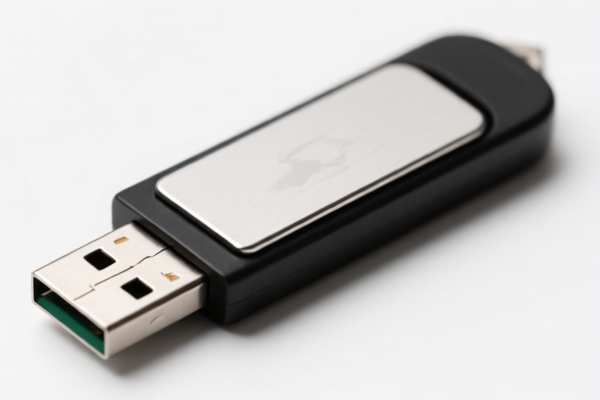
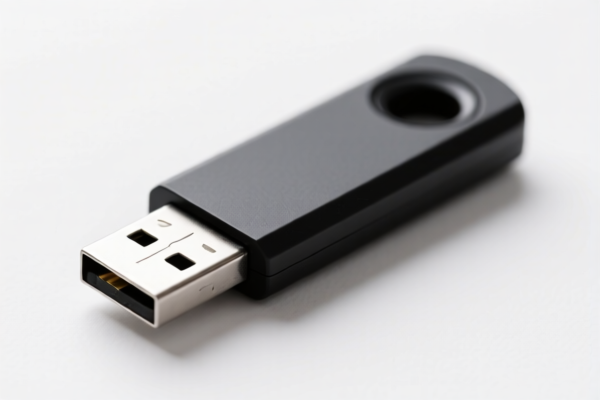
AI Analysis
💡 Flash Boards: Global HS Code Classification & Tariff Strategy (2026)
🌐 Professional Customs Clearance Guide | 2026 Tariff Breakdown | Smart Export Strategy
📌 I. Product Definition: What Exactly is a "Flash Board"?
A Flash Board is a versatile signaling device characterized by its luminous or blinking function. It serves critical roles in safety, advertising, decoration, and traffic control.
In international trade, its classification hinges on two factors: 1. Material Composition: Is it Plastic, Glass, or a Complex Electronic Assembly? 2. Functionality: Is it a standalone light source (Luminous Sign), a safety reflector, or a decorative glass component?
⚠️ Critical Distinction:
- If it is an electronic device emitting light → Likely 9405 (Luminous Signs).
- If it is a passive glass/plastic item with a retro-reflective or simple coating → Likely 7020 or 3926.
- Note: The provided data includes scenarios for both active (emitting) and passive (reflective/decorative) flash boards, leading to different tax implications.
📦 II. HS Code Classification Matrix (Based on Provided Data)
| HS Code | Material Logic | Function/Usage | Tax Profile |
|---|---|---|---|
| 9405.61.60.00 | Electronic/Luminous | Active flashing, LED/Light-based signs | ⚠️ 40.3% (High) |
| 9405.69.60.00 | Luminous (Other) | "Other" luminous signs/marques, no conflict | ✅ 15.3% (Lowest) |
| 7020.00.60.00 | Glass/Metalized | Decorative glass, coated/reflection layers | ⚠️ 40.0% (High) |
| 3926.90.99.89 | Plastic/Composite | General plastic sheeting, "Other" category | ⚠️ 22.8% (Medium) |
| 3926.90.99.25 | Plastic/Reflective | Road warning signs,反光 (reflective) features | ⚠️ 22.8% (Medium) |
🔍 Key Insight:
The most aggressive tax scenario involves Electronic Luminous Signs (9405.61) and Glass (7020), while the most cost-effective route is often the "Other Luminous" category (9405.69) or Plastic variants, provided the physical attributes align perfectly.
💰 III. Detailed Tariff Analysis & Duty Calculation (2026)
✅ Applicable Market: USA
✅ Origin: China
✅ Effective Date: Based on 2025-2026 regulatory updates
🎯 Scenario A: The "High Tax" Route (Active & Glass)
1. HS Code: 9405.61.60.00 (Luminous Signs)
Best for: Complex electronic flashing signs with embedded circuits.
| Tax Component | Rate | Legal Basis |
|---|---|---|
| Base Duty | 5.3% | Standard MFN Rate |
| Add'l Tariff | 25.0% | Section 301 (Trade War) |
| Section 122 Tax | 10.0% | China-specific surcharge |
| 🚀 TOTAL | 40.3% | Heavy Cost Impact |
2. HS Code: 7020.00.60.00 (Other Glass Products)
Best for: Decorative glass flash panels with special coatings.
| Tax Component | Rate | Legal Basis |
|---|---|---|
| Base Duty | 5.0% | Standard MFN Rate |
| Add'l Tariff | 25.0% | Section 301 (Trade War) |
| Section 122 Tax | 10.0% | China-specific surcharge |
| 🚀 TOTAL | 40.0% | Heavy Cost Impact |
🎯 Scenario B: The "Medium Tax" Route (Plastic)
3. & 4. HS Code: 3926.90.99.89 & 3926.90.99.25 (Plastic Articles)
Best for: Plastic flashing boards or reflective road signs.
| Tax Component | Rate | Legal Basis |
|---|---|---|
| Base Duty | 5.3% | Standard MFN Rate |
| Add'l Tariff | 7.5% | Reduced Section 301 (for specific plastic categories) |
| Section 122 Tax | 10.0% | China-specific surcharge |
| 🚀 TOTAL | 22.8% | Moderate Cost Impact |
🎯 Scenario C: The "Low Tax" Route (Optimization)
5. HS Code: 9405.69.60.00 (Other Luminous Signs)
Best for: Flashing signs that fit "Other" definitions (no complex circuitry conflict).
| Tax Component | Rate | Legal Basis |
|---|---|---|
| Base Duty | 5.3% | Standard MFN Rate |
| Add'l Tariff | 0.0% | No 301 Section Added |
| Section 122 Tax | 10.0% | China-specific surcharge |
| 🚀 TOTAL | 15.3% | 🏆 Lowest Possible Rate |
📌 Explanation:
- Section 301 (25% vs 7.5%): The 301 tariff varies by product specificity. Glass and complex electronics often hit the full 25%, while certain plastics or specific "other" sub-categories may qualify for lower rates. - Section 122 (10%): This is a mandatory surcharge on most Chinese-origin goods, almost universally applied across all HS Codes in this list. - Strategy: If your product can be legally argued as a "Other Luminous Sign" (9405.69) rather than a specific "Luminous Sign" (9405.61), you save 25% instantly.
🛠️ IV. Customs Clearance Strategy & Actionable Advice
✅ 1. Material & Function Evidence (The "Make or Break" Proof)
To secure the 15.3% rate (9405.69) and avoid the 40% trap, you must prove:
- Function: It is a "luminous sign" but does not fit the specific definition of 9405.61 (e.g., maybe it lacks a complex driver board, or is a simple lighting element).
- Material: If claiming Plastic (3926), you must provide a Material Safety Data Sheet (MSDS) proving it is primarily plastic, not glass or electronic.
- Structure: If claiming Glass (7020), prove it is a decorative glass item, not a functional electronic light fixture.
✅ 2. Naming & Labeling Optimization
🔥 Golden Rule: "The name on the commercial invoice must match the classification logic."
| Target HS Code | Recommended Invoice Description | Avoid This |
|---|---|---|
| 9405.69.60.00 | "LED Flashing Marque, Decorative Luminous Sign, Plastic Case" | "Electronic Sign" (triggers 9405.61) |
| 3926.90.99.89 | "Plastic Flash Panel, Non-Reflective, Sheet Form" | "Warning Sign" (triggers 3926.90.99.25) |
| 7020.00.60.00 | "Decorative Glass Flash Plate, Metalized Coating" | "Traffic Sign" (misclassification risk) |
✅ 3. Documentation Checklist
- Product Technical Manual: Clearly state the power source (if any) and lighting mechanism.
- Material Composition Statement: Breakdown of % Plastic vs. % Glass vs. % Electronics.
- Photos: High-res images showing the "Flash" effect and the absence/presence of circuit boards.
- Country of Origin Certificate: Must explicitly state "China" to manage expectations for the 10% Section 122 tax.
🌍 V. Market Impact Summary
| Target HS Code | Est. Total Duty | Risk Level | Strategic Value |
|---|---|---|---|
| 9405.69.60.00 | 15.3% | Low | 🟢 High Value: Best for margins |
| 3926.90.99.89 | 22.8% | Medium | 🟡 Medium: Viable for plastic goods |
| 7020.00.60.00 | 40.0% | High | 🔴 Low: Avoid unless it's pure glass |
| 9405.61.60.00 | 40.3% | High | 🔴 Low: Avoid unless complex electronics |
💡 Pro Tip:
If your product is a simple plastic flashing board (no complex electronics), do not declare it as an "Electronic Luminous Sign." Push for the Plastic (3926) or "Other Luminous" (9405.69) classification to cut taxes by nearly 25%.
📌 VI. Common Pitfalls to Avoid
❌ Pitfall 1: Calling it a "Traffic Safety Sign" when it's a "Decorative Flash Plate."
👉 Result: Incorrect HS Code, potential audit, higher duty.
❌ Pitfall 2: Assuming all "flashing" boards are electronics.
👉 Result: You might pay 40.3% when 15.3% is available if the tech is simpler.
❌ Pitfall 3: Ignoring the "Section 122" 10% tax.
👉 Result: Unexpected cost surprise at the border; remember this is non-negotiable for China-origin goods.
🎯 VII. Final Verdict: How to Clear Smoothly?
- Analyze Internal Specs: Is it glass, plastic, or electronic?
- Select Target: Aim for
9405.69.60.00(15.3%) if it's a general light sign, or3926.90.99.89(22.8%) if it's plastic. - Prepare Evidence: Gather technical sheets proving the material and function to justify the lower code.
- Pre-Arrival Ruling: Consider requesting a Binding Ruling from US Customs (CBP) to lock in the 15.3% rate before shipping.
🚀 Conclusion:
"Flash Boards" are not a one-size-fits-all category. The 25% difference in duty (40.3% vs 15.3%) is your biggest margin driver. Choose your HS Code wisely!
✨ Customs Clearance, Simplified.
💼 Accurate Classification = Maximum Profit.
Customer Reviews
About HS Code Classification
The Harmonized System (HS) is an internationally standardized nomenclature developed by the World Customs Organization (WCO) to classify traded products. Over 200 countries use the HS system as the basis for customs tariffs, trade statistics, and import/export regulations.
Each HS code follows a hierarchical structure:
- Chapter (2 digits) — Broad category of goods (e.g., Chapter 84: Machinery and Mechanical Appliances)
- Heading (4 digits) — More specific grouping within the chapter
- Subheading (6 digits) — Internationally standardized breakdown, used by all WCO member countries
- National subdivisions (8-10 digits) — Country-specific extensions for further classification, such as US HTSUS 10-digit codes
Correct HS code classification is essential for smooth customs clearance, accurate duty payment, and compliance with trade regulations. Misclassification can lead to customs delays, overpayment of duties, or penalties.
When importing from CN to US, the applicable tariff rates may include:
- Most-Favored-Nation (MFN) rate — The standard duty rate applied to WTO members
- General rate — Applied to countries without trade agreements
- Trade remedy duties — Additional tariffs such as Section 301 (anti-dumping), Section 232 (national security), or countervailing duties
The information provided on this page is for reference purposes only. For official classification, please consult with your local customs authority or a licensed customs broker.