Flat Plastic Folder with Labels
CN → US| HS Code | Tariff Rate | Origin | Destination | Doc |
|---|---|---|---|---|
| 3926100000 | 15.3% | CN | US | Official Doc |
| 3923900080 | 38.0% | CN | US | Official Doc |
| 3923109000 | 38.0% | CN | US | Official Doc |
| 4820300040 | 35.0% | CN | US | Official Doc |
| 3926908700 | 40.3% | CN | US | Official Doc |
| 3926909989 | 22.8% | CN | US | Official Doc |
Product Images
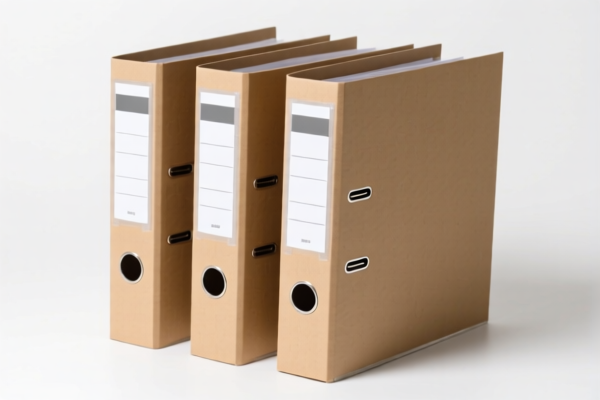
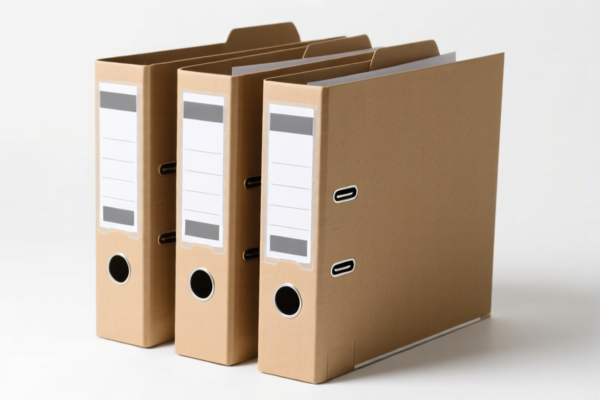
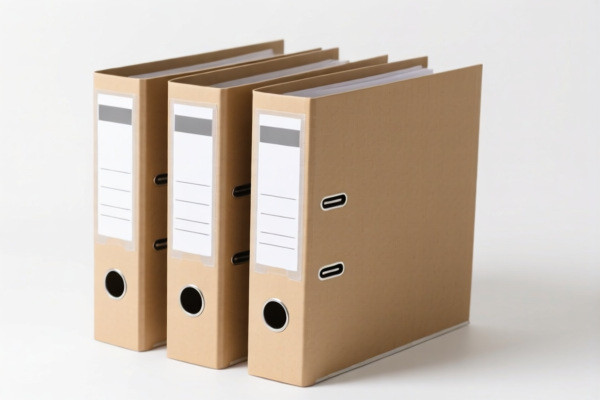
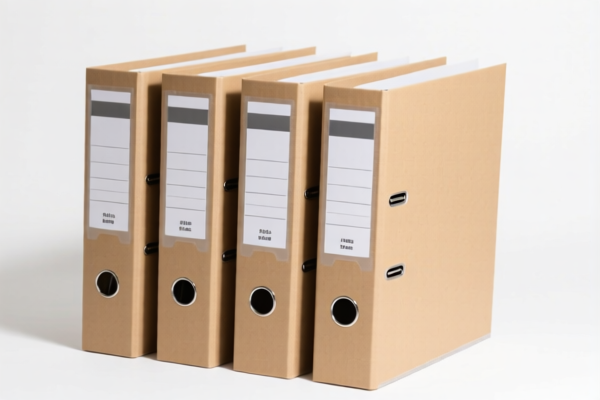
AI Analysis
📂 Flat Plastic Folder with Labels: The "HS Code Maze" & Cost Optimization Guide
🌐 HS Code Classification & Customs Clearance Strategy | 2026 U.S. Import Tariff Analysis
📌 I. Product Definition: What Exactly Is a "Flat Plastic Folder with Labels"?
A "Flat Plastic Folder with Labels" is a common office supply item. However, in the eyes of U.S. Customs and Border Protection (CBP), it is not a single entity. Its classification depends entirely on its material composition, structural function, and intended use.
⚠️ The Critical Distinction:
- Is it a stationery item (used for organizing documents)? → Likely Heading 3926 or 4820
- Is it a packaging container (used for shipping/storage)? → Likely Heading 3923
- Is it a flexible plastic sheet/enclosure? → Likely Heading 3926🚨 Key Risk:
Misclassification leads to massive duty spikes. A folder classified as "Other Plastic Articles" (3926.90.99.89) vs. "Packaging" (3923.90.00.80) can change the total tax burden from 22.8% to 38.0%.
📦 II. HS Code Classification Matrix (2026 U.S. Tariff Schedule)
Below is the authoritative breakdown based on the provided data. Each code is explained with its legal rationale, duty structure, and compliance nuance.
| HS Code | Product Description (CBP View) | Classification Rationale | Total Tax Rate | Tax Breakdown |
|---|---|---|---|---|
| 3926.10.00.00 | Office Plastic Folders with Labels | Classified under "Articles of apparel and clothing accessories, not knitted or crocheted... Office supplies." This is the most favorable code if the item is explicitly marketed/used as an office supply with labels. | 15.3% | Base: 5.3% Section 301: 0.0% 122 Clause: 10% |
| 3923.90.00.80 | Plastic Folder (Packaging/Storage) | Classified under "Containers for the conveyance or packing of goods... Other." If the folder is viewed as a package for holding goods (not just documents), or if it lacks the "office supply" designation, it falls here. | 38.0% | Base: 3.0% Section 301: 25.0% 122 Clause: 10% |
| 3923.10.90.00 | Plastic Folder (Box/Case/Carton) | Classified under "Boxes, cases, crates and similar articles." If the folder is rigid or structured like a box/case for goods, it falls here. Note: "Folder" usually implies flexibility, but CBP may scrutinize rigid plastic folders. | 38.0% | Base: 3.0% Section 301: 25.0% 122 Clause: 10% |
| 4820.30.00.40 | Plastic Folder (Form Factor: Folder) | Classified under "Binders, files... Other." This code applies if the item is considered a file/folder regardless of material, provided it doesn't fit other specific subheadings. However, plastic materials often push it to Chapter 39. | 35.0% | Base: 0.0% Section 301: 25.0% 122 Clause: 10% |
| 3926.90.87.00 | Plastic Folder (Flexible Plastic Article) | Classified under "Other articles of plastics... Flexibles." If the folder is a simple plastic sleeve or flexible enclosure without office-specific features, it falls here. | 40.3% | Base: 5.3% Section 301: 25.0% 122 Clause: 10% |
| 3926.90.99.89 | Plastic Folder (Other Plastic Article) | Classified under "Other articles of plastics... Other." This is the default category for plastic items not specifically listed elsewhere. Used when the item doesn't fit office, packaging, or flexible categories clearly. | 22.8% | Base: 5.3% Section 301: 7.5% 122 Clause: 10% |
💰 III. Detailed Tax Clause Analysis (Why the Rates Differ)
Understanding the tax structure is crucial for cost prediction. All items are subject to the 122 Clause (10%), but the Section 301 (Trade War) Tariffs vary wildly.
🎯 1. The "Best Case": 3926.10.00.00 (15.3%)
- Base Duty: 5.3% (Standard for Office Supplies)
- Section 301: 0.0% (Exempt or not applicable for this specific subheading)
- 122 Clause: 10% (Fixed)
- Strategy: Use this code if your product is explicitly labeled as an "Office Supply" and has labels attached. The "Labels" feature is key to qualifying for this subheading.
🎯 2. The "Mid-Tier": 4820.30.00.40 (35.0%) & 3926.90.99.89 (22.8%)
4820.30.00.40: Base is 0%, but Section 301 is 25%. High risk because plastic folders are often challenged under Chapter 39.3926.90.99.89: Base 5.3%, Section 301 is only 7.5% (not 25%). This is a hidden gem if you can argue it’s a "general plastic article" rather than a "packaging" or "office" item.
🎯 3. The "Worst Case": 3923.90.00.80 & 3923.10.90.00 (38.0%) & 3926.90.87.00 (40.3%)
- Base Duty: Low (3.0% or 5.3%)
- Section 301: 25.0% (Fully applicable)
- 122 Clause: 10%
- Why it’s expensive: If CBP views your folder as packaging (3923) or flexible plastic (3926.87), the full 25% trade war tariff applies. This can erase profit margins.
📌 Critical Insight:
The difference between 15.3% and 40.3% is 25%. On a $10,000 shipment, this is a $2,500 difference. Classification is not just legal; it’s financial.
🛠️ IV. Customs Clearance & Compliance Strategy
✅ 1. Documentation Requirements (Mandatory)
| Document | Purpose | Tips |
|---|---|---|
| Commercial Invoice | Must clearly state "Plastic Folder with Labels" | Avoid vague terms like "Plastic Item." Specify material (e.g., PVC, PP) and use (Office). |
| Product Photographs | Show the labels attached | Visual proof is key for 3926.10.00.00. If labels are missing, CBP may reclassify to 3926.90.99.89 or higher. |
| Product Specification | Detail structure (rigid/flexible) | If flexible, highlight this to avoid 3923 (packaging) classification. |
| Marketing Materials | Show usage as office supply | Brochures showing it in an office setting support 3926.10.00.00. |
✅ 2. Classification Strategy (How to Save Money)
🔥 Rule of Thumb:
"Labels = Office Supply = Lower Duty"
- Step 1: Ensure the product has pre-attached labels or labeling areas. This is the trigger for
3926.10.00.00. - Step 2: Describe the product as "Office Supply, Plastic Folder with Labels" in the invoice.
- Step 3: Avoid terms like "Packaging," "Container," or "Shipment Holder." Use "File Folder," "Document Organizer," or "Office Stationery."
- Step 4: If the folder is rigid or box-like, be prepared for
3923classification (38%). If it’s flexible plastic, argue for3926.90.99.89(22.8%) as a fallback if3926.10is rejected.
✅ 3. Common Pitfalls & Solutions
| Pitfall | Consequence | Solution |
|---|---|---|
| No Labels Visible | CBP rejects 3926.10.00.00 |
Add labels or change product description to highlight labeling function. |
| Called "Plastic Bag" | Reclassified to 3923 or 3926.90.87.00 |
Use "Folder" not "Bag." Show it’s for documents, not bulk goods. |
| Rigid Structure | Reclassified to 3923.10.90.00 (38%) |
Emphasize flexibility. If rigid, justify 4820.30.00.40 or 3926.90.99.89. |
| Vague Description | CBP uses "Residual" rates (high) | Always provide detailed specs. Ambiguity leads to worst-case classification. |
🌍 V. Global Market Comparison (For Reference)
| Country | Recommended HS Code | Est. Duty | Notes |
|---|---|---|---|
| 🇺🇸 USA | 3926.10.00.00 |
15.3% | Best case. Requires "Office Supply" & "Labels." |
| 🇺🇸 USA | 3926.90.99.89 |
22.8% | Safe fallback. Lower Section 301. |
| 🇪🇺 EU | 3926.10.00 |
~2.7% | No Section 301. Much cheaper in Europe. |
| 🇨🇳 China | 3926.10.00 |
~5% | No trade war tariffs. |
📌 Conclusion:
The U.S. market is the most challenging due to Section 301 tariffs. Classification is your best tool for cost control.
📌 VI. Final Clearance Advice
- Apply for Advance Ruling: Before shipping, submit a request to CBP for a pre-classification ruling using your product images and description. This locks in the
3926.10.00.00rate if justified. - Invoice Precision: Never use generic terms. Use "Plastic Office Folder with Integrated Labels."
- Sample Declaration: Ship a small test batch with the
3926.10.00.00code. If cleared without issues, proceed with bulk. - Fallback Plan: If
3926.10.00.00is rejected, be prepared to pay3926.90.99.89(22.8%) rather than3923(38%). Have documentation ready to support the "General Plastic Article" argument.
🎯 Pro Tip:
💡 "Labels are your best friend. They turn a $2,500 duty problem into a $400 duty expense."
📣 Action Item:
📄 Update your product descriptions to emphasize "Office Supply" and "Labels."
📸 Provide clear photos of the labels to CBP.
📉 Target3926.10.00.00for 15.3% total duty.
✨ Smart Classification = Higher Margins.
💼 Don’t let ambiguous codes cost you your profit!
Customer Reviews
About HS Code Classification
The Harmonized System (HS) is an internationally standardized nomenclature developed by the World Customs Organization (WCO) to classify traded products. Over 200 countries use the HS system as the basis for customs tariffs, trade statistics, and import/export regulations.
Each HS code follows a hierarchical structure:
- Chapter (2 digits) — Broad category of goods (e.g., Chapter 84: Machinery and Mechanical Appliances)
- Heading (4 digits) — More specific grouping within the chapter
- Subheading (6 digits) — Internationally standardized breakdown, used by all WCO member countries
- National subdivisions (8-10 digits) — Country-specific extensions for further classification, such as US HTSUS 10-digit codes
Correct HS code classification is essential for smooth customs clearance, accurate duty payment, and compliance with trade regulations. Misclassification can lead to customs delays, overpayment of duties, or penalties.
When importing from CN to US, the applicable tariff rates may include:
- Most-Favored-Nation (MFN) rate — The standard duty rate applied to WTO members
- General rate — Applied to countries without trade agreements
- Trade remedy duties — Additional tariffs such as Section 301 (anti-dumping), Section 232 (national security), or countervailing duties
The information provided on this page is for reference purposes only. For official classification, please consult with your local customs authority or a licensed customs broker.