Flat Pulp Plate
CN → US| HS Code | Tariff Rate | Origin | Destination | Doc |
|---|---|---|---|---|
| 4823700040 | 35.0% | CN | US | Official Doc |
| 4823901000 | 35.0% | CN | US | Official Doc |
Product Images
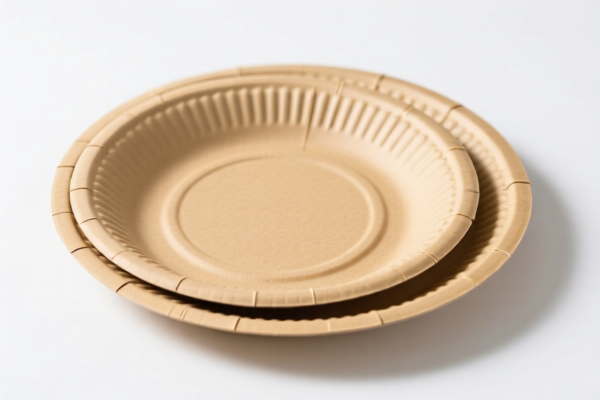
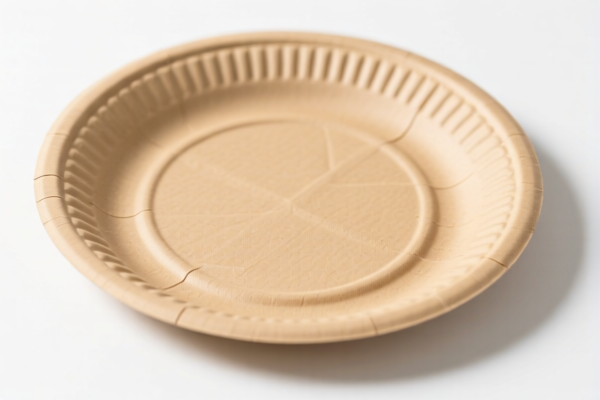
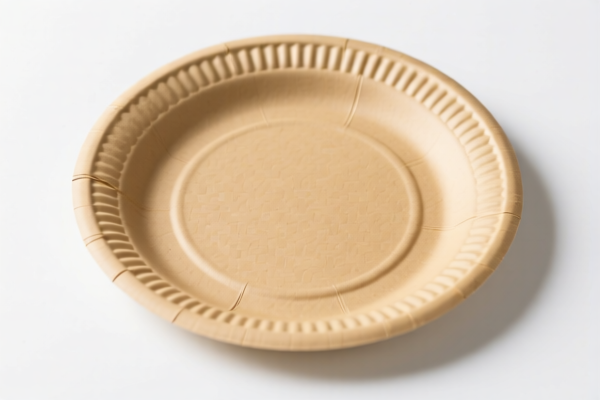
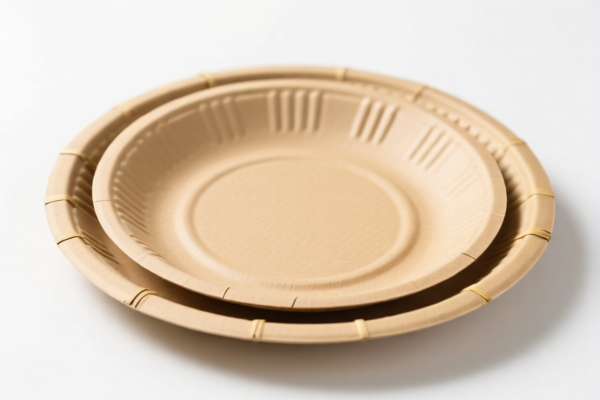
AI Analysis
🍽️ Flat Pulp Plates (Molded Paper Tableware)
🌐 HS Code Reference & Customs Clearance Guide | 2026 Latest Tariff Analysis | Professional Entry Strategy
📌 I. Product Definition & Classification: What Exactly is a "Flat Pulp Plate"?
Flat Pulp Plates are eco-friendly alternatives to plastic or ceramic dishes, made from molded paper pulp. In international trade, they are classified based on their manufacturing process and final shape.
The key distinction lies in whether the item is molded/pressed into a specific shape or merely cut from a larger sheet.
Molded/Pressed Articles (4823.70):
Plates formed by pressing wet pulp into a mold to create a 3D or specific flat shape (e.g., round, square, oval plates with raised edges).
Other Cut Articles (4823.90):
Plates cut from sheets of paper pulp or paperboard but not defined as "molded" under the specific legal definition of Chapter 48 Note 2 or 3 (depending on specific national interpretations, but generally, if it's strictly "other articles" not fitting the "molded" subheading, it may fall here). However, in many jurisdictions, molded tableware is explicitly categorized under 4823.70. If the plate is simply cut from a pre-formed pulp sheet without a molding process that defines its structure, it may fall under 4823.90.
⚠️ Key Distinction Point:
- If the plate is formed by pressure in a mold (even if flat, it has structural integrity from molding) → Typically 4823.70.00.40
- If the plate is an uncut or simply cut web/sheet of pulp not classified as molded → Typically 4823.90.10.00
- Note: Most "plates" in trade are considered "molded or pressed articles" due to the manufacturing process.
📦 II. HS Code Classification Details (2026 Latest Tariff Authority Comparison)
| HS Code | Product Description | Applicable Scenario | Key Characteristic |
|---|---|---|---|
4823.70.00.40 |
Other paper, paperboard, cellulose wadding... : Molded or pressed articles of paper pulp | Molded plates, bowls, trays, clamshells | ✅ Molded/Pressed |
4823.90.10.00 |
Other paper, paperboard, cellulose wadding... : Other: Of paper pulp | Cut pulp sheets, pulp mats, non-molded pulp articles | ✅ Cut/Other (Not Molded) |
🔍 Important Reminder:
- 4823.70.00.40 is the most common classification for molded tableware (plates, cups, containers).
- 4823.90.10.00 is for other paper pulp articles that are not molded/pressed into specific shapes (e.g., pulp sheets, liners).
- Misclassification Risk: Declaring a molded plate as "paper cutout" (4823.90) or vice versa can lead to customs delays or incorrect duty assessments.
💰 III. 2026 Latest Tariff Rate Details (Including Additional Duties)
✅ Applicable Country: United States (US)
✅ Country of Origin: China (CN)
✅ Effective Date: From November 10, 2025 onwards
🎯 1. 4823.70.00.40 —— Molded or Pressed Articles of Paper Pulp
| Item | Content |
|---|---|
| Base Tariff | 0.0% (ad valorem) |
| Section 301 Additional Duty | +25.0% |
| Total Tariff Rate | 25.0% |
| Tax Calculation | CIF Value × 25% |
| De Minimis Eligibility | ❌ No (denied) |
| Legal Basis Path | Section 301: 4823.70.00.40 |
📌 Explanation:
- The base tariff for molded paper pulp articles is 0%.
- However, due to Section 301 of the Trade Act, a 25% additional duty is applied to goods originating from China.
- Total Duty: 25%. This is a significant cost factor for importers.
🎯 2. 4823.90.10.00 —— Other Articles of Paper Pulp (Not Molded)
| Item | Content |
|---|---|
| Base Tariff | 0.0% (ad valorem) |
| Section 301 Additional Duty | +25.0% |
| Total Tariff Rate | 25.0% |
| Tax Calculation | CIF Value × 25% |
| De Minimis Eligibility | ❌ No (denied) |
| Legal Basis Path | Section 301: 4823.90.10.00 |
📌 Note:
- Like the molded category, this subheading also has a 0% base tariff.
- The 25% additional duty applies equally.
- Total Duty: 25%.
- Key Insight: Whether the plate is classified as molded (4823.70) or other pulp article (4823.90), the total tariff rate remains 25% for Chinese origin goods under current 2026 regulations.
🛠️ IV. Customs Clearance Practical Advice (Real-World Pitfall Guide)
✅ 1. Documentation Checklist (Essential)
| Document | Required | Explanation |
|---|---|---|
| ✅ Product Specification Sheet | ✔️ | Must specify: Material (e.g., bagasse, bamboo, recycled paper), Molded vs. Cut, Dimensions |
| ✅ Photos of Product | ✔️ | Clear images showing the molding process/shape, packaging, and any logos |
| ✅ Commercial Invoice | ✔️ | Must clearly describe as "Molded Paper Pulp Plate" or "Pulp Tableware" |
| ✅ Packing List | ✔️ | Detail quantity, weight, and packaging type |
| ✅ Certificate of Origin (CO) | ✔️ | Proof of Chinese origin triggers Section 301 duty |
| ✅ FDA Compliance Doc (if food contact) | ✔️ | Required for food-safe tableware in the US |
✅ 2. Declaration Tips (Key Mnemonics)
🔥 “Molded is 70, Cut is 90, Both are 25%!”
| Scenario | Correct HS Code | Common Mistake | Consequence |
|---|---|---|---|
| Molded Plates (Round/Square) | 4823.70.00.40 |
Declaring as "Paper Sheet" | Misclassification, potential audit |
| Cut Pulp Sheets (Not molded) | 4823.90.10.00 |
Declaring as "Molded" | Unnecessary complexity |
| Mixed Containers | Separate HS Codes | Mixing codes | Customs delay, fines |
📌 Advice:
- Always describe the manufacturing process in the commercial invoice.
- If the product is molded, use 4823.70.
- If the product is cut from a sheet and not molded, use 4823.90.
- Both carry a 25% duty for Chinese goods.
✅ 3. Special Cases
| Situation | Handling Advice |
|---|---|
| Food-Contact Safety | Ensure FDA compliance documents are ready. Non-compliance can lead to refusal of entry. |
| Composite Materials | If the plate has a plastic lining or coating, the classification may change. Consult a specialist. |
| Biodegradable Certification | While not affecting HS code, it may affect marketing and regulatory requirements in some states. |
🌍 V. Global Market Comparison (2026 Latest)
| Country/Region | Recommended HS Code | Tariff (China Origin) | Certification | Notes |
|---|---|---|---|---|
| 🇺🇸 USA | 4823.70.00.40 |
25% (Section 301) | FDA + BPA-Free | High duty; cost-sensitive |
| 🇨🇳 China | 4823.70.00.40 |
0% (or low) | GB Standards | No Section 301 |
| 🇪🇺 EU | 4823.70.00 |
0% (General Preference) | CE (if applicable) | Eco-friendly products favored |
| 🇬🇧 UK | 4823.70.00 |
0% | UKCA | Post-Brexit standards apply |
📌 Conclusion:
- The US market is the most expensive for Chinese-made pulp plates due to the 25% Section 301 duty.
- EU/UK markets are more favorable with 0% tariffs, making them potentially more profitable despite logistics differences.
📌 VI. Common Errors & Pitfalls (Lessons Learned)
❌ Error 1: Classifying molded plates as "Paper" (e.g., 4801-4805)
👉 Consequence: Incorrect HS Code, potential penalties, and duty miscalculation.
❌ Error 2: Not declaring Chinese origin clearly
👉 Consequence: If origin is unknown, customs may apply most-favored-nation (MFN) rates, but if later found to be Chinese, back duties + penalties will be issued.
❌ Error 3: Confusing "Molded" with "Cut"
👉 Consequence: While duty is currently the same (25%), regulatory oversight differs. Molded articles may face stricter FDA scrutiny for food contact.
✅ Correct Practice:
"Molded Bagasse Paper Pulp Plates, 9-inch Diameter, Round, Food-Grade, BPA-Free, Made in China"
🎯 VII. Conclusion: Professional Declaration, Save Costs!
🎯 Remember the Mnemonic:
🔹 "Molded is 70, Cut is 90, Both are 25%!"
🔹 "HS Code determines the path, 25% duty is the tax, declare origin clearly, avoid the tax trap!"
📌 Pro Tip:
- If your pulp plates are sourced from Vietnam, India, or Thailand, they may qualify for 0% duty (under MFN or GSP), avoiding the 25% Section 301 tax.
- Consider supply chain diversification if targeting the US market heavily.
📣 Immediate Action:
📞 Contact a licensed customs broker + Provide product photos + Verify FDA compliance
🚀 Ensure smooth clearance, avoid delays, and protect your margins!
✨ Professional clearance starts with accurate classification!
💼 Every dollar counts—calculate your duty precisely!
Customer Reviews
About HS Code Classification
The Harmonized System (HS) is an internationally standardized nomenclature developed by the World Customs Organization (WCO) to classify traded products. Over 200 countries use the HS system as the basis for customs tariffs, trade statistics, and import/export regulations.
Each HS code follows a hierarchical structure:
- Chapter (2 digits) — Broad category of goods (e.g., Chapter 84: Machinery and Mechanical Appliances)
- Heading (4 digits) — More specific grouping within the chapter
- Subheading (6 digits) — Internationally standardized breakdown, used by all WCO member countries
- National subdivisions (8-10 digits) — Country-specific extensions for further classification, such as US HTSUS 10-digit codes
Correct HS code classification is essential for smooth customs clearance, accurate duty payment, and compliance with trade regulations. Misclassification can lead to customs delays, overpayment of duties, or penalties.
When importing from CN to US, the applicable tariff rates may include:
- Most-Favored-Nation (MFN) rate — The standard duty rate applied to WTO members
- General rate — Applied to countries without trade agreements
- Trade remedy duties — Additional tariffs such as Section 301 (anti-dumping), Section 232 (national security), or countervailing duties
The information provided on this page is for reference purposes only. For official classification, please consult with your local customs authority or a licensed customs broker.