Flat Round Loose Beads
CN → US| HS Code | Tariff Rate | Origin | Destination | Doc |
|---|---|---|---|---|
| 7117909000 | 28.5% | CN | US | Official Doc |
| 3926903300 | 16.5% | CN | US | Official Doc |
| 7103995000 | 28.0% | CN | US | Official Doc |
| 7103104000 | 28.0% | CN | US | Official Doc |
| 3926903500 | 24.0% | CN | US | Official Doc |
Product Images
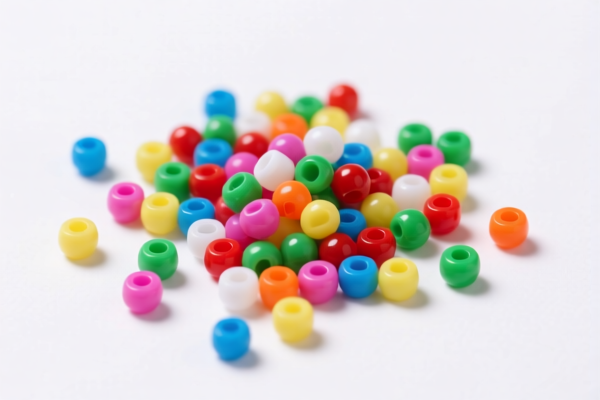
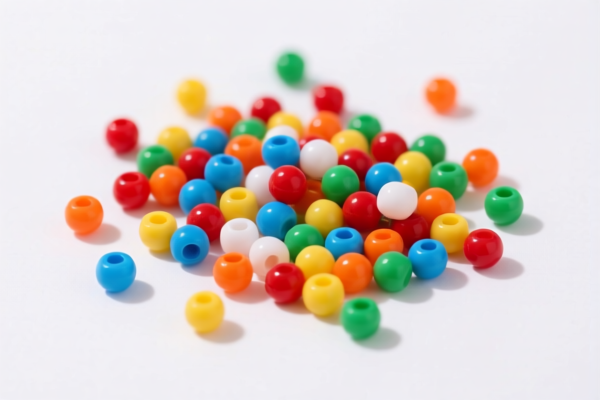
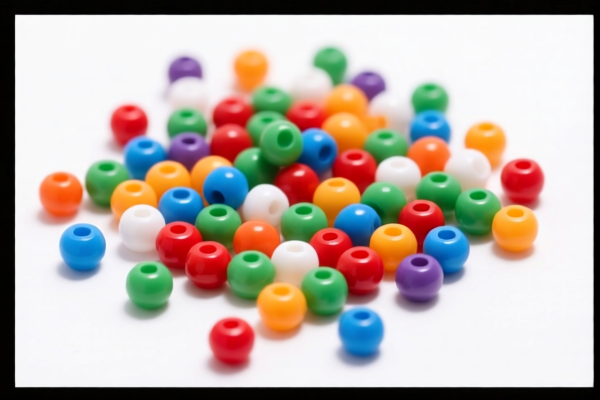
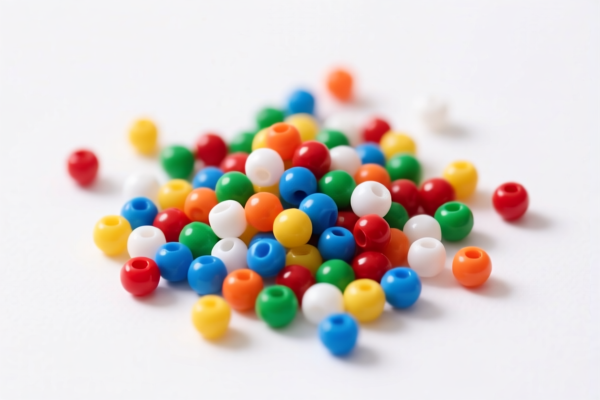
AI Analysis
💎 Flat Round Loose Beads: HS Code Classification & US Customs Clearance Guide | 2026 Tax Analysis
🌐 HS Code Reference & Customs Clearance Guide | 2026 Latest Tariff Breakdown | Professional通关 Strategy
📌 I. Product Definition & Classification: Do You Really Understand "Loose Beads"?
"Flat Round Loose Beads" are small, decorative components used primarily in jewelry making, crafts, and garment embellishments. In international trade, they are not treated as finished jewelry but as materials or semi-finished goods.
The critical distinction lies in material composition: * Plastic/Resin Beads: Classified under Chapter 39 (Plastics). * Gemstone/Crystal Beads: Classified under Chapter 71 (Pearls, Precious Stones).
⚠️ Key Distinction Point: * If the beads are unstrung (loose) and unmounted (not set into jewelry), they are generally classified based on their raw material. * If they are strung together or set into metal findings, they may be classified as "articles of jewelry" or "parts of jewelry," which often carry different tariffs. * Crucial for Loose Beads: Ensure your commercial invoice clearly states "Loose," "Unstrung," and "Unmounted" to avoid misclassification as finished jewelry.
📦 II. HS Code Classification Details (2026 Latest Tariff Authority)
Based on the provided data, here are the four primary HS Codes for Flat Round Loose Beads, categorized by material and tax implications.
| HS Code | Product Description | Material Type | Unstrung/Unmounted? | Total Tax Rate |
|---|---|---|---|---|
3926.90.35.00 |
Plastic flat round loose beads, unstrung and unmounted | Plastic | ✅ Yes | 24.0% |
7117.90.90.00 |
Imitation jewelry beads (flat round, loose), non-specific material | Imitation/Synthetic | ✅ Yes | 28.5% |
3926.90.33.00 |
Plastic flat round loose beads, unstrung and unmounted | Plastic | ✅ Yes | 16.5% |
7103.99.50.00 |
Semi-precious stone flat round loose beads, not strung | Semi-Precious Stone | ✅ Yes | 28.0% |
7103.10.40.00 |
Precious or semi-precious stone flat round loose beads, not strung | Precious/Semi-Precious Stone | ✅ Yes | 28.0% |
🔍 Important Note: * Plastic Beads offer the most tax-efficient options, with rates of 16.5% or 24.0%. * Gemstone Beads face a higher base tariff (10.5%), leading to a total of 28.0%. * Imitation Jewelry beads are taxed at the highest rate (28.5%) due to their classification under Chapter 71 (Imitation Jewelry).
💰 III. 2026 Latest Tariff Rate Breakdown (Including Surtaxes & Policy Add-ons)
✅ Applicable Country: United States (US) ✅ Origin: China (CN) ✅ Effective Date: From November 10, 2025 (including subsequent imports)
🎯 1. 3926.90.35.00 – Plastic Beads (Standard Plastic Classification)
| Item | Detail |
|---|---|
| Base Tariff | 6.5% |
| Additional Surcharge (Section 301) | 7.5% |
| 122 Clause Tariff | 10.0% |
| Total Effective Tax Rate | 24.0% |
| Tax Calculation | CIF Value × 24.0% |
| De Minimis Exemption | ❌ Not Applicable (High tariff item) |
| Legal Basis | USITC Code 3926.90.35.00 combined with Section 301 and 122 Clause surcharges |
📌 Explanation: * Base Rate (6.5%): The standard Most Favored Nation (MFN) tariff for plastic articles. * Section 301 Surcharge (7.5%): Additional tariff imposed on Chinese goods under Trade Act Section 301. * 122 Clause Tariff (10%): Specific surcharge applicable to certain plastic goods from China. * Total 24%: This is a significant cost driver for plastic bead imports.
🎯 2. 3926.90.33.00 – Plastic Beads (Optimized Plastic Classification)
| Item | Detail |
|---|---|
| Base Tariff | 6.5% |
| Additional Surcharge (Section 301) | 0.0% |
| 122 Clause Tariff | 10.0% |
| Total Effective Tax Rate | 16.5% |
| Tax Calculation | CIF Value × 16.5% |
| De Minimis Exemption | ❌ Not Applicable |
| Legal Basis | USITC Code 3926.90.33.00 combined with 122 Clause surcharge |
📌 Explanation: * Optimal Choice for Plastic: This code offers the lowest total tax (16.5%). * Why 0% Section 301?: This specific subheading may fall under an exemption or a different tariff schedule where the 7.5% surcharge does not apply, only the 10% 122 Clause tariff applies. * Strategy: If your plastic beads qualify for this code, choose this over
3926.90.35.00to save 7.5% in tariffs.
🎯 3. 7117.90.90.00 – Imitation Jewelry Beads
| Item | Detail |
|---|---|
| Base Tariff | 11.0% |
| Additional Surcharge (Section 301) | 7.5% |
| 122 Clause Tariff | 10.0% |
| Total Effective Tax Rate | 28.5% |
| Tax Calculation | CIF Value × 28.5% |
| De Minimis Exemption | ❌ Not Applicable |
| Legal Basis | USITC Code 7117.90.90.00 |
📌 Explanation: * Highest Tax Burden: Imitation jewelry beads are taxed more heavily than genuine stones. * Why?: Base tariff is higher (11.0% vs 6.5% or 10.5%), plus standard surcharges. * Strategy: Avoid this classification if possible. Ensure marketing materials do not mislead customs into thinking these are "imitation jewelry" if they can be classified as raw materials.
🎯 4. 7103.99.50.00 & 7103.10.40.00 – Stone Beads
| Item | Detail |
|---|---|
| Base Tariff | 10.5% |
| Additional Surcharge (Section 301) | 7.5% |
| 122 Clause Tariff | 10.0% |
| Total Effective Tax Rate | 28.0% |
| Tax Calculation | CIF Value × 28.0% |
| De Minimis Exemption | ❌ Not Applicable |
| Legal Basis | USITC Code 7103.99.50.00 / 7103.10.40.00 |
📌 Explanation: * Precious & Semi-Precious Stones: Both subheadings carry the same total rate (28.0%). * Differentiation:
7103.10.40.00is for precious/semi-precious stones (e.g., jade, ruby, quartz), while7103.99.50.00is for other semi-precious stones. * Strategy: Accurate material identification is crucial. Misdeclaring a semi-precious stone as plastic could lead to penalties. However, if they are truly plastic, use the plastic codes.
🛠️ IV. Customs Clearance Practical Advice (Avoiding Pitfalls)
✅ 1. Required Documentation Checklist (Non-Negotiable)
| Document | Required? | Explanation |
|---|---|---|
| ✅ Commercial Invoice | ✔️ | Must clearly state: "Flat Round Loose Beads, [Material], Unstrung, Unmounted". |
| ✅ Packing List | ✔️ | Itemize by material type (e.g., "1000 pcs Plastic Beads," "500 pcs Stone Beads"). Do not mix materials in one line item if possible. |
| ✅ Product Photos | ✔️ | Show beads loose in a container, not strung. Highlight material texture. |
| ✅ Material Declaration | ✔️ | Explicitly state "Plastic," "Stone," or "Imitation." |
| ✅ Origin Certificate | ✔️ | Required for verifying Chinese origin (CN) for surcharge calculations. |
✅ 2. Declaration Tips (Key Mantra)
🔥 "Loose & Unmounted, Material Matters, Avoid 'Jewelry' Labels!"
| Scenario | Correct Declaration | Wrong Action |
|---|---|---|
| Plastic Beads | HS Code 3926.90.33.00 (16.5%) or 3926.90.35.00 (24.0%) |
Declare as "Jewelry Parts" → Higher Tax |
| Stone Beads | HS Code 7103.99.50.00 or 7103.10.40.00 (28.0%) |
Declare as "Plastic" → Fraud/Penalty |
| Imitation Beads | HS Code 7117.90.90.00 (28.5%) |
Declare as "Stone" → Penalty |
| Strung Beads | Potentially different HS Code (Jewelry) | Declare as "Loose Beads" → Misclassification |
✅ 3. Special Cases Handling
| Scenario | Handling Advice |
|---|---|
| Mixed Materials in One Shipment | Separate Line Items! Do not combine plastic and stone beads in one HS Code. Declare separately to apply correct rates (16.5%/24.0% vs 28.0%). |
| Beads with Holes for Stringing | Ensure they are described as "Unstrung". If they come pre-strung on a thread, they may be classified as "jewelry" or "part of jewelry," which could have different tariffs. |
| Custom-Dyed Beads | Still classified by base material (Plastic/Stone). Color does not change the HS Code. |
| Small Samples (Under $800) | ⚠️ Caution: While de minimis ($800) might apply for low-value shipments, high-tariff items like these are often scrutinized. Even if de minimis applies, ensure accurate declaration to avoid future audits. |
🌍 V. Global Market Comparison (2026 Latest)
| Country/Region | Recommended HS Code | Tax Rate (China Origin) | Certification Requirements | Notes |
|---|---|---|---|---|
| 🇺🇸 USA | 3926.90.33.00 |
16.5% (Plastic) | None specific | Highest surcharges (301 + 122). Optimize material classification. |
| 🇺🇸 USA | 7103.99.50.00 |
28.0% (Stone) | None specific | Stone beads face higher taxes. |
| 🇪🇺 EU | 3926.90 / 7103.99 | 0% - 6.5% | REACH, CE | No Section 301/122 surcharges. Much more favorable for exports. |
| 🇬🇧 UK | 3926.90 / 7103.99 | 0% - 6.5% | UKCA | Post-Brexit tariffs apply, but no US-style surcharges. |
| 🇨🇦 Canada | 3926.90 / 7103.99 | 0% - 5.5% | Non-TRM | No significant surcharges on Chinese goods. |
📌 Conclusion: * USA is the most challenging market due to the 10% "122 Clause" tariff and 7.5% Section 301 surcharge. * Total Tax Impact: Up to 28.5% for imitation beads, 28.0% for stones, 24.0% for standard plastic, and 16.5% for optimized plastic. * Strategy: If exporting to the US, consider sourcing plastic beads that qualify for
3926.90.33.00to minimize costs. For high-volume stone beads, factor in the 28% tax burden.
📌 VI. Common Mistakes & Pitfalls (Blood & Tears Lessons)
❌ Mistake 1: Declaring "Plastic Beads" as "Imitation Jewelry" 👉 Consequence: Tax jumps from 16.5% to 28.5%. Loss: 12% of CIF value!
❌ Mistake 2: Mixing Stone and Plastic Beads in One HS Code 👉 Consequence: Customs may audit the entire shipment. If disputed, the entire batch could be taxed at the highest rate (28.5%).
❌ Mistake 3: Not Specifying "Unstrung/Unmounted" 👉 Consequence: Customs may classify as "Jewelry" or "Jewelry Parts," leading to different HS codes and potential penalties or delays.
❌ Mistake 4: Ignoring the 122 Clause Tariff 👉 Consequence: Underestimating landed cost. The 10% surcharge is mandatory for many plastic and stone goods from China.
✅ Correct Practice:
"Flat Round Loose Beads, Unstrung, Unmounted, [Material: Plastic/Stone], Model XYZ, Origin: China"
🎯 VII. Conclusion: Precise Classification, Cost Control, Smooth Clearance!
🎯 Remember the Mantra:
🔹 "Plastic is Key, 33 is Best (16.5%), 35 is Next (24%), Stones are High (28%), Imitation is Highest (28.5%)!"
🔹 "Loose & Unmounted, Material Matters, Surcharges Add Up!"
📌 Pro Tip:
If your plastic beads can be classified under
3926.90.33.00instead of3926.90.35.00, you save 7.5% in tariffs. Ensure your product specifications and material description align with this code.
📣 Immediate Action:
📞 Contact a professional customs broker + Provide product photos + Request HS Code Ruling 🚀 Ensure your flat round loose beads clear US customs smoothly, efficiently, and profitably!
✨ Professional Clearance Starts with Accurate Classification! 💼 Every percent saved in tax is pure profit!
Customer Reviews
About HS Code Classification
The Harmonized System (HS) is an internationally standardized nomenclature developed by the World Customs Organization (WCO) to classify traded products. Over 200 countries use the HS system as the basis for customs tariffs, trade statistics, and import/export regulations.
Each HS code follows a hierarchical structure:
- Chapter (2 digits) — Broad category of goods (e.g., Chapter 84: Machinery and Mechanical Appliances)
- Heading (4 digits) — More specific grouping within the chapter
- Subheading (6 digits) — Internationally standardized breakdown, used by all WCO member countries
- National subdivisions (8-10 digits) — Country-specific extensions for further classification, such as US HTSUS 10-digit codes
Correct HS code classification is essential for smooth customs clearance, accurate duty payment, and compliance with trade regulations. Misclassification can lead to customs delays, overpayment of duties, or penalties.
When importing from CN to US, the applicable tariff rates may include:
- Most-Favored-Nation (MFN) rate — The standard duty rate applied to WTO members
- General rate — Applied to countries without trade agreements
- Trade remedy duties — Additional tariffs such as Section 301 (anti-dumping), Section 232 (national security), or countervailing duties
The information provided on this page is for reference purposes only. For official classification, please consult with your local customs authority or a licensed customs broker.